
Quick Take
- Quick commerce is forcing FMCG firms to cut product launch cycles from 12 months to weeks.
- Redseer pegs food FMCG quick commerce at $4 Bn (Rs 38,116 Cr) today, rising to $27 Bn by 2030.
- Tata Consumer says e-commerce now grows 62% YoY, reshaping how brands plan and refill stock.
In This Article
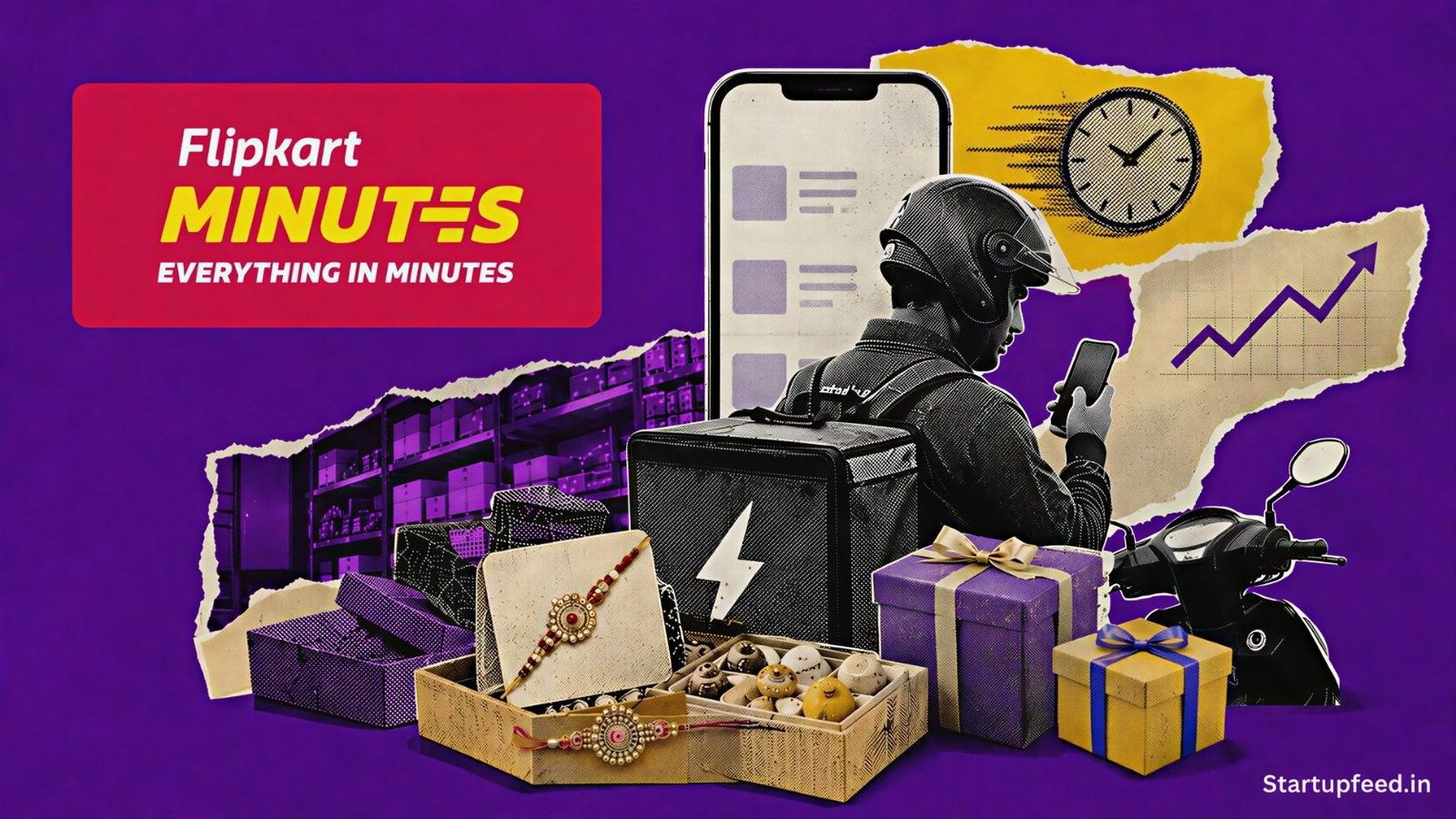
The Quick Commerce Squeeze is real: rapid growth of 10-minute delivery is pushing India’s FMCG (Fast-Moving Consumer Goods) companies to shrink product innovation and launch cycles from as long as 12 months to just weeks, as reported by The Economic Times on August 3, 2026. Speed is now the deciding factor.
The channel barely existed five years ago. Today it shapes how big brands like Tata Consumer, HUL (Hindustan Unilever), and MTR plan products, refill stock, and read demand. Faster shelf turnover on apps like Blinkit, Zepto, and Instamart rewards brands that move quickly and punishes those still working on old yearly timelines.
StartupFeed Insight
The real story here is not speed for its own sake, it is a rewrite of the FMCG cost structure. A brand refilling stock every two days needs smaller batches, tighter vendor terms, and store-level demand sensing, which raises logistics cost but cuts dead inventory. Watch mid-size regional players and D2C founders closely: they carry less legacy distribution weight, so they can turn a product idea into a shelf-ready SKU faster than a giant can clear internal approvals. Expect at least three large FMCG firms to formally split out dedicated quick commerce supply teams by the end of FY27, following HUL’s early lead. By Harshvardhan Jain.
The Quick Commerce Squeeze Explained
The Quick Commerce Squeeze is the pressure on FMCG brands to launch faster and refill smaller because 10-minute delivery apps reward fresh, high-frequency products over slow annual launches. The old model built distribution for kirana (neighbourhood) stores and monthly restocking. Quick commerce runs on a very different clock.
According to The Economic Times, several FMCG companies have compressed innovation timelines from a year, or even a fortnight, down to weeks. Dark stores enable faster availability, feedback, and withdrawal of products that do not sell. Daily sales dashboards are now replacing long-term forecasting models across the sector.
Why are FMCG firms cutting launch cycles?
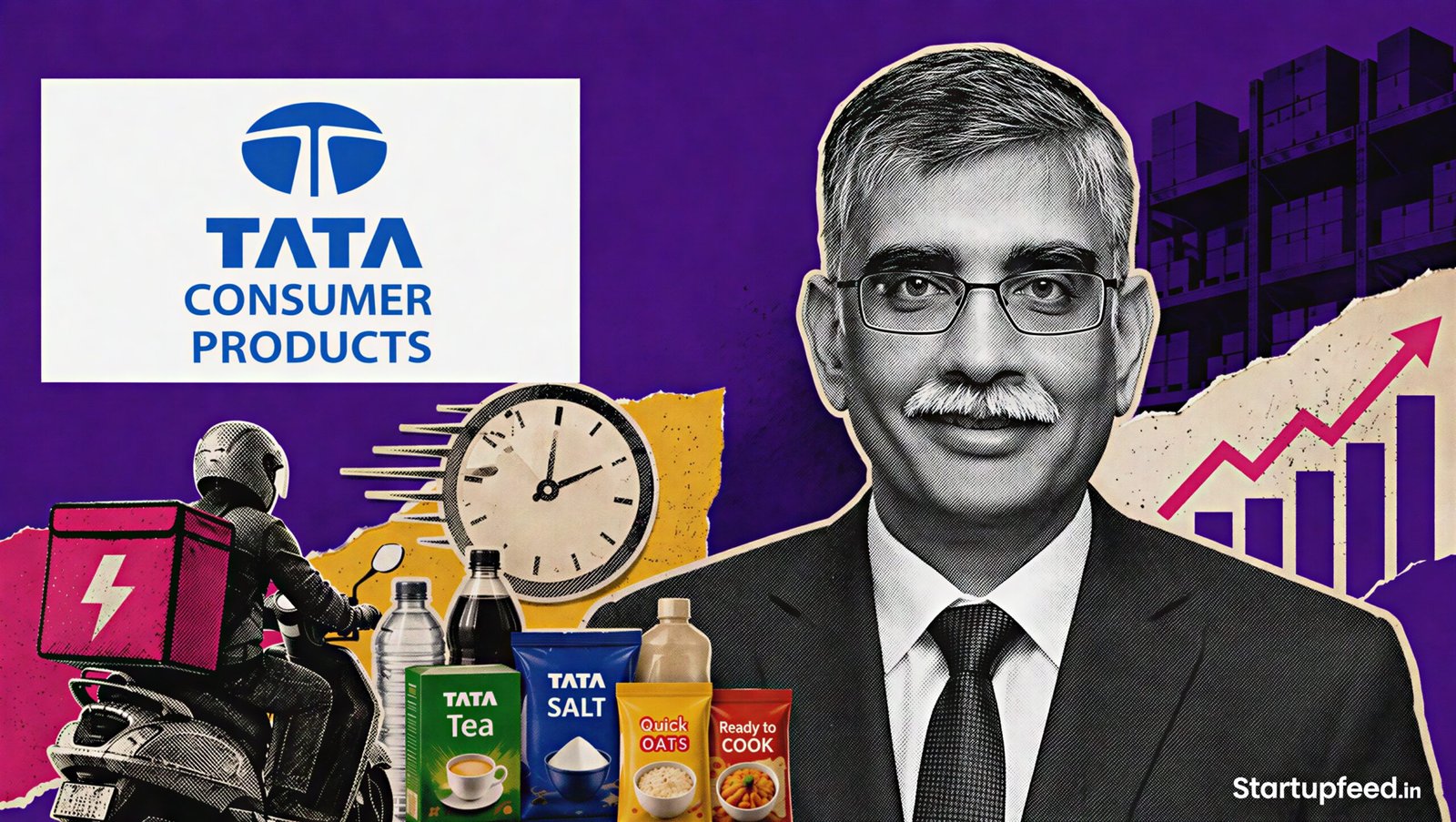
FMCG firms are cutting launch cycles because quick commerce shortens the distance between a product idea and real consumer demand, so waiting a year now means losing share to faster rivals. Tata Consumer Products has framed this shift plainly in recent commentary.

“We are digitising the organisation at speed to leverage technology for agility,” Sunil D’Souza, Managing Director and CEO, Tata Consumer Products, has said about the company’s channel strategy.
Tata Consumer reported that its e-commerce channel is growing around 62% year-on-year, with modern trade adding another layer, so a large slice of domestic revenue now flows through channels that were tiny five years ago. When a channel grows that fast, monthly planning rhythms simply cannot keep up, which is why launch calendars are shrinking across the sector.
The Numbers Behind the Shift
Quick commerce for food FMCG is projected to grow from about 4% of sales today to roughly 18% by 2030, a shift that explains why brands are racing to adapt. The figures below are drawn from Redseer Strategy Consultants’ 2026 report, Reinventing Packaged F&B with Quick Commerce, converted at the live rate of 1 USD = Rs 95.29 on August 3, 2026.
| Metric | Detail | Notes |
|---|---|---|
| Food FMCG q-comm value (today) | $4 Bn (Rs 38,116 Cr) | Redseer 2026 report |
| Food FMCG q-comm value (2030) | $27 Bn (Rs 2,57,283 Cr) | Projected, mid-point of $27-29 Bn range |
| Q-comm share of food FMCG | 4% today to 18% by 2030 | About 4.5x expansion |
| Growth pace vs other channels | ~45-50% per year | Roughly 9x faster than all other channels combined |
| Monthly transacting users (2026) | 50 Mn+ across 250+ cities | Redseer estimate |
| Reported date | August 3, 2026 | The Economic Times feature |
The most striking figure is the pace: quick commerce is growing nearly nine times faster than every other retail channel combined, which is why launch cycles are collapsing rather than merely shortening.
About Tata Consumer Products
Tata Consumer Products Limited is the FMCG arm of the Tata Group, formed in 2020 by merging Tata Global Beverages with the consumer division of Tata Chemicals. Led by Managing Director and CEO Sunil D’Souza and headquartered in Mumbai, it owns brands such as Tata Salt, Tata Tea, Tata Sampann, and Tata Starbucks. The company crossed Rs 20,000 Cr in annual revenue in FY26 and counts the Tata Group as its anchor promoter.
How do D2C and regional brands fit in?
D2C (Direct-to-Consumer) and regional brands fit in as the fast-moving challengers whose lighter structures let them launch shelf-ready products quicker than legacy giants, intensifying the squeeze on incumbents. Tata Consumer has been candid that innovation is now central to defending its turf.
“We continued to maintain momentum on innovation with a number of new launches across our Beverages and Foods categories,” Sunil D’Souza, Managing Director and CEO, Tata Consumer Products, has said.
Redseer notes that categories such as ready-to-cook, functional beverages, and chocolates behave differently on quick commerce because the underlying need states differ. Brands like MTR have leaned into ready-to-cook and breakfast mixes to match this demand. What separates winners is simple: those that feed demand data straight into planning stay ahead, while those keeping monthly rhythms fall behind. StartupFeed will keep tracking how this reshapes India’s shelves.
What’s Next
The next test comes over the coming two to three quarters, when more FMCG majors are expected to announce dedicated quick commerce supply chains and store-level demand tools, following HUL’s early moves such as its iSight app. Watch whether regional and D2C brands can hold their speed advantage as giants restructure. Will faster launches mean better products, or just more noise on the shelf?


Frequently Asked Questions
Have a tip? Write to us at editorial@startupfeed.in.
Liked this story? Follow StartupFeed on Google so our reporting reaches you first.