Adani Energy Solutions Ltd won a Rs 4,700 crore transmission project in Maharashtra on August 26, 2026. It emerged as the lowest bidder in a competitive auction.
The company statement confirms the win. The project will carry 4,500 MW of renewable power from Karnataka to load centres in Maharashtra.
The auction ran under the Tariff Based Competitive Bidding route, called TBCB. Under TBCB, the developer offering the lowest annual transmission charge wins the asset for a 35-year term.
The full scheme name is “Network Expansion Scheme in Western Region to Cater to Pumped Storage Potential near Satara (up to 4500 MW), Part A”. Adani Energy Solutions will build it through a special purpose vehicle, Satara Power Transmission Ltd.
The build window is 36 months. The work includes a 765/400 kV substation at Satara and a Kolhapur-Satara 765 kV double-circuit line.



The project supports pumped storage in Satara, Pune and the Mumbai Metropolitan Region. Pumped storage stores power by moving water between two reservoirs, then releases it when demand rises.
The win adds 562 circuit kilometres of lines and 9,000 MVA of transformation capacity. That lifts the Adani Energy Solutions network to 29,739 circuit kilometres and 143,425 MVA.
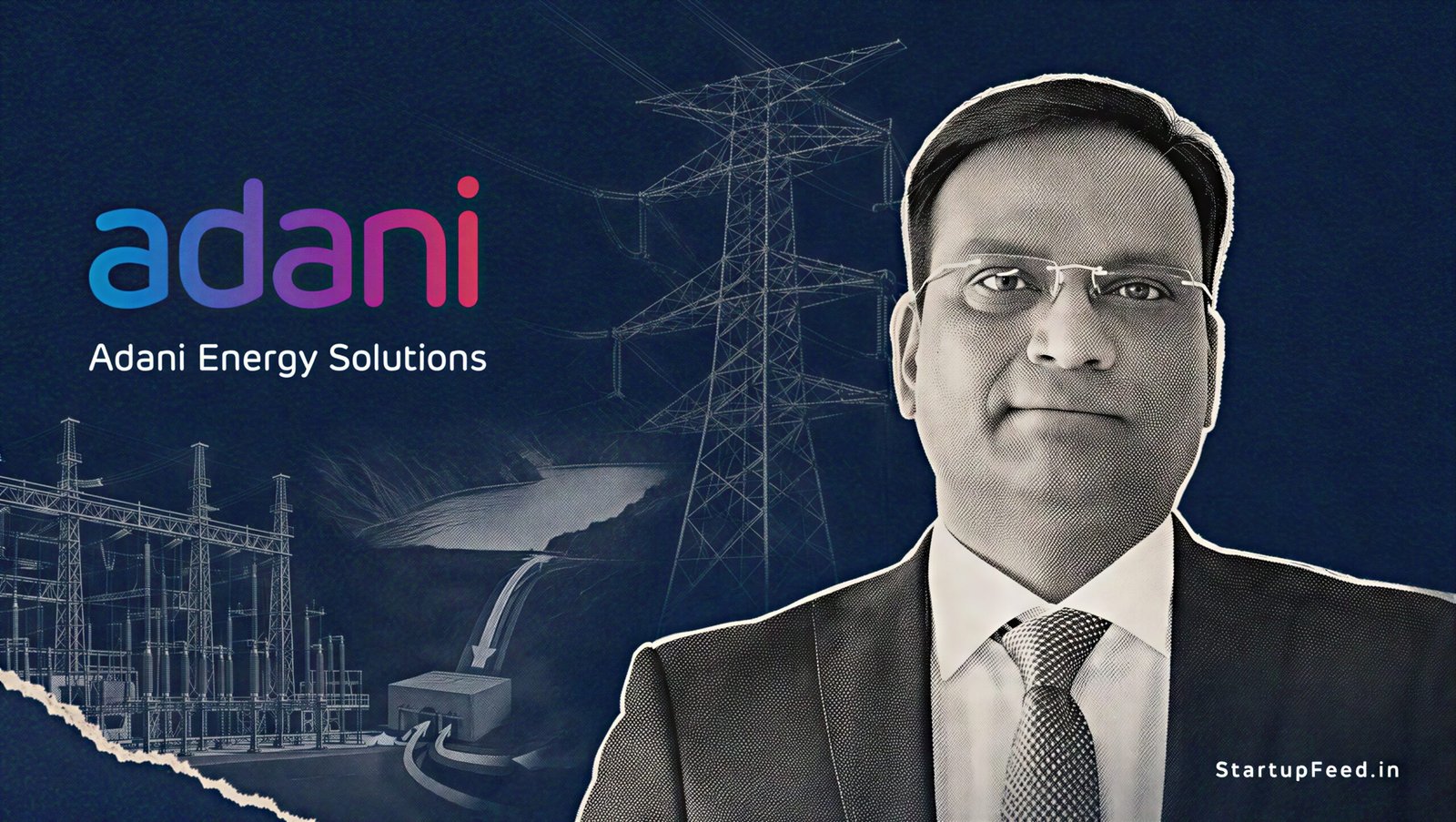
Kandarp Patel is chief executive of Adani Energy Solutions Ltd. Patel said pumped storage projects are becoming a critical enabler of India’s clean energy shift, giving the grid the flexibility to absorb large volumes of renewable power.
The market liked the news. Adani Energy Solutions shares rose 1.75% to a high of Rs 1,617.85 on the BSE on August 26, 2026. The stock is up 56% over the past six months.
What this win means for the Adani group
This is a bolt-on, not a step change. At Rs 4,700 crore it is far smaller than the Rs 25,000 crore Bhadla-Fatehpur HVDC project the company won in early 2026, its largest order to date.
It does deepen a clear strategy. Adani Energy Solutions is India’s largest private transmission and distribution firm, with a 41.5% share of private operational transmission capacity as of FY24. Winning the renewable-evacuation and storage corridors keeps it aligned with where new grid demand is forming.



What it means for competitors
The transmission race has two tiers. Power Grid Corporation of India, the state-owned giant, still dominates the overall market. Private players fight hard for the rest, and Adani Energy Solutions leads that private pack.
Here is how the main bidders compare on recent competitive-bidding activity.
| Developer | Type | Recent grid position |
|---|---|---|
| Power Grid Corporation of India | State-owned | Over 60% ISTS-TBCB tariff share in 9M FY25; holds Rs 1,05,094 crore of TBCB projects |
| Adani Energy Solutions | Private | Ranked second at about 14% ISTS-TBCB tariff share; led FY26 private bidding on tariff |
| Sterlite Electric | Private | Orders worth Rs 7,500 crore in FY25; 10.3% tariff share on one large scheme |
| Tata Power | Private | Two ISTS-TBCB schemes in 9M FY25; about 4.3% tariff share |
The lowest-bid rule shapes the whole contest. It rewards firms that build fast, buy equipment cheaply and borrow at low rates. Adani Energy Solutions competes on speed and scale, which lets it quote aggressive tariffs.
That aggression carries risk. A low winning bid squeezes the margin, so any delay, land dispute or rate rise can erode the return. Rivals like Sterlite Electric answer with faster methods such as drone surveys and helicopter stringing on hard terrain.
The pipeline is large enough for several winners. The near-term tender pipeline was valued at over Rs 90,000 crore in 2024, and India’s power transmission EPC market is set to grow from about $14.68 Bn in 2025 to $35.20 Bn by 2035. Every developer named above is chasing that build-out.
What this means for you: If you track Adani group stocks or the power sector, watch the order book and the build timelines, not just the win, because the profit sits in on-time delivery.
Have a tip? Write to us at editorial@startupfeed.in.
Disclaimer: This article is for information only and is not investment advice. StartupFeed and its authors are not SEBI-registered investment advisors. Please speak to a SEBI-registered advisor before investing.
Liked this story? Follow StartupFeed on Google so our reporting reaches you first.