
Quick Take
- Shark Tank India has reached over 250 million people across five seasons since December 2021.
- In season one, sharks invested in only 28 of 65 televised pledges, per a PrivateCircle analysis of filings.
- The real prize for most founders is free national airtime, not the cheque.
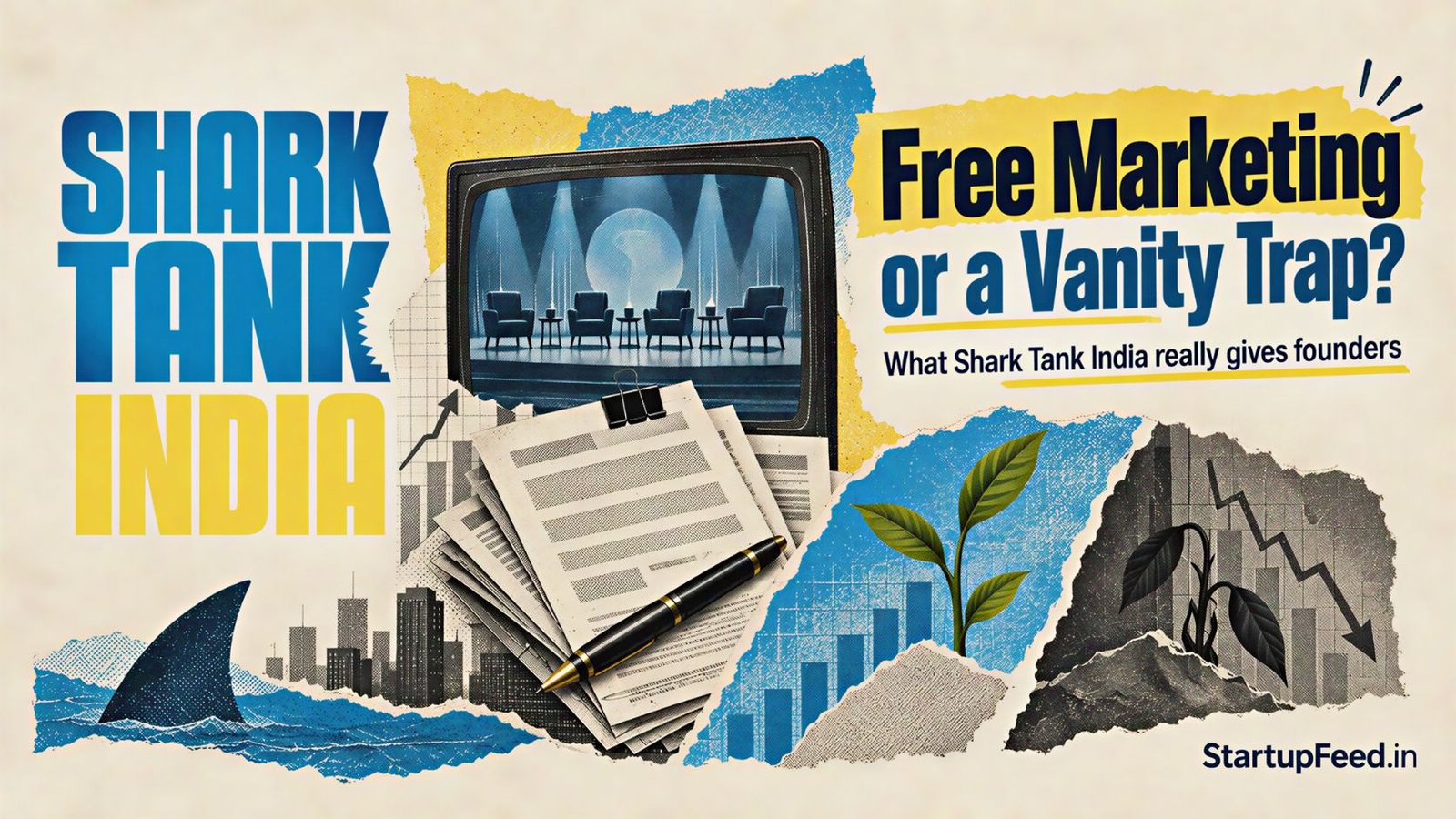
Shark Tank India sells a simple dream. A founder pitches, a shark says yes, and the money follows. The truth is more complicated.
The show has reached more than 250 million people, broadcaster Sony estimates. That scale is real. Whether it builds real businesses is the harder question.
A 2023 analysis by market intelligence firm PrivateCircle looked at what happened after the cameras stopped. In season one, the sharks showed 65 investment pledges on air. They had actually invested in only 28 of them, based on corporate filings. The gap is the story.
What does Shark Tank India actually give founders?
Shark Tank India gives most founders one thing above all: free national marketing. A single pitch puts a brand in front of tens of millions of viewers. That exposure would cost crores in paid advertising.
Founders feel it fast. Websites crash on the night an episode airs. Amazon listings jump. Retail buyers start returning calls. This spike is the show’s clearest, most reliable benefit.



The cheque is a different matter. On-air deals are soft commitments, not signed contracts. Aman Gupta, co-founder of boAt and a shark since season one, has said as much in interviews. Due diligence comes after the telecast, and some deals do not survive it.
So the show works as an advertising platform first and a funding round second. For a young consumer brand, that order can still be very useful.
How many Shark Tank India deals actually close?
Fewer than the screen suggests. The PrivateCircle study is the clearest evidence. It found the sharks committed $4.87 Mn worth of deals in season one but had paid out only about $2 Mn more than a year later.
Season two looked worse on paper. The panel promised 115 deals that season. Only one investment had been disclosed to the corporate affairs ministry when PrivateCircle checked in July 2023.
Some of that gap is a filing delay, not a broken promise. Deals take three to six months to close, shark Anupam Mittal has said. Some founders also walk away on purpose. PrivateCircle found at least six startups skipped their shark deal to raise money elsewhere at a higher valuation.
Here is the pattern across seasons, using figures reported at each stage.
| Season | Year aired | On-air deals | Closure signal |
|---|---|---|---|
| Season 1 | 2021-22 | 67 deals | 28 of 65 pledges funded (PrivateCircle) |
| Season 2 | 2023 | 115 deals | 1 disclosed to ministry by July 2023 |
| Season 4 | 2025 | 89 companies | Rs 94.8 Cr committed on air |
| Season 5 | 2026 | 52 episodes | Aired January 5 to March 17 |
The numbers for the latest seasons are still settling. Season four saw 148 companies pitch on air, and 89 of them secured a deal worth Rs 94.8 crore in total. How many of those cheques cleared will only be clear from filings over the next year.


Why do so many deals fall apart after the show?
Most deals break for one reason: the numbers do not match. During due diligence, a shark’s team checks the real financials against the pitch. Gaps show up.
Namita Thapar, executive director of Emcure Pharmaceuticals and a shark, has been blunt about this. She told the YouTube channel Finance With Sharan that some founders show inflated figures on air. She also said several founders simply stopped replying to her after their episode aired. She called it a lack of integrity.
Founders tell the other side too. Some say sharks went quiet after promising a deal on camera. Both things can be true. A televised handshake is not a contract, and either side can step back.
There is also a smarter reason to walk away. A strong episode can lift a startup’s profile enough to attract better terms from other investors. Turning down the shark is sometimes the winning move.
Is the show worth it for Indian founders in 2026?
For the right founder, yes, but not for the reason most expect. The value is the audience, not the assured cheque. A founder who treats Shark Tank India as a marketing event tends to come out ahead. One who treats it as guaranteed funding often ends up disappointed.
The show has widened who gets to dream of building a company. It reached over 250 million people and turned founders into household names. Season five, hosted by Aditya Kulshreshth, even added a campus focus to pull in student founders.
That cultural shift is worth something on its own. It normalises building a business as a career. For a first-time founder in a tier-2 town, seeing someone like them pitch on national TV lowers a real barrier.
The catch is expectation. A pitch is a spotlight, not a settlement. Founders who prepare clean books, and who are ready to close fast, get the most from that spotlight.
What this means for you: Treat a Shark Tank India pitch as a marketing campaign you must convert yourself, and keep your financials audit-ready before you ever walk in.
StartupFeed Insight
The honest way to read Shark Tank India is as the cheapest national ad buy in India, with a funding lottery attached. The 28 of 65 season one figure is not a scandal. It is how early-stage investing works once real books are opened. The founders who win are the ones who bank the visibility on the night and stop counting on the cheque. Watch season six, likely in January 2027, for one signal: whether Sony starts publishing verified post-show closure data. If it does, the show matures from spectacle to genuine funding channel. If it does not, the vanity-trap label sticks.
— Avinash Mishra, Business Correspondent
Frequently Asked Questions
Have a tip? Write to us at editorial@startupfeed.in.
Liked this story? Follow StartupFeed on Google so our reporting reaches you first.