


Quick Take
- GalaxEye is the first Indian startup to win a US patent for satellite imaging technology.
- The patent protects OptoSAR, which fuses an optical camera and radar on one satellite weighing about 190 kg.
- GalaxEye is building towards a 30-satellite constellation over the next five years.
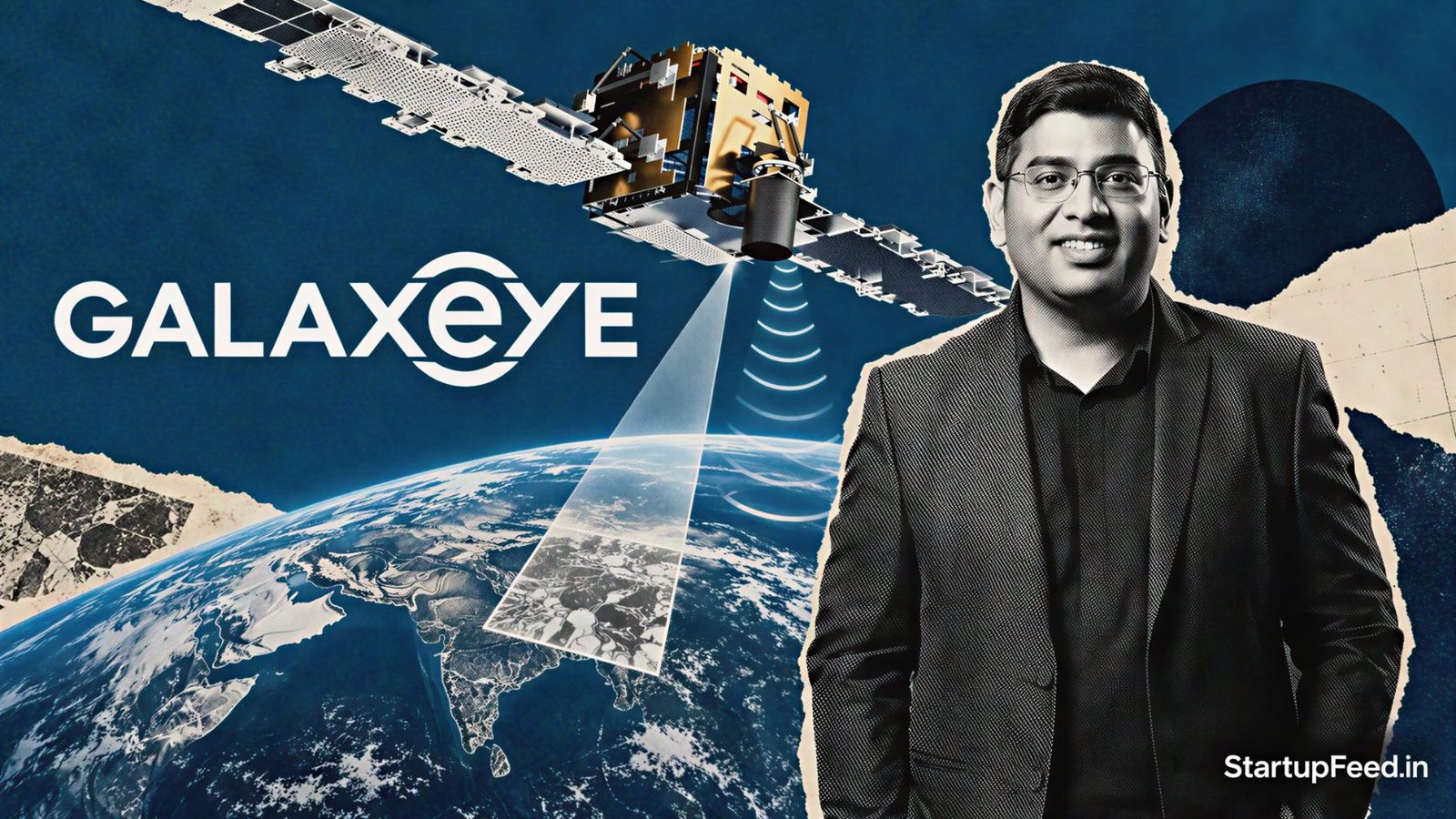
GalaxEye has become the first Indian startup to win a United States patent for satellite imaging technology. The Bengaluru company announced the grant on Monday, September 8, 2026. The same invention was already patented in India.
What is OptoSAR, and what does the patent cover?
The patent covers the core architecture behind GalaxEye’s OptoSAR technology. OptoSAR aligns two kinds of sensors on a single satellite: an optical camera and a synthetic aperture radar, or SAR.
Together the two sensors capture matched images of the same spot, by day and by night. That removes the usual gap when clouds or darkness block an optical camera.
Who built GalaxEye?
GalaxEye was founded in 2021 by five alumni of IIT Madras. The team came out of Avishkar Hyperloop, a student group that reached the SpaceX Hyperloop finals in 2019.
Suyash Singh is co-founder and chief executive of GalaxEye. His co-founders are Denil Chawda, Pranit Mehta, Kishan Thakkar and Rakshit Bhatt.

The grant follows a big year for the company. GalaxEye launched its first satellite, Mission Drishti, on a SpaceX Falcon 9 in May 2026.
The spacecraft weighs about 190 kg and is India’s largest privately built Earth observation satellite. It is also the world’s first imaging satellite to use OptoSAR.
Why does the US patent matter?
Why does a patent matter here? It gives GalaxEye legal cover to sell the technology abroad. Suyash Singh said the patent lets the company serve global markets with weather-agnostic imaging. He named defence, agriculture, insurance and disaster response as target sectors for the OptoSAR payload.
The company is building towards a 30-satellite constellation over the next five years. GalaxEye says its commercial pipeline is growing across both Indian and international customers.
GalaxEye has raised about $14 million across eight rounds since 2021. Its Series A was led by Mela Ventures and Speciale Invest. Backers include drone maker ideaForge, Rainmatter, Navam Capital, Faad Capital and Anicut Capital. Infosys Innovation Fund separately put in Rs 17 crore.
The patent drew praise from outside the company as well. Somanath S Panicker, a former ISRO chairman, called it a strong example of innovation from India’s private space sector. He said the OptoSAR method has real commercial potential across fields that need richer intelligence.
What this means for you: A young Indian spacetech company can now own a defensible global IP claim, so founders raising on deep-tech should treat international patents as a near-term lever, not a someday goal.

StartupFeed Insight
The patent is worth more than the press line about being “first”. OptoSAR’s value is the synchronised optical-plus-radar capture, and owning that claim in the United States is what lets GalaxEye sign Western defence and insurance buyers without a licensing fight. With about $14 million raised and one satellite in orbit, the company is small next to global peers. The IP is the moat that a thin balance sheet is not. Watch for GalaxEye to name its first paid US or European customer before the second satellite launches, likely within the next twelve months.
— Avinash Mishra, Business Correspondent
Have a tip? Write to us at editorial@startupfeed.in.