Quick Take
- Abyro Capital and T-Hub launched Beacon on August 3, 2026, backing five spacetech startups with $500K each.
- Recent private rounds span Digantara ($50 Mn), CoreEL ($30 Mn), Bellatrix ($20 Mn), TakeMe2Space and Aule Space.
- Money is shifting from rockets to subsystems: propulsion, satellite buses, tracking and in-orbit servicing lead deals.
In This Article
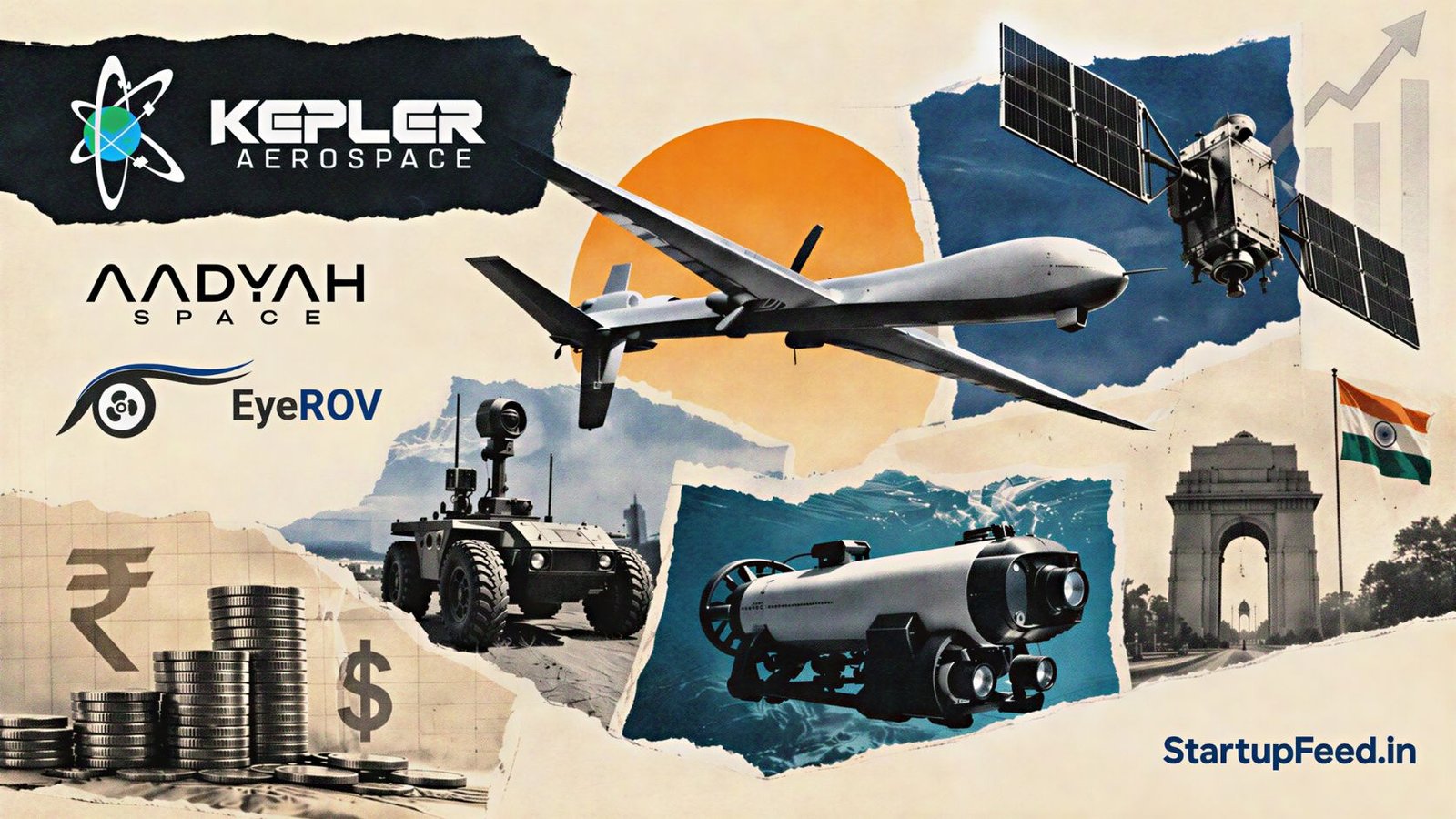
Spacetech startups in India are pulling in serious venture capital in 2026. On August 3, 2026, deep-tech VC firm Abyro Capital, with Hyderabad incubator T-Hub, launched Beacon, an accelerator that gives five selected startups $500,000 (about Rs 4.76 Cr) each, per the firm’s announcement. Applications opened the same day.
Beacon targets founders building technologies at Technology Readiness Levels (TRL) 2-4, the early research-to-prototype stage. Selected startups also get an eight-week programme with mentorship, technical validation and fundraising support, Abyro Capital said. The launch lands as India’s private space sector moves from rocket launches to the less visible subsystems that make missions work. All USD figures use the live rate of Rs 95.2 to $1 (BookMyForex, August 5, 2026).
StartupFeed Insight
The real signal here is not the dollar amounts, it is where the money is going. Rockets grabbed early headlines, but the recent rounds cluster around propulsion, satellite buses, space tracking and in-orbit servicing, the plumbing that every constellation needs. That means investors now see a supplier layer worth owning, not just launch glory. Founders in imaging and orbital data centres should watch Beacon’s first cohort closely, because a $500K day-one check plus follow-on capital is exactly the bridge early hardware teams struggle to cross. Expect Beacon’s inaugural cohort to be announced by September 30, 2026, and at least three subsystem startups to raise fresh rounds before March 2027. By Avinash.
Beacon Accelerator Breakdown
Beacon is a spacetech accelerator run by Abyro Capital in partnership with T-Hub, launched on August 3, 2026. It commits $500,000 (about Rs 4.76 Cr) to each of five selected startups on day one, according to Abyro Capital’s launch through T-Hub. The programme pairs that capital with an eight-week acceleration sprint.
| Metric | Detail | Notes |
|---|---|---|
| Programme | Beacon SpaceTech accelerator | Flagship platform by Abyro Capital |
| Partner | T-Hub, Hyderabad | India’s largest startup incubator |
| Investment per startup | $500,000 (Rs 4.76 Cr) | Committed on day one |
| Cohort size | 5 startups | At TRL 2-4 stage |
| Programme length | 8 weeks | Mentorship, validation, fundraising |
| Launch date | August 3, 2026 | Applications open the same day |
The most striking detail is the day-one commitment. Many accelerators promise capital after milestones, but a $500K check at selection removes the earliest cash crunch for hardware founders.
About Abyro Capital
Abyro Capital is a venture capital firm focused on deep technology investments, founded and led by Managing Partner Vamsi Kora. The firm backs early-stage startups across space and frontier tech, and runs Beacon as its flagship spacetech platform in partnership with Hyderabad-based incubator T-Hub. Its stated aim is to bridge the gap between breakthrough space technology and early institutional capital, per its launch announcement.

Why are investors backing spacetech startups now?
Investors are backing spacetech startups now because the sector has proven it can build rockets and satellites, and the next hard problem is the supporting technology around them. That includes propulsion systems, satellite buses, space tracking and the software that connects assets in orbit, areas the private sector is only beginning to address at scale.
Beacon is designed to bridge the gap between breakthrough space technologies and early-stage institutional capital, enabling Indian founders to build globally competitive SpaceTech companies, said Vamsi Kora, Founder and Managing Partner of Abyro Capital.
The logic is simple. A consumer app can test its idea with users in weeks, but a spacetech startup may need years of engineering, testing, certification and launch partnerships before a product earns revenue. Patient, specialised capital plus technical mentorship shortens that odds-heavy early stretch, which is exactly what programmes like Beacon promise.
Who else raised money recently?
Several Indian spacetech startups have closed rounds over the past year, and the mix shows capital flowing into subsystems rather than launch vehicles alone. Space-tracking firm Digantara led with the largest disclosed round, while propulsion and in-orbit servicing names filled out the map.
| Startup | Focus | Amount | Timing |
|---|---|---|---|
| Digantara | Space surveillance, situational awareness | $50 Mn (Rs 435 Cr), Series B | Dec 2025 |
| CoreEL Technologies | Aerospace and defence electronics | $30 Mn | Dec 2025 |
| Bellatrix Aerospace | Satellite propulsion | $20 Mn, pre-Series B | Mar 2026 |
| TakeMe2Space | Orbital computing, satellite subsystems | $5 Mn (approx), Seed | Dec 2025 |
| Aule Space | In-orbit mobility, satellite servicing | $2 Mn (Rs 18 Cr), pre-seed | Jan 2026 |
Digantara’s $50 Mn Series B was led by Reliance, with 360 One, SBI Ventures and others, and regulatory filings pegged its post-round valuation near $200 Mn, Entrackr reported based on RoC filings. Bellatrix’s $20 Mn came from a pre-Series B led by Cactus Partners, Reuters reported, to scale propulsion manufacturing. Aule Space’s $2 Mn pre-seed, led by pi Ventures, funds in-orbit “jetpacks” that dock with ageing satellites to extend their life.
How big is India’s space economy?
India’s space economy is currently valued at around $8.4 Bn and is projected to reach $44 Bn by 2033, figures cited by Abyro Capital at Beacon’s launch. That growth curve is the core reason private capital and dedicated funds are lining up behind the sector.
Government-backed money is reinforcing the trend. SIDBI Venture Capital announced the first close of its Rs 1,600 Cr Antariksh Venture Capital Fund, anchored by IN-SPACe, focused solely on spacetech startups. IN-SPACe has also given early grants to companies like Aule Space directly. What sets this phase apart from the early rocket race is the depth of the supply chain now attracting checks, from docking systems to space traffic monitoring.
What’s Next
Beacon’s application window runs until August 21, 2026, with final cohort results expected by September 30, 2026, per Abyro Capital’s timeline. The first five names will signal which subsystems investors rate most highly, propulsion, orbital computing, or servicing. If the cohort clusters around one theme, expect copycat funds to follow within months. Which part of India’s space supply chain do you think deserves the most capital next?

Frequently Asked Questions
Have a tip? Write to us at editorial@startupfeed.in.
Liked this story? Follow StartupFeed on Google so our reporting reaches you first.