
Quick Take
- Flam raised $40 million in a Series B led by QED Investors.
- Total funding now reaches about $62.5 million, up from $22.5 million.
- Shah Rukh Khan’s family office joined as a new backer.
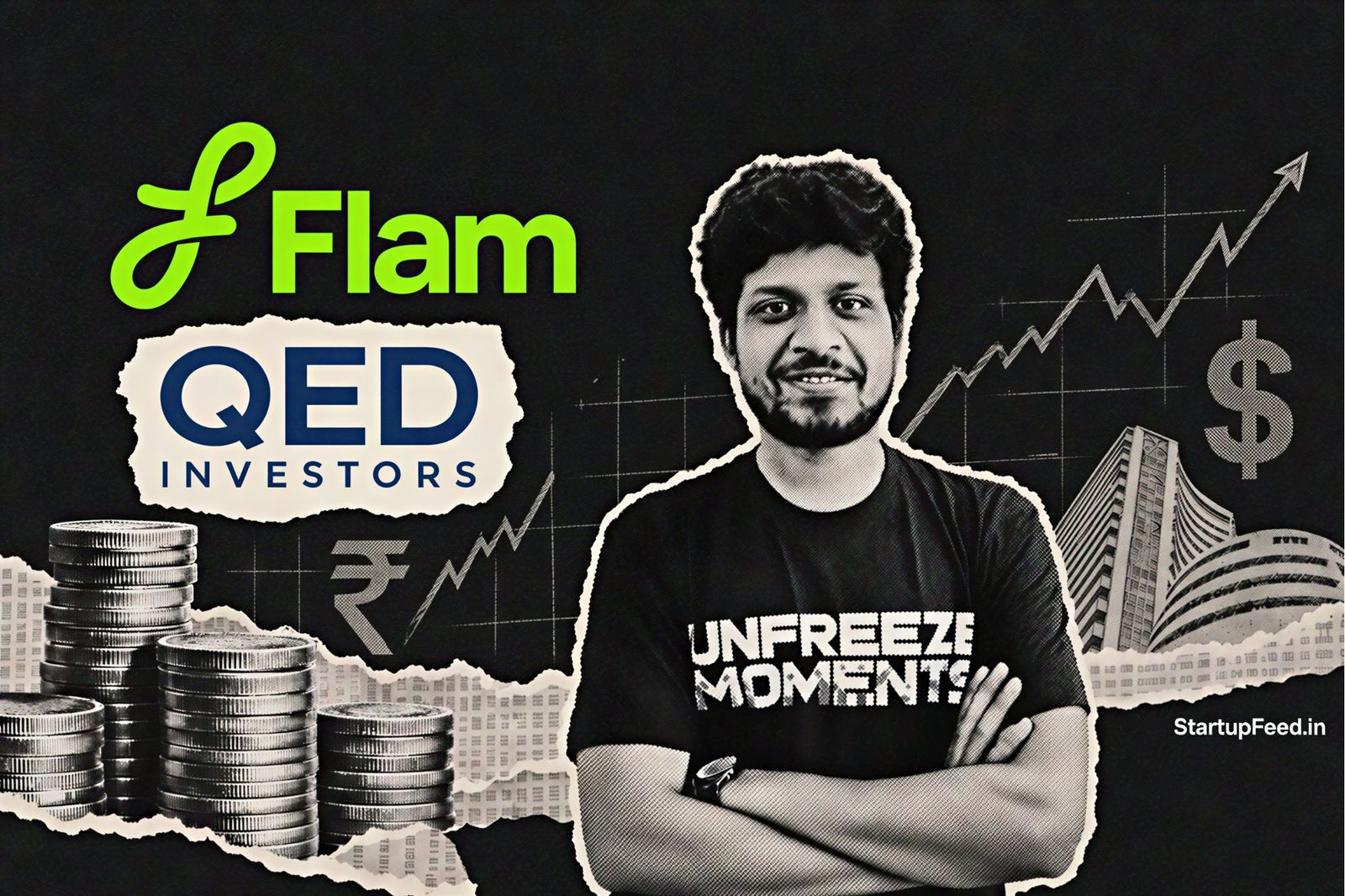
Flam has raised $40 million in a Series B round led by QED Investors. The Bengaluru startup builds interactive AI content for brands.
The round more than doubles what Flam had raised before, which stood at $22.5 million. That earlier figure included a $14 million Series A in May 2025, led by RTP Global. Total funding now reaches about $62.5 million.
Who founded Flam and where is it based?
Shourya Agarwal, Malhar Patil and Amit Gaiki founded Flam in 2021, and all three studied at BITS Pilani. The company now works between Bengaluru and San Francisco, with teams in India and Japan.
Who put money into the round?
Bollywood actor Shah Rukh Khan joined the round through his family office. The SRK Family Office is one of several new backers in this Series B.
Claypond Capital and Australian Gulf Capital also came in. Datadog chief Olivier Pomel and former Goldman Sachs partner Martin Chavez joined as well. Existing investors RTP Global and Dovetail put in more money.


| Round | Amount | Lead investor |
|---|---|---|
| Series A (May 2025) | $14 Mn | RTP Global |
| Series B (Sep 2026) | $40 Mn | QED Investors |
| Total to date | $62.5 Mn | Multiple |
What does Flam actually build?
Flam has signed more than 100 enterprise customers in six quarters. Its clients include Google, Samsung, Hyundai, Emirates and Diageo. The company targets an annual recurring revenue near $100 million next year.
Flam makes three kinds of interactive content, and none of it needs an app. Its videos let a viewer switch scenes mid-playback, and its 3D boards load in about 300 milliseconds. Its visual agents reply in under two seconds.
The startup holds more than 15 patents. Its AI models carry names like Fable, Fantom and Falcon, and Falcon is a 26 billion-parameter model built for speed.
Agarwal said the demand was always there but the technology was not. He said Flam has made interactivity easy to build at enterprise scale.
Revenue has grown five times since Flam started charging brands in 2024. Basic campaigns cost $5,000 to $10,000, while the most interactive ones cross $100,000.
The fresh money will fund research, product and sales. Flam plans to grow its enterprise business worldwide.
StartupFeed Insight
The star name will grab the headlines, but the number to watch is the ARR gap. Flam has 100-plus enterprise logos in six quarters and a target near $100 million in recurring revenue. Those two facts do not yet line up, which is exactly what a Series B is meant to close. A $40 million cheque from QED, a fintech-heavy investor, signals a bet on paid enterprise usage, not brand campaigns alone. The real test lands in the FY27 numbers. Expect Flam to report a disclosed ARR figure, not just a logo count, by mid-2027. If it does not, the $100 million target was a ceiling, not a plan.
— Dr. Mayank Raj, Contributing Editor
What this means for you: An Indian-founded AI firm just pulled a star investor and a $40 million cheque, so watch how fast it turns 100 customers into real recurring revenue.


Have a tip? Write to us at editorial@startupfeed.in.
Liked this story? Follow StartupFeed on Google so our reporting reaches you first.