
Quick Take
- PepsiCo India is rolling out new Sting cans and bottles that drop the energy word, per FSSAI’s July 1 order.
- Six firms including Red Bull and Monster got a 90-day window to comply, after an Indian Beverage Association appeal failed.
- The shift hits a Rs 13,000 crore ($1.4 Bn) category as distributors pause orders and Sting reworks Formula One ads.
In This Article
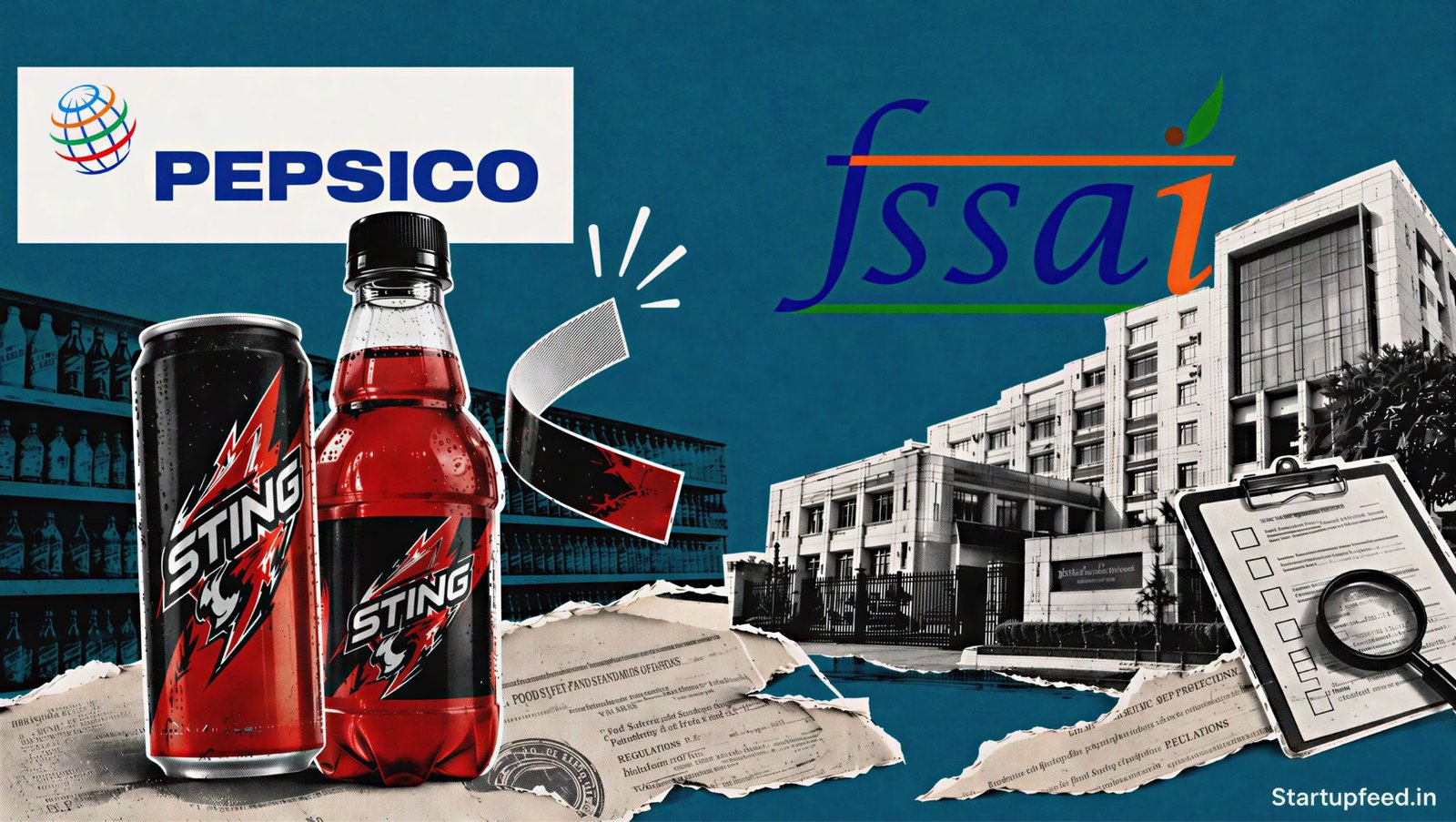
PepsiCo India has dropped the Sting Energy label from new cans and bottles, complying with a July 1, 2026 order from the Food Safety and Standards Authority of India (FSSAI) that gave the industry 90 days to act.
The regulator told six beverage makers to stop calling their high-caffeine drinks “energy drinks,” saying no Indian standard exists for that category (FSSAI). New Sting packaging is now reaching shelves without the energy word, and PepsiCo is reworking Formula One ads tied to the brand, according to The Economic Times.
StartupFeed Insight
This is a marketing problem dressed as a labelling problem. Sting was built on instant-energy claims, and stripping the word forces PepsiCo to sell taste and price rather than a promise. Watch Reliance’s Campa Energy closely: it is the cheapest challenger and has the least brand equity to lose, so a level naming field helps it most. Expect all six firms to settle on a shared substitute term, likely “caffeinated beverage,” within the 90-day window ending around late September 2026. Rural India, where Sting sells hardest at StartupFeed.in’s tracked price points, will decide who wins the relabel. By Avinash.
What the FSSAI Sting Energy label order says
The FSSAI Sting Energy label order bars six companies from using the term “energy drink” on packaging within 90 days. FSSAI issued the notices on July 1, 2026, arguing that the Food Category System used for licensing cannot be treated as permission to name a product an energy drink (Reuters).
| Metric | Detail | Notes |
|---|---|---|
| Order date | July 1, 2026 | Notices to six firms |
| Compliance window | 90 days | Ends around late September 2026 |
| Brands affected | Sting, Adrenaline Rush, Red Bull, Monster, Campa Energy, Hell | PepsiCo, Red Bull, Coca-Cola-backed, Reliance |
| Stated reason | No Indian standard for “energy drink” | Health claims flagged as misleading |
| Enforcement seen | Rajasthan seizures; e-commerce notices | Amazon, Flipkart, Blinkit, Swiggy Instamart |
The regulator also flagged claims like “vitalises body and mind” as potentially misleading, since they suggest health benefits that are not established (FSSAI).
About PepsiCo India
PepsiCo entered India in 1989 and makes and sells beverages, juices and packaged foods through brands including Pepsi, Mountain Dew, Sting, Lay’s and Kurkure. Headquartered in Gurugram, it reported Rs 8,877 crore in revenue and Rs 1,172 crore in profit before tax for calendar year 2024, per a company statement. It runs a large manufacturing and distribution network, with bottling partner Varun Beverages handling much of its beverage volume.
Why did PepsiCo drop the Sting Energy label?
PepsiCo dropped the Sting Energy label because the industry lost its appeal to soften the FSSAI order and chose compliance over a court fight. The Indian Beverage Association (IBA), which counts Coca-Cola, PepsiCo and Reliance among members, met FSSAI leadership seeking relief but secured only time to change packaging (Reuters).
“Regular stakeholder consultations before implementing significant interpretational changes would facilitate smoother compliance and reduce litigation,” the Indian Beverage Association said in a July 6 letter.
In that confidential letter, the IBA argued that public disclosure of preliminary notices could damage reputations and confuse consumers, and urged a risk-based approach (Reuters). FSSAI leadership held firm, telling executives they were free to challenge the ruling in court. The industry then agreed to comply.
How big is the market at stake?
India’s energy drink category is estimated at over Rs 13,000 crore ($1.4 Bn), with brands spending a combined Rs 2,000 crore ($210 Mn) on marketing every year, according to The Economic Times. Conversions here use the live rate of Rs 95.3 to the dollar on August 4, 2026.
| Brand | Owner | Position |
|---|---|---|
| Sting | PepsiCo | Category leader since 2017 launch |
| Campa Energy | Reliance Consumer Products | Low-price challenger |
| Red Bull, Monster | Red Bull, Coca-Cola-backed | Premium global brands |
Sting became the leader on the back of a Rs 20 bottle that sold strongly among 15-to-19-year-olds and in rural areas, according to Euromonitor. Retail sales for the category are projected to reach $1.6 Bn (Rs 15,250 Cr) by 2028, growing 12.6% a year (Euromonitor). What sets Sting apart is scale at a low price point, which is exactly the equity now tested by a name change.
What happens to the Formula One ads?
PepsiCo is reworking the Sting Formula One advertising built around instant-energy claims, one executive told The Economic Times. Sting signed a multi-year global deal in May 2025 as the Official Energy Drink of Formula 1, tied to the Mercedes-AMG Petronas team (Formula 1).
The Indian campaign leaned on lightning coursing through the body to signal energy, a message now at odds with the label change. Meanwhile, distributors are refusing to pick up existing stock, causing shortages of some brands at retail counters, per The Economic Times.
What’s Next
The 90-day window closes around late September 2026, so expect new-format packaging across all six brands by then. The open question is whether firms can exhaust existing stock or face write-offs, which is still unclear. Will a shared substitute term keep the category’s marketing muscle intact, or does dropping the energy word blunt the whole sales pitch?
Frequently Asked Questions
Have a tip? Write to us at editorial@startupfeed.in.
Liked this story? Follow StartupFeed on Google so our reporting reaches you first.