
Quick Take
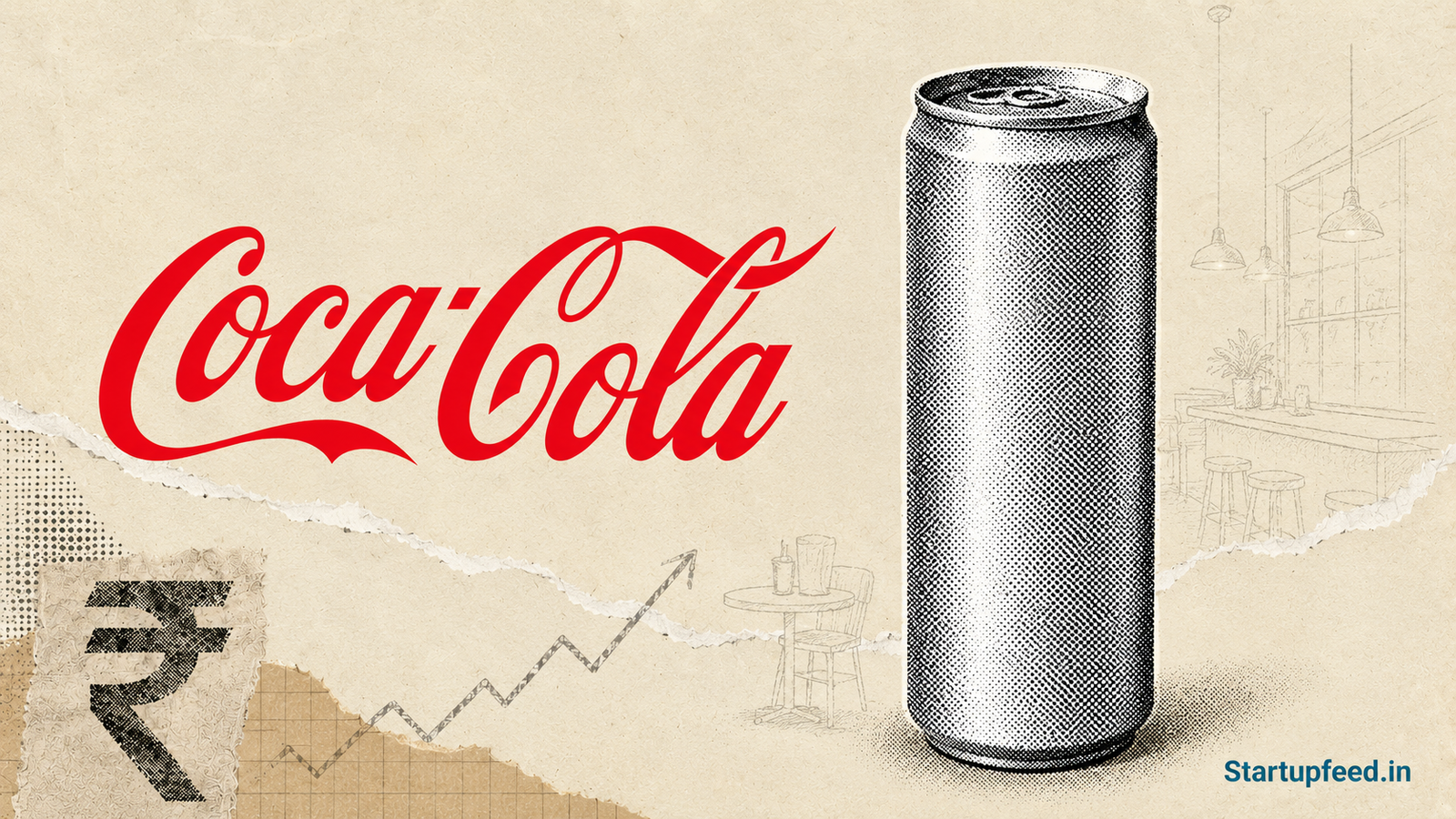
- Coca-Cola India slim can push is about behavioural branding, not just lighter packaging.
- Slim cans look premium, feel “healthier”, and fit cafes, multiplexes, and quick commerce orders.
- India is now one of Coca-Cola’s top three growth markets after the US and China.
The Coca-Cola India slim can looks like a small packaging tweak. It is not. It is a careful behavioural-branding bet aimed at urban Gen Z, evening occasions, and the quick commerce shelf.
Coca-Cola has spent 140 years getting distribution right. The slim can is what happens next. With cola volumes plateauing globally, the only growth left is perception: lighter, premium, guilt-free, modern. Small cans deliver all four. India is where the company is testing this hardest.
StartupFeed Insight
The slim can is a Trojan horse for price-per-ml expansion. A 250ml slim can on Blinkit retails at Rs 40-50, while a 750ml PET bottle goes for around Rs 60. On a per-ml basis, the slim can is roughly 3x more expensive. That is the real game. Coca-Cola is using “smaller equals premium” psychology to lift unit economics without raising the headline shelf price. Watch the Diet Coke aluminium can shortage closely. It has trained Indian consumers to pay Rs 100 for 200ml of glass-bottled Diet Coke, a price anchor that did not exist a year ago. We expect slim-can volumes in India to outpace standard-can volumes by Q4 FY27, by StartupFeed Desk.
Why is the Coca-Cola India slim can showing up everywhere?
The slim can is not new globally. It has been the format of choice for premium energy drinks and Diet Coke for years. What is new is its visibility on Indian quick commerce apps, in cafes, and at multiplexes.
Three real moves explain this. Coca-Cola’s Q1 2026 earnings flagged India as one of three markets driving global volume growth, alongside the US and China. The same filing said the company is doubling down on single-serve packs, including premium 500ml “Superfan” cans in the UK and 7.5oz mini cans in US convenience stores. India is being treated as a similar opportunity, just at a lower price point.
In April, the brand partnered with Burger King India on “Feast on Wheels”, a Coca-Cola plus Whopper combo activation aimed squarely at Gen Z. The launch happened at Lovely Professional University with food trucks, DJ sets, and gaming zones. It was not about taste. It was about being seen with the brand.

Why the Coca-Cola India Slim Can works on the brain
Behavioural science has spent decades studying portion psychology. Smaller portions reduce guilt. Slimmer shapes feel more premium. A tall, narrow can feels modern in a way a squat 330ml can does not.
For Coca-Cola India, this matters because the cola category faces three pressures. Sugar guilt is rising. Gen Z is drinking less alcohol but more energy drinks and flavoured waters. Quick commerce has changed what fits comfortably in a 10-minute order. A slim can solves all three.
| Format | Volume | Typical Quick Commerce Price (Rs) | Per-ml Cost (Rs) |
|---|---|---|---|
| Slim aluminium can | 250 ml | 40 to 50 | 0.16 to 0.20 |
| Standard PET bottle | 750 ml | 55 to 65 | 0.07 to 0.09 |
| Glass bottle (Diet Coke, post-shortage) | 200 ml | 90 to 100 | 0.45 to 0.50 |
| Affordable Small Sparkling Pack (ASSP) | 250 ml | 20 to 25 | 0.08 to 0.10 |
The per-ml gap is the entire strategy. Indian shoppers do not anchor on per-ml. They anchor on the headline price, which stays under Rs 50.
How does the slim can fit Coca-Cola’s India playbook?
Coca-Cola’s India playbook has two layers. The bottom layer is affordability: small PET bottles at Rs 10-20 for rural and semi-urban markets, via the ASSP (Affordable Small Sparkling Package) launched in 2023. The top layer is premiumisation: slim cans, glass bottles, and limited editions for tier-1 metros.
This barbell strategy mirrors what HUL (Hindustan Unilever) has done for soap and PepsiCo for chips. It also explains why Coca-Cola did not panic when aluminium can supply broke down in April 2026. Diet Coke vanished from shelves. Coca-Cola simply pivoted Diet Coke to a 200ml glass bottle at roughly Rs 100. According to Storyboard18, demand barely dropped. The format change made consumers feel they were getting something rare and premium.
What this means for Indian beverage and consumer founders
For founders building D2C (Direct-to-Consumer) brands, the slim can lesson is bigger than soft drinks. It applies to any premium consumable: cold-pressed juices, kombucha, hard seltzers, even cold coffee.
Three takeaways. First, packaging is the new positioning. A new shape does the work of a Rs 5 Cr ad campaign. Second, smaller is more profitable. Per-ml cost rises sharply as pack size shrinks, and consumers do not notice. Third, quick commerce changes packaging logic. The Blinkit shelf rewards formats that look distinct in a 2-inch app thumbnail. Slim and tall wins over squat and wide.

About Coca-Cola in India
The Coca-Cola Company entered the Indian market in 1993, after a 16-year absence following its 1977 exit. The Atlanta-headquartered firm runs India operations through subsidiary Coca-Cola India and bottling partners Hindustan Coca-Cola Beverages, Moon Beverages, and SLMG Beverages. Its India portfolio includes Coca-Cola, Thums Up, Sprite, Fanta, Limca, Maaza, Kinley, Minute Maid, and Diet Coke. Henrique Braun, formerly COO, became Global CEO on March 31, 2026, succeeding James Quincey.
How does this compare to PepsiCo and Reliance’s Campa?
The Indian cola market is no longer a two-horse race. Reliance Consumer Products relaunched Campa Cola in 2022 at sharply lower prices. The Tata Group, Bisleri, and several D2C brands have followed. Coca-Cola cannot win on price alone, which is exactly why the slim can matters.
| Player | Indian Cola Strategy | Slim Can Bet |
|---|---|---|
| Coca-Cola India | Premiumisation + affordable ASSP | 250ml slim cans on quick commerce |
| PepsiCo India | Sports and youth tie-ins | 250ml slim cans for Sting, Mountain Dew |
| Campa Cola (Reliance) | Aggressive low pricing | Standard 250ml and 200ml only |
What sets Coca-Cola apart is brand pricing power. PepsiCo and Campa cannot charge Rs 50 for 250ml because their cola is bought on price. Coca-Cola can, because it is bought on identity.
What’s Next
The aluminium can shortage in India will likely ease by late 2026. When it does, watch whether Coca-Cola brings back Diet Coke at Rs 30 or holds the Rs 100 glass-bottle pricing as the new normal. The brand has had six months to retrain Indian shoppers on what Diet Coke is worth. Will it give that anchor up? That decision will shape Indian beverage pricing for the next decade.
Frequently Asked Questions
What is the Coca-Cola India slim can strategy?
The Coca-Cola India slim can strategy uses tall, narrow 250ml aluminium cans to position the drink as premium, modern, and guilt-free. The format targets urban Gen Z, cafes, multiplexes, and quick commerce orders. Smaller portions help reduce sugar guilt and lift per-ml pricing without raising the headline price.
Why is Coca-Cola pushing slim cans in India now?
Coca-Cola Q1 2026 results flagged India as one of three top growth markets, behind only the US and China. Cola volumes are flat globally, so the company is leaning on packaging-led premiumisation. Slim cans help Coca-Cola compete with Campa’s lower prices by selling identity, not just price.
How much does a Coca-Cola India slim can cost?
A 250ml Coca-Cola slim can typically retails between Rs 40 and Rs 50 on Indian quick commerce platforms like Blinkit and Zepto. The per-ml cost is roughly twice that of a 750ml PET bottle. Diet Coke in a 200ml glass bottle, which returned during the April 2026 aluminium shortage, sells for close to Rs 100.
Liked this story? Follow StartupFeed on Google so our reporting reaches you first.