
Quick Take
- PM Narendra Modi said India will add 5 to 8 chip plants in 7 to 8 years. Three plants already run and export.
- The Design Linked Incentive scheme now backs 24 chip design startups. It reimburses up to 50% of design cost, capped at Rs 15 crore.
- Local fabs and cheaper chips give Indian hardware founders shorter supply chains by 2028. The design ecosystem matters more than the factories.
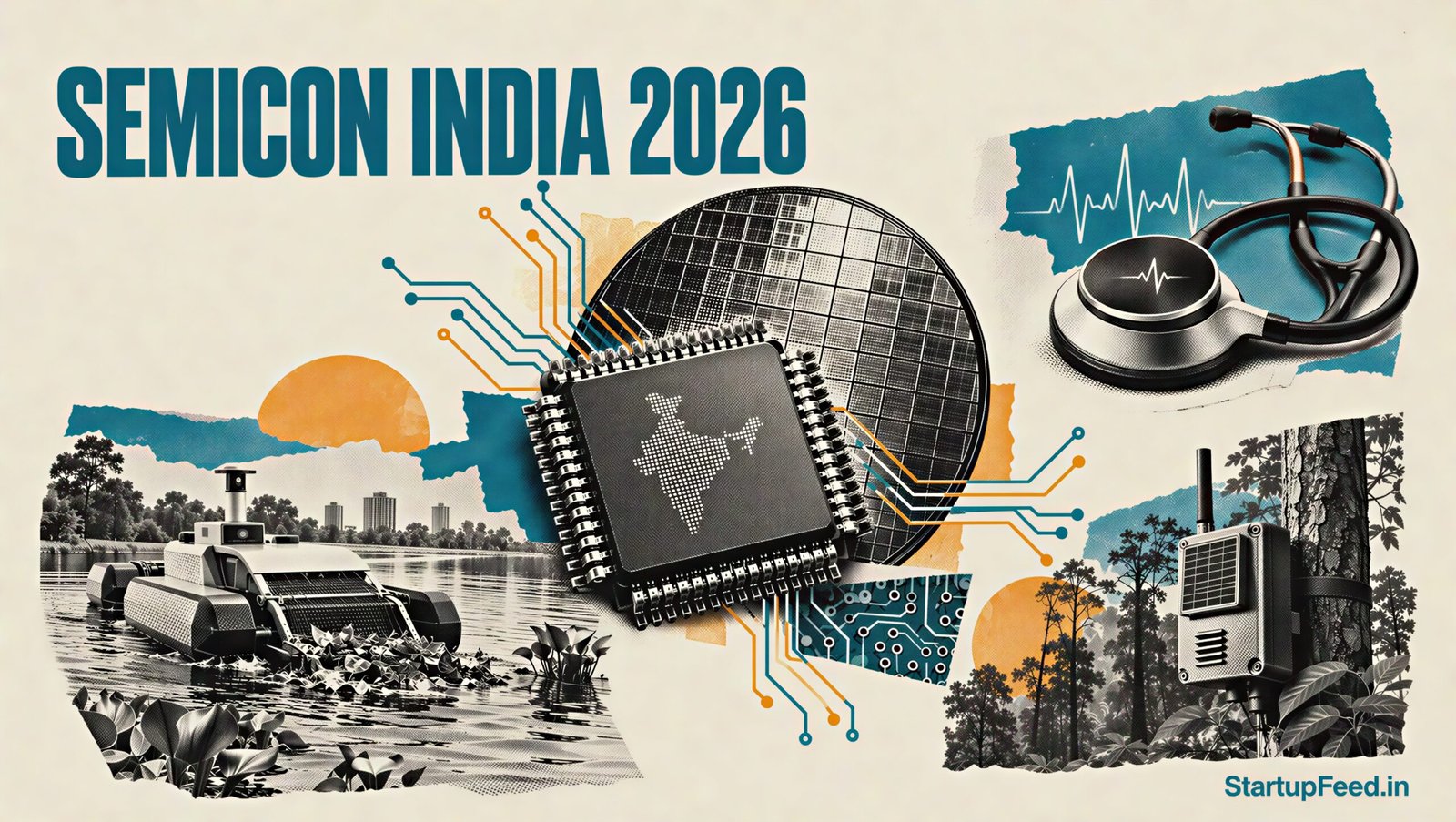
Prime Minister Narendra Modi said India will build 5 to 8 more semiconductor plants over the next 7 to 8 years. He spoke from the Red Fort on August 15, 2026, the 80th Independence Day. He said three chip plants already run in the country. Exports from them have started.
In This Article
This is a promise of capacity, not a signed deal. The government has not yet named the companies, the locations or the money behind the new 5 to 8 plants. So the real story for founders sits one layer down. It is in the schemes that already fund Indian chip work today.
What exactly did PM Modi announce?
PM Modi said 5 to 8 new chip plants are likely to become operational in the next 7 to 8 years. He made no mention of specific firms or sites. The Prime Minister’s Office has not released project details.
Three plants are already in commercial production. According to the July 15, 2026 Cabinet statement, these are run by Micron, Kaynes and CG Semi. A fourth company is expected to begin operations in 2026.
These sit under the first India Semiconductor Mission, called ISM. The Cabinet said 12 projects are approved across six states. Their combined investment crosses Rs 1.64 lakh crore.


The 12 include one silicon fab, one silicon-carbide fab and one display unit. The other nine are packaging plants. India’s first silicon fabrication plant is due to start in 2028.
The government also cleared Semicon 2.0 in July 2026. Its outlay is Rs 1,27,500 crore. It funds chip design, equipment, materials, fabs, packaging, research and skills.
What this means for you: The new plants are years away, but the funding taps for startups are open now.
How do more chip plants help a startup?
More local chip plants cut the distance between an Indian founder and the silicon they need. Today most Indian hardware startups import chips or wait in a foreign foundry queue. Local fabs and packaging units shorten that path.
The gain is not only cheaper chips. It is a full local ecosystem. When fabs, packaging and design sit in one country, a small team can build faster.
Take a drone startup. It needs custom chips for flight control and cameras. Today it designs in India, then sends the design abroad for fabrication. That round trip costs months and dollars.
A local advanced packaging unit changes that math. The startup keeps more of the work at home. It pays in rupees, not dollars, and iterates quicker.


There is a second effect. A working chip sector pulls in private capital. India-briefing notes that venture money is now flowing beside public money into Indian chip design.
The benefit reaches beyond pure chip startups. Cheaper, closer chips help every hardware founder. That covers electric vehicles, medical devices, robotics and defence tech.
India imports most of its electronics today. Every rupee of that is a cost and a supply risk. Local plants trim both over time.
StartupFeed Insight
The headline number is the factories. The real prize for founders is the design layer. Chip design drives up to 50% of a chip’s value, per MeitY, yet needs a fraction of a fab’s capital. India already backs 24 design startups through the DLI scheme, and those firms have logged 16 tape-outs. That is where an Indian founder can win in the next three years, not by building a Rs 91,000 crore fab. Watch the DLI applicant count. If it crosses 50 approved startups before March 2027, the fabless wave is real. The plants make headlines. The design houses will make the returns.
— Avinash Mishra, Business Correspondent
What is the DLI scheme and who can apply?
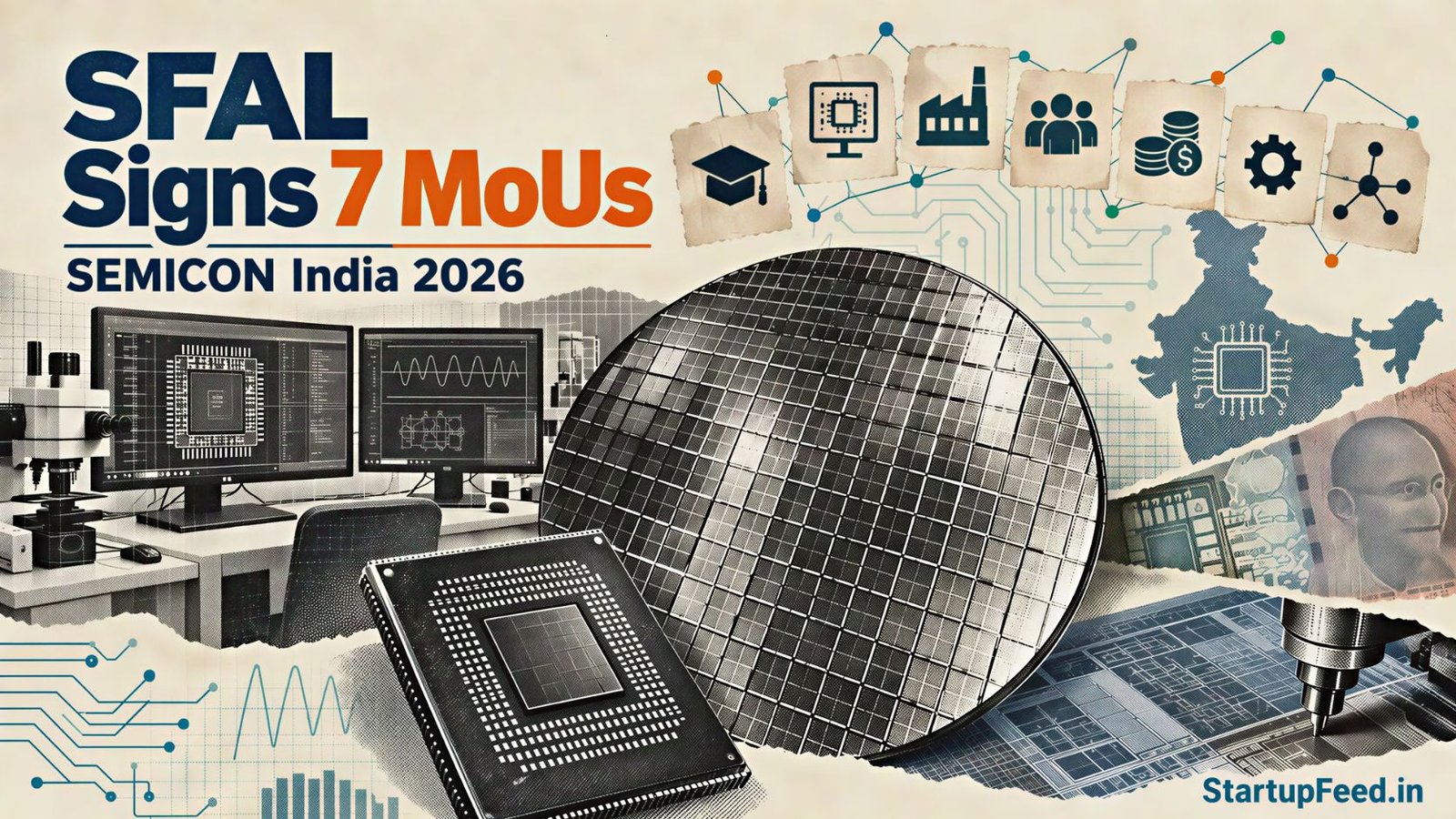
The Design Linked Incentive scheme, called DLI, is the one central scheme aimed straight at startups. It funds Indian firms that design chips without owning a factory. This model is called fabless.
The Ministry of Electronics and Information Technology runs it. That ministry is called MeitY. It sits under the Semicon India Programme.
The scheme gives two things. First, it reimburses up to 50% of design and development cost. This is capped at Rs 15 crore per project.
Second, it gives a sales-linked incentive on chips that sell. This runs at about 4% to 6% of net sales over five years. It also opens access to costly design tools and foundry support.
Design tools are called EDA tools. They are expensive for a small team to buy alone. Shared access removes a real barrier for early founders.
Who can apply? The scheme is open to DPIIT-recognised startups and MSMEs. It also covers Indian-owned companies that deploy chip designs.
MSME means micro, small and medium enterprises. DPIIT is the Department for Promotion of Industry and Internal Trade. Its 2019 rule defines who counts as a startup.
The target sectors are wide. According to MeitY, they include 5G, electric vehicles, AI, industrial automation, aerospace and defence. That covers most Indian deep-tech founders.
| DLI scheme feature | Detail |
|---|---|
| Design cost reimbursement | Up to 50%, capped at Rs 15 crore per project |
| Sales-linked incentive | About 4% to 6% of net sales over five years |
| Who can apply | DPIIT startups, MSMEs, Indian-owned firms |
| Infrastructure | EDA design tools, foundry and tape-out support |
| Run by | MeitY, under Semicon India Programme |
| Target sectors | 5G, EVs, AI, IoT, aerospace, defence |
Which startups benefit first in 2026?
The DLI scheme already backs 24 chip design startups. Union Minister Ashwini Vaishnaw shared this figure in New Delhi on January 27, 2026. Many of these firms have completed tape-outs and found buyers.
A tape-out is the final design step before a chip goes to fabrication. It is a real milestone, not a slide. The 24 firms have logged 16 tape-outs so far.
According to a MeitY press note, these projects have produced 6 ASIC chips and 10 patents. An ASIC is a chip built for one fixed job. The projects engage more than 1,000 engineers.
The work spans strategic sectors. It covers video surveillance, drone detection, energy metering and satellite communication. It also includes RISC-V processors and low-power chips for connected devices.
RISC-V is an open chip design standard. It lets Indian teams build processors without paying heavy foreign licence fees. Several DLI startups are betting on it.
The capital effect is visible already. MeitY says the DLI projects have pulled in more than 3 times their public funding in private money. That is a strong early signal.
The AI chip demand runs parallel. The IndiaAI Mission has set aside Rs 10,000 crore for AI infrastructure. It gave four startups government-backed compute, and Sarvam AI alone got 4,096 Nvidia H100 chips.
Cheaper local chips lower training and hardware costs for these AI firms too. India’s chip build-out feeds India’s AI build-out. The two missions reinforce each other.
What are the risks and gaps?
The biggest risk is simple. This is an announcement, not a signed project. The government has given no names, no sites and no money for the 5 to 8 plants.
It is also unclear how the new plants link to the 12 already approved. The overlap is not yet defined. Founders should not plan around plants that may not exist.
Timelines are long. India’s first silicon fab starts only in 2028. The full 5 to 8 plants stretch to 2033 or 2034 on the stated schedule.
There is a capacity gap too. A senior India Semiconductor Mission official told Deccan Herald that India aspires to 10 fabs in 10 years. Aspiration and delivery are different things.
Memory chips are a weak spot. StartupFeed has noted that India has no listed memory chipmaker and no HBM supply. HBM is the fast memory that AI servers depend on.
Skilled talent is the other gap. Fabs and design houses both need trained engineers. Semicon 2.0 funds skills, but that pipeline takes years to fill.
The honest read is this. The plants are a long-term bet. The DLI scheme is the near-term tool a founder can actually use in 2026.
What should founders do now?
Founders should act on what exists today, not on the 2033 promise. The DLI scheme, IndiaAI compute and state deep-tech grants are all live. These are the real levers right now.
Here is a practical checklist for an Indian hardware or chip founder in 2026:
- Check DLI eligibility. Confirm your DPIIT startup or MSME status first.
- Map your design cost. The scheme covers up to 50%, so model your Rs 15 crore ceiling.
- Apply for shared EDA tool and foundry access, even before you raise capital.
- Track state schemes. Gujarat, Karnataka and Uttar Pradesh run their own semiconductor and deep-tech support.
- If you build AI hardware, watch IndiaAI Mission compute rounds.
- Explore RISC-V to cut foreign licence costs on processor designs.
- Build a documentation and audit trail early to speed up incentive claims.
The pattern is clear. India’s chip story is moving from talk to production. For a founder, the design layer is open for business today.
What this means for you: Do not wait for the fabs. Apply to the DLI scheme and state grants now, while the money is live and the queue is short.
Have a tip? Write to us at editorial@startupfeed.in.
Frequently Asked Questions
Liked this story? Follow StartupFeed on Google so our reporting reaches you first.