Quick Take
- India AI startups raised $1.48 Bn in Q1 2026 alone, with AI accounting for 38% of all startup funding that quarter.
- The IndiaAI Mission has committed Rs 10,000 Cr and allocated 4,096 H100 GPUs to accelerate sovereign AI development.
- From Krutrim’s LLMs to Qure.ai’s 39 million patient scans, Indian founders are building AI for the world, not just India.
In This Article
India AI startups in 2026 are no longer a niche story. They are a capital-market event. According to data tracked across funding rounds in Q1 2026, AI-led companies attracted approximately $1.48 Bn out of India’s total $3.9 Bn startup funding that quarter. One deal alone, Neysa’s $1.2 Bn financing from Blackstone, reset expectations about how large India’s AI infrastructure bets can get.
India now has over 4,500 active AI startups, ranking third globally after the United States and China. The India AI startups covered in this guide are not early-stage experiments. They operate in production, serve real customers in sectors from healthcare and agriculture to enterprise contact centers, and several are heading toward IPOs (Initial Public Offerings, first sales of company shares to the public) in 2026 and 2027. This guide covers all 15 in detail: funding, founders, use cases, and why each one matters next year.
StartupFeed Insight
The 2026 class of India AI startups reveals a structural shift: Indian founders are no longer building application layers on top of OpenAI or Google. Krutrim and Sarvam AI are building the base models. Neysa is building the compute layer. Gnani.ai and CoRover are building the government-grade voice infrastructure. This vertical integration, from silicon to application, is exactly what India needs to avoid long-term dependency on foreign AI stacks. Watch for the India AI impact to move from “interesting exports” to “sovereign infrastructure” as a government priority before the 2027 Union Budget. By StartupFeed Desk.
What Makes India AI Startups Different in 2026?
Three things separate India AI startups from their US or Chinese counterparts. First, India’s 22 official languages drive a multilingual-first approach. Startups like Sarvam AI, Gnani.ai, and CoRover build for Hindi, Tamil, Telugu, and a dozen other languages before they build for English. Second, India’s cost advantage lets these companies iterate faster on smaller budgets. Third, a market of 1.4 billion people, many of them first-time digital users, creates demand patterns that no Western market can replicate.
The India AI Impact Summit 2026 (held in February 2026) generated over $200 Bn in global investment commitments and drew Sam Altman, Sundar Pichai, and Dario Amodei. That level of global attention signals that India’s deeptech moment has genuinely arrived.
The IndiaAI Mission: Government as Fuel
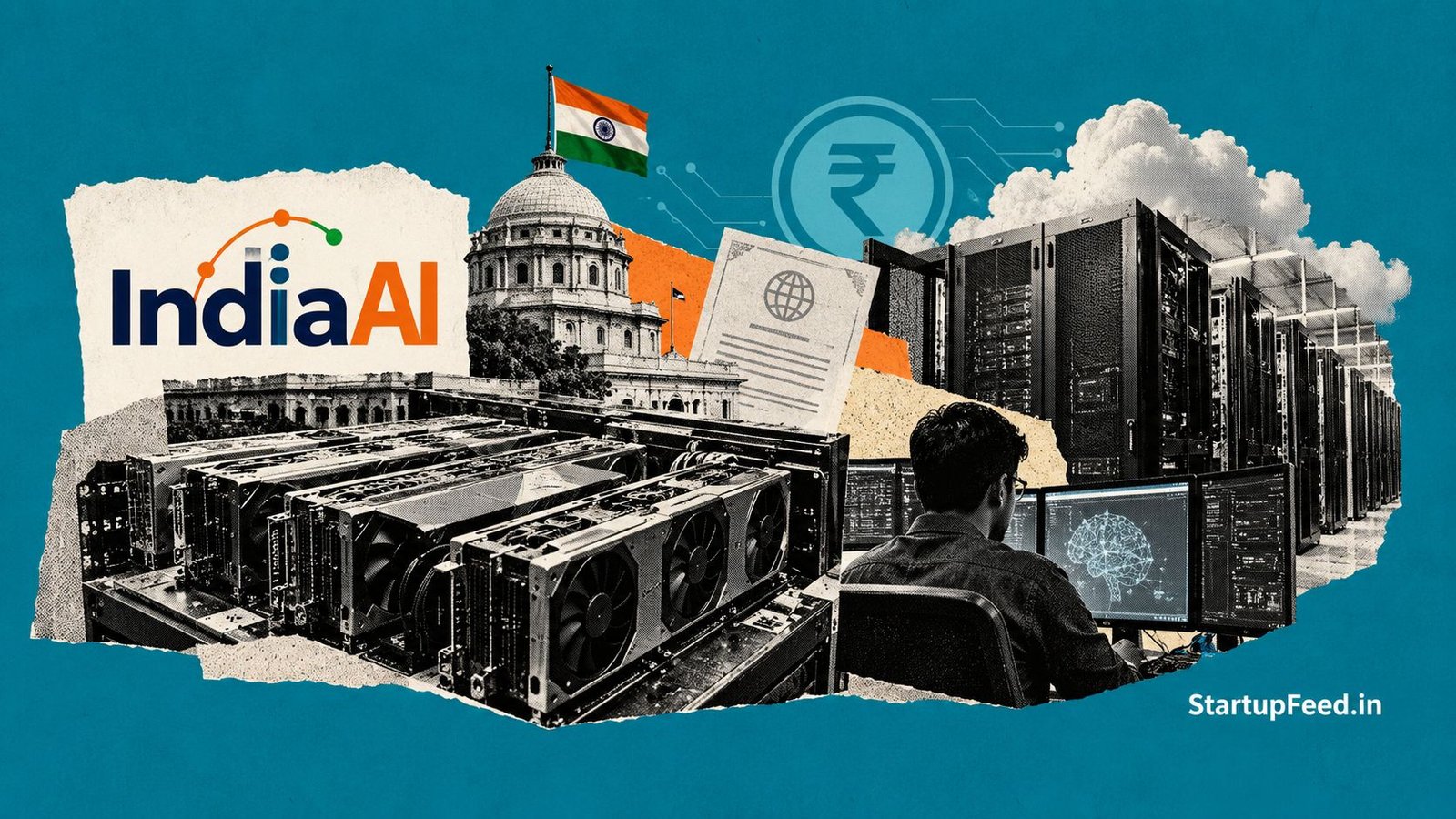
The Indian government’s IndiaAI Mission has allocated Rs 10,000 Cr toward AI infrastructure, including a Rs 1,100 Cr ($132 Mn) state-backed venture fund targeting AI and advanced manufacturing. The Mission selected four Indian AI startups to receive government-backed compute support for foundational model development: Sarvam AI, Gnani.ai, SoketAI, and Gan.ai. Sarvam AI received 4,096 NVIDIA H100 GPUs. These allocations matter because training large language models (LLMs, AI systems trained on vast text to understand and generate language) without access to thousands of high-end chips is nearly impossible. Government compute removes that barrier.
The Top 15 India AI Startups in 2026
The table below summarizes key facts across all 15 India AI startups. Detailed profiles follow.
| Company | Sector | Founded | Notable Funding | 2027 Signal |
|---|---|---|---|---|
| Krutrim | Sovereign LLM | 2022 | $50 Mn+ (Matrix Partners) | GPU infrastructure scale-up |
| Sarvam AI | Sovereign AI | 2023 | $53.8 Mn (Lightspeed, Peak XV) | IndiaAI Mission contract pipeline |
| Neysa | AI Infrastructure | 2023 | $1.2 Bn financing (Blackstone) | 20,000+ GPU deployment |
| Uniphore | Enterprise AI | 2008 | $985 Mn total; $2.5 Bn valuation | NVIDIA-backed emotion AI expansion |
| Kore.ai | Enterprise GenAI | 2014 | $620.9 Mn total; NVIDIA investor | Enterprise agentic AI rollout |
| Fractal Analytics | Decision Intelligence | 2000 | Unicorn ($1.6-2.4 Bn valuation) | IPO filing expected 2026 |
| Qure.ai | Healthcare AI | 2016 | Significant VC (undisclosed total) | India’s first healthcare AI IPO |
| Yellow.ai | Conversational AI | 2016 | $102 Mn (WestBridge, Sapphire) | 135-language emerging market push |
| Haptik | Conversational AI | 2013 | Acquired by Reliance Jio | Jio distribution drives mass scale |
| Gnani.ai | Voice AI | 2016 | $7.72 Mn; IndiaAI Mission selected | Fresh funding round in progress |
| Observe.AI | Contact Center AI | 2017 | $214 Mn+ raised | AI services export benchmark |
| Vue.ai | Retail + Fintech AI | 2016 | $27.5 Mn; acquired by M2P Fintech | Retail-fintech AI convergence |
| Cropin | AgriTech AI | 2010 | $54 Mn (Chiratae, Gates Foundation) | Climate-resilient farming mandate |
| Leena AI | Agentic HR AI | 2018 | $450 Mn+ valuation | Autonomous agent adoption surge |
| CoRover | Government AI | 2016 | IndiaAI Mission participant | Massive government procurement |
1. Krutrim
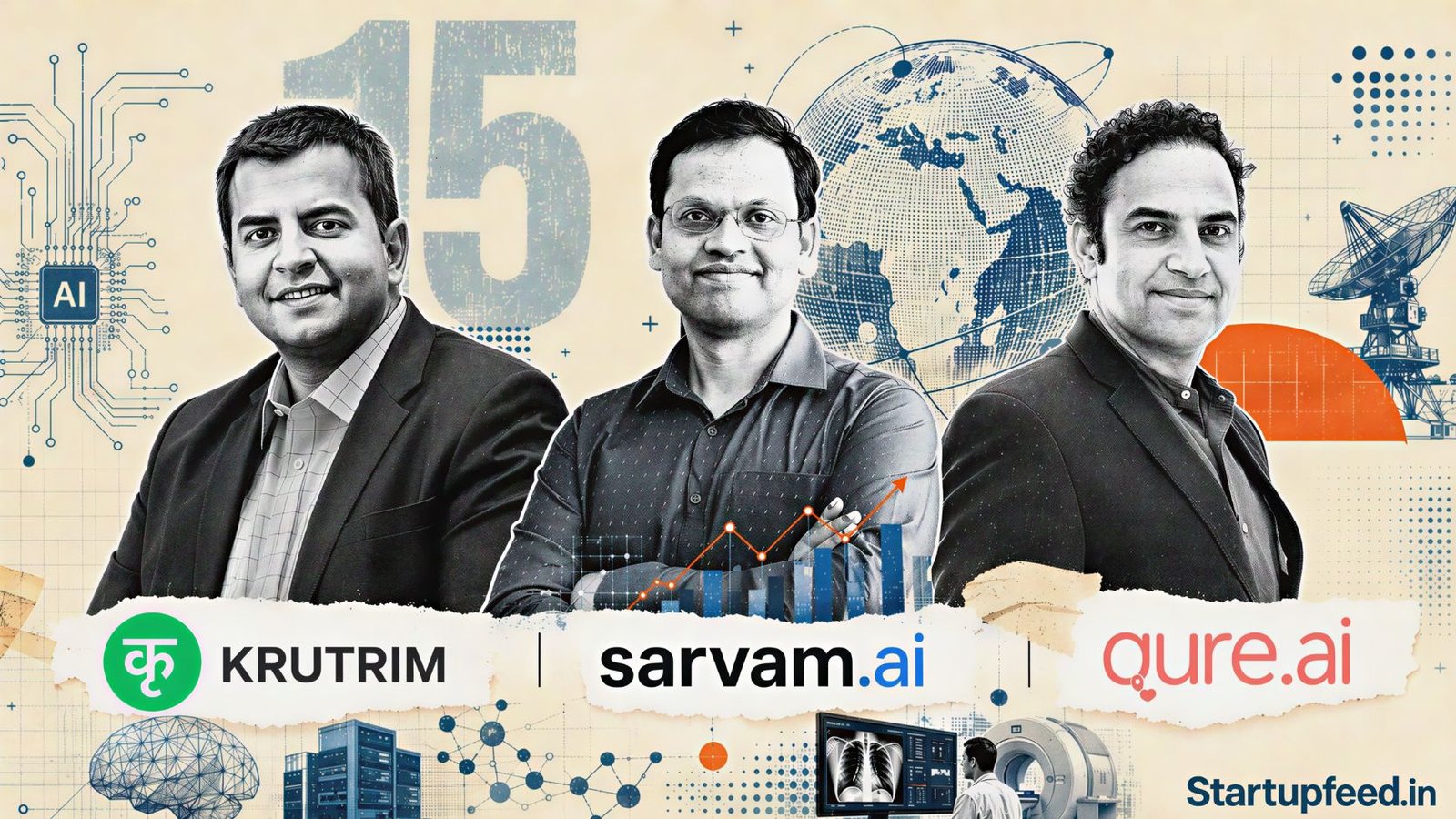
Founder: Bhavish Aggarwal (Ola co-founder). HQ: Bengaluru. Funding: $50 Mn+ led by Matrix Partners India. India’s first AI unicorn ($1 Bn+ valuation). Krutrim builds full-stack sovereign AI: Krutrim-2 (12-billion parameter multilingual model), the Kruti agentic assistant (supporting 13 Indian languages), and its own GB200-powered GPU infrastructure. Why 2027: Hardware plus model plus assistant in one Indian stack is an advantage no foreign AI lab can replicate locally.
2. Sarvam AI
Founders: Vivek Raghavan and Pratyush Kumar (IIT and IISc alumni). HQ: Bengaluru. Funding: $53.8 Mn (Lightspeed, Peak XV Partners, Khosla Ventures). The IndiaAI Mission selected Sarvam AI to build India’s first homegrown sovereign LLM and allocated 4,096 NVIDIA H100 GPUs. Sarvam-105B scored 84.3% on the olmOCR-Bench, beating Gemini 3 Pro. Sarvam Edge delivers offline on-device AI for privacy-sensitive deployments. Why 2027: The government contract pipeline is the durable moat.
3. Neysa
Founders: Sharad Sanghi (ex-Netmagic founder) and Anindya Das. HQ: Mumbai and Bengaluru. Funding: $600 Mn from Blackstone plus $50 Mn earlier equity plus $600 Mn planned debt, totalling $1.2 Bn+ in financing commitments. Neysa runs a GPU-as-a-Service (GaaS) platform called Velocis, targeting enterprises and government agencies that need local, sovereign compute. It plans to deploy 20,000+ GPUs. Blackstone estimates India’s GPU count will grow 30x to 2 million. Why 2027: Every India AI startup needs compute. Neysa supplies it.
4. Uniphore
Founders: Umesh Sachdev and Ravi Saraogi. HQ: Chennai (global HQ San Francisco). Funding: $985 Mn total; $2.5 Bn valuation; NVIDIA joined as a strategic investor in the $260 Mn Series F. Uniphore applies emotion AI and real-time conversational analytics to contact centers for Fortune 500 clients globally. Its AI identifies speaker intent, emotion, and compliance risk in real time. Why 2027: Emotion AI will become mandatory in regulated industries like banking and insurance, where every customer call is a compliance risk.
5. Kore.ai
Founder: Raj Koneru. HQ: Bengaluru and Orlando. Funding: $620.9 Mn total (highest among pure-AI Indian startups), including a $150 Mn round led by FTV Capital with NVIDIA participation. Kore.ai provides a GenAI (Generative AI, AI systems that create text, images, or code on request) deployment platform for enterprises, covering conversational AI, AI agents, and self-service automation. Why 2027: NVIDIA’s participation positions Kore.ai as the integration layer between chipmakers and enterprise AI buyers.
6. Fractal Analytics
Founders: Srikanth Velamakanni and Pranay Agrawal. HQ: Mumbai. Valuation: $1.6–2.4 Bn (unicorn). Founded in 2000, Fractal predates the AI boom but now leads in decision intelligence, applying AI to supply chain management, consumer behavior prediction, and financial risk for Fortune 500 retailers and FMCG (Fast-Moving Consumer Goods) companies. An IPO is expected in 2026. Why 2027: A Fractal IPO will set the public-market valuation benchmark for India’s enterprise AI sector.
7. Qure.ai
Founders: Prashant Warier and Bhavya Mittal. HQ: Mumbai. Qure.ai uses deep learning to interpret chest X-rays, CT scans, and other diagnostic images, helping physicians detect TB, lung cancer, and stroke faster. It has screened 39 million+ patients across 105+ countries and is widely used in low-resource settings where radiologists are scarce. An IPO is planned for 2026. Why 2027: India’s first AI healthcare listing will unlock a new investor category for medtech AI in emerging markets.
8. Yellow.ai
Founders: Raghu Ravinutala, Jaya Kishore Reddy, and Rashid Khan. HQ: Bengaluru. Funding: $102 Mn (WestBridge Capital, Sapphire Ventures). Yellow.ai is an agentic AI platform for enterprise customer service, supporting 135+ languages across 35+ channels. Its voice and chat automation handles onboarding, support, and collections for companies in Dr. Reddy’s Laboratories and Concentrix. Why 2027: 135-language support is a structural edge in Southeast Asia, Middle East, and Africa markets.
9. Haptik
Founders: Aakrit Vaish and Swapan Rajdev. HQ: Mumbai. Status: Acquired by Reliance Jio in 2019. Haptik builds Intelligent Virtual Assistants (IVAs, AI-powered chatbots for enterprise-grade customer service) for BFSI (Banking, Financial Services, and Insurance), telecom, and e-commerce sectors. It has processed over 2 billion customer interactions. Why 2027: Jio’s distribution across 450 million subscribers gives Haptik an enterprise sales force that no standalone conversational AI startup can match.
10. Gnani.ai
Founders: Ganesh Gopalan and Ananth Nagaraj. HQ: Bengaluru. Funding: $7.72 Mn (Info Edge, Samsung Ventures). Selected for IndiaAI Mission foundational model development. Gnani.ai’s 14-billion parameter voice-first model powers customer onboarding, loan collections, and fraud detection (via voice biometrics) for over 200 enterprise clients including Muthoot Finance and TVS Credit. Why 2027: Voice-first AI for India’s BFSI sector is a large, underpenetrated market with direct financial inclusion implications.
11. Observe.AI
Founders: Swapnil Jain, Akash Singh, and Sharath Keshava Narayana. HQ: San Francisco (Indian-founded, engineering in India). Funding: $214 Mn+. Observe.AI applies conversational intelligence to contact centers: real-time agent coaching, post-call quality analysis, and AI-powered compliance checks. Its technology reduces average call handle time and increases first-call resolution rates for large enterprise clients. Why 2027: Contact center AI is India’s next large IT export category, and Observe.AI is the product-led entry into it.
12. Vue.ai (Mad Street Den)
Founders: Ashwini Asokan and Anand Chandrasekaran. HQ: Bengaluru. Funding: $27.5 Mn; acquired by M2P Fintech. Vue.ai built computer vision and AI orchestration for retail, serving Myntra and Ajio for product tagging, visual search, and merchandising intelligence. Post-acquisition, the platform is being extended into fintech AI automation. Why 2027: The M2P acquisition is one of India’s first meaningful AI startup exits and signals that retail AI and fintech AI will converge in India’s fast-growing commerce layer.
13. Cropin
Founders: Krishna Kumar, Kunal Prasad, and Chittaranjan Jena. HQ: Bengaluru. Funding: $54 Mn (Chiratae Ventures, Bill and Melinda Gates Foundation Strategic Investment Fund, ImpactAssets). Cropin’s Sage platform uses GenAI to convert farm data into actionable crop advice. It has digitized 30 million+ acres and improved livelihoods for 7 million+ farmers across 103 countries. Why 2027: Climate-driven agricultural disruption is a global funding priority, and Cropin is the only India AI startup with production deployments across six continents.
14. Leena AI
Founders: Adit Jain and Mayank Goyal. HQ: Gurugram. Valuation: $450 Mn+. Leena AI has moved from HR chatbots to autonomous HR agents that complete end-to-end workflows (leave approvals, policy queries, onboarding tasks) without a human approving each step. Enterprise clients see 30%+ reductions in HR team workload. Why 2027: India’s 500-million-person formal workforce is the world’s largest addressable market for autonomous HR AI, and Leena AI is 18 months ahead of any domestic competitor.
15. CoRover
Founder: Ankush Sabharwal. HQ: Bengaluru. CoRover builds multilingual conversational AI for Indian government services. Its AskDisha chatbot powers the Indian Railways booking experience for hundreds of millions of travelers. CoRover also deploys AI at airports, state government portals, and public service helplines in vernacular Indian languages. IndiaAI Mission participant. Why 2027: India’s government AI procurement budget is growing rapidly, and CoRover holds the most sensitive and high-traffic government AI deployments in the country today.
Why India AI Startups Will Matter Most in 2027
The 2026 class of India AI startups has crossed a critical threshold: they are no longer pilots. Sarvam AI runs in production for Tamil Nadu’s government. Qure.ai screens patients in African hospitals. Neysa supplies GPU compute to Swiggy in real time. These are not demos. They are revenue-generating infrastructure plays, and 2027 is when the revenue curves steepen.
Three catalysts will matter most in 2027. First, two or three IPOs (Qure.ai, Fractal Analytics likely) will give India’s AI sector public-market valuations for the first time. Second, the $200 Bn committed at the India AI Impact Summit will start deploying, much of it into the companies on this list. Third, global AI infrastructure costs will keep falling, making India’s GPU-cloud players (Neysa) and on-device AI players (Sarvam Edge) increasingly competitive against hyperscalers. The global AI infrastructure race is intensifying, and India has started entering it from the supply side, not just the demand side.
What’s Next
Watch four things in the next 12 months: Qure.ai’s DRHP (Draft Red Herring Prospectus, the document filed with SEBI before a company lists publicly) filing, Neysa’s GPU deployment count, Gnani.ai’s next funding round, and whether Krutrim launches its own AI chip as hinted at public events. India’s semiconductor infrastructure is growing too, which will directly lower training costs for every India AI startup on this list. Will India’s AI founders build the next globally deployed model before 2028?
Also Read
- Bharat Innovates 2026: India’s Bold Deeptech Push Hits Nice
- Anthropic Raises $65 Bn, Tops OpenAI With Huge $965 Bn Value
- IBM Invests $10 Bn in Quantum, Targets Huge 2029 Win
Frequently Asked Questions
Which are the top AI startups in India in 2026?
The top India AI startups in 2026 include Krutrim, Sarvam AI, Neysa, Uniphore, Kore.ai, Fractal Analytics, Qure.ai, Yellow.ai, Haptik, Gnani.ai, Observe.AI, Vue.ai, Cropin, Leena AI, and CoRover. These 15 companies cover sovereign LLMs, GPU infrastructure, healthcare AI, conversational AI, agritech AI, and government AI, representing the full range of India’s production-grade AI ecosystem in 2026.
Which India AI startups received IndiaAI Mission support?
The IndiaAI Mission selected Sarvam AI, Gnani.ai, SoketAI, and Gan.ai for foundational model development with government compute. Sarvam AI received 4,096 NVIDIA H100 GPUs under the mission. The government has also committed Rs 10,000 Cr ($1.2 Bn) toward AI infrastructure broadly, including a state-backed venture fund targeting AI and advanced manufacturing startups across India’s deeptech sector.
Which Indian AI startup has raised the most funding?
Uniphore has raised the most total capital at $985 Mn, with a $2.5 Bn valuation and NVIDIA as a strategic investor. Neysa has secured $1.2 Bn in financing commitments (from Blackstone and co-investors), making it the largest single-round capital commitment to an Indian AI startup in 2026. Among pure AI software startups, Kore.ai leads with $620.9 Mn in total equity raised.
Disclaimer: This article is for informational purposes only and does not constitute investment advice. StartupFeed and its authors are not SEBI-registered investment advisors. Company valuations cited are based on the latest publicly disclosed or reported figures and may have changed. Please consult a SEBI-registered financial advisor before making investment decisions.
Have a tip? Write to us at editorial@startupfeed.in.
Liked this story? Follow StartupFeed on Google so our reporting reaches you first.