
Quick Take
- IBM invests $10 Bn (Rs 83,000 Cr) over five years to build the world’s first large-scale quantum computer by 2029.
- IBM has already deployed 90-plus quantum systems globally, more than all rivals combined, and serves 325-plus Fortune 500 companies.
- India’s Quantum Valley Tech Park in Amaravati, built with TCS, directly benefits from IBM’s expanded quantum push.
In This Article
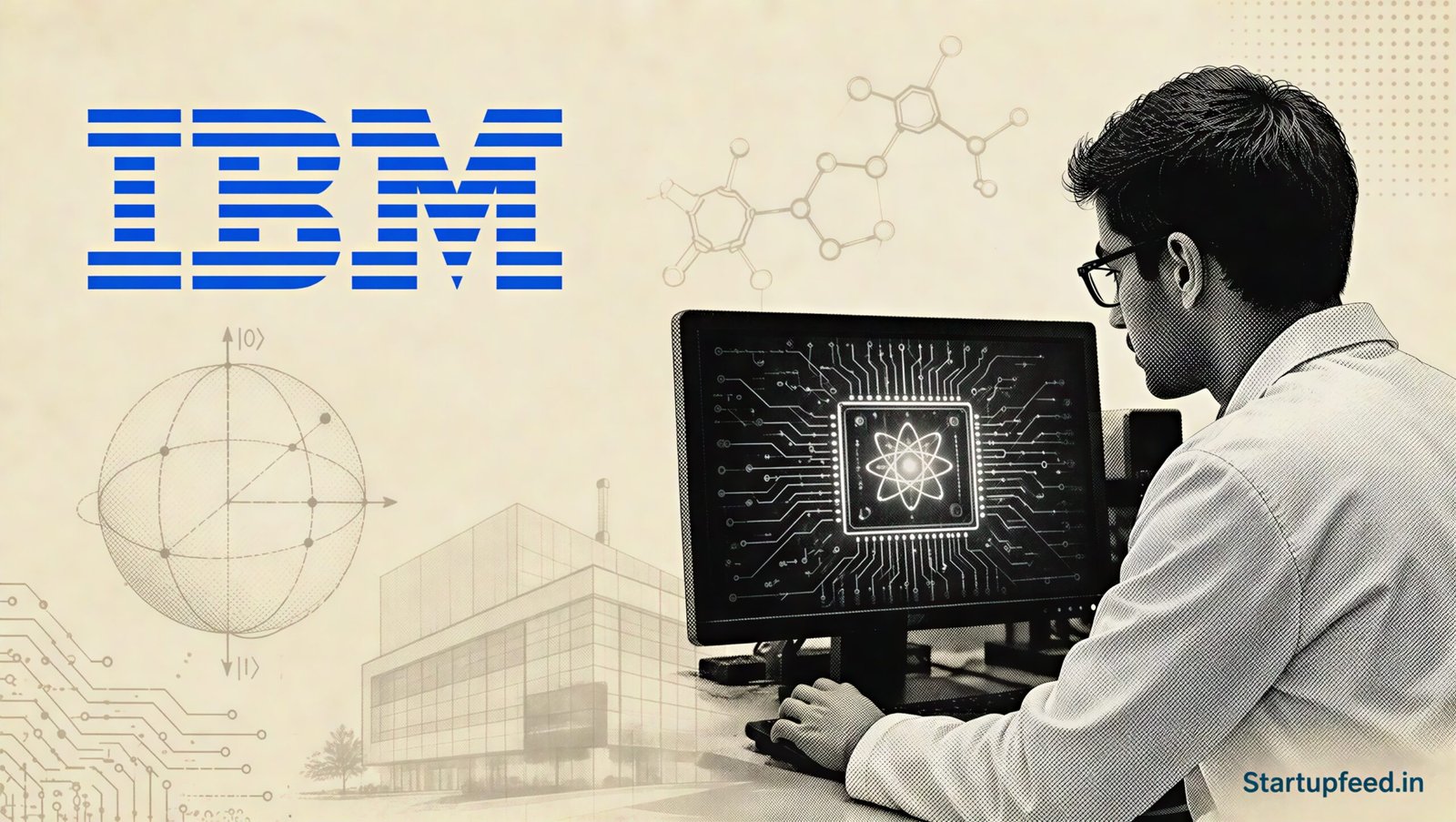
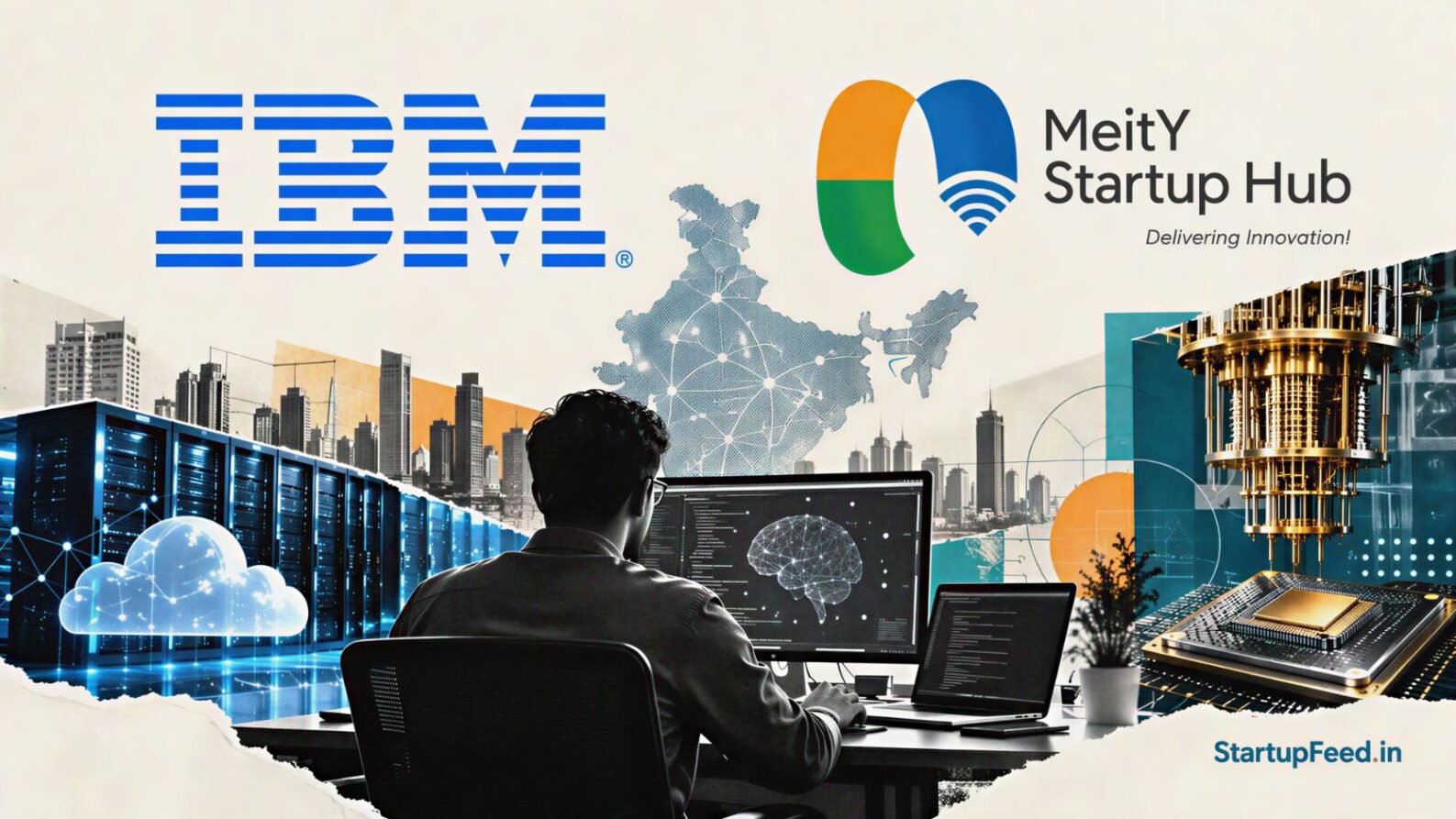
IBM invests $10 Bn (Rs 83,000 Cr) in quantum computing over the next five years, filing the plan with the US SEC (Securities and Exchange Commission, the American market regulator) on May 28, 2026, according to IBM’s official newsroom.
The investment targets the delivery of the world’s first large-scale fault-tolerant quantum computer by 2029. Fault-tolerant means a quantum computer that can correct its own calculation errors automatically, making it reliable enough for commercial use. The capital will go to research and development, capital expenditure, ecosystem partnerships, manufacturing scaling, and mergers and acquisitions tied to quantum technologies. IBM shares rose +1.7% in premarket trading on the day of the announcement.
StartupFeed Insight
The non-obvious number here is not $10 Bn. It is the 325-plus Fortune 500 companies already in IBM’s quantum ecosystem. That is enterprise validation at a scale no other quantum hardware maker has matched. For Indian founders, the IBM-TCS Quantum Valley Tech Park in Amaravati is the most accessible on-ramp to this ecosystem in Asia. Indian pharma startups using quantum molecular simulation and Indian fintech startups needing quantum cryptography should be building proofs of concept on IBM Quantum cloud access through TCS today. Expect the first commercial Indian quantum use case, a drug discovery or optimization application, to be announced by Q1 FY28. By StartupFeed Desk.
Why IBM Invests $10 Bn in Quantum Now
Quantum computing has been in research labs for decades. The commercial urgency is new. Two forces have pushed it into boardrooms in 2026. First, AI models have hit classical computing limits, and the next performance gains require fundamentally different hardware. Second, governments, including the US and India, are treating quantum supremacy as a national security issue.
The US Trump administration announced in May 2026 that it would take $2 Bn in equity stakes in nine quantum computing companies. IBM is set to receive $1 Bn of that through a new subsidiary called Anderon, which will become the first dedicated quantum chip manufacturing facility in the US. The IBM investment announcement followed that government commitment directly.
IBM CEO Arvind Krishna has called fault-tolerant quantum computing the next major computing frontier. The company has staked its long-term hardware credibility on hitting the 2029 target for a machine that can run complex calculations reliably and without errors, the milestone that turns quantum from a research tool into a commercial product.
Deal Breakdown: The Numbers and Anderon
| Metric | Detail | Notes |
|---|---|---|
| Total Investment | $10 Bn+ (Rs 83,000 Cr) over 5 years | Filed via SEC Form 8-K, May 28, 2026 |
| Target Milestone | First large-scale fault-tolerant quantum computer | Target delivery: 2029 |
| New Subsidiary | Anderon (US quantum chip foundry) | IBM contributing $1 Bn; US govt contributing $1 Bn via equity |
| Quantum Systems Deployed | 90-plus globally | More than all rivals combined, per IBM |
| Ecosystem Partners | 325-plus Fortune 500 companies, startups, universities | Includes India’s TCS, AP govt via Quantum Valley Tech Park |
| Investment Scope | R&D, capex, partnerships, manufacturing, M&A | Anderon to also take in external investors |
The most important line in the table: Anderon will offer chipmaking technology to outside customers. That means IBM is building quantum chip manufacturing as a service business, not just for internal use.
About IBM
International Business Machines Corporation (IBM) is a US technology company founded in 1911 and headquartered in Armonk, New York. It operates across cloud, AI, and quantum computing. IBM has deployed more than 90 quantum computing systems globally and has a dedicated quantum division. Its India operations include partnerships with TCS and the Andhra Pradesh government for the Quantum Valley Tech Park in Amaravati. IBM is listed on the NYSE under the ticker symbol IBM.
What This Means for India’s Quantum Startups
IBM’s $10 Bn push directly accelerates India’s own quantum ambitions. In May 2025, IBM, TCS (Tata Consultancy Services), and the Government of Andhra Pradesh announced the Quantum Valley Tech Park in Amaravati, which will host India’s first IBM Quantum System Two. That system carries IBM’s 156-qubit Heron processor, currently among the most powerful commercial quantum processors globally.
TCS already has cloud access to IBM’s quantum computers since November 2025 and has run skills workshops and a hackathon. Indian startups including QpiAI (Bengaluru, quantum AI hardware, founded 2019) and BosonQ Psi (Bengaluru, quantum engineering simulations) are building on IBM’s quantum platform. HDFC Bank invested in QNu Labs in September 2025, signalling that large Indian banks are also betting on quantum-safe cybersecurity.
India’s pharmaceutical sector, which dominates global generics manufacturing, stands to gain the most. Quantum molecular simulation could reduce drug discovery timelines from 10-15 years to under 24 months, according to industry projections. That is the single biggest commercial use case India can build on the back of IBM’s 2029 machine.
How Does IBM Compare to Other Quantum Bets?
| Company | Quantum Commitment | Target / Timeline |
|---|---|---|
| IBM | $10 Bn+ over 5 years | Fault-tolerant quantum computer by 2029 |
| Google (Alphabet) | Undisclosed (ongoing) | CEO: “practically useful” quantum 5-10 years away (2025 estimate) |
| India (National Quantum Mission) | Rs 6,000 Cr government outlay | Global quantum hub by 2030 |
What separates IBM from its rivals is hardware deployment at scale. Google and Microsoft have demonstrated specific quantum breakthroughs in labs, but neither has 90-plus deployed commercial systems. IBM’s ecosystem depth, 325-plus Fortune 500 partners, gives it a lead in translating lab results into real commercial workflows. That lead is what justifies the $10 Bn bet.
Also Read
- AI and Deep-Tech: All Coverage on StartupFeed
- For Founders: How India’s Deep-Tech Founders Can Access Global Quantum Networks
- Funding and Deals: Track Deep-Tech Rounds in India
What’s Next
Watch for the first commercial customer announcements from Anderon by Q4 2026. In India, the Quantum Valley Tech Park in Amaravati is expected to go live with the IBM Quantum System Two by late 2026 or early 2027. Will an Indian pharma or fintech company be the first to demonstrate a quantum advantage on IBM’s hardware?


Frequently Asked Questions
Why does IBM invests $10 Bn in quantum computing?
IBM invests $10 Bn over five years to build the world’s first large-scale fault-tolerant quantum computer by 2029. Fault tolerance means the machine can correct its own calculation errors, making it reliable for commercial use. The investment also funds Anderon, a new US quantum chip foundry backed by $1 Bn from the US government.
What is a quantum computer and why does it matter for India?
A quantum computer uses qubits, which can be both 0 and 1 at the same time, unlike regular computers that use bits locked at either 0 or 1. This lets quantum machines process enormous numbers of possibilities at once. For India, the biggest near-term applications are drug discovery, financial modelling, and quantum-safe cybersecurity, all sectors where Indian companies are already building on IBM’s platform.
How is India connected to IBM’s quantum push?
IBM, TCS, and the Andhra Pradesh government announced the Quantum Valley Tech Park in Amaravati in May 2025. It will host India’s first IBM Quantum System Two. TCS has had cloud access to IBM’s quantum computers since November 2025 and is developing quantum algorithms for Indian industry and academia.
Written by StartupFeed Desk. Published: May 30, 2026. Updated: May 30, 2026. Have a tip? Write to us at editorial@startupfeed.in.
Liked this story? Follow StartupFeed on Google so our reporting reaches you first.