Quick Take
- Razorpay filed a confidential DRHP with SEBI on June 12, 2026, targeting Rs 5,000-6,000 Cr ($519-623 Mn).
- The fintech seeks a $5-6 Bn valuation, a sharp discount to its $7.5 Bn Series F peak from 2021.
- FY25 revenue rose 65% to Rs 3,783 Cr, though a net loss of Rs 1,209 Cr remains from ESOP and tax costs.
In This Article
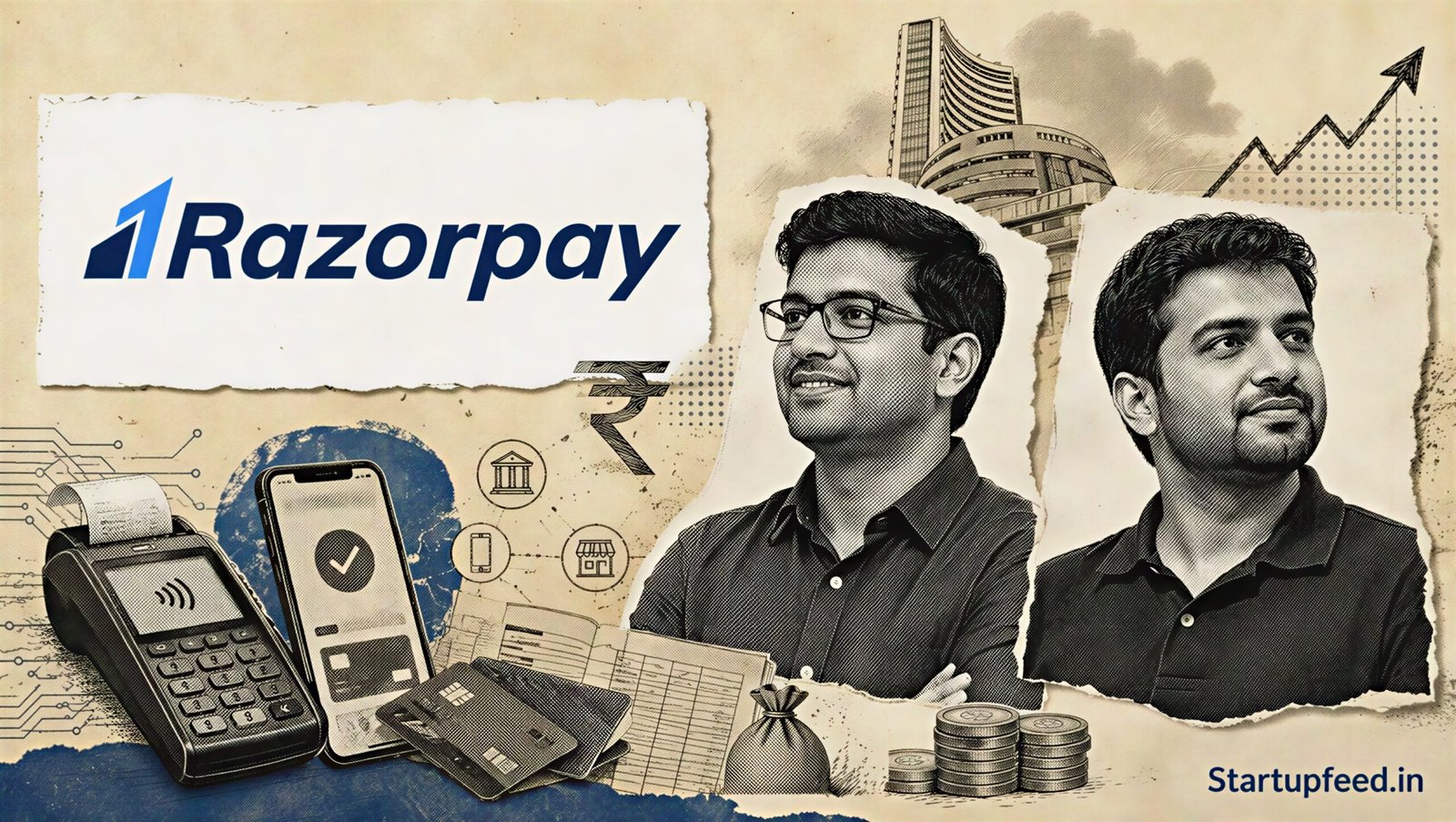
The Razorpay IPO moved a decisive step closer after the Bengaluru fintech confidentially filed its Draft Red Herring Prospectus (DRHP, the offer document filed with SEBI before an IPO) with the Securities and Exchange Board of India (SEBI) on June 12, 2026. The company is targeting a raise of Rs 5,000 to Rs 6,000 Cr ($519 Mn to $623 Mn).
Razorpay disclosed the filing through a newspaper advertisement on June 15, using SEBI’s confidential pre-filing route. The company is eyeing a valuation of $5 Bn to $6 Bn, per multiple market reports, a notable markdown from the $7.5 Bn it commanded during its December 2021 Series F round. Axis Capital, Kotak Mahindra Capital, JPMorgan, and Citi are the bankers on the issue.
StartupFeed Insight
The number that matters most is not the raise, it is the re-rating. A $5-6 Bn ask against Rs 3,783 Cr FY25 revenue puts Razorpay at roughly 1.3x to 1.6x sales, a public-market multiple that public investors can actually defend, unlike the 2021 private mark. Early backers who entered near $7.5 Bn will watch closely, since they carry paper losses unless the stock re-rates after listing. Expect SEBI observations within 30 to 75 days of the June 12 filing, which points to a listing window in the final quarter of 2026 if markets hold. This is the pricing discipline that will define India’s next fintech listings. By Soumya Verma.
Razorpay IPO: The DRHP Filing Breakdown
The Razorpay IPO is structured as a mix of a fresh issue and an Offer for Sale (OFS), where existing investors sell part of their stake. Shareholders had earlier approved a fresh issue of up to Rs 2,700 Cr, according to the DRHP disclosures. The table below sets out the key facts of the filing.
| Metric | Detail | Notes |
|---|---|---|
| Filing date | June 12, 2026 | Disclosed via newspaper ad on June 15 |
| Target raise | Rs 5,000-6,000 Cr ($519-623 Mn) | Fresh issue plus OFS |
| Target valuation | $5-6 Bn | Down from $7.5 Bn (2021 Series F) |
| Bankers | Axis Capital, Kotak, JPMorgan, Citi | Four-bank syndicate |
| Route | Confidential pre-filing | SEBI review before public DRHP |
| Target listing | End of 2026 | Subject to SEBI and market conditions |
The most striking detail is the timing. Razorpay filed just as India’s primary market warmed up again after a slow first half, positioning the Razorpay IPO among the year’s heavyweight listings. Confirmation of the licence backbone sits on the company’s own Razorpay newsroom.
About Razorpay
Razorpay is a payments and business-banking platform founded in 2014 by IIT Roorkee alumni Harshil Mathur and Shashank Kumar, headquartered in Bengaluru. It lets startups, SMEs, and large enterprises accept online payments via cards, UPI, and wallets, and runs RazorpayX for business banking and payroll. The firm serves 12 Mn-plus merchants and is backed by GIC, Peak XV Partners, Tiger Global, and TCV.

Why is the Razorpay IPO priced below its 2021 peak?
The Razorpay IPO carries a valuation cut of roughly 20% to 33% from its $7.5 Bn private peak, a rare downward private-to-public reset among marquee Indian fintechs. The gap reflects 2021 venture-cycle pricing meeting 2026 public-market discipline. Global investors no longer extend peak multiples to growth-stage fintechs still posting consolidated losses.
At Razorpay, we have always seen ourselves as a money-movement platform for businesses, not just a payments company, Shashank Kumar, MD and Co-founder, Razorpay.
That framing matters for pricing. A money-movement platform with regulated cross-border rails and offline reach argues for a wider revenue base over time. Even at the markdown, a raise in this band would rank among India’s larger fintech listings, and a strong debut could re-rate the stock upward.
Is Razorpay profitable ahead of the IPO?
Razorpay is not yet profitable at the consolidated level, though its core online payments business has turned EBITDA (Earnings Before Interest, Taxes, Depreciation, and Amortization) positive. FY25 operating revenue climbed 65% year-on-year to Rs 3,783 Cr, up from Rs 2,296 Cr in FY24, per company disclosures. Gross profit rose 41% to Rs 1,277 Cr.
The consolidated net loss of Rs 1,209 Cr in FY25 stems largely from one-time ESOP (Employee Stock Ownership Plan) charges and tax costs tied to the company’s reverse-flip. Razorpay completed that reverse-flip in May 2025, shifting its parent domicile from the United States back to India, a restructuring that carried a one-time tax outlay of around Rs 1,275 Cr. Management has said consolidated profitability should follow two to three quarters after the India business turns profitable.
| FY25 metric | Value | Change |
|---|---|---|
| Operating revenue | Rs 3,783 Cr | +65% YoY |
| Gross profit | Rs 1,277 Cr | +41% YoY |
| Net loss | Rs 1,209 Cr | ESOP plus reverse-flip tax |
| Annualised TPV | $180 Bn (Rs 17,34,480 Cr) | Target $400 Bn by 2030 |
How does Razorpay compare with fintech rivals?
Razorpay operates in a crowded Indian digital-payments sector alongside listed peers and private challengers. It holds roughly 55% of the online payment gateway market across its merchant base, per company statistics. The comparison below sets it against its closest listed and unlisted rivals.
| Company | Status | Focus |
|---|---|---|
| Razorpay | Filing (IPO 2026) | Payment gateway, banking, POS |
| Paytm (One 97) | Listed | Consumer payments, lending |
| PhonePe | IPO-bound | UPI, consumer payments |
| PayU / Cashfree | Unlisted | Payment gateway |
What sets Razorpay apart is its licence stack. It secured the RBI cross-border (PA-CB) licence in December 2025 and the offline (PA-P) licence in January 2026, giving it online, offline, and cross-border rails, as detailed in the official Razorpay cross-border blog. That end-to-end regulatory coverage is rare among Indian payment firms and underpins the StartupFeed.in read on its durability.
What’s Next
SEBI typically issues observations within 30 to 75 days of a DRHP filing, which points to a possible listing window in the final quarter of 2026 if conditions hold. Watch for the public DRHP, which will reveal the final issue size, the OFS split, and updated financials. A successful debut could also open the door for other IPO-bound fintechs. Will Razorpay’s markdown become the template for India’s next wave of listings?


Frequently Asked Questions
Disclaimer: This article is for informational purposes only and does not constitute investment advice. StartupFeed and its authors are not SEBI-registered investment advisors. The analysis above is based on publicly available information and should not be the sole basis for any investment decision. Please consult a SEBI-registered financial advisor before making investment decisions.
Have a tip? Write to us at editorial@startupfeed.in.
Liked this story? Follow StartupFeed on Google so our reporting reaches you first.