
StartupFeed Quick Take
- Balwaan Krishi raised Rs 100 crore in a Series B on September 28, 2026.
- First Bridge India Growth Fund led it; Right Pillar Advisors was the advisor.
- The money goes to Indian factories and a South India dealer push.
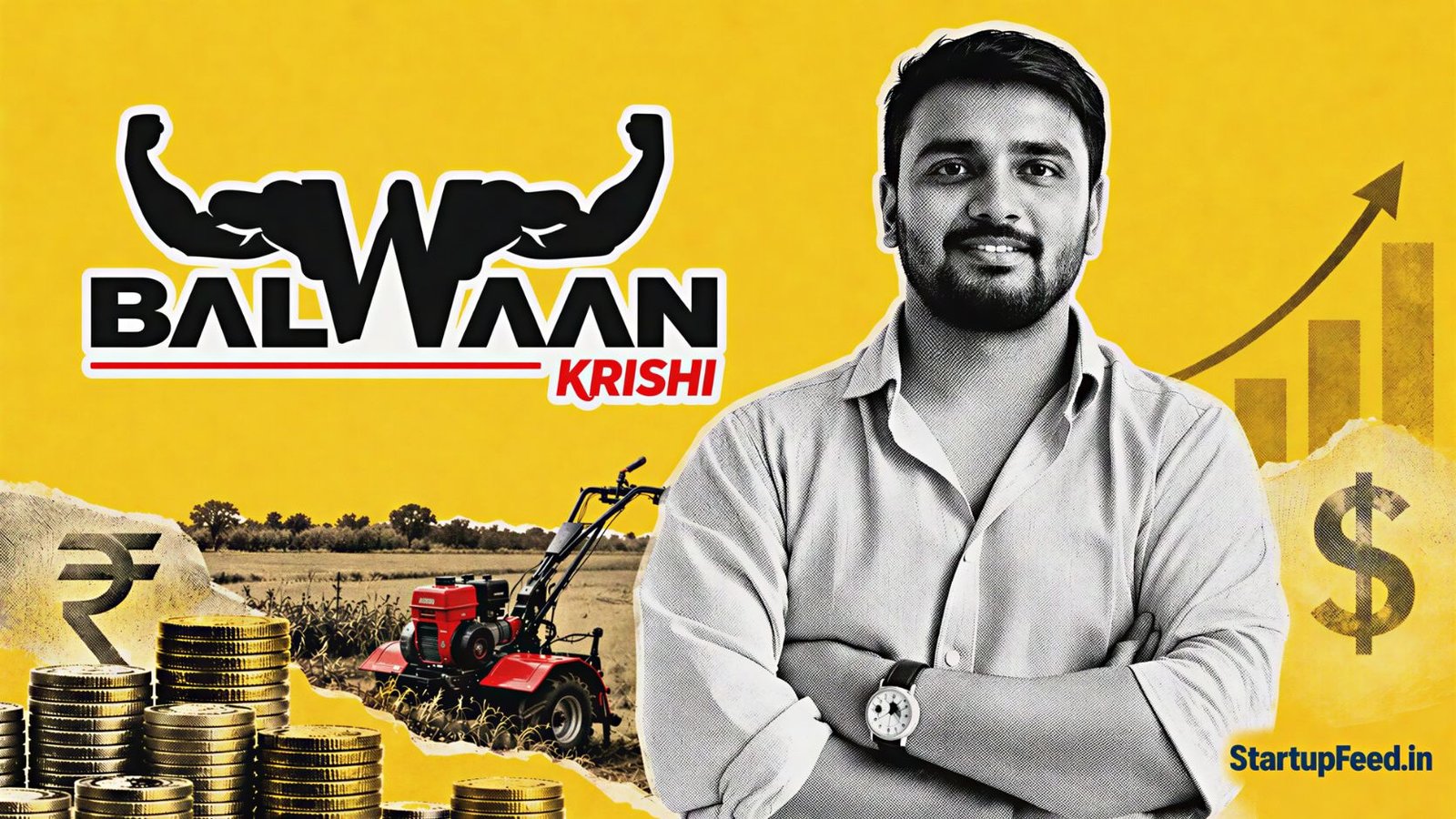
Jaipur farm-equipment maker Balwaan Krishi has raised Rs 100 crore in a Series B round led by First Bridge India Growth Fund Private Equity on September 28, 2026.
Other institutional investors joined the round. The names were not shared. Right Pillar Advisors advised on the deal.
The Series B is more than double the Rs 40 crore Series A that JM Financial Private Equity put in during June 2024. The company’s own announcement gives the figures.
Balwaan Krishi will spend a large part of the money on its own factories in India. That gives it more control over quality, supply and stock. It cuts its need for imported machines and parts.
What the Balwaan Krishi Series B money will do
The plan has three parts. Build more at home. Grow the dealer and service network in South India. Add sensors to the machines.
Balwaan Krishi sells through both dealers and direct-to-buyer channels. It has more than 800 dealers across North India. It also sells online.
More than four lakh farmers use its machines today. The kit includes power weeders, battery sprayers and other small tools.
The new funding will also pay for equipment with predictive maintenance and IoT features. IoT means machines that connect to the internet and send data. Predictive maintenance means the machine warns you before a part fails.
Why Balwaan Krishi targets small farms
Balwaan Krishi builds low-cost tools for small plots. Its products run from Rs 10,000 to about Rs 1 lakh. The price is the pitch.
Small and marginal farms are most of Indian farming. Holdings under two hectares were 86.08% of all operational holdings, the Agriculture Census 2015-16 shows. Big machines do not pay off on land that small.
Rohit Bajaj, co-founder and chief executive of Balwaan Krishi, set out the gap the company is chasing.
“India’s small and marginal farmers are increasingly facing rising labour costs and pressure to improve productivity, yet access to affordable mechanisation remains limited.”
Rohit Bajaj, co-founder and CEO, Balwaan Krishi. From the company statement, September 28, 2026.
Balwaan Krishi funding history, 2023 to 2026
This is the third outside round for the company. Balwaan Krishi is run by the legal entity Modish Tractoraurkisan Private Limited. Brothers Rohit Bajaj and Shubham Bajaj founded it in 2016.


Here is the round-by-round record from the company’s disclosures.
| Round | Amount | Lead investor | Date |
|---|---|---|---|
| Series B | Rs 100 crore | First Bridge India Growth Fund | September 2026 |
| Series A | Rs 40 crore | JM Financial Private Equity | June 2024 |
| Pre-Series A | $2 million | Caspian Leap for Agriculture Fund | May 2023 |
What the investor said about Balwaan Krishi
The lead investor tied the bet to demand it can already see. First Bridge backs the mix of a big market and proven sales.
“Balwaan operates at the intersection of a large addressable market, rising farm mechanisation adoption and proven customer demand.”
Vishal Gupta, managing partner, First Bridge Investment Managers. From the company statement, September 28, 2026.
The order book did the talking here, not a promise about the future.
What this means for you: If you are an agri-equipment dealer or a small-farm tool founder in South India, a funded rival is about to enter your market. Watch for Balwaan Krishi dealer sign-ups and new IoT models over the next two quarters.
Have a tip? Write to us at editorial@startupfeed.in.
StartupFeed Insight
The number that matters is not Rs 100 crore. It is four lakh farmers already paying for these tools. That is real demand, not a pilot. The South India push is the risky part, because Balwaan Krishi’s 800 dealers sit in the North, and service is what sells a Rs 40,000 weeder twice. Watch the dealer count in the South. If it crosses 200 by March 2027, the plan is working. If it stalls, the money went to factories that ran ahead of sales.
By Avinash Mishra, Business Correspondent
Liked this story? Follow StartupFeed on Google so our reporting reaches you first.