Quick Take
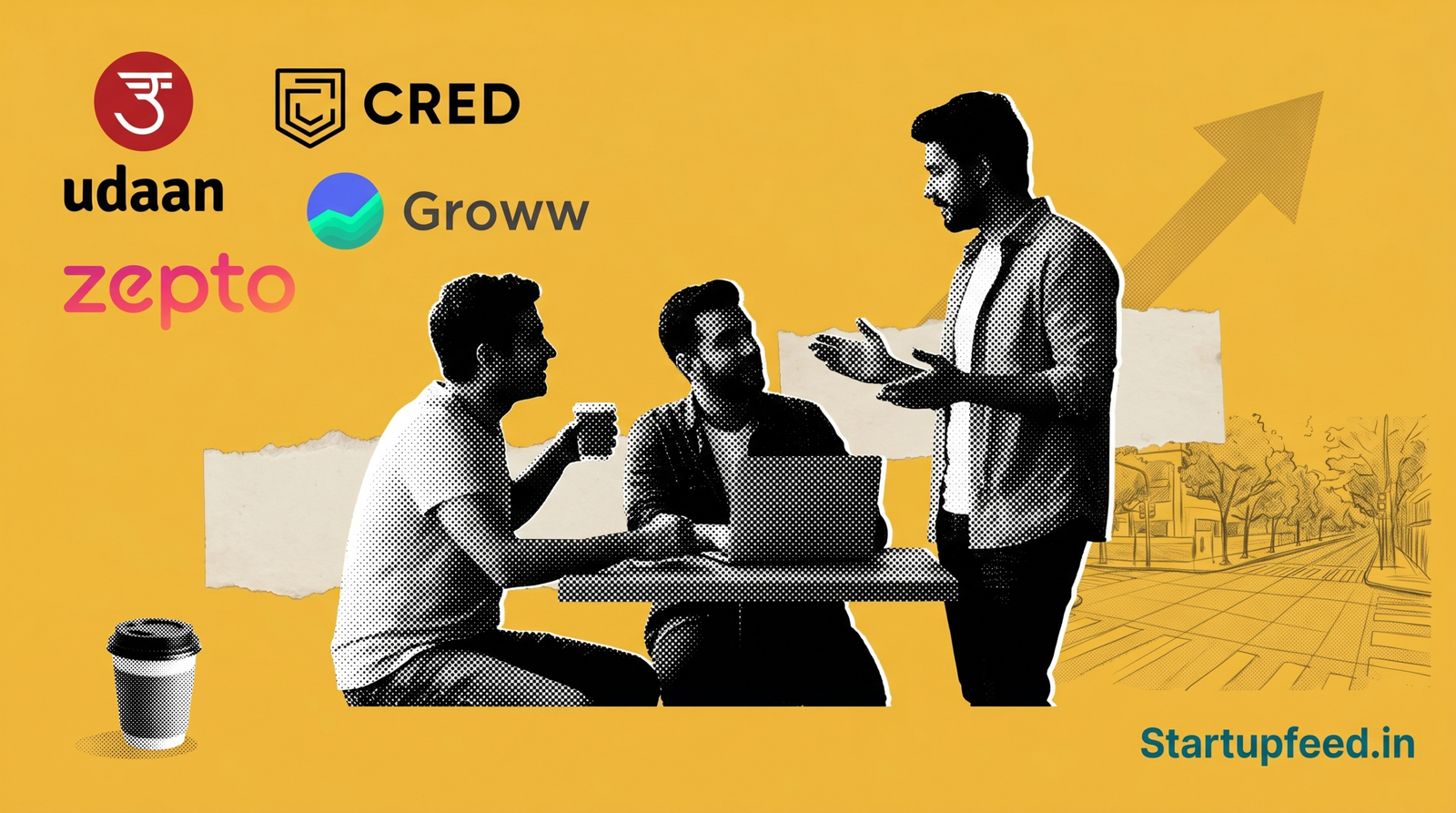
- HSR Layout’s 17th Cross Road — nicknamed “Unicorn Street” — birthed Udaan, CRED, Zepto, Groww, and KhataBook.
- Founders routinely bump into unicorn CEOs at Third Wave Coffee or BHIVE coworking with no appointment needed.
- Bengaluru now hosts 39 startups per 1 lakh people — the highest density in South Asia — and HSR is its dense core.
HSR Layout India’s Startup Capital story did not begin with a government policy or a venture fund announcement. It began with a daycare search. When Simplilearn founder Krishna Kumar moved to HSR Layout over a decade ago, he was not looking for a startup cluster — he was looking for a good school for his son. What he found instead was a well-planned grid suburb with wide roads, green parks, affordable office space, and a remarkably calm quality of life compared to the congested lanes of Koramangala next door. Within a few years, so had Udaan, Cure.fit, KhataBook, Vedantu, Zepto, CRED, Groww, Meesho, and Whatfix. The address that was once a quiet residential pocket in South Bengaluru is now the most productive square kilometre in Indian startup history.
Today, HSR Layout’s 17th Cross Road in Sector 3 is known by a single name inside Bengaluru’s founder community: Unicorn Street. If you walk its length on any weekday morning, you will pass the offices of companies collectively valued at over $30 billion. If you sit long enough at Third Wave Coffee — the café that has become the unofficial headquarters of HSR’s founder culture — you will watch deals get sketched on napkins, founding teams get assembled over oat lattes, and seed rounds get committed with a handshake before the check arrives.
StartupFeed Insight
What makes HSR Layout different from every other self-proclaimed Indian startup hub is a property that urban economists call “productive proximity” — the compounding effect that happens when a critical mass of founders, investors, operators, and talent occupy the same small geographic radius and interact informally on a daily basis. Koramangala had it in 2014-16. Bengaluru’s Indiranagar has it for D2C brand founders today. But HSR’s version of productive proximity is structurally stickier than both, for one specific reason: density of ex-unicorn operators. The Flipkart, Ola, and Amazon India alumni networks are disproportionately concentrated in HSR. When Sujeet Kumar, Amod Malviya, and Vaibhav Gupta left Flipkart to build Udaan, they chose HSR partly because their engineering networks lived there. When their engineers became senior and left to start their own companies, they stayed in HSR. That flywheel — ex-operator → founder → hires ex-operator → becomes founder → stays in HSR — is what sustains Unicorn Street across multiple startup generations. Policy cannot create this. It emerges, or it does not. HSR’s flywheel is now self-sustaining and will likely produce another 3-5 unicorns in the next five years without any government intervention whatsoever. The question for founders outside Bengaluru is not whether to replicate HSR — it is whether to move into it early, before rents price out the next generation of early-stage teams. — StartupFeed Desk
Why HSR Layout India’s Startup Capital Status Is No Accident
Six structural factors combined to make HSR what it is — and understanding each one explains why attempts to replicate it in other Indian cities have largely failed.
1. The grid advantage. HSR Layout was designed in the 1970s as a planned residential township, laid out in a grid of numbered sectors and numbered cross roads. Unlike Koramangala — which grew organically from older village patterns into a chaotic tangle of one-ways and dead ends — HSR’s streets are wide, well-maintained, and predictable. “The parks and the quiet environment makes HSR peaceful to not just live in, but also work. It includes a mix of commercial and residential properties, providing options to stay and set up offices. The presence of multiple startups makes it easier to mingle and network. Also, there are no parking issues and lots of food options,” says Simplilearn’s Krishna Kumar. For a startup where engineers are working 12-hour days, the ability to walk to lunch, run an evening lap around Agara Lake, and cycle to work in the same neighbourhood matters enormously for retention.
2. The ORR connection. HSR Layout’s eastern edge runs directly onto the Outer Ring Road — Bengaluru’s primary arterial road connecting Electronic City, Sarjapur, Marathahalli, and Whitefield. This means a startup in HSR can recruit from every major residential cluster on the city’s south and east without subjecting employees to the traffic nightmare of central Bengaluru. “HSR has all the attributes of a good location in terms of accessibility, connectivity to other places in the city — whether it is going to the airport or Electronic City. There is a certain vibrancy to this place,” says Sujeet Kumar, co-founder of Udaan.

3. The affordability window. When HSR’s startup density began building in 2015-18, office rents were roughly 40-50% below Koramangala for comparable quality. Subhadeep Mondal of PregBuddy paid Rs 18,000 as his initial rent for a 2BHK when he shifted to HSR — a number that allowed early-stage founders to extend their runway without sacrificing a quality working environment. Rents have since risen, but HSR still represents better value per square foot than Indiranagar, Koramangala, or Whitefield for office-quality space.
4. The operator flywheel. The single most powerful force in HSR’s startup density is not geography — it is the ex-Flipkart, ex-Amazon, and ex-Ola alumni network that chose HSR as home. When Udaan — founded by former Flipkart executives Sujeet Kumar, Amod Malviya, and Vaibhav Gupta — became a unicorn in just two years (the fastest in Indian startup history at the time), it sent an unmistakable signal to every ambitious operator in the building: this neighbourhood produces outcomes. Founding teams clustered around networks, and networks clustered around HSR.
5. The coworking infrastructure. Venture capital firms, angel networks, and seed-stage funds actively scout HSR Layout for early-stage investments. The success of startups like Udaan and KhataBook has made investors confident about the locality’s potential to produce the next unicorns. BHIVE Workspace — one of Bengaluru’s most founder-friendly coworking operators — has a flagship campus in HSR that functions as an informal deal-making hub. WeWork, Awfis, and 91springboard also have HSR outposts. For pre-seed founders who cannot commit to a full office lease, this means a professional mailing address, reliable internet, and walk-in proximity to other founders, all at a fraction of independent office cost.
6. The café layer. No analysis of HSR’s culture is complete without Third Wave Coffee on 17th Cross. Irrespective of when you step into Third Wave, the chairs are occupied by freelancers, budding entrepreneurs, and even a few VCs signing off initial cheques. “I see entrepreneurs meeting with VCs, discussing ideas, or startup founders just hanging around for interviews,” says PregBuddy co-founder Subhadeep Mondal. Third Wave is the informal deal room that no one designed — it emerged because the density of founders was high enough that coffee shop encounters became commercially productive on a daily basis.
Which Startups Were Built on HSR’s Unicorn Street?
| Startup | Sector | Founded | Valuation / Status | HSR Connection |
|---|---|---|---|---|
| Udaan | B2B e-commerce | 2016 | ~$1.8 Bn (2025); $1.99 Bn total raised | Headquartered at 17th Cross, Sector 3 since inception; fastest unicorn in India at launch |
| Cult.fit (Cure.fit) | Health-tech / Fitness | 2016 | ~$1.5 Bn | Founded and HQ’d on 17th Cross; started in a small bungalow, now 32,550 sq ft black building |
| KhataBook | Fintech / SMB | 2018 | ~$600 Mn | Sector 3 office; built second 5-storey building in HSR during scale-up phase |
| CRED | Fintech / Loyalty | 2018 | ~$6.4 Bn | Kunal Shah founded CRED from HSR; team assembled around the HSR founder network |
| Zepto | Quick commerce | 2021 | ~$7-8 Bn (IPO target) | Early operations and founding team assembled from HSR; Aadit Palicha and Kaivalya Vohra networked through HSR ecosystem |
| Groww | Fintech / Investing | 2017 | ~$5 Bn | Founded by ex-Flipkart team; HSR base; built early product team from HSR talent pool |
| Simplilearn | Edtech | 2010 | Acquired by Blackstone for $250 Mn | Founder Krishna Kumar relocated to HSR before startup era; built scale-up operations from HSR |
| Vedantu | Edtech | 2014 | ~$1 Bn | Bengaluru HSR-based team; hiring and operations concentrated in HSR |
| MyGate | PropTech / Society management | 2016 | ~$150 Mn | HSR-based; product tested extensively in HSR’s own gated apartment communities |
| Whatfix | SaaS / Digital adoption | 2014 | ~$600 Mn | HSR Layout operations base; engineering and product team concentrated in HSR |
The combined valuation of startups founded or headquartered in HSR Layout exceeds $30 billion — making a single residential suburb in South Bengaluru, by company creation density, the most valuable 10 square kilometres of startup real estate in India, and arguably in Asia outside of Zhongguancun in Beijing.
What Does Daily Life on Unicorn Street Actually Look Like in 2026?
The character of 17th Cross Road has evolved from its first wave of startup arrivals. The early days — 2016 to 2020 — were defined by offices in converted bungalows, engineers cycling between startup buildings, and a single Third Wave Coffee outlet that most people discovered by accident. The pandemic years hollowed it out temporarily. What returned in 2022 and has deepened every year since is a more mature version of the same ecosystem: larger offices, more coworking infrastructure, a second and third generation of founding teams, and a class of angel investors who are themselves successful HSR alumni reinvesting into new HSR-based companies.
On any given weekday morning in 2026, 17th Cross Road looks like this. The ground floors of converted residential buildings are coworking spaces. The first and second floors are product and engineering teams — most of them early-stage startups with eight to twenty people, none of whom anyone outside the building has yet heard of. The third and fourth floors belong to scale-up companies with 50-to-200 person teams, Series A or B funded, building category-defining products in fintech, AI, B2B SaaS, or health-tech. And at the corner — always — is Third Wave. The founder sitting next to you at Third Wave may be the next Sujeet Kumar. The person who holds the door open for you as you leave may be a partner at Sequoia, Lightspeed, or Elevation Capital who happens to live two streets away and does not feel the need to be anywhere but here.



Is HSR Layout’s Reign as Startup Capital Being Challenged?
High commercial rentals in HSR Layout and Indiranagar have forced many early-stage founders into “garage mode” or hybrid work models. This is the first meaningful friction in HSR’s dominance: as it became successful, it became expensive. A 2,000 sq ft office in HSR now costs Rs 70,000-1,00,000 per month — a figure that pre-seed and idea-stage founders cannot sustain. The response has been twofold. Many early-stage teams are working from HSR apartments and coworking spaces, keeping their footprint minimal until the first institutional cheque arrives. Simultaneously, adjacent areas — Bellandur, Sarjapur Road, and HSR’s own outer sectors — are absorbing the overflow, creating a broader “HSR district” that functions as a single interconnected ecosystem even if the postcodes differ.
Global multinationals expanding Global Capability Centres in Bengaluru are also intensifying competition for top-tier AI and full-stack engineering talent in HSR specifically. UBS, Goldman Sachs, and multiple US tech firms have opened GCC offices within a 3-kilometre radius of 17th Cross — recruiting from the same engineering talent pool that HSR startups depend on, at compensation packages that early-stage startups cannot match. This talent competition is the most significant structural threat to HSR’s startup density over the next five years.
What’s Next for HSR Layout
The Bengaluru Metro’s planned Silk Board to KR Puram line — passing close to HSR Layout — will, when operational, transform the neighbourhood’s accessibility for talent from across the city and its periphery, further deepening the talent pool available to HSR-based startups. The Karnataka government’s Elevate NxT programme — which awarded Rs 150 Cr in grants to deep-tech ventures in early 2026 — creates an additional capital source for HSR-based early-stage companies that do not yet have VC backing. Watch for the next generation of HSR unicorns to emerge from two sectors where HSR has disproportionate early-stage density in 2026: B2B AI SaaS, and climate and clean-energy infrastructure. The founders building these companies are already sitting at Third Wave. Some of them are on their second or third startup. Most of them will not leave HSR to do it. Will India’s next $10 billion company be conceived at a corner table on 17th Cross Road — like so many of the $30 billion that came before it?
Frequently Asked Questions
Why is HSR Layout called India’s startup capital?
HSR Layout India’s Startup Capital label comes from its extraordinary concentration of high-value startup companies within a small geographic area. Udaan, CRED, Zepto, Groww, KhataBook, Cult.fit, Simplilearn, Vedantu, MyGate, and Whatfix were all founded or headquartered in HSR Layout’s 17th Cross Road in Sector 3 — an address the founder community calls “Unicorn Street.” The combined valuation of HSR-birthed startups exceeds $30 billion. Bengaluru now hosts 39 startups per 1 lakh population — the highest density in South Asia — and HSR is the densest cluster within the city.
What makes Third Wave Coffee in HSR Layout famous among startup founders?
Third Wave Coffee’s outlet on 17th Cross Road, HSR Layout, became the informal headquarters of Bengaluru’s founder community through simple density: the café sits at the intersection of Udaan, Cult.fit, KhataBook, and dozens of other startup offices, making accidental encounters between founders, investors, and operators a near-daily occurrence. Founders routinely meet co-founders, pitch investors, and conduct job interviews at Third Wave without a formal appointment. The café represents the social infrastructure that turns a geographic cluster into a genuine startup community — a role previously played by Koramangala’s Cafe Coffee Day outlets in an earlier era.
Which major Indian startups were built in HSR Layout?
The most significant startups founded or headquartered in HSR Layout include Udaan (B2B e-commerce unicorn, founded by ex-Flipkart executives, valued at $1.8 Bn), CRED (fintech unicorn by Kunal Shah, valued at $6.4 Bn), Zepto (quick commerce unicorn, targeting $7-8 Bn IPO valuation), Groww (investing platform, valued at $5 Bn), KhataBook (SMB fintech, $600 Mn), Cult.fit or Cure.fit (health-tech, $1.5 Bn), Simplilearn (edtech, acquired for $250 Mn), Vedantu (edtech unicorn, $1 Bn), MyGate (proptech), and Whatfix (SaaS, $600 Mn). Several more pre-unicorn companies are currently building from HSR in AI, climate-tech, and B2B SaaS.
Written by Dr. Mayank Raj. Published: May 2, 2026. Updated: May 2, 2026. Have a tip? Write to us at editorial@startupfeed.in.
Liked this story? Follow StartupFeed on Google so our reporting reaches you first.