Quick Take
- India’s PLI scheme covers 14 sectors with a total outlay of Rs 1.97 lakh crore ($28 Bn) launched in 2020.
- By 2026, it has generated Rs 7.5 lakh crore in production, Rs 3.2 lakh crore in investment, and 11.5 lakh jobs.
- Startups and pure-play EV companies face structural exclusion in the Auto PLI — a gap parliament flagged in March 2026.
The PLI scheme India introduced in 2020 is a performance-based incentive programme that pays eligible manufacturers 4–18% of incremental sales above a defined FY2019-20 baseline, across 14 priority sectors with a combined government outlay of Rs 1.97 lakh crore ($28 Bn).
Six years on, the results are uneven. Electronics is a standout success — India’s smartphone production crossed Rs 5.25 lakh crore in FY25, and iPhone exports alone hit Rs 2 lakh crore in FY26, making Apple India’s single largest branded export. Auto and textiles are more complicated: the scheme has driven investment but its eligibility design has left out the innovation-led startups it was partly meant to support.
StartupFeed Insight
PLI’s core tension is structural, not accidental. The scheme was designed for large, scale-ready manufacturers — a reasonable choice in 2020 when India needed anchor tenants to build the supply chain. But six years later, the sectors where India needs the most innovation (EVs, deep tech, advanced materials) are exactly the sectors where startups are most active and most excluded. The parliamentary panel’s March 2026 recommendation to relax Auto PLI eligibility is the first formal crack in this wall. Our view: expect a PLI 3.0 framework announcement by Q2 FY27 that introduces a dedicated startup window— smaller incentive percentages, lower thresholds, and a focus on R&D intensity rather than raw revenue scale.
That redesign, if it comes, will be the most significant policy upgrade for Indian deep-tech founders since DPIIT recognition. — StartupFeed Desk
What Is the PLI Scheme India Launched in 2020?
The Production Linked Incentive scheme rewards manufacturers with a cash incentive — calculated as a percentage of incremental sales above their base year output — for a fixed period of five to six years. The incentive rate varies by sector: 18% for auto components, 12% for pharmaceuticals, 4–6% for electronics and IT hardware. The scheme is not a grant or a subsidy on inputs — it only pays out when sales actually increase.
| Sector | PLI Outlay (Rs Cr) | Incentive Rate | Key Outcome (FY25/26) |
|---|---|---|---|
| Large-scale Electronics (Mobile) | 40,951 | 4–6% | Smartphone exports $30 Bn+ in FY26; India #2 globally |
| Automobiles & Auto Components | 25,938 | 13–18% | Rs 29,500 Cr investment; 45,000 jobs — but EV startups excluded |
| Pharmaceuticals | 15,000 | 10–12% | API import dependence reduced; Rs 2,444 Cr FY26 allocation |
| Textiles (MMF & Technical) | 10,683 | 15% | 52 new approvals in April 2026; Rs 4,473 Cr turnover in 9M FY26 |
| White Goods (ACs, LEDs) | 6,238 | 4–6% | Rs 6,600 Cr+ investment committed |
| Advanced Chemistry Cells (Batteries) | 18,100 | Varies | FY26 allocation cut 37.7% — implementation lagging |
| Telecom & Networking | 12,195 | 6% | Growing; supports Digital India backbone |
| Drones & Components | 120 | 20% | Startup-friendly segment; multiple small firms qualified |
The Finance Ministry has cut MeitY’s FY27 allocation by 17% citing underspending across PLI, semiconductor, and AI Mission schemes — a signal that disbursement efficiency is now as big a concern as headline outlay.
How Does PLI Scheme India Work for a Manufacturer?
The mechanics are straightforward. A company sets a base year revenue from eligible products (typically FY2019-20). Each year, it submits audited sales data. If incremental sales exceed the base — adjusted for the scheme’s minimum growth threshold — the government credits the incentive percentage directly to the company’s bank account. No production, no payout. The scheme is explicitly not a grant; it is a performance bonus at industrial scale.
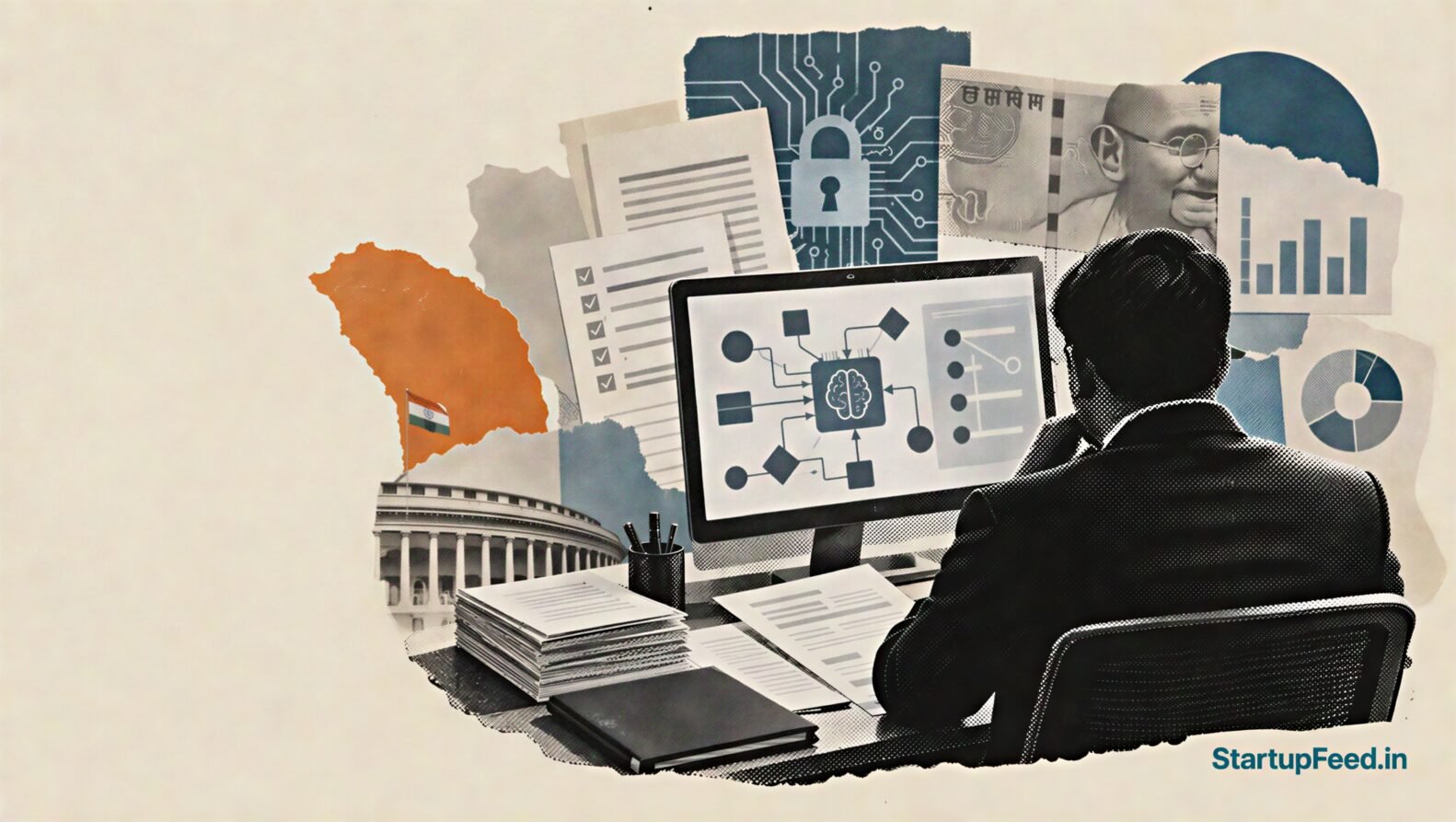
Eligibility, however, is where it gets complex. Each sector has its own minimum investment threshold. In automobiles, an OEM must sell at least Rs 125 crore in eligible vehicles in Year 1 and grow those sales by 10% annually. These thresholds were designed for large manufacturers — and that design choice is now at the centre of the PLI’s biggest policy debate.
About the PLI Scheme
India’s Production Linked Incentive scheme was first introduced in April 2020 for mobile manufacturing, pharmaceuticals, and medical devices. It was progressively extended to 14 sectors by the Union Cabinet. The scheme is administered by the respective sectoral ministries — MeitY for electronics, MHI for automobiles, the Ministry of Textiles for apparel — under the overall coordination of DIPP and the Ministry of Commerce. Total committed investment by March 2025 reached Rs 1.76 lakh crore, with 806 applications approved and Rs 21,500 crore disbursed.
Why Are Startups Largely Excluded from PLI Scheme India?
The exclusion is most acute in the Auto PLI. The Rs 125 crore minimum sales threshold in Year 1 is straightforwardly inaccessible for early-stage manufacturers. More critically, legacy OEMs count petrol vehicle revenue toward eligibility — so a company with Rs 500 crore in motorcycle sales and a nascent EV product qualifies, while a pure-play EV startup with Rs 100 crore in revenue and Rs 200 crore in R&D spend does not.
“PLI, which was meant to push electrification, is penalising almost every pure electric player. They invest hundreds of crores annually in R&D and capex, yet cannot claim PLI — creating a very convoluted structure.”
— Tarun Mehta, Co-founder and CEO, Ather Energy, at BS Manthan 2026
A parliamentary standing committee tabled its 332nd report in the Rajya Sabha in March 2026, recommending that MHI review eligibility thresholds to include EV startups — the first formal institutional endorsement of what Ather, River, and the Startup Policy Forum have been arguing since 2024. The committee also flagged that, as of January 2026, claims for more than 2.32 lakh electric vehicles were pending verification due to integration failures between state vehicle databases and the national VAHAN system.
What Has the PLI Scheme Delivered and Where Has It Fallen Short?
| Metric | Target (2030) | Achieved (By 2026) |
|---|---|---|
| Additional Production | Rs 30 lakh crore | Rs 7.5 lakh crore |
| Investment Committed | Rs 1.97 lakh crore | Rs 3.2 lakh crore |
| Direct Jobs Created | 6 lakh by 2030 | 11.5 lakh (ahead of target) |
| Government Disbursals | Full outlay over 5-6 yrs | Rs 21,500 Cr disbursed by March 2025 |
| MSME Participation | Wide inclusion | Only 176 MSMEs directly benefited |
| Startup Inclusion (Auto) | Not specified | Near-zero — parliamentary reform pending |
Electronics — led by Apple’s India manufacturing push through Tata and Foxconn — is the scheme’s clearest win. The drone segment has been the most startup-friendly, with smaller companies qualifying due to the sector’s lower investment thresholds. Batteries and advanced chemistry cells lag badly: FY26 allocation was cut by 37.7%, and implementation remains behind schedule across committed projects.
What’s Next
The two developments to watch in the next 12 months: MHI’s formal response to the parliamentary panel’s Auto PLI recommendation (expected by Q2 FY27), and whether the government announces a PLI 3.0 or dedicated startup window for deep-tech and EV manufacturers. The Finance Ministry’s 17% cut to MeitY’s FY27 PLI allocation suggests the government is now focused on disbursement discipline over headline spending. Will India use the reform window to bring its most innovative companies inside the tent?

Frequently Asked Questions
What is the PLI scheme and how does it work?
The Production Linked Incentive (PLI) scheme is India’s flagship manufacturing incentive programme, offering companies 4–18% of incremental sales above a FY2019-20 baseline. It was launched in 2020 and now covers 14 sectors with a total outlay of Rs 1.97 lakh crore. Incentives are disbursed annually after companies submit audited sales data — there is no payout without verified production growth.
Which sectors are covered under PLI scheme India?
The 14 PLI sectors are: large-scale electronics (mobile phones), pharmaceuticals, medical devices, automobiles and auto components, advanced chemistry cells (batteries), textile products, white goods, specialty steel, telecom and networking, food processing, solar photovoltaic modules, drones, IT hardware, and non-semiconductor electronics components (approved March 2025). Electronics and automobiles account for the largest combined outlay.
Can startups apply for the PLI scheme?
Participation varies by sector. The drone segment is the most accessible for startups, with lower investment thresholds and 20% incentive rates. The Auto PLI is the most exclusionary — its Rs 125 crore minimum Year 1 sales requirement and reliance on legacy ICE revenue effectively bars pure-play EV startups. A parliamentary committee recommended eligibility reform in March 2026, but MHI’s formal response is still pending.
Written by StartupFeed Desk. Published: April 30, 2026. Updated: April 30, 2026. Have a tip? Write to us at editorial@startupfeed.in.
Liked this story? Follow StartupFeed on Google so our reporting reaches you first.