Quick Take
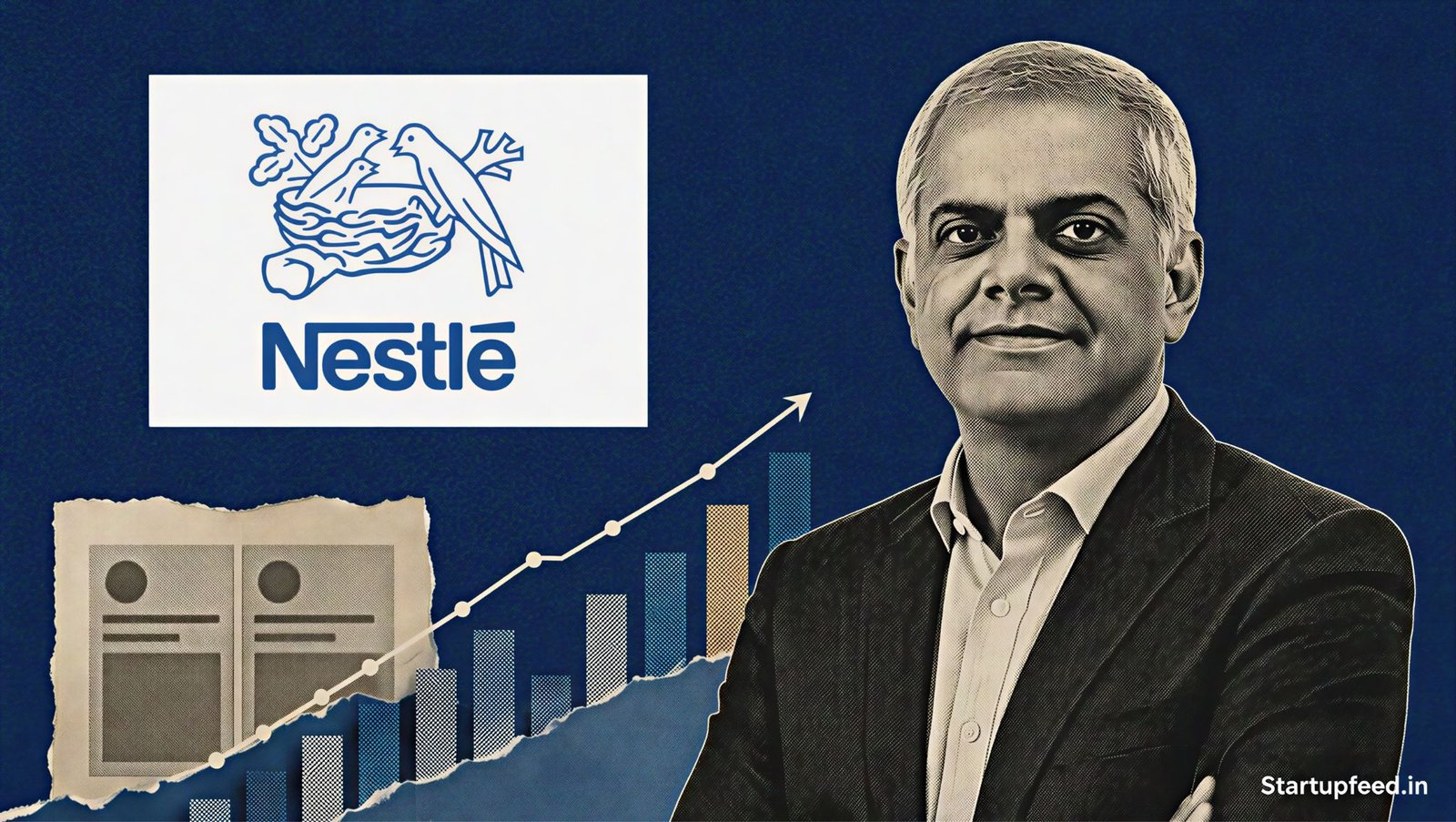
- Nestle India posted Q1 FY27 profit of Rs 975.1 Cr, up 47.9% year-on-year.
- Total sales rose 25.4% to Rs 6,363.3 Cr, with EBITDA margin at 24.2%.
- All four product groups grew in double digits, powered by rural demand and quick commerce.
In This Article
Nestle India Q1 results for FY27, announced on July 22, 2026, show standalone profit after tax at Rs 975.1 Cr, up 47.9% year-on-year, on total sales of Rs 6,363.3 Cr.
The maker of MAGGI and NESCAFE reported sales growth of 25.4% for the quarter ended June 30, 2026, according to its stock exchange filing and press release. Domestic sales grew 25.0% to Rs 6,073.1 Cr and exports climbed 35.6% to Rs 290.2 Cr. Consolidated net profit stood at Rs 958.7 Cr, up 48.3%. The board approved the results the same morning.
StartupFeed Insight
The headline number hides the real story: Nestle India raised advertising spends by over 40% and still expanded EBITDA margin to 24.2% from 21.6%. That combination only happens when raw material costs fall faster than brand investment rises, and the filing confirms it, with material costs dropping from 45.0% to 42.9% of sales. Founders in packaged foods and D2C should watch this closely, because a legacy player funding heavy media while protecting margin squeezes challenger brands on both price and shelf visibility. StartupFeed expects Nestle India to keep advertising elevated through Q2 FY27, with margin holding above 23% unless cocoa and protein costs bite by October 2026. By Avinash.
Nestle India Q1 Results: The Numbers Breakdown
Nestle India reported total sales of Rs 6,363.3 Cr for the June 2026 quarter, against Rs 5,073.96 Cr a year earlier (company filing). Revenue from operations, which includes other operating revenue, reached Rs 6,378.18 Cr. Standalone profit after tax was Rs 975.1 Cr and earnings per share stood at Rs 5.06.
| Metric | Q1 FY27 | Notes |
|---|---|---|
| Total Sales | Rs 6,363.3 Cr | +25.4% YoY (company press release) |
| Standalone PAT | Rs 975.1 Cr | +47.9% YoY from Rs 659.23 Cr |
| Consolidated Net Profit | Rs 958.7 Cr | +48.3% YoY from Rs 646.59 Cr |
| EBITDA | Rs 1,538.1 Cr | Margin at 24.2%, up from 21.6% |
| Domestic Sales | Rs 6,073.1 Cr | +25.0% YoY |
| Export Sales | Rs 290.2 Cr | +35.6% YoY, 4-Star Export House status |
| Result Date | July 22, 2026 | Board approved, auditors issued unmodified report |
The most striking line is exports. At 35.6% growth, the export book grew faster than the domestic business, even as the company flagged geopolitical headwinds.
About Nestle India
Nestle India Limited is the Indian arm of Swiss food and beverage group Nestle S.A., incorporated in 1959 and headquartered in Gurugram, Haryana. It sells packaged foods and beverages across four product groups, led by MAGGI, NESCAFE, KITKAT and MILKMAID. Manish Tiwary serves as Chairman and Managing Director. The parent holds roughly 62.8% of the company, which is listed on BSE and NSE.

How did Nestle India lift its margin so sharply?
Nestle India expanded its EBITDA (Earnings Before Interest, Tax, Depreciation and Amortisation) margin to 24.2% in Q1 FY27 from 21.6% a year ago. The filing shows the main lever clearly. Cost of materials consumed fell to 42.9% of sales from 45.0%, a saving of 210 basis points that flowed straight to operating profit. EBITDA itself rose 39.8% to Rs 1,538.1 Cr.
“We further accelerated operational cost savings, and continued to step up investments behind our brands with advertising spends increasing by over 40%, with a healthy EBIDTA margin of 24.2%,” said Manish Tiwary, Chairman and Managing Director, Nestle India.
That statement is unusual for an FMCG quarter. Most companies trade one for the other: cut media to hold margin, or spend and watch margin slip. Nestle India did both at once because input costs moved in its favour. The company cautioned that commodity conditions stay mixed, with cocoa and sugar under pressure and dairy-based proteins facing inflation.
Which channels drove the sales jump?
Quick commerce emerged as the single biggest growth lever inside Nestle India’s e-commerce business in Q1 FY27, the company said. Its results release credits better product availability, platform-specific pack sizes and heavier on-platform media for the momentum. General trade also grew in double digits across town classes, with rural markets leading.
Rural distribution touchpoints expanded during the quarter. The company attributes part of this to DMS (Distribution Management System) adoption at the sub-distributor level, a software layer that tracks retailer orders and stock. Powdered and liquid beverages clocked a 20th straight quarter of double-digit growth, while confectionery gained share on the back of KITKAT and its One Piece partnership. Pet food expanded with FELIX Gravy Lover and PRO PLAN Cat launches.
How does Nestle India compare with FMCG peers?
Nestle India’s 25.4% sales growth sits far above what brokerages expected from most large FMCG names this quarter. Pre-result estimates tracked by analysts placed HUL, Dabur and Colgate in the high-single-digit to low-double-digit sales growth band for Q1 FY27, with Nestle itself pegged at mid-teens growth. The company beat that.
| Company | Q1 Sales Growth | Reference Period |
|---|---|---|
| Nestle India | +25.4% YoY | Q1 FY27 reported |
| HUL | +5.1% YoY | Q1 FY26 reported |
| Britannia | 5-7% volume growth | Q1 FY27 brokerage estimate |
What separates Nestle India is portfolio concentration. Four product groups, all growing in double digits, in a quarter when peers leaned on price hikes rather than volume.
What’s Next
The next test arrives with Q2 FY27 results around late October 2026. Watch whether the 24.2% EBITDA margin survives cocoa and protein inflation, and whether quick commerce keeps compounding once the festive base normalises. Shareholders receive a special dividend of Rs 2.00 per share alongside the Rs 5.00 final dividend from July 30, 2026. Can any Indian FMCG peer match this pace in the same quarter?



Frequently Asked Questions
Disclaimer: This article is for informational purposes only and does not constitute investment advice. StartupFeed and its authors are not SEBI-registered investment advisors. The analysis above is based on publicly available information and should not be the sole basis for any investment decision. Please consult a SEBI-registered financial advisor before making investment decisions.
Written by Avinash. Have a tip? Write to us at editorial@startupfeed.in.
Liked this story? Follow StartupFeed on Google so our reporting reaches you first.