
Quick Take
- Apple posted record Q2 2026 revenue of $111.2 billion — up 17% YoY — its best-ever March quarter, driven by iPhone 17 demand and an all-time high Services revenue of $30.98 billion.
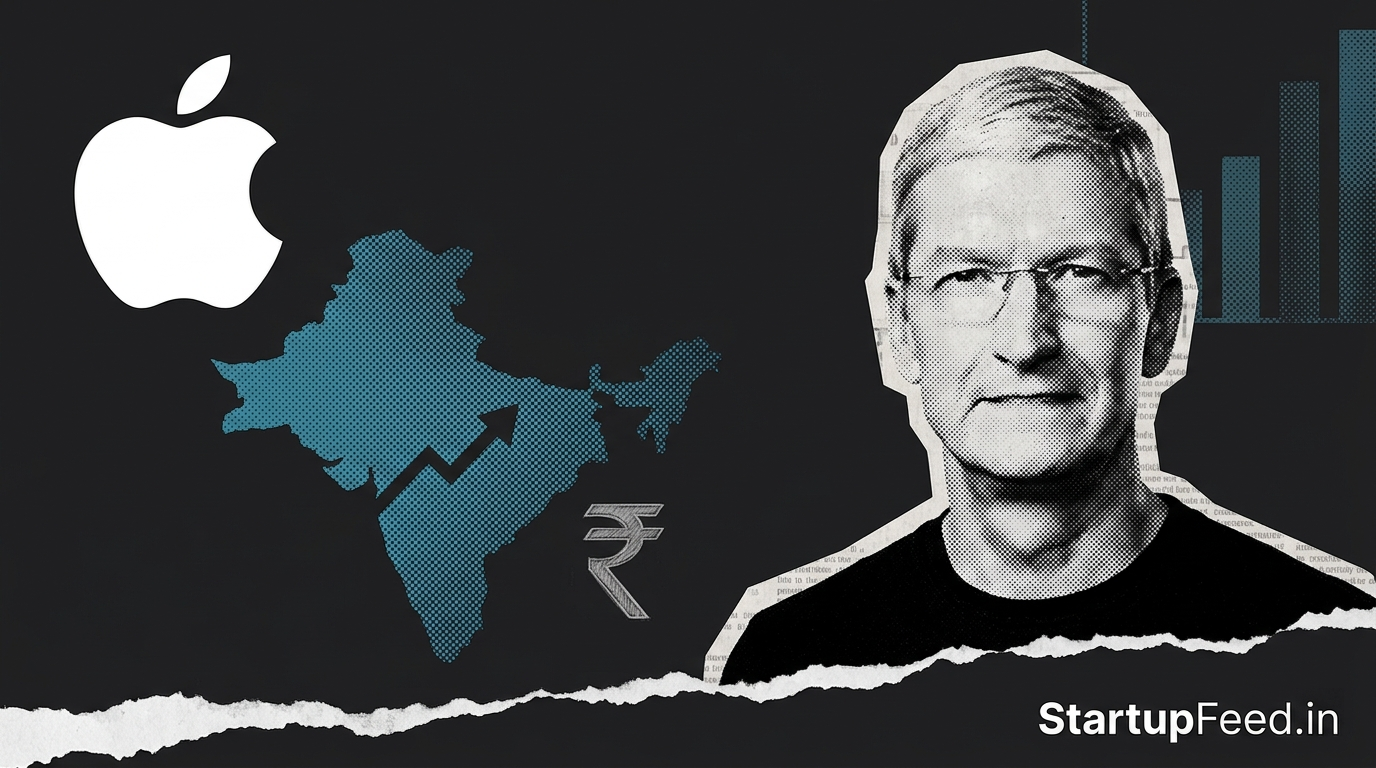
- Tim Cook singled out India as a standout growth market with double-digit expansion across iPhone, Mac, and iPad, calling India a “huge opportunity” and adding he is “over the moon excited.”
- Cook’s India remarks are among his last as CEO — John Ternus takes over as Apple CEO on September 1, 2026, with Cook moving to executive chairman.
Apple Q2 2026 India growth story was the most quoted passage from the company’s April 30 earnings call — and it came from a CEO who is counting down his final months in the role. Tim Cook, who will hand over the CEO title to John Ternus on September 1, 2026, told analysts that India delivered double-digit growth across multiple product lines in the March quarter and called it one of the most exciting markets on Earth for Apple’s long-term ambitions.
Apple’s total revenue for the quarter was $111.2 billion, up 17% year-on-year — its best-ever March quarter and a result that beat Wall Street estimates across virtually every line except iPhone units, which fell just short of consensus despite a 22% revenue increase.
Cook’s India remarks were precise and pointed. He acknowledged that Apple’s market share in India remains “modest” despite years of strong performance — a rare admission that frames India not as a success story to celebrate, but as an opportunity that is still largely untapped. With India now the world’s second-largest smartphone market and third-largest PC market, and with most of Apple’s Indian customers being first-time Apple buyers across all product lines, Cook’s characterisation of India as a “perfect environment to grow” is backed by structural data, not just enthusiasm.
StartupFeed Insight
The two most important sentences in Apple’s Q2 2026 earnings call — for an Indian audience — were not about iPhone revenue or Services records. They were Cook’s admission that Apple has a “modest share” in India, and his statement that most customers across all product lines are “new to the brand.” Together, those two sentences describe a market where Apple has established aspirational equity, retail infrastructure, and manufacturing depth without yet converting that equity into volume. That gap is the opportunity.
India’s premium smartphone segment (devices above Rs 30,000) is the fastest-growing segment in the world’s second-largest smartphone market, and Apple’s installed base expansion there is still in early innings. For Indian founders: Apple’s India conviction has direct downstream effects on the startup ecosystem.
Every new Apple Store location creates a service and accessory market. Every iPhone first-time buyer creates an AppStore customer. Every MacBook sold to a student creates a developer. Apple’s India bet is not just a consumer electronics story — it is a platform expansion story. The question is whether India’s startup ecosystem is ready to build for the next hundred million Apple users before they arrive. — StartupFeed Desk
Apple Q2 2026 Earnings: Full Results Breakdown
| Metric | Q2 2026 Result | YoY Change | vs Analyst Estimate |
|---|---|---|---|
| Total Revenue | $111.2 billion | +17% | Beat — record March quarter |
| Net Profit | $29.6 billion | +19% | Beat |
| Earnings Per Share (diluted) | $2.01 | +22% | Beat — March quarter record |
| iPhone Revenue | Not disclosed (units missed slightly) | +22% | Units slightly below estimate; revenue beat |
| Services Revenue | $30.98 billion | +16% | Beat — all-time record high |
| Operating Cash Flow | $28+ billion | — | March quarter record |
| Gross Margin | 49.3% | — | Beat (estimate: 48.4%) |
| Share Buyback Authorised | $100 billion additional | — | — |
| Dividend | $0.27/share | +4% | — |
| Q3 FY26 Revenue Guidance | +14% to +17% YoY | — | Significantly ahead of estimate (+9.5%) |
CFO Kevan Parekh flagged two headwinds that prevented an even stronger quarter: supply constraints on iPhones and Macs, driven by competition for TSMC’s 3nm advanced node — the same fabrication process used for high-demand AI chips — and ongoing tariff exposure. Cook said Apple is applying for tariff refunds under the established process and will reinvest any recovered amounts into US innovation and manufacturing, in addition to existing commitments. The Q3 guidance of 14–17% growth — far ahead of the analyst consensus of 9.5% — sent Apple stock up approximately 3% in after-hours trading.
What Apple Q2 2026 India Growth Numbers Actually Mean
India delivered double-digit growth across three product categories in Q2 2026: iPhone (standout market alongside the US, Latin America, Greater China, Western Europe, Japan, and Southeast Asia), Mac (highlighted alongside Indonesia as a standout for developed and emerging market Mac growth), and iPad (standout alongside Mexico and Thailand for emerging market iPad expansion). Cook described India as among the clearest examples of new March quarter records being set across both developed and emerging markets.

| Product | India Q2 2026 Performance | Market Context |
|---|---|---|
| iPhone | Double-digit growth; India among global standout markets | India: 2nd largest smartphone market globally; Apple share estimated 7–10% — significant headroom vs Samsung (16%) and Vivo (20%) |
| Mac | Double-digit growth alongside Indonesia | Mac India shipments grew 62.3% YoY in Q4 2024; MacBook Neo launched at Rs 69,900 targeting students and first-time buyers |
| iPad | Double-digit growth alongside Mexico and Thailand | iPad Air with M4 chip launched in March 2026; India among key emerging market drivers |
| Services | Not separately broken out for India | Global Services revenue at all-time high of $30.98 Bn; India AppStore and iCloud growing with installed base |
Cook’s acknowledgement that Apple still has a “modest share” in India is the most strategically significant data point in his India commentary. Apple’s current estimated iPhone market share in India is 7–10% by volume — behind Samsung (16%) and Vivo (20%) — despite leading the premium segment (devices above Rs 30,000) where it competes more directly. The PC market position is similar: Mac shipments are growing sharply but still trail volume leaders HP and Lenovo. The gap between aspiration and volume is exactly where Cook sees the long-term opportunity.
About Apple Inc.
Apple Inc. is an American multinational technology company headquartered in Cupertino, California, founded by Steve Jobs, Steve Wozniak, and Ronald Wayne in 1976. Tim Cook has served as CEO since 2011. Apple designs, manufactures, and markets smartphones (iPhone), personal computers (Mac), tablets (iPad), wearables (Apple Watch, AirPods), and services (App Store, iCloud, Apple Music, Apple TV+). As of Q2 FY2026, Apple has a market capitalisation of approximately $3.1 trillion and an active device installed base at an all-time high across all major product categories and regions. In India, Apple manufactures approximately 25% of its global iPhone production through Foxconn and Tata Electronics, with Indian iPhone exports reaching approximately Rs 1.5 lakh crore in FY25 — a 76% surge year-on-year.
Apple India’s Manufacturing Story: The Other Reason Cook Is Bullish
Cook’s consumer market enthusiasm is inseparable from Apple’s manufacturing transformation in India. India now produces approximately 25% of all iPhones globally — up from less than 5% just four years ago. In calendar year 2025, Indian factories assembled approximately 55 million iPhones, a 53% increase year-on-year, led by Foxconn’s Bengaluru facility and Tata Electronics’ expanding multi-site capacity. Apple has publicly targeted majority US-bound iPhone production from India by end of 2026 — a supply chain diversification move accelerated by US tariff exposure.
The India PLI scheme has been a critical enabler of this manufacturing shift — one of the rare cases where the Auto PLI’s startup exclusion critique does not apply. Apple’s manufacturing partners (Foxconn and Tata) qualify as large-scale electronics manufacturers and have been able to access PLI benefits that have partially offset the higher operational costs of building in India versus China. The combined investment pipeline for Apple-related manufacturing in India is estimated to exceed $5 billion through 2028.
Apple is also expanding retail: a sixth company-owned India store opened in Borivali, Mumbai. Each owned store brings Apple’s full service stack — Genius Bar, Today at Apple sessions, complete product range — directly under its control, rather than through resellers, giving the brand its most effective tool for converting first-time aspirational buyers into Apple ecosystem customers.
The CEO Transition Question: What Changes When Ternus Takes Over?
Cook’s India remarks on the Q2 2026 earnings call carry a particular weight: they are among the last he will make as CEO before John Ternus, currently Apple’s Senior Vice President of Hardware Engineering, takes the top role on September 1, 2026. Cook will move to executive chairman of Apple’s board.
Ternus is a hardware engineer by formation — the executive credited internally with the M-series chip transition and the Apple Silicon architecture that redefined Mac performance. His elevation signals that Apple’s next phase of growth is expected to come from hardware innovation, not from the services-and-ecosystem flywheel that Cook spent his tenure building. For India, the question is whether Ternus will maintain Cook’s personal conviction about the market — Cook visited India in person to open the first Apple Stores in 2023 and has mentioned India on virtually every earnings call since — or whether India will become one priority among many in a hardware-focused CEO’s roadmap.


What’s Next
Three India-specific signals to watch in the next two quarters. First, whether Apple announces any additional owned retail locations in India beyond the six currently operating — a direct indicator of how deeply the company is investing in retail infrastructure for the next growth phase. Second, the Q3 FY26 earnings commentary on India (due July 2026) — the first results that will overlap with Ternus’s transition period and signal whether India enthusiasm survives the leadership change. Third, whether India’s iPhone manufacturing share crosses the 30% threshold by end of 2026, which would make India Apple’s largest single manufacturing location outside China — a geopolitical and supply chain milestone with significant downstream effects for India’s broader electronics export ambitions.
Frequently Asked Questions
What did Tim Cook say about India on Apple’s Q2 2026 earnings call?
Tim Cook called India a “huge opportunity” for Apple during the Q2 2026 earnings call on April 30, 2026. He noted that India is the world’s second-largest smartphone market and third-largest PC market, that Apple has performed “extremely well” in the country but still holds only a “modest share,” and that most Apple customers in India are first-time Apple buyers across all product lines. He concluded his India remarks by saying: “Net-net, I’m over the moon excited about India.” Apple posted double-digit growth in India across iPhone, Mac, and iPad in the March quarter.
What were Apple’s Q2 2026 earnings results?
Apple reported record Q2 FY2026 revenue of $111.2 billion, up 17% year-on-year — its best-ever March quarter. Net profit was $29.6 billion (+19% YoY), diluted EPS was $2.01 (+22%), Services revenue hit an all-time high of $30.98 billion, and gross margin came in at 49.3%. Apple authorised a new $100 billion share buyback and raised its dividend by 4% to $0.27 per share. Q3 FY26 revenue guidance of 14–17% growth significantly exceeded the analyst consensus of 9.5%.
Who is replacing Tim Cook as Apple CEO?
John Ternus, currently Apple’s Senior Vice President of Hardware Engineering, will become Apple CEO on September 1, 2026. Tim Cook will move to the role of executive chairman of Apple’s board of directors. Ternus is widely credited with leading Apple’s M-series chip development and the Apple Silicon transition, which redefined Mac performance. Apple announced the leadership transition in April 2026.
Written by Harshvardhan jain. Published: May 1, 2026. Updated: May 1, 2026. Have a tip? Write to us at editorial@startupfeed.in.
Liked this story? Follow StartupFeed on Google so our reporting reaches you first.