
Quick Take
- Ather CEO Tarun Mehta has called India’s Auto PLI scheme a “policy disability” for pure EV startups.
- PLI-eligible competitors enjoy an 18% cost advantage, forcing Ather to delay entry-level and motorcycle launches.
- A parliamentary panel now recommends relaxing eligibility rules, backed by a reported PMO nudge to MHI.
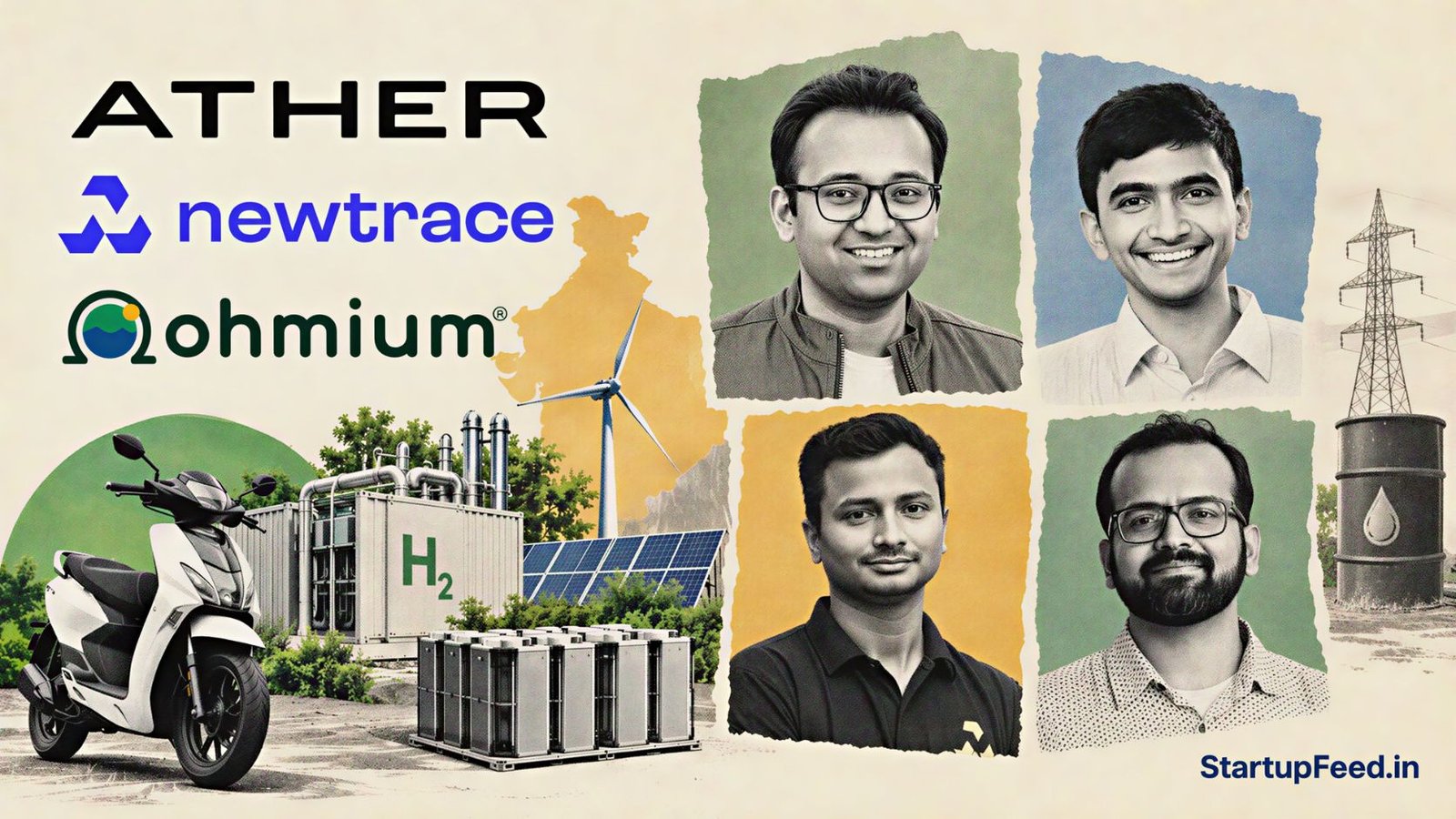
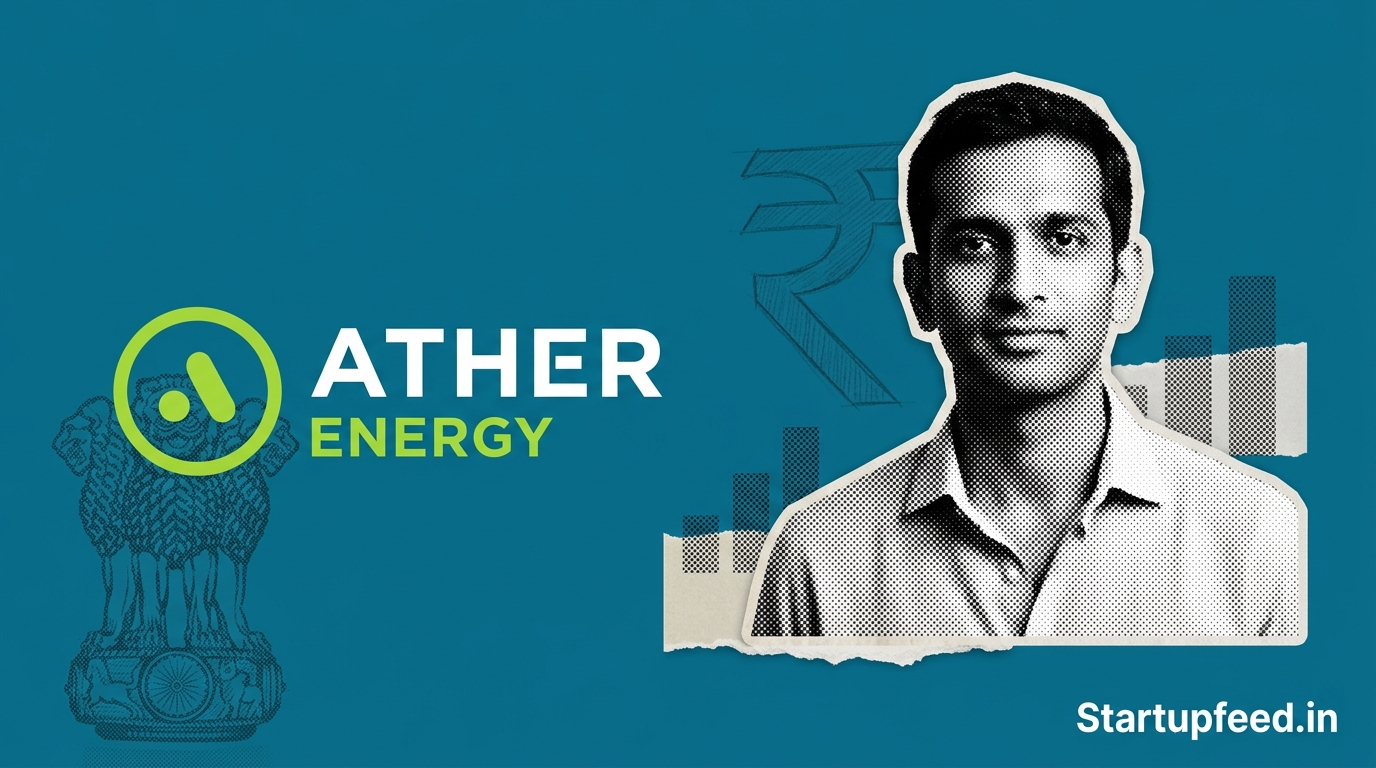
Ather CEO Tarun Mehta slams PLIene scheme rules that bar pure electric vehicle startups from benefits worth 13–18% of revenue, calling the structure a “policy disability” that penalises companies that built India’s EV ecosystem from scratch.
Mehta’s criticism has grown louder over the past year — from Ather’s Community Day 2025 to the BS Manthan summit in February 2026 — and has since attracted political weight. A parliamentary standing committee tabled a report in the Rajya Sabha in March 2026, recommending the Ministry of Heavy Industries (MHI) revisit eligibility thresholds to give EV startups a fair shot. The report is reportedly backed by a PMO nudge.
StartupFeed Insight
The PLI exclusion isn’t just Ather’s problem — it is a structural signal that India’s industrial policy still defaults to scale and incumbency rather than innovation and disruption. Mehta’s data point that five of the six PLI-approved OEMs haven’t even started meaningful production is a damning verdict on a Rs 25,938 crore scheme. Who should be watching: every EV founder, every EV-sector VC, and every politician who believes India can own the $100 billion global e2W export market.
The PMO nudge and parliamentary panel recommendation suggest the window for reform is open but narrow. Our view: if MHI revises eligibility by Q3 FY27, Ather will fast-track both its sub-Rs 1 lakh scooter and its Zenith motorcycle platform — two product categories that could add 30–40% to its addressable market. — StartupFeed Desk
Why Does Ather CEO Tarun Mehta Slam the PLI Scheme?
| Issue | Detail | Impact on Ather |
|---|---|---|
| Eligibility threshold | Minimum Rs 125 Cr in qualifying vehicle sales in Year 1 | Pure EV startups with no ICE revenue cannot meet this threshold |
| ICE revenue advantage | Legacy OEMs count petrol vehicle revenue toward eligibility | Competitors receive 13–18% PLI benefit; Ather receives zero |
| PLI scheme outlay | Rs 25,938 Cr approved over five years (Cabinet, Sept 2021) | Ather not among the 82 approved beneficiaries out of 115 applicants |
| Delayed product launches | Sub-Rs 1 lakh scooter, electric motorcycles on hold | Competing at an 18% cost disadvantage is not viable |
| Parliamentary panel action | 332nd Standing Committee report, tabled March 2026 | Recommends MHI review e2W startup eligibility — first formal reform signal |
The sharpest data point Mehta has cited: five of the six companies approved under the Champion OEM Incentive Scheme have not started meaningful production or applied for vehicle certification. That outcome, he argues, is the clearest evidence that rigid eligibility attracted the wrong beneficiaries.
About Ather Energy
Ather Energy is a Bengaluru-based electric two-wheeler manufacturer founded in 2013 by Tarun Mehta and Swapnil Jain, both IIT Madras alumni. Listed on BSE and NSE in May 2025, the company posted revenue of Rs 995.7 crore in Q3 FY26, up 53% year-on-year, with an 18.8% pan-India market share. It operates more than 5,000 fast chargers and 700+ experience centres. Hero MotoCorp is its largest institutional backer.
How Does the PLI Exclusion Affect Ather’s Product Roadmap?
Mehta has been direct about the consequence: Ather is deliberately delaying entry into the sub-Rs 1 lakh scooter segment and electric motorcycles because competing against a 13–18% PLI subsidy enjoyed by ICE-first rivals makes unit economics impossible. He said the company is effectively waiting for the PLI scheme to expire before launching these categories — a delay he estimates costs India new jobs, new export capacity, and new EV adoption.
“The reason I don’t want to go below Rs 1 lakh price point is because I’m competing with players who get 18% PLI benefit. How do you fight with 18%? It’s like both hands tied behind your back.”
— Tarun Mehta, Co-founder and CEO, Ather Energy, at BS Manthan 2026
Ather is not alone. River, JSW MG Motor, and several other pure-EV players face identical exclusions. Mehta has framed this as a systemic problem: PLI, a policy designed to accelerate electrification, is inadvertently penalising the companies most committed to it.
How Does Ather Compare to PLI-Eligible EV Rivals?
| Company | PLI Eligible? | e2W Market Share (Q3 FY26) | Key Advantage |
|---|---|---|---|
| TVS Motor | Yes | ~22% | ICE revenue qualifies; PLI incentives on iQube |
| Bajaj Auto | Yes | ~21% | Chetak benefits from PLI; large ICE base |
| Ather Energy | No | 18.8% | Pure EV — no ICE revenue; largest public charging infra in India |
| Ola Electric | Partial | ~25% | Received PLI certification for Gen 3 portfolio in late 2025 |
The competitive gap is stark: Ather holds the largest public fast-charging network in India and leads the market in South India, J&K, and the North-East — yet it competes at a structural cost disadvantage versus rivals whose core business is still petrol.
What’s Next
Watch the Ministry of Heavy Industries’ response to the parliamentary panel’s March 2026 recommendation. If MHI revises the Auto PLI eligibility criteria by Q3 FY27, Ather has signalled it will fast-track the sub-Rs 1 lakh scooter and the Zenith motorcycle platform — a move that could unlock the high-volume mass market for the first time. Will India’s policymakers fix a Rs 25,938 crore scheme before its window closes?
Frequently Asked Questions
Why is Ather Energy excluded from India’s Auto PLI scheme?
Ather Energy is excluded from the Auto PLI scheme because its eligibility rules require companies to meet a minimum revenue threshold from qualifying vehicles — a threshold that legacy OEMs meet using petrol vehicle sales. As a pure-play EV company with no ICE revenue, Ather cannot meet this threshold, despite being one of India’s top three e2W manufacturers by market share and the largest operator of public EV fast-chargers in the country.
What is the Auto PLI scheme and how much is it worth?
The Automobile and Auto Components PLI scheme was approved by the Union Cabinet in September 2021 with a total outlay of Rs 25,938 crore over five years. It offers incentives of 13–18% linked to incremental sales of qualifying vehicles, aimed at boosting domestic manufacturing of advanced automotive technologies. Of the 115 companies that applied, 82 were approved — but Ather is not among them.
Has any action been taken to fix the PLI startup exclusion?
A Parliamentary Standing Committee on Industry tabled its 332nd report in the Rajya Sabha in March 2026, recommending that MHI review and relax Auto PLI eligibility thresholds to include EV startups. The recommendation is reportedly backed by a PMO nudge to MHI. Ather CEO Tarun Mehta welcomed the development, calling it a “hopeful” signal — but formal policy revision is still pending.
Written by Harshvardhan jain. Published: April 30, 2026. Updated: April 30, 2026. Have a tip? Write to us at editorial@startupfeed.in.
Liked this story? Follow StartupFeed on Google so our reporting reaches you first.