
Quick Take
- NPCI is building the Unified Agent Protocol to let AI agents make small UPI payments without approving each one.
- UPI processed 24.51 billion transactions in August 2026, worth Rs 29.82 lakh crore, up 22% from a year earlier.
- Reuters says the protocol could be unveiled at the Global Fintech Fest in Mumbai, which runs from September 8 to 11, 2026.
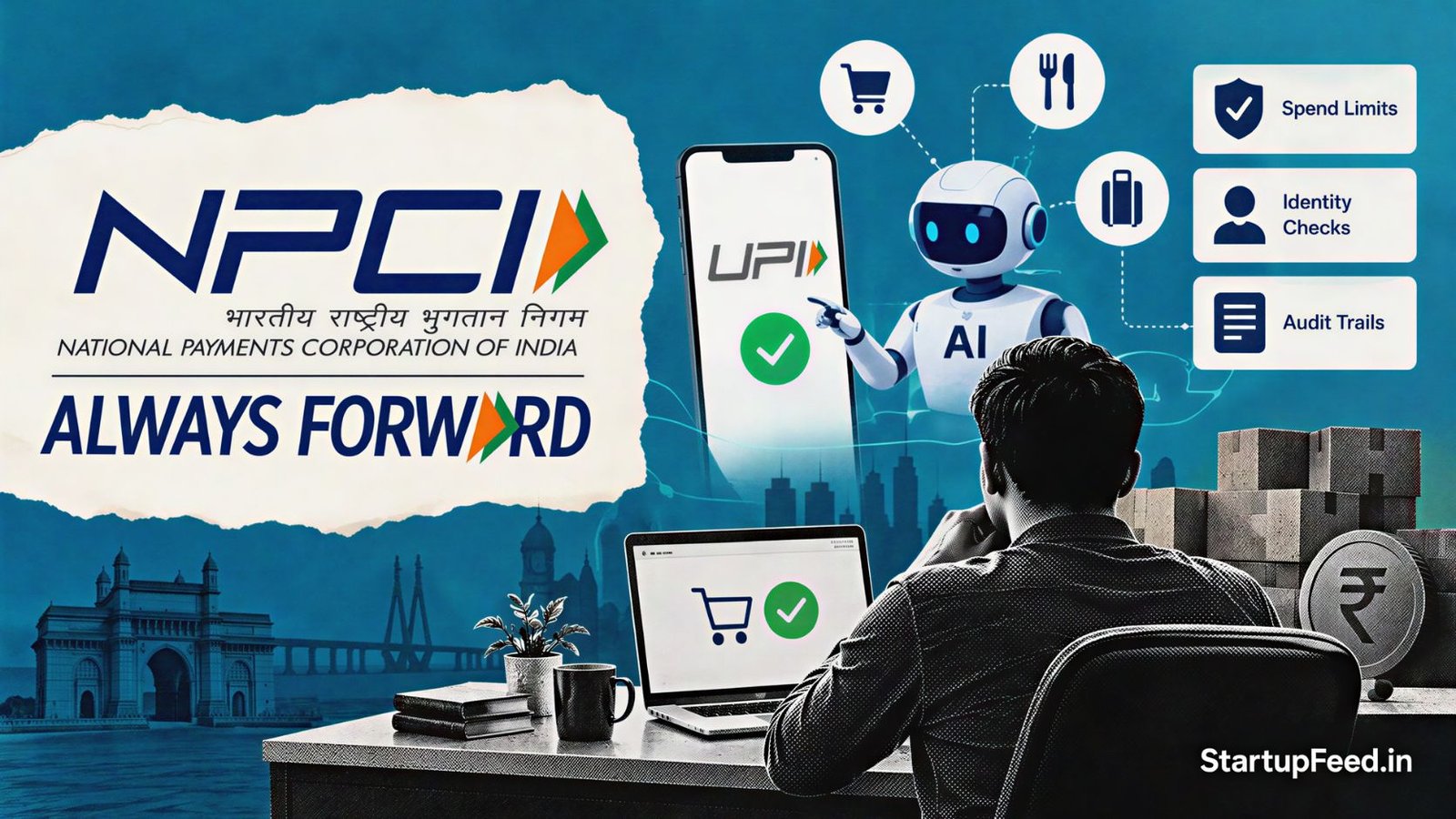
India is building a way for AI agents to pay directly over UPI. The National Payments Corporation of India (NPCI) is developing the Unified Agent Protocol. It would let an AI agent make small UPI payments without asking you to approve each one.
Reuters reported the plan on September 3, 2026, citing three people familiar with it. The protocol could be unveiled at the Global Fintech Fest in Mumbai. That event runs from September 8 to 11, 2026.
NPCI declined to comment when Inc42 asked. Business Standard first reported the work in July 2026.
Here is the core idea. Today UPI trusts a human and their phone. An AI agent is neither.
So NPCI wants a new layer. It can register, verify and authorise agents to act for a user.

NPCI’s own role would stay narrow. It would only check whether a payment request is genuine, as it does now. It would not see what you are buying.
Why this matters for Indian founders
UPI is the largest instant payment system in the world. It processed 24.51 billion transactions in August 2026, worth Rs 29.82 lakh crore. That volume rose 22% from a year earlier.
Daily transactions averaged 791 million. Those numbers come from NPCI data reported by Business Standard.
An agent layer on top of that base is a large opening. It would let founders build tools that shop, book and pay inside a chat. Groceries and other small, repeat buys are the likely first use.
Over time NPCI expects harder cases. Think of agents that buy on a discount, or invest at a set price.
How would the controls work
The user sets the rules. You would tell the agent how much it can spend, on what, and when. NPCI plans built-in spending limits, identity checks and audit trails.
A liability framework is also planned. Who pays for a bad transaction is not yet clear.



The protocol builds on two existing UPI features. The first is UPI Circle. It lets a primary user delegate payment power to a trusted secondary user, which could be an agent.
The second feature is Reserve Pay. It lets a user block funds for several future debits.
Those features already carry limits. Under UPI Circle Full Delegation, a primary user can set a monthly cap of up to Rs 15,000. Each transaction is capped at Rs 5,000.
Sources told Reuters these caps could change for agent use.
Who is already building here
This is not a cold start. NPCI showed a live agentic payments demo at the Global Fintech Fest in September 2025. That demo used Google’s Gemini, BigBasket, Google Pay and Razorpay.
In the demo, an assistant scaled a recipe, ordered the items and paid. It did all of it in one flow.
In October 2025, Razorpay, NPCI and OpenAI began a pilot for agentic payments on ChatGPT. Axis Bank and Airtel Payments Bank were the banking partners. BigBasket, a Tata firm, was an early merchant.
In that pilot, a ChatGPT user could order recipe items from BigBasket. The payment ran through Razorpay’s UPI stack.
NPCI has also been laying AI groundwork. In February 2026, it announced work with NVIDIA on what it called a payments-native AI base for India. Fintech firms such as Pine Labs and Cashfree have been building agent payment tools too.
The open question is fraud
Agentic payments raise a hard safety question. An agent that spends on its own is a new target for bad actors.
NPCI’s plan leans on spending caps, identity checks and audit trails to limit the risk. The liability split, if an agent is tricked, is still being worked out.
There is also a global race. Google unveiled its Universal Commerce Protocol in January 2026. Visa and OpenAI are building similar agent commerce standards.
India’s edge is UPI itself. It is a public rail that already reaches hundreds of millions.
StartupFeed Insight
The Unified Agent Protocol matters less as a product and more as a rail. NPCI is not building a shopping agent. It is building the trust layer every agent must pass through, the same move that made UPI itself win. That is the part founders should watch. Suppose NPCI keeps its role to verifying agents and leaves commerce to the market. Then a wave of Indian agent apps becomes possible, on a public rail no rival controls. Expect the first live pilots under this protocol to be announced at the Global Fintech Fest between September 8 and 11, 2026.
By Soumya Verma — Senior Correspondent
What this means for you: If you build in payments or commerce, start mapping where an agent layer fits your product now. The rails are close.
Frequently Asked Questions
Have a tip? Write to us at editorial@startupfeed.in.
Liked this story? Follow StartupFeed on Google so our reporting reaches you first.