
Quick Take
- RBI retained Tata Sons in its Upper Layer NBFC list for 2026-27, among 17 named entities.
- Tata Sons held standalone assets above Rs 2 Lakh Cr ($21 Bn) as of March 31, 2026.
- Its plea to deregister as a CIC stays pending, so the listing question remains open.
In This Article
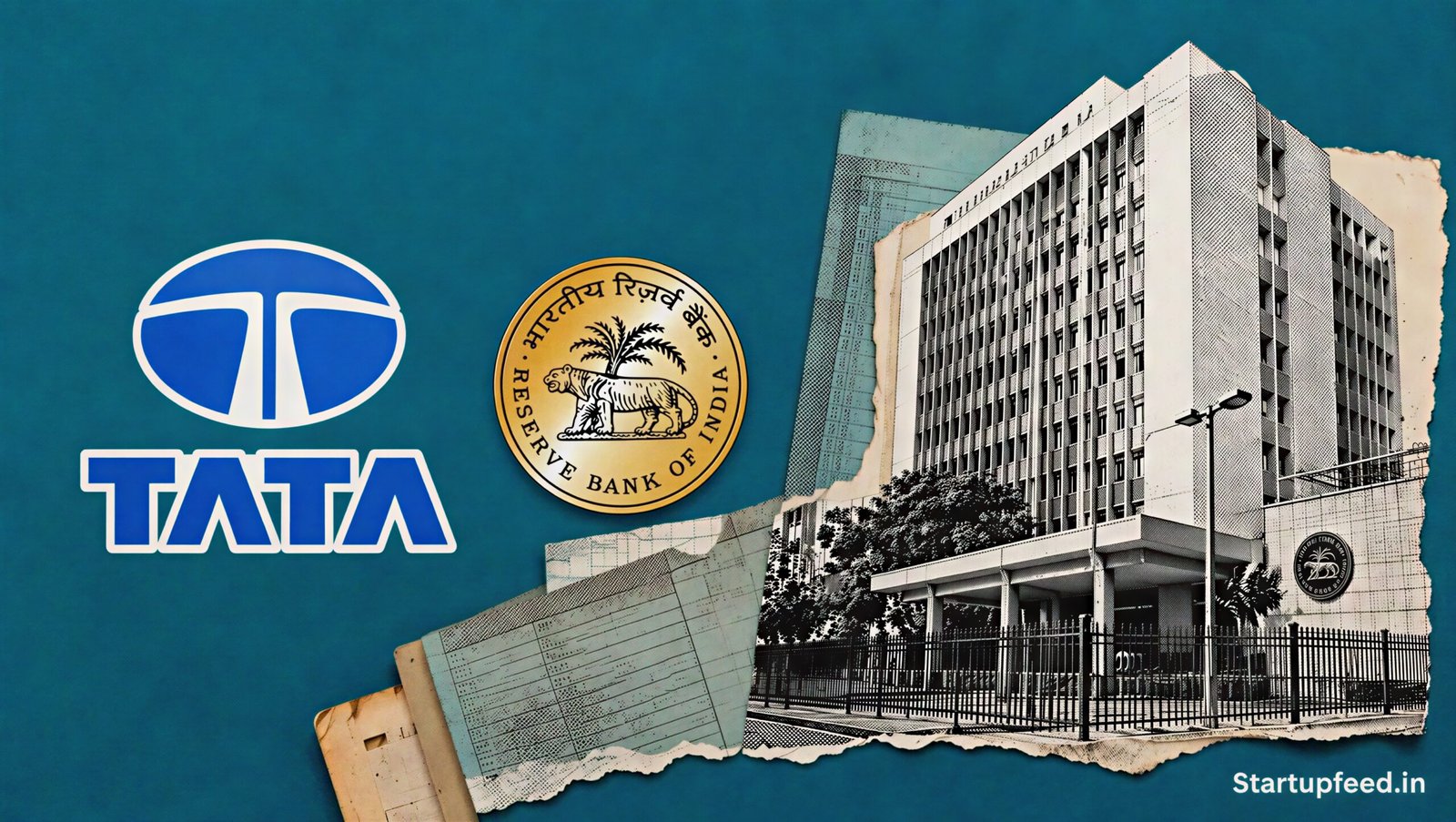
The Reserve Bank of India has retained Tata Sons Upper Layer NBFC status for 2026-27, keeping the Tata Group holding company under its strictest non-banking rules. The RBI published the list on August 6, 2026, naming 17 entities in all.
Tata Sons held standalone assets of more than Rs 2 Lakh Cr ($21 Bn) as of March 31, 2026, according to the RBI. That sits well above the Rs 1 Lakh Cr threshold set under the revised principle-based framework that took effect in June 2026. The central bank stressed the classification does not settle the company’s pending plea to exit the NBFC framework. Details of the framework are available on the RBI Scale Based Regulation notification.
StartupFeed Insight
The five-year lock is the detail most readers miss. Even if the RBI clears the deregistration plea, Tata Sons stays inside the enhanced framework for at least five years from its FY27 classification, so a quick clean exit is off the table. Watch two camps: Tata Trusts, which resists listing to protect control, and the Shapoorji Pallonji Group, which wants a listing to unlock value from its 18.5% stake. StartupFeed expects the RBI to issue a clear signal on the deregistration path before March 31, 2027, since the listing overhang cannot stay unresolved through another full review cycle. By Harshvardhan Jain.
The FY27 Classification At A Glance
Tata Sons is the only Core Investment Company (CIC) on the RBI’s Upper Layer list for 2026-27. A CIC is an NBFC whose main business is holding stakes in its own group companies. The table below sets out the key facts.
| Metric | Detail | Notes |
|---|---|---|
| Classification | Upper Layer NBFC (NBFC-UL) | Retained for FY27 |
| Standalone Assets | Above Rs 2 Lakh Cr ($21 Bn) | As of March 31, 2026 (RBI) |
| Asset Threshold | Rs 1 Lakh Cr and above | Revised norms, effective June 2026 |
| Registration Type | Core Investment Company (CIC) | Only CIC on the list |
| Total Entities On List | 17 NBFCs | Up from 15 in FY25 |
| Announcement Date | August 6, 2026 | RBI press release |
The most striking fact is Tata Sons’ status as the sole unlisted entity carrying the CIC tag on a list otherwise packed with lenders. Once classified, an NBFC-UL stays under enhanced rules for at least five years, even if it later falls below the criteria, per the RBI.
About Tata Sons
Tata Sons Private Limited is the principal holding company of the Tata Group, founded in 1917 and based in Mumbai. It holds stakes across 31 group firms, including Tata Consultancy Services (TCS), Tata Motors, and Tata Steel, operating as a Core Investment Company. Its largest shareholder is Tata Trusts, which holds about 66%, followed by the Shapoorji Pallonji Group at roughly 18.5%. It became debt-free in FY24 after prepaying its borrowings.


Why is Tata Sons Upper Layer NBFC status back in focus?
The Tata Sons Upper Layer NBFC tag matters because Upper Layer status carries a listing requirement. Under RBI rules, an NBFC-UL must implement a board-approved policy to adopt the enhanced framework and list on the stock exchanges within three years. Tata Sons was first placed in the Upper Layer in September 2022, which set an original listing deadline of September 2025.
“It is principle-based; anyone who meets the criteria will continue,” said RBI Governor Sanjay Malhotra, at the Monetary Policy Committee press conference on August 5, 2026.
The company applied in 2024 to surrender its CIC registration after becoming debt-free, a move that would let it stay private and unlisted. That plea has still not been decided, even though the September 2025 deadline has passed. The RBI’s FY27 list keeps the pressure on without forcing an immediate outcome.
What does the pending deregistration plea mean?
The pending plea means Tata Sons’ listing future is not yet fixed either way. The RBI made this explicit in its release, stating that inclusion in the Upper Layer list is without prejudice to the outcome of the deregistration application, which is under examination. Full text sits on the RBI press releases page.
If the RBI approves the plea before the listing obligation bites, Tata Sons may avoid going public. If it does not, the company faces the full set of Upper Layer norms, listing included. Two big shareholders pull in opposite directions, which adds to the stakes. Tata Trusts opposes a listing that could dilute its grip on the group, while the Shapoorji Pallonji Group backs a listing to help monetise its stake and ease its own debt load.
How does Tata Sons compare on the list?
Tata Sons stands apart on the FY27 Upper Layer list as the only unlisted entity and the only CIC. The other 16 names are established lenders, most of them already listed or state-owned. The table below shows how it differs.
| Entity | Type | Listing Status |
|---|---|---|
| Tata Sons | Core Investment Company | Unlisted |
| Tata Capital | NBFC-ICC | Listed |
| Bajaj Finance | Deposit-taking NBFC | Listed |
| REC Limited | Infrastructure Finance | Listed, state-owned |
The RBI took an ownership-neutral view this year, adding state-owned names like REC, Power Finance Corporation, and Indian Railway Finance Corporation, though these government firms are exempt from the listing requirement. What sets Tata Sons apart is that it wants out of the framework entirely, rather than a listing waiver.
What’s Next
The next signal to watch is the RBI’s decision on the deregistration plea, which could land within the FY27 cycle ending March 31, 2027. A green light would let Tata Sons stay private, though the five-year enhanced-rules lock would still apply. A refusal would revive the listing clock. Which way do you think the RBI will lean on one of India’s most closely held companies?

Frequently Asked Questions
Disclaimer: This article is for informational purposes only and does not constitute investment advice. StartupFeed and its authors are not SEBI-registered investment advisors. The analysis above is based on publicly available information and should not be the sole basis for any investment decision. Please consult a SEBI-registered financial advisor before making investment decisions.
Have a tip? Write to us at editorial@startupfeed.in.
Liked this story? Follow StartupFeed on Google so our reporting reaches you first.