UPI Vyapaar Saksham: Rs 300 Per QR, Rs 750 Per Soundbox
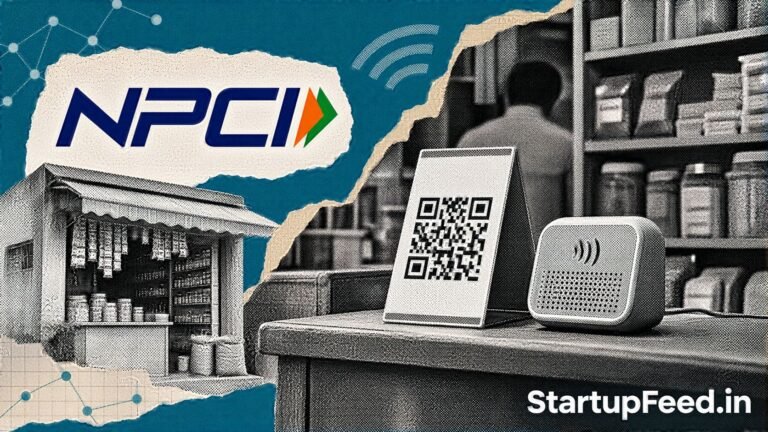
The UPI Vyapaar Saksham scheme pays banks Rs 300 per QR code and Rs 750 per soundbox to reach small merchants in Tier 3 to 6 towns and beyond.

By Avinash Mishra, Business Correspondent
9 min read
Quick Take
- The UPI Vyapaar Saksham scheme pays banks Rs 300 for each new QR code and Rs 750 for each soundbox at a small shop.
- The fund takes 5% of UPI’s new merchant fee and runs for three years from the day that fee starts.
- NPCI is aiming for up to 1 crore new QR codes a year in Tier 3 to 6 towns, the North East, Jammu and Kashmir and Ladakh.
In this story7 sections
UPI Vyapaar Saksham is a three-year scheme that pays banks to put UPI QR codes and soundboxes in small shops. NPCI announced it in a circular dated November 11, 2026.
The money comes from UPI’s new merchant fee, not from the government budget. A small shop pays nothing. The bank that signs up the shop collects the reward.
What The UPI Vyapaar Saksham Scheme Does
UPI Vyapaar Saksham puts free payment tools in small shops and pays banks for the work. The scheme funds two things: a QR code, and a soundbox that calls out each payment.
NPCI runs the fund, checks each claim, and pays the banks. The circular went to every UPI member bank and app. It said the aim is to reach shops in smaller towns, where QR codes and card machines are still rare.
Also read
The scheme also pays banks for growing UPI use at these shops over three years. A shop owner never pays for the QR code or the soundbox. The fund is built from the fee itself, not a one-time grant. NPCI will review the scheme every six months and can change the rewards.
Who Can Apply, And In Which Towns
A small shop with yearly sales up to Rs 40 lakh can join UPI Vyapaar Saksham. The shop must sit in a targeted area to earn the full reward.
The targeted areas are Tier 3 to Tier 6 towns, the North East states, Jammu and Kashmir, and Ladakh. Street vendors under two central schemes also qualify: PM SVANidhi and PM Vishwakarma.
The reward is tied to real use, not just a new sticker. A new shop must log at least 25 UPI payments across any two months of a quarter. It must also take at least Rs 5,000 in UPI each month.
Only payments of Rs 2,000 or less count toward the scheme. A payment that is later reversed, refunded, or cancelled does not count.
Splitting one bill into parts to stay under Rs 2,000 is banned. Each bank must give the shop a unique ID, built from its mobile number, and record where the shop is.
The rules keep the smallest shops out of the fee. Praveen Dhabhai, a payment industry expert, put it this way:
Also read
“By keeping 95 per cent of everyday transactions and small merchants completely zero-rated, NPCI ensures that micro-retailers won’t feel a ripple.”
Praveen Dhabhai, payment industry expert. From Entrepreneur India, September 16, 2026.
How The Fund Is Split Into Three Parts
The UPI Vyapaar Saksham fund is split into three parts, by what each one rewards. Every bank, app, and payment firm puts in 5% of its UPI fee share to build it.
The first part takes 30% and pays for signing up new shops. The second takes 50% and rewards growth in UPI payments. The third takes 20% and rewards extra growth in the targeted towns.
For the growth part, a bank must show its qualifying UPI volume rose at least 5% over the last quarter. The reward is 0.03% of the value of those payments. Shops in the targeted towns earn the bank an extra 50% on top.
The third part pays 0.2% of the rise in payment value over the previous quarter. That reward sits on top of the growth reward. Money earned from shops that do not qualify is left out of the fund.
| Part of the fund | Share | What it rewards | The reward |
|---|---|---|---|
| Signing up new shops | 30% | A new QR code or soundbox | Rs 300 per QR, Rs 750 per soundbox |
| Growing UPI use | 50% | At least 5% growth over last quarter | 0.03% of value, plus 50% in target towns |
| Extra growth in target towns | 20% | Higher value than last quarter | 0.2% of the rise |
What A Bank Earns Per Merchant
A bank earns the most at the start, when it first fits a new shop with a QR code and a soundbox. Set up both, and the bank earns Rs 1,050 at once, once the shop clears the usage test.
After that, the reward depends on how much the shop transacts. On Rs 1 lakh of qualifying payments in a quarter, the 0.03% growth reward is Rs 30. In a targeted town, the extra 50% lifts that to Rs 45.
The third part adds 0.2% on any rise over the last quarter. So Rs 20,000 more in a quarter earns the bank another Rs 40. The rewards are small per shop. They add up only across lakhs of shops.
This is why the scheme leans on volume, not on the one-time setup fee. StartupFeed worked out these figures from the rates in the circular.
| What the bank does | Rate | Reward |
|---|---|---|
| Fits one QR code at a new shop | Flat | Rs 300 |
| Fits one soundbox at a new shop | Flat | Rs 750 |
| Rs 1 lakh volume, normal town | 0.03% | Rs 30 |
| Rs 1 lakh volume, target town | 0.045% | Rs 45 |
| Rs 20,000 rise over last quarter | 0.2% | Rs 40 |
Where UPI MDR Stands In 2026
UPI Vyapaar Saksham only works once UPI starts charging a merchant fee, and that fee is new for 2026. For nearly six years, UPI was free for both shops and customers.
In September, the government changed the Payment and Settlement Systems Act to allow a fee on some merchant payments. NPCI’s FAQ of September 15 set the rate.
The fee is 0.4% on merchant payments above Rs 2,000. It is capped at Rs 300 for payments of Rs 75,000 and up.
Customers still pay nothing. Payments up to Rs 2,000 stay free. Person-to-person transfers stay free. Small shops that take up to Rs 1 lakh a month through a personal QR code also pay zero.
The Ministry of Finance said the fee is shared among banks and payment firms, and is not a tax. By its count, payments up to Rs 2,000 are more than 95% of all merchant payments on UPI.
The fee is far below card rates. Debit cards run up to 0.9%, and credit cards from 1.5% to 2.5%. The small-merchant fund gets 5% of all the fee collected. UPI Vyapaar Saksham is how that 5% is spent.
| Payment to a merchant | Fee at 0.4% | Who pays |
|---|---|---|
| Rs 2,000 or less | Rs 0 | No one, it is free |
| Rs 3,000 | Rs 12 | The merchant |
| Rs 50,000 | Rs 200 | The merchant |
| Rs 75,000 or more | Rs 300 (capped) | The merchant |
Why The Start Date Is Still Open
UPI Vyapaar Saksham has no start date because UPI MDR has no start date. The scheme’s three-year clock starts only on the day the fee goes live.
The fee was first set for October 15, 2026. Shops and retail bodies pushed back. The rollout was then put off past Diwali. Earlier reports pointed to a possible January 2027 start.
As of the circular, NPCI had not fixed a date. Until the fee starts, there is no fee pool. With no pool, there is no money to pay the rewards.
For banks, the circular is a signal to plan, not a reason to spend yet. For a shop owner, nothing changes today. The free QR code and soundbox come only after the fee starts and a bank signs you up.
About UPI Vyapaar Saksham: It is a scheme from NPCI, the body that runs UPI in India. The scheme uses a slice of UPI’s new merchant fee to put QR codes and soundboxes in small shops. It runs for three years from the day the fee starts. Banks, not shops, claim the rewards, and NPCI checks each claim before it pays.
Before You Count On UPI Vyapaar Saksham, Check These
- Your shop’s yearly sales are Rs 40 lakh or less.
- Your shop is in a Tier 3 to 6 town, the North East, Jammu and Kashmir, or Ladakh, or you hold a PM SVANidhi or PM Vishwakarma card.
- You can log at least 25 UPI payments across two months in a quarter.
- Your shop takes at least Rs 5,000 in UPI each month.
- The QR code and soundbox are free, and the bank keeps the reward.
- Nothing starts until UPI MDR goes live, which may be after January 2027.
StartupFeed Insight
The headline number is the Rs 300 per QR code. The number that matters is the 50% of the fund tied to volume growth. That design pushes banks to keep shops active, not just hand out stickers and leave. The earlier Rs 1,500 crore scheme of 2025 paid a flat 0.15% on each small payment, straight from the budget. This one pays less per shop, funds itself from the fee, and rewards steady use for three years. Watch the acquiring banks with deep rural reach, such as those tied to PM SVANidhi lists. Expect the first real claims only after UPI MDR goes live, which still looks unlikely before January 2027.
By Avinash Mishra, Business Correspondent
Frequently Asked Questions
What is the UPI Vyapaar Saksham scheme?
UPI Vyapaar Saksham is a three-year scheme from NPCI, announced on November 11, 2026. It pays banks to put UPI QR codes and soundboxes in small shops and to grow UPI use there. The money comes from UPI’s new merchant fee. The tools are free for the shop.
Who gets the Rs 300 and Rs 750, the shop or the bank?
The bank gets the money, not the shop. A bank earns Rs 300 for each new QR code and Rs 750 for each soundbox it fits at a qualifying small shop. The shop pays nothing for either. The bank can claim the reward once the shop clears a usage test.
Does a small merchant pay anything for the QR code or soundbox?
No. Under UPI Vyapaar Saksham, the QR code and the soundbox are free for the shop. The bank that signs up the shop collects the reward from the fund. A shop must still use UPI actively, with at least 25 payments across two months and Rs 5,000 a month.
When does the UPI Vyapaar Saksham scheme start?
There is no fixed date yet. The scheme starts only when UPI’s merchant fee goes live, and NPCI has not set that date. The fee was first planned for October 15, 2026, then put off past Diwali. Some reports point to a possible January 2027 start.
Which shops and towns qualify for UPI Vyapaar Saksham?
A shop with yearly sales up to Rs 40 lakh qualifies. The full reward targets Tier 3 to 6 towns, the North East, Jammu and Kashmir, and Ladakh. Street vendors under the PM SVANidhi and PM Vishwakarma schemes also qualify. Only UPI payments of Rs 2,000 or less count.
Have a tip? Write to us at editorial@startupfeed.in.