
Published: October 6, 2026
StartupFeed Quick Take
- MDR of 0.4% begins on UPI payments above Rs 2,000 from October 15, 2026, capped at Rs 300.
- PhonePe plans 50 lakh payment devices and 20,000 sales hires; Pine Labs plans 10 lakh soundboxes.
- Brokerages see up to Rs 20,600 crore a year in fresh MDR revenue, with acquirers keeping 30%.
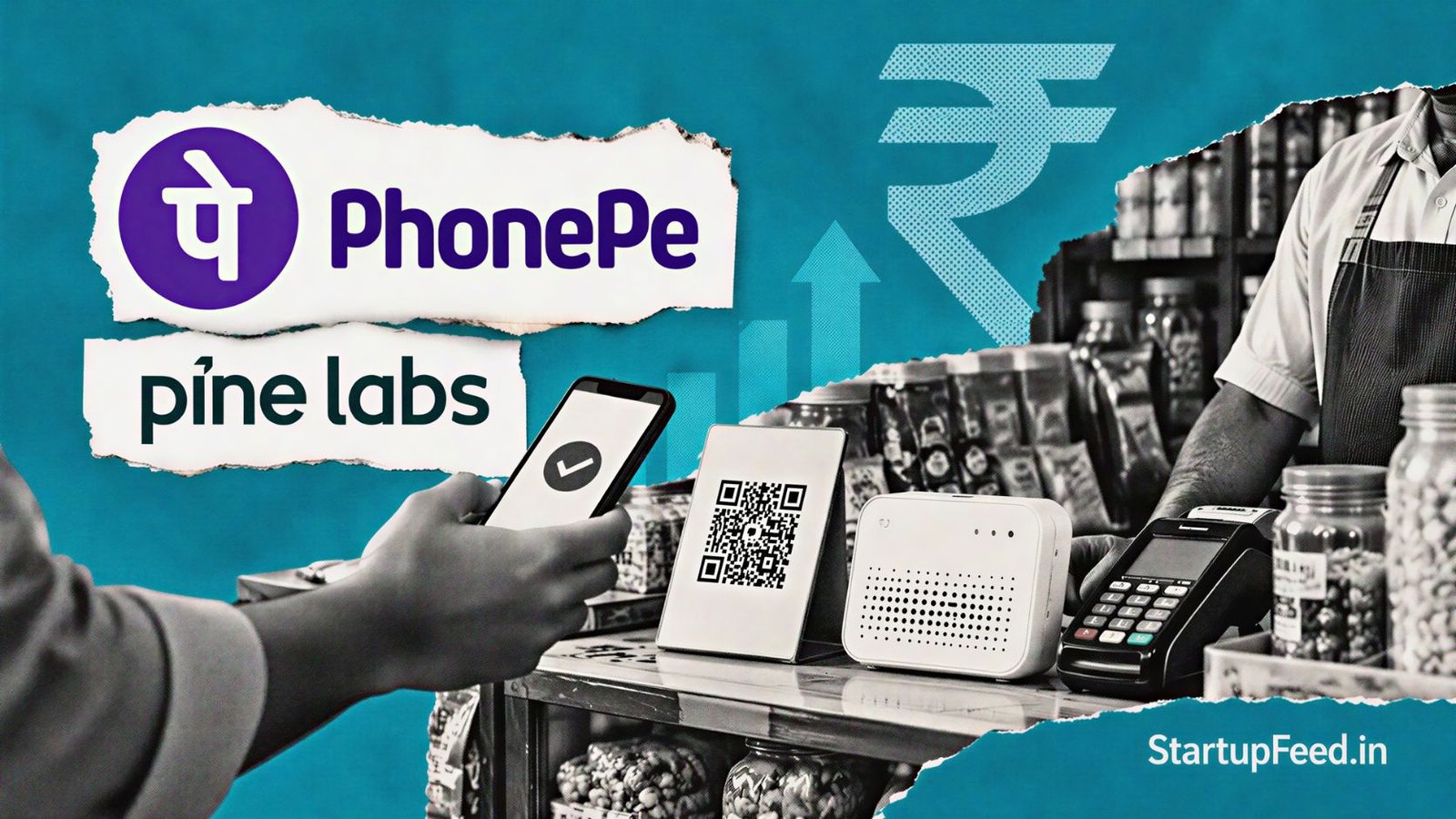
PhonePe, Pine Labs and rivals plan to add about 60 lakh payment devices across India before a new UPI merchant fee starts on October 15, 2026.
The push follows the UPI MDR framework that NPCI announced on September 15, 2026. From October 15, merchants pay 0.4% on UPI payments above Rs 2,000, capped at Rs 300.
Consumers pay nothing new. UPI stays free for person-to-person transfers and for payments up to Rs 2,000.
For six years, UPI earned the payment apps almost nothing. The government set MDR on UPI to zero in January 2020 to spread digital payments fast.
Soundboxes were the workaround. The small speakers call out each payment aloud, and firms rent them to shops for a monthly fee.
Why UPI MDR changed the soundbox math
The new charge turns UPI into a revenue line for the first time since 2020. On a Rs 3,000 sale, a shop now pays about Rs 12. On a Rs 50,000 bill it pays Rs 200, and Rs 300 is the most any single payment can cost.
That money is split along the chain. Issuer banks keep 40%, merchant acquirers get 30%, UPI apps take 20% and partner banks get the last 10%.
Acquirers are the firms that sign up shops and fit the devices. Their 30% share is why a soundbox, once a pure cost, now earns on every large sale.
The rate is still small next to cards. Credit and debit cards can carry an MDR of 1.5% to 2%. UPI at 0.4% looks modest, and far below the market’s early fear of a broad consumer charge.
What PhonePe and Pine Labs are committing
PhonePe moved first and largest. The Walmart-backed firm said on September 24 it will hire more than 20,000 on-roll sales staff over the next year.
It also plans more than 50 lakh payment devices in 12 months. About half, including smart speakers and card machines, will go to rural India and Tier 6 towns.
PhonePe read the fee as a green light. The MDR framework, it said, lets the company take a long view on merchant growth. As of August it had more than 720 million users and over 50 million merchants.
New labour codes are helping too. The rules, in force since last year, let PhonePe staff up faster with lighter paperwork.
Pine Labs matched the mood the same day. It said it will deploy 10 lakh soundboxes across India, with no end date set for the rollout.
B. Amrish Rau, who runs Pine Labs, cast the spend as money put back into the system:
“We want to walk the talk by investing back into the ecosystem.”
B. Amrish Rau, chief executive, Pine Labs. From the company’s statement, September 24, 2026.
Investors were cooler. Pine Labs shares fell about 3.5% on the day, as the market weighed the upfront bill.
How big the new revenue pool could be
UPI is enormous. It handled 2,451 crore payments worth Rs 29.9 lakh crore in August 2026 alone.
A fee on even a thin slice of that adds up. Brokerages differ on the size, yet all see a large new pool.
| Brokerage | Estimated yearly UPI MDR pool |
|---|---|
| Goldman Sachs | Up to Rs 20,600 crore |
| Citi | Rs 16,000 to Rs 17,000 crore |
| UBS | Rs 10,000 to Rs 15,000 crore |
| Jefferies | Rs 5,000 to Rs 10,000 crore |
The top estimate reaches up to Rs 20,600 crore a year, if half of all UPI value draws the full 0.4%.
Banks take the biggest share in most of these numbers. Acquirers and apps split the rest, which still runs into thousands of crore a year.
Running UPI is costly. The system costs roughly Rs 20,000 crore a year to run. The new fee is meant to cover that, not yearly state subsidies.
What it means for small shops
Most small shops stay outside the fee. The government says about 95% of merchant payments fall below Rs 2,000 and keep zero MDR.
A size test shields the smallest sellers too. Shops taking up to Rs 1 lakh a month through UPI QR pay no MDR at all.
Some of the fee flows back to them. A dedicated fund takes 5% of all MDR collected to widen UPI in Tier 3 to Tier 6 towns, the Northeast, Jammu and Kashmir and Ladakh.
The old rate was lower. UPI once carried an MDR near 0.3% before 2020, so 0.4% sits a shade above the old mark, but every payment is capped at Rs 300.
What this means for you: If you run a shop taking UPI payments above Rs 2,000, this new fee touches you from October 15. Keep your monthly UPI QR receipts under Rs 1 lakh and you stay in the zero-MDR small-merchant bracket.
StartupFeed Insight
The real contest is not the 0.4% fee. It is a land grab for the merchant counter. Each soundbox and card machine locks in a shop, its sales data and its future loans. The firm that fits the device owns that account for years. PhonePe’s 50 lakh push and Pine Labs’ 10 lakh plan are bets on holding that last mile before rivals do. Watch the December-quarter results, due around late January 2027, for the first real device and take-rate numbers. The winners will be judged on shops activated, not devices shipped.
By Avinash Mishra, Business Correspondent
Have a tip? Write to us at editorial@startupfeed.in.
Disclaimer: This article is for information only and is not investment advice. StartupFeed and its authors are not SEBI-registered investment advisors. Please speak to a SEBI-registered advisor before investing.
Liked this story? Follow StartupFeed on Google so our reporting reaches you first.