
Quick Take
- Parliament amended the payments law on August 4, 2026, opening the door to UPI merchant fees.
- Jefferies sees MDR adding $525 Mn to $1.05 Bn (Rs 4,996 Cr to Rs 9,991 Cr) to platform revenue by FY28.
- High-value payments could push UPI apps from a volume race to a value race, reshaping revenue.
In This Article
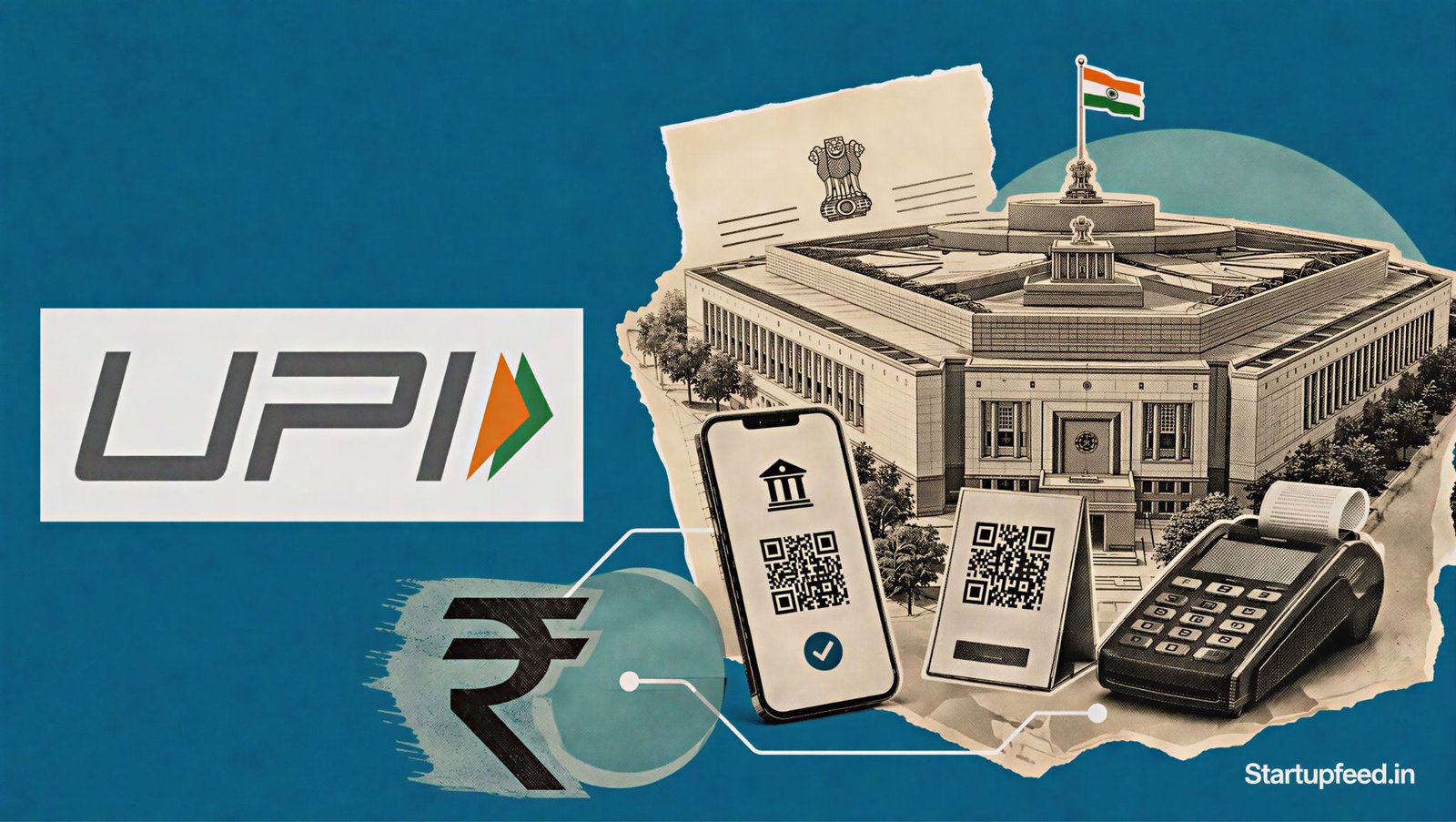
The UPI MDR return moved a big step closer on August 4, 2026, when Parliament amended India’s payments law to allow merchant fees on high-value UPI transactions, per the government’s Bill in the Lok Sabha.
Finance Minister Nirmala Sitharaman introduced the Taxation and Other Laws (Amendment) Bill, 2026, which amends Section 10A of the Payment and Settlement Systems Act, 2007. The change lets the central government notify, by order alone, which payment modes stay free of Merchant Discount Rate (MDR) charges. Brokerage Jefferies estimates the shift could add $525 Mn to $1.05 Bn (Rs 4,996 Cr to Rs 9,991 Cr) to payment platforms by FY28. USD figures use the live rate of Rs 95.15 per US Dollar, as quoted on August 5, 2026 (Xe mid-market rate).
StartupFeed Insight
The real story is not the fee, it is the pivot in strategy. For six years, UPI apps chased raw transaction counts because volume was the only scoreboard. If MDR lands only on payments above Rs 2,000, the winners will be apps that own big-ticket flows: bill payments, insurance premiums, and merchant checkouts, not small kirana taps. Expect PhonePe and Google Pay to fight harder for high-value merchant categories, and expect credit-linked apps to gain fresh leverage. StartupFeed predicts the first commercial MDR rates on large merchants will be negotiated and live by the second half of FY27. By Avinash.
UPI MDR Return: The Numbers
The UPI MDR return centres on a fee merchants pay banks and payment firms to process a digital payment. MDR (Merchant Discount Rate) covered UPI from 2016 until January 1, 2020, when the government made person-to-merchant UPI transactions free. The table below breaks down the key facts.
| Metric | Detail | Notes |
|---|---|---|
| Law amended | Payment and Settlement Systems Act, 2007 | Section 10A, the zero-MDR provision |
| Bill introduced | Taxation and Other Laws (Amendment) Bill, 2026 | Lok Sabha, August 4, 2026 |
| Likely fee trigger | Payments above Rs 2,000 (reported) | P2P payments seen staying free |
| Revenue upside | $525 Mn to $1.05 Bn (Rs 4,996 Cr to Rs 9,991 Cr) | Jefferies estimate for FY28 |
| Value concentration | 4% of merchant payments, 67% of value | Payments above Rs 2,000, per report |
| Consumer impact | Small merchants and consumers protected | Stated in the amendment |
The most striking number is that just 4% of merchant transactions, those above Rs 2,000, account for about 67% of total merchant transaction value. That thin slice is where the money sits.
About the Payment and Settlement Systems Act
The Payment and Settlement Systems Act, 2007, is the core law governing digital payments in India, administered by the Reserve Bank of India (RBI). Section 10A, added later, barred banks and payment service providers from charging MDR on notified electronic modes such as UPI and RuPay debit cards. The National Payments Corporation of India (NPCI) operates UPI itself, which now serves over 554 million users and 65 million merchants.

What Did Parliament Actually Change?
Parliament did not impose a fee on August 4, 2026. It removed the legal wall that made a fee impossible. The amendment swaps the old fixed reference in Section 10A for wording that lets the central government specify, by notification, which payment modes remain exempt from MDR. Any mode not listed as exempt may lawfully attract a charge. RBI Governor Sanjay Malhotra struck a cautious note the next day.
It is very premature to talk right now. The government is still carrying out the amendment. The costs have to be paid by someone, said Sanjay Malhotra, RBI Governor.
Malhotra added that under a “user pays” model, the transacting merchant bears the cost, but that even with zero MDR, the public still pays through taxes. His remarks signal that fee rates and timelines are far from settled, even as the legal path clears.
Why Does This Shift The Race To Value?
The UPI MDR return changes the scoreboard for payment apps from how many transactions they process to how much value flows through them. Under zero MDR, apps earned little directly on UPI, so they chased volume to win users and cross-sell loans, insurance, and investments. A fee on high-value payments flips the incentive.
According to a report by brokerage Jefferies, apps would increasingly shift focus from driving transaction volumes to capturing higher-value payments, which include those monetising them. Because big-ticket payments carry the value, apps that dominate categories like utility bills, rent, and merchant checkout stand to gain most. Smaller peer-to-peer taps, the bulk of raw volume, would matter less for revenue. This is the core of the shift from a volume race to a value race.
How Do PhonePe And Google Pay Stack Up?
PhonePe and Google Pay dominate UPI today, together controlling roughly 81% of volume as of July 2026, per NPCI data. The table compares the two leaders by volume and value share, the two metrics that matter most as the UPI MDR return nears.
| App | Share by Volume | Share by Value |
|---|---|---|
| PhonePe | 46.2% | 49% |
| Google Pay | 37.5% | 33.4% |
| Paytm | 7.6% | 7.2% |
PhonePe leads on both counts, with a value share (49%) that runs ahead of its volume share, per NPCI figures cited in the source. That gap matters: in a value-based fee world, PhonePe’s grip on higher-value payments could become its sharpest edge over Google Pay.
What’s Next
The Bill must first pass both Houses and become law. After that, the government would notify which modes stay exempt, followed by negotiations on fee rates among apps, banks, and acquirers like payment aggregators. Watch for a notified MDR framework on large merchants over the next 6 to 12 months. Will a value-first fee tighten PhonePe’s lead, or open a door for credit-linked challengers?

Frequently Asked Questions
Disclaimer: This article is for informational purposes only and does not constitute investment advice. StartupFeed and its authors are not SEBI-registered investment advisors. The analysis above is based on publicly available information and should not be the sole basis for any investment decision. Please consult a SEBI-registered financial advisor before making investment decisions.
Have a tip? Write to us at editorial@startupfeed.in.
Liked this story? Follow StartupFeed on Google so our reporting reaches you first.