
Quick Take
- Tata Sons posted standalone profit near Rs 32,000 Cr in FY26, up from Rs 26,231 Cr.
- Standalone revenue rose to about Rs 42,000 Cr, lifted by Tata Capital listing gains.
- The board recommended a higher dividend, with Rs 3,000 Cr flowing to Tata Trusts.
In This Article
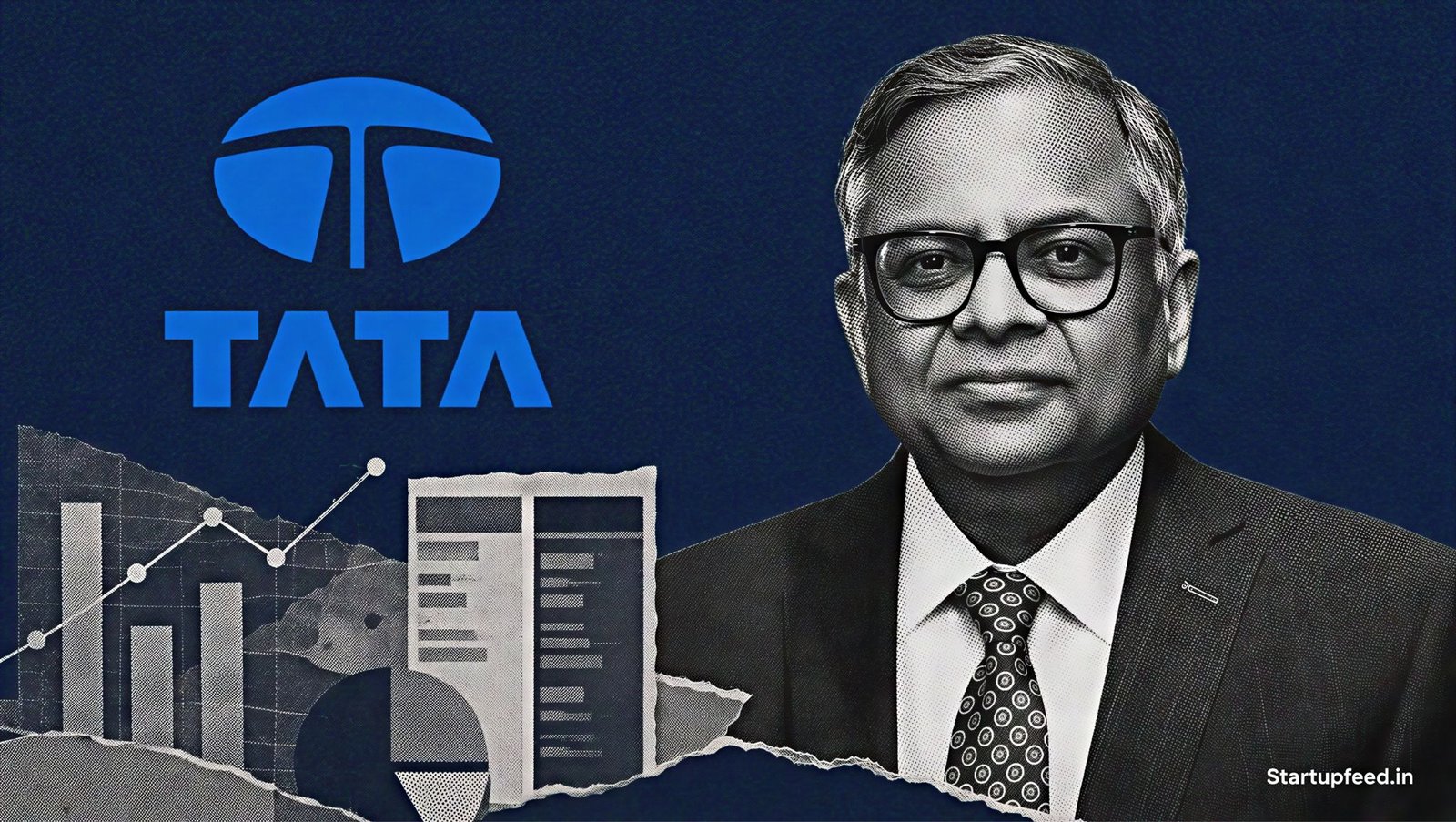
Tata Sons FY26 standalone profit rose to nearly Rs 32,000 Cr , recovering sharply from Rs 26,231 Cr a year earlier, on gains from the Tata Capital stock market listing.
The holding company of the Tata Group reported standalone revenue of about Rs 42,000 Cr for the year ended March 31, 2026 (ET). Its board, which met on June 12, 2026, approved the accounts and recommended a higher dividend payout. The accounts now go to shareholders at an Annual General Meeting expected in August 2026.
StartupFeed Insight
The FY26 jump tells you something StartupFeed readers should not miss: a holding company’s profit can swing hard on one event, here the Tata Capital listing. That makes the gain partly one-off, not a clean signal of stronger dividend income from operating firms. Watch the FY27 base. If standalone profit holds above Rs 30,000 Cr without another large listing, the recovery is structural. If it slides back toward Rs 26,000 Cr, FY26 was a listing-driven spike. Expect the next big swing factor to be a possible Tata Sons listing decision, likely debated through 2026 and 2027. By StartupFeed Desk.
Tata Sons FY26: The Numbers Breakdown
Tata Sons FY26 marks a recovery year for the Tata Group holding company after a weaker FY25. The table below sets out the key standalone figures and how they compare with the prior year.
| Metric | FY26 | FY25 |
|---|---|---|
| Standalone net profit (PAT) | ~Rs 32,000 Cr | Rs 26,231 Cr |
| Standalone revenue | ~Rs 42,000 Cr | Rs 38,834 Cr |
| Dividend to Tata Trusts | Rs 3,000 Cr | Rs 1,415 Cr |
| Board approval date | June 12, 2026 | — |
| Key profit driver | Tata Capital listing gains | — |
PAT here is profit after tax. The standalone numbers cover only Tata Sons as a holding company, whose income is mainly dividends and investment gains (ET). The most striking line is the dividend, which more than doubled the FY25 payout to Tata Trusts.
About Tata Sons
Tata Sons is the principal holding company and promoter of the Tata Group, founded in 1917 and headquartered in Mumbai. Its income comes mainly from dividends and investment gains across group firms. As of March 2025, its 323 subsidiaries together generated revenue of about Rs 15.34 lakh crore. Philanthropic Tata Trusts own roughly 66% of Tata Sons, with Sir Dorabji Tata Trust and Sir Ratan Tata Trust as the largest shareholders. N Chandrasekaran chairs the company.

Why Did Tata Sons Profit Rebound?
Tata Sons returned to growth in FY26 mainly because of gains tied to the Tata Capital share listing. Tata Capital, the group’s lending arm, listed on the NSE and BSE on October 13, 2025, in the largest IPO (Initial Public Offering) by the Tata Group. Through the offer for sale, Tata Sons sold about 23 crore shares and raised roughly Rs 7,500 Cr. That single event lifted both profit and revenue at the standalone level.
“October 13, 2025, was a momentous day for the Tata group as Tata Capital officially debuted on the Indian stock exchanges,” the Tata group newsroom stated.
The rebound reverses a weak FY25, when standalone revenue fell 11.5% and profit dropped from Rs 34,653 Cr. FY26 profit of nearly Rs 32,000 Cr is up about 22% over FY25, a strong swing for a holding company.
What Does FY26 Mean for Tata Trusts?
Tata Sons FY26 directly boosts the income of Tata Trusts, which own about 66% of the company. The board recommended a dividend that sends Rs 3,000 Cr to the trusts, more than double the Rs 1,415 Cr paid in FY25 (ET). That money funds the trusts’ philanthropic work across health, education, and rural programmes. A bigger payout matters because the trusts depend heavily on Tata Sons dividends for their grants. The timing is sensitive, since Sir Ratan Tata Trust has faced a governance dispute over its trustee structure. Shareholders must still clear the accounts at the August AGM.
How Does Tata Sons Compare?
Tata Sons sits alongside India’s other large business-house holding entities, though few match its scale. Its FY26 standalone profit of nearly Rs 32,000 Cr and group-wide subsidiary revenue of about Rs 15.34 lakh crore place it among the country’s biggest conglomerates . The table compares Tata Sons with two peer group holding structures on basic FY25 markers.
| Holding entity | Group anchor sectors | Scale signal |
|---|---|---|
| Tata Sons | IT, autos, steel, finance | ~Rs 15.34 lakh Cr subsidiary revenue |
| Reliance Industries | Energy, retail, telecom | Listed flagship, single-entity model |
| Aditya Birla group holdcos | Metals, cement, finance | Multiple listed flagships |
What sets Tata Sons apart is its trust-owned structure, where philanthropy holds the controlling stake rather than a founding family directly.
What’s Next
The Tata Sons accounts head to shareholders at the AGM expected in August 2026, where the dividend and trustee questions could draw attention. The bigger watch point is whether Tata Sons itself moves toward a public listing in the next two years, a decision regulators and the group continue to weigh. Will FY27 prove the rebound is built to last, or was it a one-time listing bump? Tell us what you think.
Frequently Asked Questions
Last updated: June 27, 2026 at 11:30 IST



Disclaimer: This article is for informational purposes only and does not constitute investment advice. StartupFeed and its authors are not SEBI-registered investment advisors. The analysis above is based on publicly available information and should not be the sole basis for any investment decision. Please consult a SEBI-registered financial advisor before making investment decisions.
Written by Avinash. Published: June 27, 2026. Updated: June 27, 2026. Have a tip? Write to us at editorial@startupfeed.in.
Liked this story? Follow StartupFeed on Google so our reporting reaches you first.