Quick Take
- DGFT added DPIIT-recognised startups to its Source from India service, effective August 06, 2026.
- Eligible startups get a unique Start-up Badge and free microsites on the Trade Connect platform.
- Early-stage startups with an active IEC can join even without meeting export performance rules.
In This Article
India’s export authority has opened its official buyer discovery platform to startups. The Directorate General of Foreign Trade (DGFT) added recognised startups to its Source from India service on August 06, 2026.
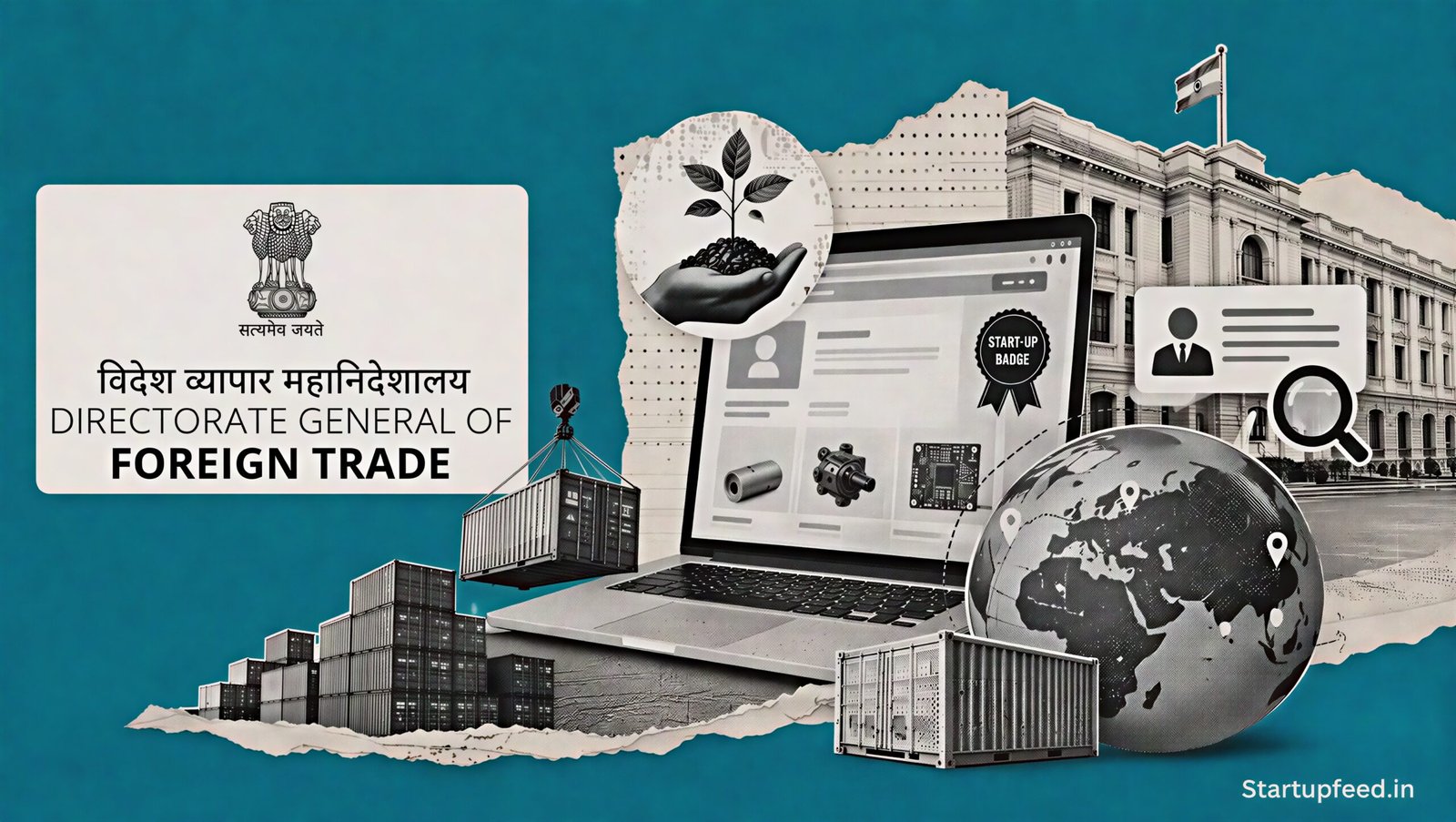
The change, notified through Trade Notice no. 16, adds startups recognised by the Department for Promotion of Industry and Internal Trade (DPIIT) to the Source from India service and lets them build free microsites on the Trade Connect ePlatform with a unique Start-up Badge. The move aims to help India’s innovation-led exporters get discovered by overseas buyers on a government-run digital marketplace.
StartupFeed Insight
The real shift here is access, not just visibility. Export performance rules once locked most young startups out of Source from India, so this waiver hands pre-revenue exporters a government shopfront years earlier than before. Deep-tech, electronics, and specialty D2C founders holding an active IEC should register first, since early microsites tend to get discovered before the platform crowds. Expect DGFT to publish its first count of startup microsites and buyer leads by the March 2027 quarter, followed by tighter links with GeM and ONDC. Watch the onboarding numbers, not the launch noise. By Harshvardhan Jain.
What Changes Under Source from India?
Source from India is a feature of the Trade Connect ePlatform where verified Indian exporters build digital microsites that overseas buyers browse to find suppliers. Under the revised framework, DPIIT-recognised startups that meet the existing eligibility criteria can now create these microsites and appear with a Start-up Badge.
DGFT notified the expansion through Trade Notice no. 16 dated August 06, 2026, with effect from the same date. A special onboarding route also lets startups with an active Import Export Code (IEC), provided it is not on the Denied Entity List (DEL), join even without clearing the standard export performance criteria. Their profiles are verified against the DGFT IEC database.
| Feature | Detail | Notes |
|---|---|---|
| What changed | Startups added to the service | Eligibility widened beyond regular exporters |
| Effective date | August 06, 2026 | Notified via Trade Notice no. 16 |
| Who qualifies | DPIIT-recognised startups | Must meet existing platform criteria |
| Special onboarding | Active IEC holders, not on DEL | Allowed without an export track record |
| Identifier | Unique Start-up Badge | Makes startups easy for buyers to spot |
| Verification | DGFT IEC database | Confirms onboarding eligibility |
The most consequential line is the performance waiver: a startup can list on Source from India before it has booked a single export order, as long as its IEC is clean.

About the Trade Connect ePlatform
The Trade Connect ePlatform is the Government of India’s single-window digital gateway for exporters, launched by the Department of Commerce and DGFT in September 2024. Hosted at trade.gov.in, it connects exporters with buyers, tariffs, certifications, and trade events, and has onboarded Indian Missions, Export Promotion Councils, and Commodity Boards. Its Source from India feature acts as the official buyer discovery marketplace.
Why Did DGFT Open the Platform to Startups?
DGFT opened Source from India to startups to widen India’s export base and push technology-led products into global trade. According to the official DGFT announcement, the Department of Commerce framed the change as a way to give India’s growing startup ecosystem more international visibility on an official government platform.
“To encourage early-stage exporters, a special onboarding provision has also been introduced,” the Department of Commerce said, allowing eligible startups to join even without meeting standard export performance criteria.
The reasoning is practical. Most young startups export in small volumes, or not at all, in their first years, so the older performance-based rule shut them out exactly when a government shopfront would help most. By verifying only the IEC, DGFT lowers the entry barrier while keeping a basic fraud check in place.
How Will the Start-up Badge Help Startups Reach Global Buyers?
The Start-up Badge is a visual tag on a startup’s Source from India microsite that flags it to overseas buyers scanning the platform. It works like a filter: a buyer looking for fresh, innovation-led Indian suppliers can spot badged startups quickly instead of sifting through thousands of listings.
Startups already registered on Trade Connect with eligible IEC-linked accounts will see the microsite option appear automatically on their dashboards, according to DGFT. A detailed user guide has been issued to walk them through registration. For a first-time exporter, the badge plus a government-verified profile can shorten the trust gap that usually slows early cross-border deals.
How Big Is India’s Startup Export Push in 2026?
India’s push to send more startups into global trade sits on a large base. More than 2.4 Lakh (240,106) entities held DPIIT recognition as of March 31, 2026, per the Startup India portal, making India the world’s third-largest startup ecosystem.
These startups had created over 23.36 Lakh direct jobs by March 31, 2026, the same portal shows. Adding them to Source from India links this base to formal export channels for the first time at scale.

| Aspect | Before August 06, 2026 | From August 06, 2026 |
|---|---|---|
| Who could list | IEC holders meeting export realisation criteria | Same, plus DPIIT-recognised startups |
| Export track record | Required | Waived for startups with a clean IEC |
| Special identifier | None for startups | Unique Start-up Badge |
What sets this apart from earlier expansions is the performance waiver, which prioritises innovation and potential over past export numbers.
What’s Next
The next test is uptake. DGFT will likely track how many startups create Source from India microsites and how many buyer connections follow, with early numbers expected over the coming quarters. Watch for deeper links with the Government e-Marketplace (GeM) and the Open Network for Digital Commerce (ONDC), which the ministry has flagged before. Will a government badge be enough to turn first-time startups into steady exporters?
Frequently Asked Questions
Have a tip? Write to us at editorial@startupfeed.in.
Liked this story? Follow StartupFeed on Google so our reporting reaches you first.