Quick Take
- WhatsApp launched bill payments in India on September 2, 2026, across 22,722 billers.
- The feature runs on Bharat Connect and covers 30 bill categories.
- WhatsApp Pay did 167.89 million UPI transactions in July 2026, far behind PhonePe and Google Pay.
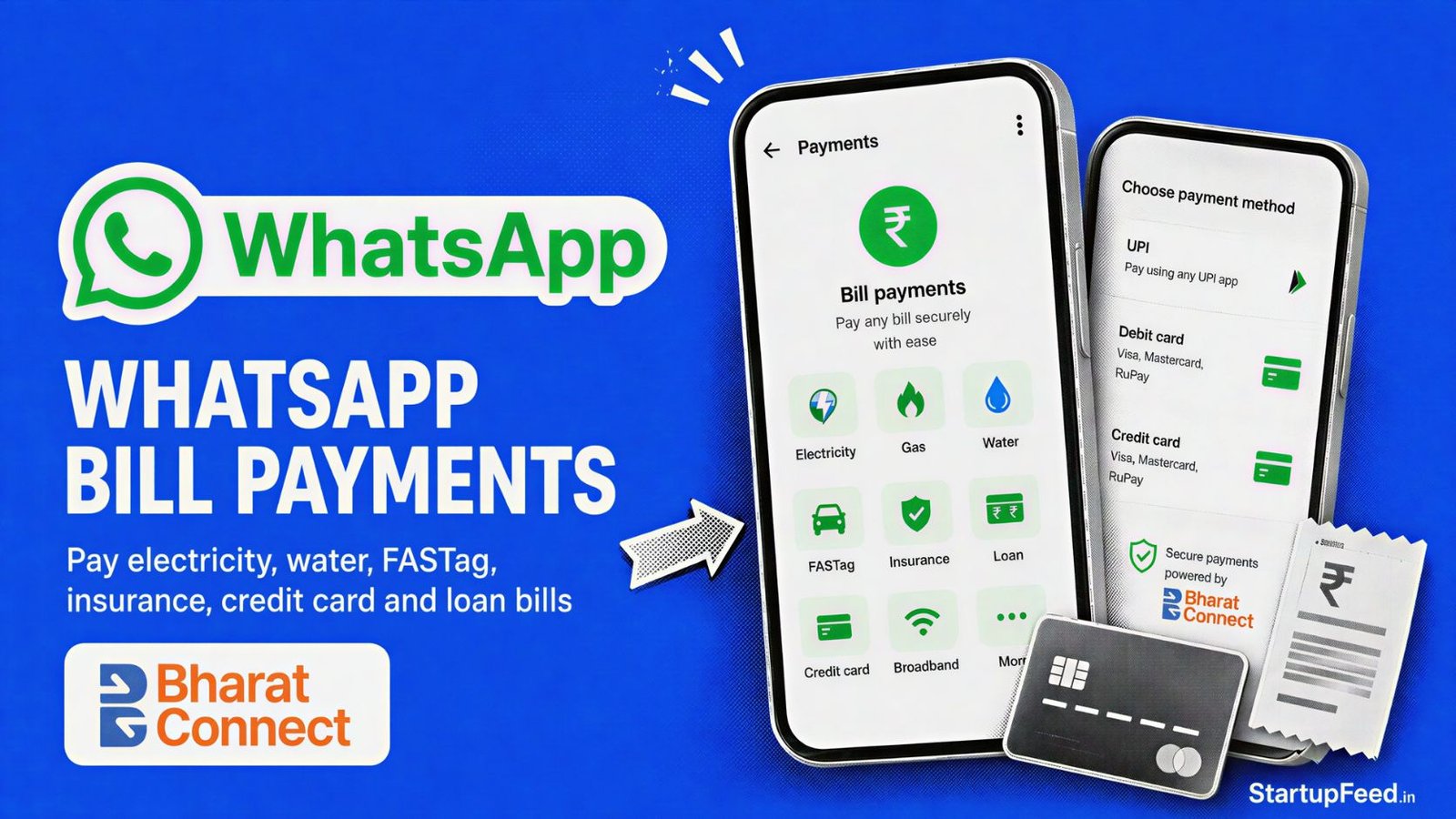
WhatsApp launched bill payments in India on September 2, 2026. Users can now pay electricity, gas, water, FASTag and other bills inside the app.
The feature runs on the Bharat Connect network, once called BBPS. It gives users access to 22,722 billers across 30 categories. Meta India confirmed the launch this week.
The reach is huge. The market share is not. WhatsApp has more than 500 million users in India. Yet WhatsApp Pay processed only 167.89 million UPI transactions in July 2026, worth Rs 12,957.07 crore, Business Today reported. PhonePe and Google Pay together control more than 85% of UPI transactions.
That gap is the whole story. It decides whether this is a real fintech threat or one more feature in a crowded app.
What did WhatsApp actually launch?
WhatsApp launched a bill payment service inside its messaging app. It lets users find, manage and pay household bills without opening another app.

The categories are wide. They include electricity, gas, water, FASTag, insurance, credit card bills and loan repayments. There are 30 categories in all.
Users open the feature by tapping the rupee icon at the top of the WhatsApp home screen. Bills are pre-fetched. Billers a user has paid before appear on the Payments Home screen for one tap.
Payment is not locked to WhatsApp Pay. Users can pay with UPI, a debit card or a credit card. That is an important choice, and we return to it below.
The service also lets one person manage bills for home, office and family under a single biller. WhatsApp said the rollout is gradual. It will reach all Android and iOS users over the coming weeks.
Arun Srinivas, Managing Director and Country Head of Meta India, said the aim is to cut app-switching. He said users should not have to track many payment services at once.
What is Bharat Connect, and why does it matter?
Bharat Connect is India’s national bill payment network. It was earlier known as the Bharat Bill Payment System, or BBPS. It is run under the National Payments Corporation of India.
The network is the plumbing behind most bill payments in India. PhonePe, Google Pay, Paytm and CRED all plug into it. WhatsApp is now one more app on the same rails.
This matters for two reasons. First, WhatsApp built no new payment system. It joined an existing one, which is faster and cheaper to do. Second, every rival sits on those same rails. So WhatsApp cannot win on the biller list. It has the same 22,722 billers everyone else can reach.
The one thing WhatsApp does not share is distribution. Its rivals need a user to download an app. WhatsApp is already open on the phone. That is the single advantage it brings to the table.
Is this a real threat to PhonePe and Google Pay?
Not yet, on the numbers. WhatsApp Pay remains far behind the market leaders, and bill payments alone will not close that gap.
The scale of the gap is stark. Here is where WhatsApp Pay sat in July 2026 against the wider UPI market.
| Metric | Figure | Source |
|---|---|---|
| WhatsApp Pay UPI transactions, July 2026 | 167.89 million | Business Today |
| WhatsApp Pay UPI value, July 2026 | Rs 12,957.07 crore | Business Today |
| India WhatsApp users | 500 million plus | Meta |
| PhonePe and Google Pay share of UPI | Over 85% | NPCI, via TechCrunch |
WhatsApp Pay did overtake CRED and Amazon Pay by July 2026. So it is climbing. But it climbed only after the National Payments Corporation of India removed its user cap in December 2024.
There is a policy clock too. The National Payments Corporation of India has deferred its 30% cap on any single app’s UPI share to December 31, 2026. That cap is aimed at PhonePe and Google Pay. It gives smaller players like WhatsApp Pay room to grow first.
The honest read is this. Bill payments make WhatsApp Pay more useful. They do not make it a winner. Habits in Indian payments are sticky, and scan-and-pay still favours standalone apps.
What should Indian founders watch?
Founders in fintech should watch the default payment method. WhatsApp lets users pay by card, not only by WhatsApp Pay. So the bill feature can grow even if WhatsApp Pay does not.
This is the super-app pattern. WeChat did the same in China. WhatsApp already offers mobile recharges, metro tickets and some citizen services in India. Bill payments are one more block in that wall.
For any startup whose product is bill payments or reminders, the ground just shifted. WhatsApp reaches the customer before your app does. The question is whether you build on WhatsApp or compete with it.
For lending and insurance startups, the loan and insurance categories are the ones to track. A bill reminder inside WhatsApp is a powerful sales channel. Meta knows this.
What this means for you: If you run a payments or reminders product, test a WhatsApp channel now, before the habit forms around Meta’s own flow.
StartupFeed Insight
The number that matters is not 22,722 billers. It is the card option. By letting users pay bills with any card, WhatsApp cut bill payments loose from WhatsApp Pay’s weak 167.89 million monthly base. That is the super-app move, not the fintech one. Meta is not trying to beat PhonePe at UPI first. It is trying to own the daily habit, then route payments later. Watch loan and insurance categories, where a reminder becomes a sale. My prediction: by June 30, 2027, WhatsApp reports bill payment volume, not WhatsApp Pay share, as its headline India metric.
— Avinash Mishra, Business Correspondent
Frequently Asked Questions
Have a tip? Write to us at editorial@startupfeed.in.
Liked this story? Follow StartupFeed on Google so our reporting reaches you first.