Quick Take
- Fireworks AI on Foundry is now generally available, serving open model inference inside Microsoft Azure.
- Startups get 20+ open models via one Azure endpoint, with no GPU clusters to run.
- Eligible founders can apply up to $150,000 (Rs 14.3 Cr) in Startup credits toward deployments.
In This Article
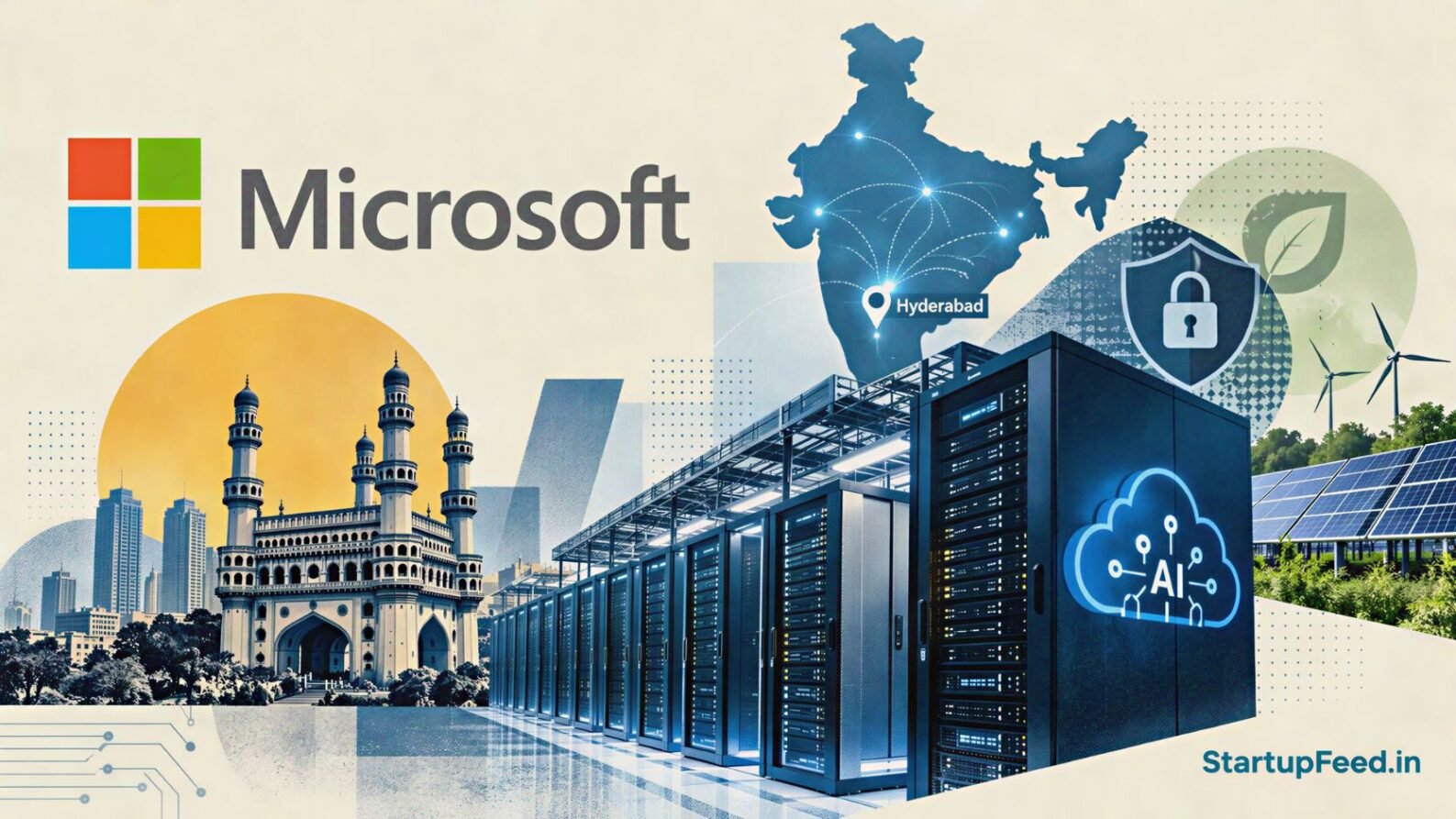
Fireworks AI on Foundry is now generally available, letting startups run high-speed open model inference directly inside Microsoft Azure through a single endpoint, Microsoft confirmed in an August 4, 2026 blog post. The move removes the need to build custom inference infrastructure.
Microsoft for Startups paired the launch with a new deployment guide built for AI-native teams. The stack runs entirely inside a founder’s Azure subscription, so model discovery, governance, and billing stay in one control plane. Eligible startups can apply up to $150,000 (Rs 14.3 Cr) in Startup credits toward these deployments, at the live rate of Rs 95.16 to the dollar on August 5, 2026.
StartupFeed Insight
The real signal here is not the model catalog, it is the billing lock. By keeping inference spend inside Azure commitments, Microsoft turns model choice into an account-level decision, not a vendor switch. Indian AI startups burning cash on GPU rentals should watch this closely, because pay-per-token serving plus Startup credits can push a working MVP live before a single cluster is provisioned. Expect at least three India-based Foundry case studies to surface from the Microsoft for Startups program by the first quarter of 2027, as more teams route production traffic through open models on Azure. By Harshvardhan Jain.
What Fireworks AI on Foundry Offers
Fireworks AI on Foundry is an inference layer that serves open-weight models inside Microsoft Azure. Fireworks provides the high-throughput serving engine, while Foundry supplies governance, security, and lifecycle management, according to Microsoft. Developers reach the models through one Azure endpoint with enterprise service-level agreements and no separate contracts.
| Feature | Detail | Notes |
|---|---|---|
| Availability | Generally available | Announced by Microsoft, August 4, 2026 |
| Open models | 20+ frontier open models | Includes DeepSeek, Kimi, GLM, gpt-oss, MiniMax (Fireworks) |
| Access | Single Azure endpoint | OpenAI-compatible API, identity via Entra ID |
| Pricing model | Serverless pay-per-token or PTUs | Up to 1M tokens per minute on serverless PayGo |
| Startup credits | Up to $150,000 (Rs 14.3 Cr) | Applies to Data Zone Standard, not reserved PTUs |
| Custom weights | Bring-your-own-weights supported | Import fine-tuned models via Azure Developer CLI |
The most useful detail for cost-sensitive teams: usage runs through an existing Azure account and counts toward the Microsoft Azure Consumption Commitment (MACC), so spend is not fragmented across new bills.
About Fireworks AI and Microsoft Foundry
Fireworks AI is a US-based inference platform that runs open-weight models at internet scale using its FireOptimizer compilation stack tuned per model architecture. Microsoft Foundry is Azure’s platform for deploying, governing, and billing AI models. The two first launched a public preview in March 2026 before reaching general availability. Together they let teams evaluate, deploy, and operate open models inside one Azure control plane, with observability through Azure Monitor.
Why does inference cost matter for startups?
Inference is one of the largest controllable cost drivers for AI-native companies, Microsoft noted in its blueprint. Early choices about how models are served can lock in long-term limits on cost, latency, and flexibility. Serving open models through Foundry keeps those choices with the founder.
“You don’t need to build your own inference infrastructure to run open models here; Fireworks serves them on Foundry, so you can start quickly and scale that footprint as you go,” Microsoft for Startups wrote.
For a Bengaluru or Pune startup, that means testing production-grade AI without standing up GPU clusters. The team can match each workload to the cheapest suitable model and switch later through the same API, which cuts rework when needs change.
Inside the Startup Architecture Blueprint
The Microsoft for Startups blueprint is a repeatable, Azure-native path from idea to minimum viable product to product-market fit. The stack sits entirely inside a founder’s Azure environment and needs only a model endpoint for the application harness. Teams start by deploying a single model, route traffic through Azure API Management, and track latency, usage, and cost.
As traffic grows, teams add Azure Cache for Redis to cut redundant inference calls, tune performance by workload, and deploy multiple model variants for A/B testing. Supporting services include Azure Container Apps for the application, Azure Key Vault for credentials, and Azure Monitor for observability. Full steps sit in the Microsoft Learn deployment guide.
How does this compare to other options?
Fireworks AI on Foundry competes with self-hosted GPU serving and rival managed inference platforms. Its edge is that everything stays inside Azure billing and governance, so there is no separate vendor review for each model.
| Approach | Infrastructure | Billing |
|---|---|---|
| Fireworks AI on Foundry | No GPU clusters, single endpoint | Inside Azure, counts toward MACC |
| Self-hosted open models | Team runs own GPU clusters | Direct cloud or hardware spend |
| Closed frontier model API | No infrastructure, less control | Separate provider contract |
What sets this apart for founders is the credit stack: Startup credits can fund Data Zone Standard deployments, letting teams find where open models win on cost before they scale.
What’s Next
Microsoft is expected to expand the Fireworks open model catalog on Foundry through 2026, having already added models like Kimi K2.6. Indian AI startups building on Azure can apply to the Microsoft for Startups program to unlock the credits and begin testing. The open question: will pay-per-token open model serving pull India’s AI teams away from closed models faster than expected?



Frequently Asked Questions
Have a tip? Write to us at editorial@startupfeed.in.
Liked this story? Follow StartupFeed on Google so our reporting reaches you first.