Quick Take
- Hindalco is the only company to submit a firm proposal to NPCIL for a 220 MW Bharat Small Reactor.
- The reactor targets captive power for hard-to-abate industries, with each unit rated at 220 MW capacity.
- Users fund the full cost; NPCIL builds and runs the plant, then supplies the power for captive use.
In This Article
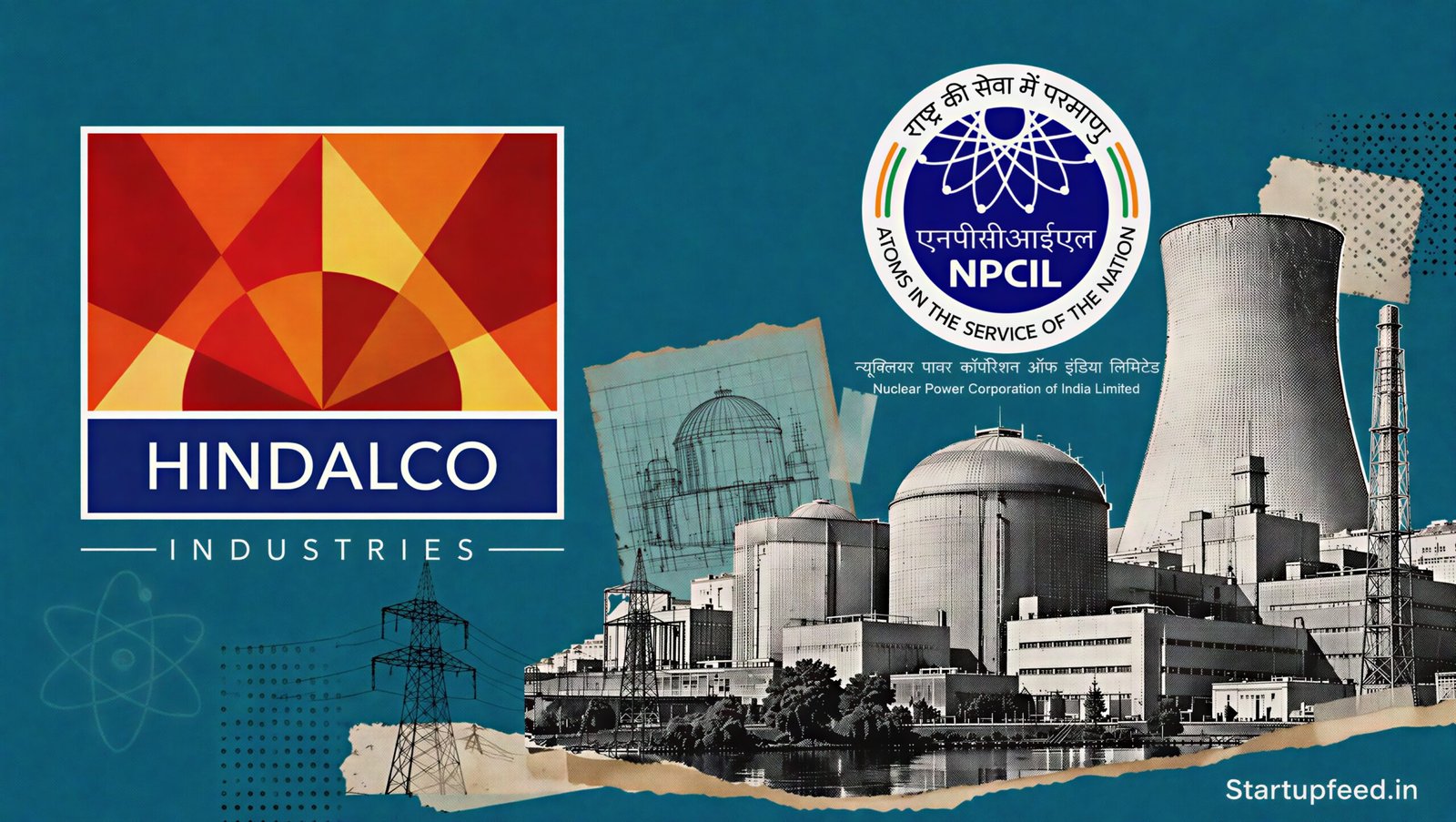
The Hindalco nuclear reactor bid is now the sole proposal that Nuclear Power Corporation of India Limited (NPCIL) has received for setting up a 220 MW Bharat Small Reactor (BSR), the state-run operator confirmed in July 2026. Hindalco Industries, the aluminium and copper arm of the Aditya Birla Group, submitted the standalone proposal.
The move marks a notable first for India’s captive nuclear ambitions. Five other large industrial houses, including Reliance, Tata Power, Adani Power, JSW Energy and Jindal Steel and Power, had earlier signed non-disclosure agreements and collected technical data, yet none matched Hindalco with a firm proposal. The 220 MW reactor is designed to power energy-heavy plants without drawing from the grid.
StartupFeed Insight
Being first is a bet, not a guarantee. Hindalco has read the math that others hesitated over: an aluminium smelter runs 24×7, so a steady 220 MW of carbon-free power protects both its costs and its export competitiveness as carbon taxes tighten. Watch aluminium and steel makers most closely here, because their round-the-clock load makes nuclear far easier to justify than for lighter industries. StartupFeed expects NPCIL to close a detailed site and cost agreement with Hindalco before December 2026, which would set the template every later bidder copies. First mover on captive atomic power is a title worth holding. By Harshvardhan Jain.
Hindalco Nuclear Reactor Bid: The Full Breakdown
The Hindalco nuclear reactor bid is a formal proposal to co-develop one 220 MW Bharat Small Reactor under NPCIL’s captive power framework. NPCIL floated the underlying Request for Proposals (RFP) on December 31, 2024, inviting industries to fund and site twin 220 MW pressurised heavy water reactors (PHWRs), as detailed in the official government release.
| Metric | Detail | Notes |
|---|---|---|
| Proposal status | Sole proposal received | Only Hindalco filed a firm bid, per NPCIL |
| Reactor capacity | 220 MW per unit | Bharat Small Reactor, a compact PHWR |
| Purpose | Captive industrial power | For hard-to-abate, energy-heavy plants |
| Who funds it | The industrial user | Full capex and operating cost, including decommissioning |
| Who operates it | NPCIL | Built under NPCIL supervision, then run by NPCIL |
| RFP issued | December 31, 2024 | Proposal deadline extended to March 31, 2026 |
The single most striking fact is the count itself: six companies engaged, only one committed. That gap between interest and action, reported by NPCIL, tells you how hard the numbers are to close.
About Hindalco
Hindalco Industries, founded in 1958 and headquartered in Mumbai, is the metals flagship of the Aditya Birla Group. It is one of the world’s largest aluminium and copper producers and owns US-based downstream major Novelis. Its smelters run continuously and consume vast amounts of power, which makes a steady, low-carbon source strategically valuable. The group is led by Chairman Kumar Mangalam Birla.
Why is Hindalco backing a nuclear reactor?
Hindalco is backing a nuclear reactor because aluminium smelting needs uninterrupted, carbon-free power at scale, and grid supply cannot always guarantee both. Bharat Small Reactors are designed to help decarbonise industries that are hard to run on renewables alone, according to NPCIL’s official RFP page.
NPCIL has stated that the reactors will offer industries assured long-term access to the full electricity output for captive use, with the option to sell surplus power under applicable rules.
For an aluminium maker, that certainty matters more than for most. A smelter cannot easily switch off, so a dedicated 220 MW reactor removes a major cost and reliability risk. It also shields exports from future carbon border taxes in markets like the European Union.
How does the BSR captive model work?
The BSR captive model puts the full financial burden on the industrial user while keeping operational control with NPCIL. The user funds every stage, from pre-project studies to construction and eventual decommissioning, and reimburses NPCIL for all lifecycle costs. NPCIL then builds and operates the plant.
In return, the user gets rights to the net electricity the plant generates for its own captive needs. Any surplus can be sold under prevailing regulations. This structure is a first step toward wider private participation, enabled after amendments to India’s Atomic Energy Act, 1962, and the nuclear liability law were cleared in late 2025.
Where are the other five companies?
Five other conglomerates showed early interest but have not filed firm proposals. Together, the six named companies had identified 16 prospective reactor sites across six states, yet only Hindalco converted that groundwork into a submitted bid.
| Company | Sector | Reported stage |
|---|---|---|
| Hindalco | Aluminium, copper | Sole firm proposal filed |
| Reliance, Tata Power | Energy, conglomerate | Signed NDA, collected data |
| Adani, JSW, Jindal | Power, steel | Early-stage engagement |
What sets Hindalco apart is timing and conviction: it acted while peers were still weighing capital and operating costs against the returns.
What’s Next
The next milestone is a detailed site selection and cost agreement between Hindalco and NPCIL, expected within the coming months. If it firms up, construction planning and regulatory clearances from the Atomic Energy Regulatory Board would follow. The bigger test is whether Hindalco’s lead nudges the other five to move from studies to signatures. Will one committed bidder be enough to prove the captive nuclear model works?



Frequently Asked Questions
Have a tip? Write to us at editorial@startupfeed.in.
Liked this story? Follow StartupFeed on Google so our reporting reaches you first.