
Quick Take
- HDFC Bank fined MD and CEO Sashidhar Jagdishan, the CFO and retail head Rs 1 lakh each.
- The board called the conduct business overreach, not mala fide action or personal gain, on July 23, 2026.
- The case covers MSRDC deposits from 2017 and 2021; the bank has told RBI about the findings.
In This Article
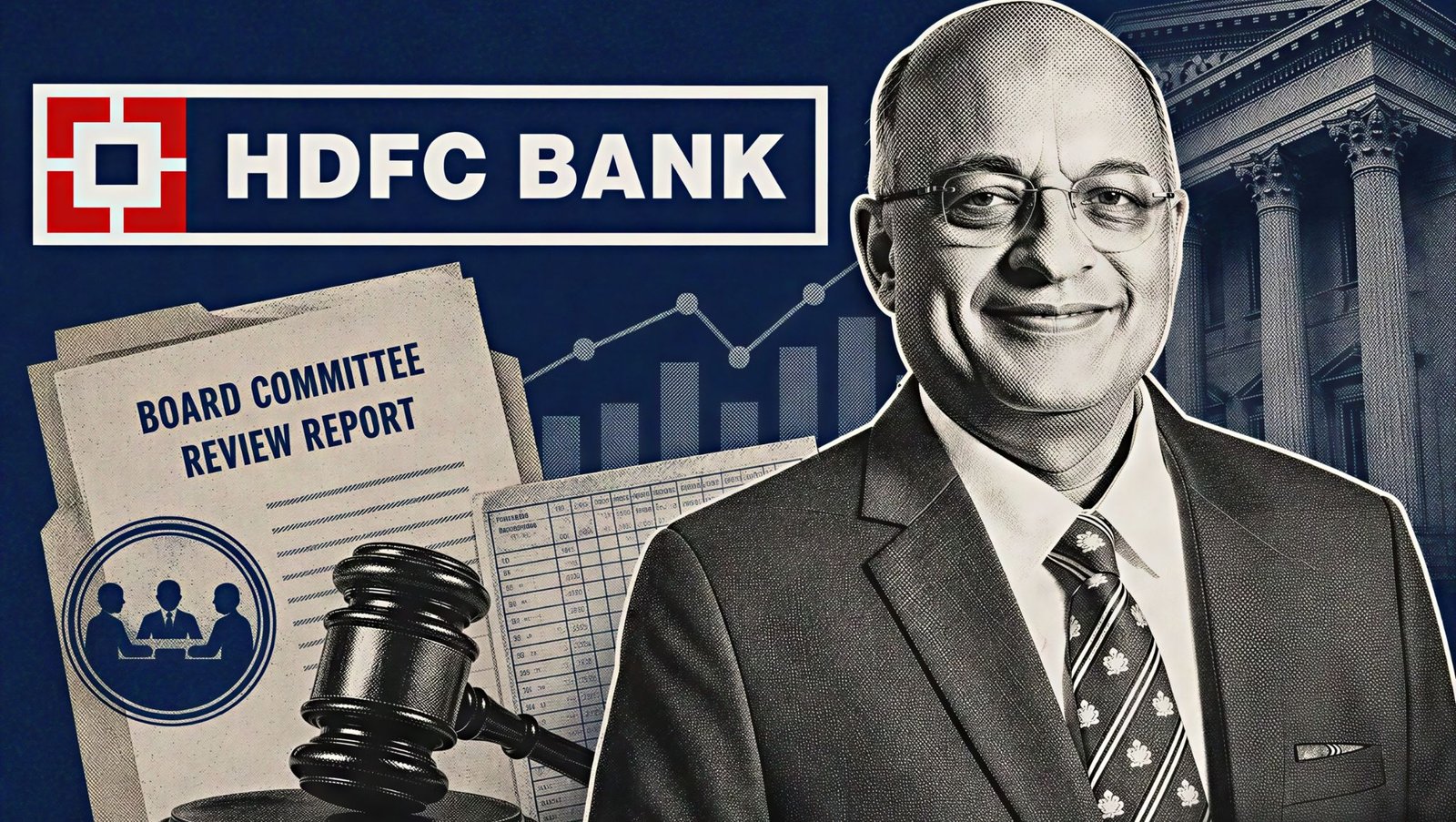
The HDFC Bank penalty landed on July 27, 2026, when the board fined MD and CEO Sashidhar Jagdishan, CFO Srinivasan Vaidyanathan and Group Head of Retail Assets Arvind Vohra Rs 1 lakh each over the MSRDC deposit case. The board took the decision at its meeting on July 23, 2026.
India’s largest private sector lender said the money came from an internal review into its arrangement with the Maharashtra State Road Development Corporation (MSRDC), a Maharashtra government body that builds roads and infrastructure, for garnering deposits in 2017 and 2021. The bank disclosed the outcome to the stock exchanges and to the U.S. market, where it is listed on the New York Stock Exchange. You can read the bank’s statement in its BSE regulatory filing.
StartupFeed Insight
A Rs 1 lakh fine on a CEO who runs a bank with 11 percent of India’s deposits is not about the money. It is a signal. The board chose to name Jagdishan and act before his reappointment, which is rare for an Indian company that usually shields a sitting CEO. Founders, bank analysts and independent directors across BFSI should watch this closely, because it resets what “business overreach” can cost at board level. StartupFeed expects RBI to issue its own view on the MSRDC matter before the end of 2026, and that response will matter far more than the penalty itself. By Avinash.
What did the HDFC Bank penalty decision say?
The HDFC Bank penalty followed a report by a Special Disciplinary Committee of Independent Directors that reviewed the MSRDC deposit arrangement. The board acted on that committee’s findings and recommendations, according to the bank’s stock exchange filing.
The board concluded that the conduct of the employees involved was business overreach, and not any mala fide (bad faith) action, personal enrichment or improper motive, the bank stated. It still issued warning letters and the Rs 1 lakh penalty to three senior employees, and warning letters to the other staff linked to the case.
| Detail | What the filing says |
|---|---|
| Penalty | Rs 1 lakh each on three senior employees |
| Named executives | MD and CEO, CFO, Group Head of Retail Assets |
| Also issued | Warning letters to the three plus other staff |
| Period reviewed | MSRDC deposit arrangement in 2017 and 2021 |
| Board finding | Business overreach, not mala fide or personal gain |
| Board meeting date | July 23, 2026 |
The most telling line is the choice to penalise the very top of the bank. The board named the roles clearly rather than settle for a general remark, which raised the weight of the HDFC Bank penalty far above its rupee value.
About HDFC Bank
HDFC Bank is India’s largest private sector lender by market value, formed in 1994 and headquartered in Mumbai. It offers retail and corporate banking, treasury and asset-based services, and holds about 11 percent of banking deposits in India, according to comments by CEO Sashidhar Jagdishan. HDFC Ltd merged into the bank on July 1, 2023. The bank is listed in India and on the New York Stock Exchange as a foreign private issuer.
What does the HDFC Bank penalty mean for the bank?
The HDFC Bank penalty matters because it touches the office of a sitting CEO at India’s biggest private bank, and it arrives at a sensitive moment for the board. The action landed soon after RBI approved former Chief Election Commissioner and Finance Secretary Rajiv Kumar as part-time chairman, effective July 15, 2026.
“The conduct of the employees involved constituted business overreach rather than any mala fide action, personal enrichment, or improper motive,” HDFC Bank said in its regulatory filing.
For the bank, the framing tries to draw a firm line: it accepts a process failure, yet it rejects any claim of fraud or self-dealing. That balance protects the CEO’s standing while showing the board can act, which is what investors and the regulator will judge in the coming months.
Why did the RBI angle drive the action?
The RBI angle sits at the centre of the HDFC Bank penalty. The bank said it acted while keeping in view any potential divergence from the applicable Reserve Bank of India (RBI, India’s banking regulator) directions, and it directed that the matter be communicated to RBI.
Media reports had said an internal probe flagged about Rs 45 crore paid to MSRDC, allegedly booked under marketing spend, as the trigger for the review. The bank’s own statement does not confirm that figure, and StartupFeed uses the bank’s verified filing as the primary record here. What is clear is that the board wanted to pre-empt a regulatory finding rather than wait for one.
| Governance signal | Status |
|---|---|
| Board-level action on top brass | Yes, three senior executives named |
| RBI informed | Yes, board directed communication to RBI |
| Fraud or personal gain found | No, per the board finding |
The bank noted that the matter does not trigger a mandatory disclosure under SEBI (Securities and Exchange Board of India) Listing Obligations rules, yet it disclosed the outcome from a good governance view. That choice signals how carefully the board is treating regulator perception.
How does this compare to recent board exits?
The HDFC Bank penalty follows a run of board churn at the top of the bank. Former chairman Atanu Chakraborty resigned effective March 2026, citing that certain practices at the bank over the prior two years did not align with his personal values and ethics. Keki Mistry then served as interim chairman before Rajiv Kumar’s approval.

| Event | When |
|---|---|
| Chairman Atanu Chakraborty resigns | March 2026 |
| Rajiv Kumar approved as chairman | Effective July 15, 2026 |
| Board penalises three executives | Decided July 23, 2026 |
What sets HDFC Bank apart here is that the board acted on a named CEO before his reappointment, a step Indian companies rarely take in public. That willingness to record a fault at the top is the real story.
What’s Next
The next move belongs to RBI, which now holds the board’s findings. A formal RBI view or supervisory comment on the MSRDC matter would be the milestone to watch, and StartupFeed expects it before the end of 2026. Jagdishan’s reappointment timeline and any RBI conditions attached to it will shape how markets read the outcome. Will RBI accept “business overreach” as the final word, or push further?
Frequently Asked Questions
Disclaimer: This article is for informational purposes only and does not constitute investment advice. StartupFeed and its authors are not SEBI-registered investment advisors. The analysis above is based on publicly available information and should not be the sole basis for any investment decision. Please consult a SEBI-registered financial advisor before making investment decisions.
Have a tip? Write to us at editorial@startupfeed.in.