Quick Take
- India crossed 2.07 Lakh DPIIT-recognised startups by December 2025, with 48% emerging from tier-2 and tier-3 cities.
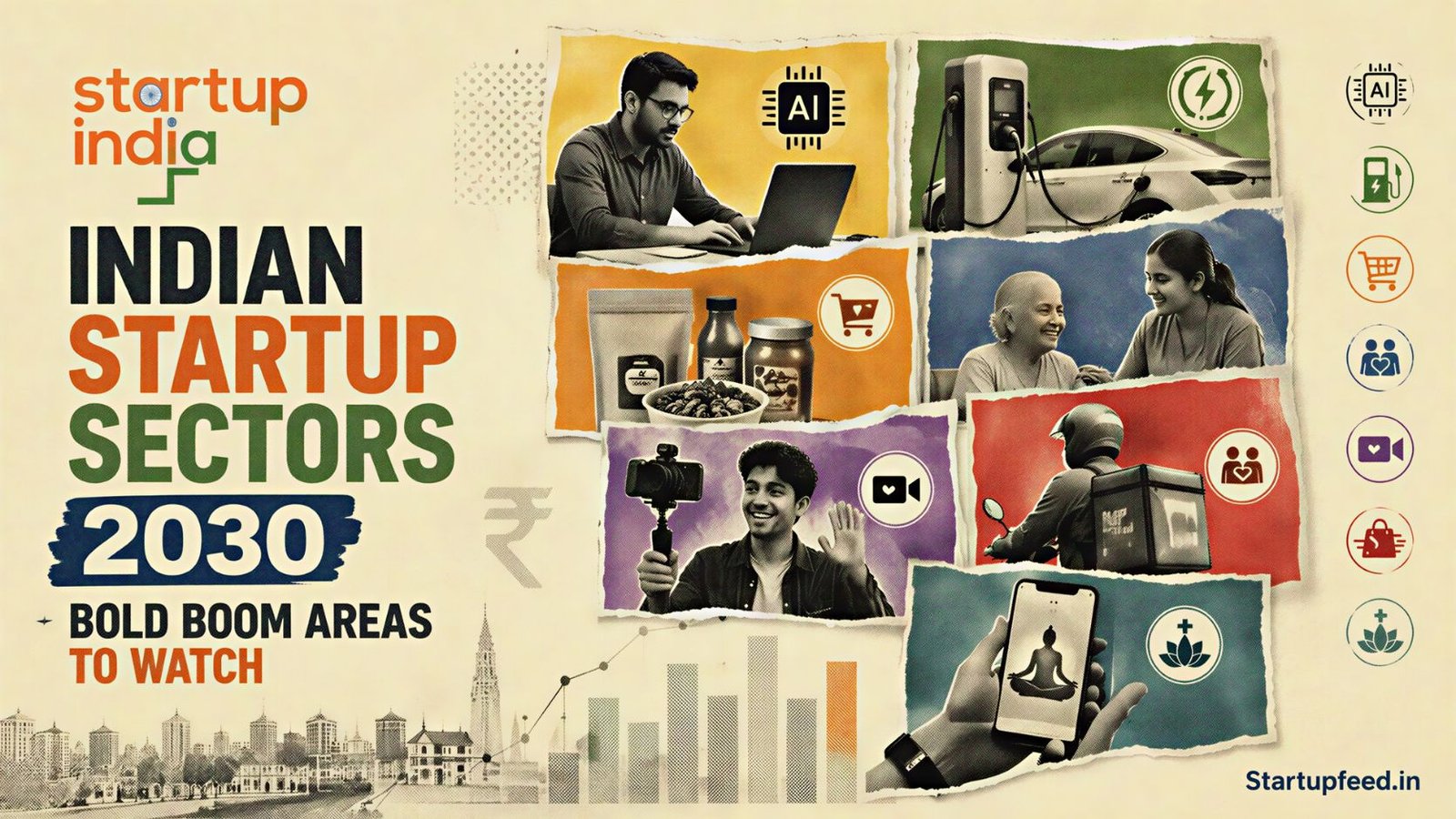
- Seven Indian startup sectors offer the largest 2030 opportunity: enterprise AI, EV charging, clean-label food, senior care, creator economy, quick commerce, wellness-tech.
- Combined market opportunity across these seven sectors crosses $300 Bn (Rs 24.9 Lakh Cr), backed by NITI Aayog, BCG, and Inc42 data.
In This Article
Indian Startup Sectors heading into the 2030 window are no longer about generic ideas; they are about precise market sizes, regulatory tailwinds, and demand from a 950 Mn-plus internet base.
India is the world’s third-largest startup ecosystem with over 2.07 Lakh DPIIT-recognised startups as of December 2025, according to the Department for Promotion of Industry and Internal Trade (DPIIT). Nearly 48% of these come from tier-2 and tier-3 cities, a structural shift that changes which sectors will scale fastest. Backed by 21.9 Lakh direct jobs and Rs 15 Lakh Cr ($180 Bn) in private funding over the last decade, the next five years will reward founders who pick the right sector early.
India’s startup market snapshot in 2026
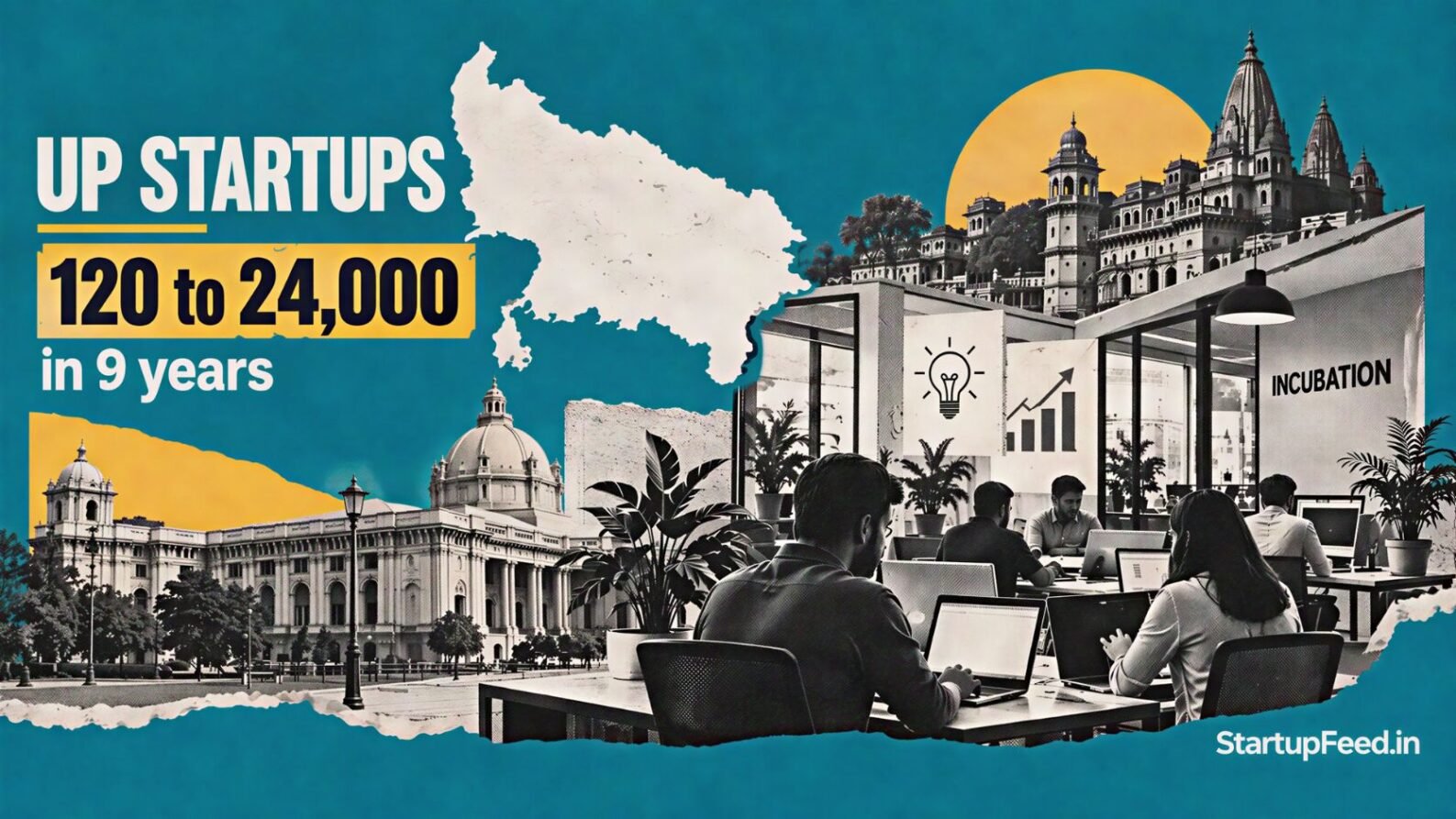
India’s startup count grew from 502 DPIIT-recognised firms in 2016 to 2.07 Lakh by December 2025, a 412x expansion in nine years. Funding has been disciplined since the 2023 winter; H1 2025 saw $5.7 Bn deployed across 470 deals, per industry data. Total venture capital and private equity into Indian startups has crossed $150 Bn between 2014 and H1 2024, with e-commerce, fintech, and enterprise tech taking 52% of that cumulative pool.
The bigger story is composition. Tier-2 and tier-3 cities now produce 51% of new startups, per the Press Information Bureau. Cities like Jaipur (5,000 new incorporations in 2025), Indore (300-plus tech startups), and Chandigarh-Mohali-Panchkula (633 DPIIT-recognised startups) are sector-specialising in agritech, AI-driven SaaS, and industrial automation.
About India’s startup ecosystem
India’s startup ecosystem is the world’s third largest by count, founded structurally under the Startup India initiative launched on January 16, 2016, by the Government of India. Headquartered policy operations sit with DPIIT in New Delhi under the Ministry of Commerce and Industry. The ecosystem runs on Digital Public Infrastructure (Aadhaar, UPI, ONDC), produces 112-plus unicorns, and counts top investors including Sequoia (now Peak XV), Accel, Blume Ventures, Elevation Capital, and Lightspeed.
Seven Indian Startup Sectors set to boom by 2030
The seven sectors below were filtered against three criteria: a credible 2030 market size from a primary source (NITI Aayog, BCG, Inc42, JLL, or government data), an early-mover funding gap, and an India-specific demand signal that does not depend on importing a Western playbook.
| Sector | 2030 Market Size | Primary Source | Key Driver |
|---|---|---|---|
| Enterprise AI | $71 Bn (Rs 5.9 Lakh Cr) | Google-Inc42 Bharat AI Report 2026 | Workflow deployment shift |
| EV Charging Infrastructure | $1.65 Bn (Rs 13,720 Cr) | NMSC, Ministry of Heavy Industries | 1.32 Mn stations needed |
| Clean-Label D2C Food | $30 Bn (Rs 2.49 Lakh Cr) | Industry estimates, FSSAI | Label-reading consumer |
| Senior Care | $12 Bn (Rs 99,600 Cr) | NITI Aayog position paper | 347 Mn elderly by 2050 |
| Creator Economy | $100-125 Bn direct revenue | BCG, WAVES 2025 report | 2-2.5 Mn monetised creators |
| Quick Commerce | $35-40 Bn (Rs 2.9-3.3 Lakh Cr) | Motilal Oswal, Bernstein | 7,500 dark stores by 2030 |
| Wellness-Tech | $1.97 Bn mental health apps alone | Market Research Future, 2035 | Smartphone penetration 96% |
The combined opportunity across these seven Indian Startup Sectors exceeds $300 Bn (Rs 24.9 Lakh Cr) by 2030. Enterprise AI alone is forecast to expand 6.5x from $11 Bn in 2025 to $71 Bn by 2030, the steepest curve in the set.
1. Enterprise AI and AI-native SaaS
Enterprise AI is the largest single opportunity. India’s AI market is projected to reach $126 Bn (Rs 10.4 Lakh Cr) by 2030, with $71 Bn from enterprise deployments, according to the Bharat AI Startups Report 2026 by Google and Inc42. India’s SaaS opportunity will cross $70 Bn by 2030 at a 31% CAGR, with vertical SaaS growing from $5 Bn to $26 Bn in the same window.
Indian AI startups have raised over $2.6 Bn cumulatively, with 170-plus firms building models, devices, and enterprise tools. The 2026-2027 founding window is described as the highest-leverage period, since entering after 2028 risks a 3-4x increase in customer acquisition costs as categories consolidate.
2. EV Charging Infrastructure and battery services
India’s EV charging market was valued at $348.5 Mn in 2024 and will reach $1.65 Bn (Rs 13,720 Cr) by 2030 at a 27.67% CAGR. The bigger number is volume: India needs 1.32 Mn public charging stations by 2030 to support 30% EV penetration, more than 40 times the current installed base of 29,151 stations (as of December 2025), per the Ministry of Heavy Industries.
PM E-DRIVE has allocated Rs 2,000 Cr ($240 Mn) specifically for public EV charging stations. The government targets electrifying 70% of commercial vehicles, 30% of private cars, 40% of buses, and 80% of two and three-wheelers by 2030.
3. Clean-Label D2C food and functional nutrition
India’s healthy snack market is moving into what industry calls the “Clinical Era”, a $30 Bn (Rs 2.49 Lakh Cr) opportunity by the end of the decade. The broader Indian D2C space is projected to become a $300 Bn market by 2030, per Inc42 estimates. The F&B segment alone will hit $68 Bn at a 25% CAGR.
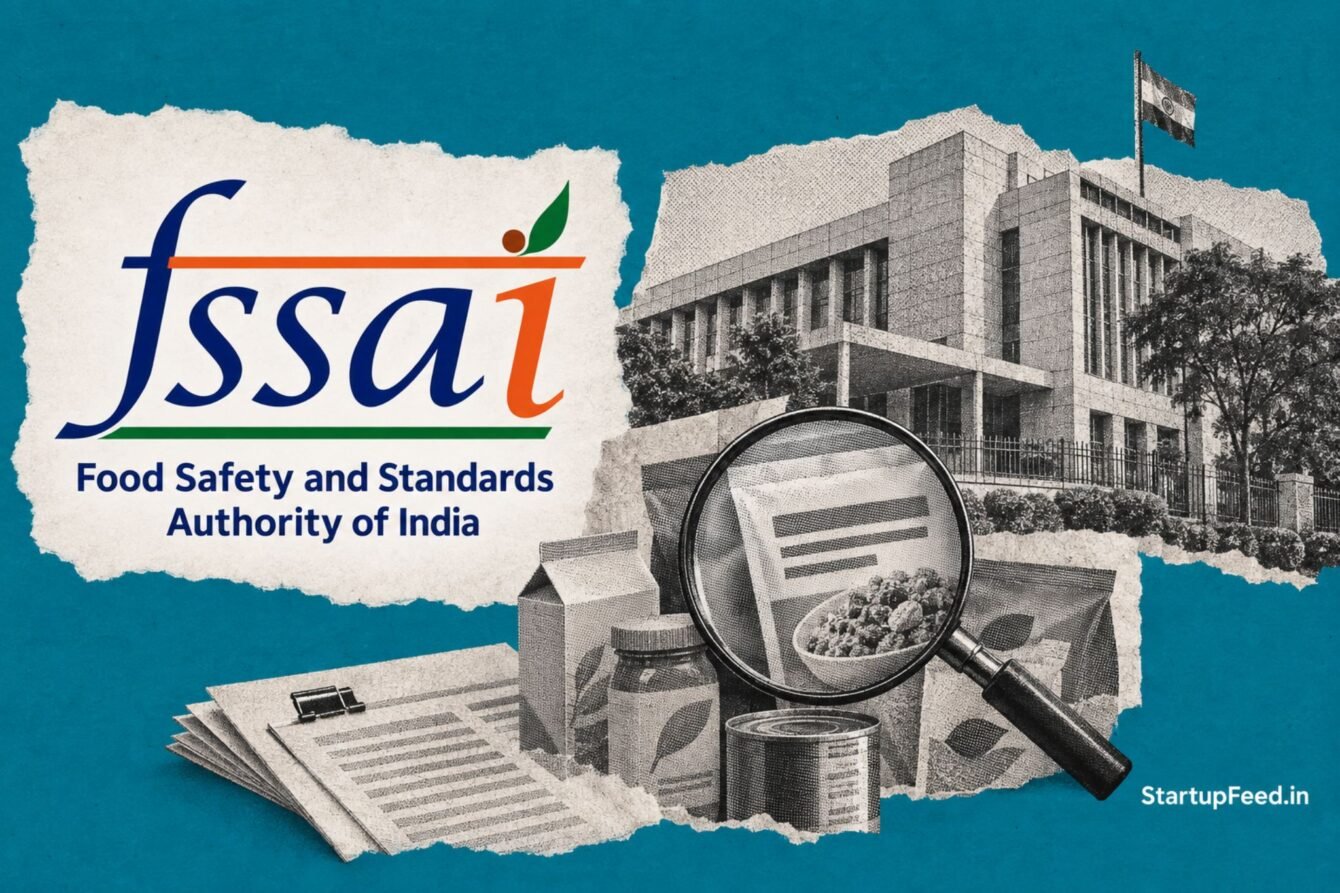
The shift is behavioural. 73% of consumers now scrutinise ingredients for hidden additives, the “Label Padhega India” movement reached 10 Mn-plus people in its first month, and brands like The Whole Truth, Anveshan (raised Rs 121 Cr Series B in 2024), and Yoga Bar have proven the model. India has 318 D2C food brand startups, the highest in the world.
4. Senior Care and the silver economy
India’s senior care market, currently $7 Bn (Rs 58,100 Cr) per NITI Aayog, will reach $12 Bn (Rs 99,600 Cr) by 2030, a 71% expansion. The NITI Aayog position paper “Senior Care Reforms in India” published February 16, 2024, lays out the policy framework.
The demographic math is unforgiving. India’s 60-plus population will grow from 153 Mn in 2020 to 347 Mn by 2050, with the 80-plus segment increasing 279%. Current senior living penetration is 1.3% versus 6-7% in the US and UK, a gap that translates into 2.4 Mn new senior living units needed by 2030, per JLL-ASLI estimates. Eldercare funding has scaled from $1.5 Mn in 2021 to $23.8 Mn in 2023, with startups like Emoha, Antara Senior Care, and Kites Senior Care leading.
5. Creator Economy and creator-led commerce
The creator economy is the largest consumption opportunity on this list. Indian creators influence over $350-400 Bn in annual consumer spending today, projected to cross $1 trillion (Rs 83 Lakh Cr) by 2030, per a BCG report titled “From Content to Commerce” launched at WAVES 2025.
Direct creator-economy revenue will grow from $20-25 Bn in 2025 to $100-125 Bn (Rs 8.3-10.4 Lakh Cr) by 2030. India has 2-2.5 Mn monetised creators, but only 8-10% monetise meaningfully, versus 40% in mature markets. That gap is the opportunity for tooling startups: monetisation platforms, analytics, live commerce infrastructure, and AI-assisted content production. The government has announced a $1 Bn fund for the creator economy at WAVES 2025.
6. Quick Commerce and hyperlocal logistics
India’s quick commerce GMV grew from $300 Mn in 2022 to $7.1 Bn in FY25, a 24x expansion in three years, and will hit $35-40 Bn (Rs 2.9-3.3 Lakh Cr) by 2030, per Motilal Oswal and Bernstein estimates. Dark store counts will triple from 2,500 to 7,500 by 2030, occupying close to 39 Mn sq ft of micro-warehouse space.
Blinkit hit Adjusted EBITDA breakeven in Q3 FY26 (December 2025) with Rs 4 Cr profit, the first major player to prove unit economics. Tier-2 and tier-3 markets will drive the next leg, with quick commerce TAM in smaller cities projected at $57 Bn by 2030. The downside: 200,000 kirana stores closed in the past year, and 25-30% of India’s 13-15 Mn neighbourhood stores may close by 2030.
7. Wellness-Tech and preventive health
India’s mental health apps market alone will grow from $194.85 Mn in 2024 to $1.97 Bn (Rs 16,350 Cr) by 2035 at a 23.4% CAGR, per Market Research Future. Wider wellness-tech, covering preventive care, wearables, continuous glucose monitoring, and corporate wellness, is significantly larger.
HealthifyMe, Wysa, YourDOST (which raised Rs 100 Cr in August 2023), and Fitterfly are early scale players. The demand driver is structural: 75% of Indian elderly suffer from one or more chronic diseases per the Longitudinal Ageing Study of India (LASI) 2021, and lifestyle disease prevalence in 25-45 age groups is accelerating.
StartupFeed Insight
The seven Indian Startup Sectors above are not equally accessible to first-time founders. Enterprise AI and EV charging are capital-heavy and reward deep-tech depth, with realistic seed rounds starting at Rs 5-10 Cr ($600K-$1.2 Mn) just to clear technical risk. Clean-label D2C food, senior care services, and wellness-tech, on the other hand, can be bootstrapped to Rs 1-5 Cr ARR before institutional capital. StartupFeed.in tracks the funding velocity in each. Our prediction: by Q4 2027, India will produce at least 12 new unicorns from the senior care and AI-native SaaS verticals combined, with at least 4 of them headquartered outside the Bengaluru-Delhi-Mumbai triangle. By Dr. Mayank Raj.
2030 sector opportunity, side by side
The table below ranks the seven sectors by 2030 absolute market size in USD, sourced from the most recent primary research available as of June 2026.
| Rank | Sector | 2025 Size | 2030 Size | CAGR |
|---|---|---|---|---|
| 1 | Creator-led consumption | $350-400 Bn | $1,000 Bn+ | ~20% |
| 2 | D2C ecosystem (full) | $80 Bn | $300 Bn | 30% |
| 3 | AI market (full) | $24 Bn | $126 Bn | 39% |
| 4 | Enterprise AI | $11 Bn | $71 Bn | 45% |
| 5 | Quick Commerce GMV | $7.1 Bn | $35-40 Bn | 38% |
| 6 | Senior Care | $7 Bn | $12 Bn | 11.4% |
| 7 | EV Charging | $487 Mn | $1.65 Bn | 27.67% |
The fastest absolute growth lies in enterprise AI; the largest absolute pool lies in creator-influenced consumption. The two are not mutually exclusive.
Why is 2026-2027 the right window to build?
The 2026-2027 window is the highest-leverage founding period for these Indian Startup Sectors, per multiple investor reports. Four forces converge in this window: enterprise demand has shifted from pilots to production (87% of Indian enterprises now actively experiment with AI), consumer adoption is already at scale (177 Mn AI app downloads in 2024, second-highest globally), public compute and data rails (IndiaAI Mission, ONDC, Aadhaar Stack) lower experimentation cost, and regulatory clarity is replacing uncertainty across EV, fintech, and digital commerce.
“Consolidation will hit the application layer first, particularly horizontal tools trying to be AI for everything. The graveyard will be full of generic AI assistants and productivity tools that never found a specific use case worth paying for”, said Anand Dhanak of Rocket, in an Inc42 analysis.
Founders entering after 2028 face a 3-4x rise in customer acquisition cost as categories consolidate. The smart play is to enter a vertical with deep workflow ownership, build proprietary data loops, and prioritise trust-by-design rather than chase generic horizontal applications.
How will tier-2 and tier-3 cities reshape these bets?
Tier-2 and tier-3 cities now host 48% of DPIIT-recognised startups and will define which of these sectors scales fastest. Jaipur produced 5,000 new incorporations in 2025 with 500-plus active startups, backed by the iStart programme that offers matching funds up to Rs 25 Lakh under the BHAMASHAH Techno Fund. Indore powers 300-plus tech startups with 20,000 STEM graduates annually. Chandigarh-Mohali-Panchkula has 633 DPIIT-recognised startups concentrated around Rajiv Gandhi IT Park.
Operational costs in tier-2 cities are 25-50% lower for real estate and talent. Quick commerce TAM in smaller cities is projected at $57 Bn by 2030. Consumer internet funding rose from Rs 375 Bn in 2021 to Rs 1.13 trillion in 2023, with 58% of new user acquisition for consumer internet startups expected from non-metros by 2026, per a NASSCOM-Redseer projection.
What’s Next
The 2026-2030 window will reward founders who pick one of these seven Indian Startup Sectors, anchor in a specific vertical, and build for India’s 950 Mn-plus internet base rather than chase Silicon Valley playbooks. Expect at least three of these sectors to produce IPO-grade companies, with the first wave likely from enterprise AI and senior care by FY28. Which of these sectors will see the next $1 Bn Indian outcome first?
Frequently Asked Questions
Last updated: June 22, 2026 at 14:30 IST
Written by Dr. Mayank Raj. Published: June 22, 2026. Updated: June 22, 2026. Have a tip? Write to us at editorial@startupfeed.in.
Liked this story? Follow StartupFeed on Google so our reporting reaches you first.