
Published: October 16, 2026
StartupFeed Quick Take
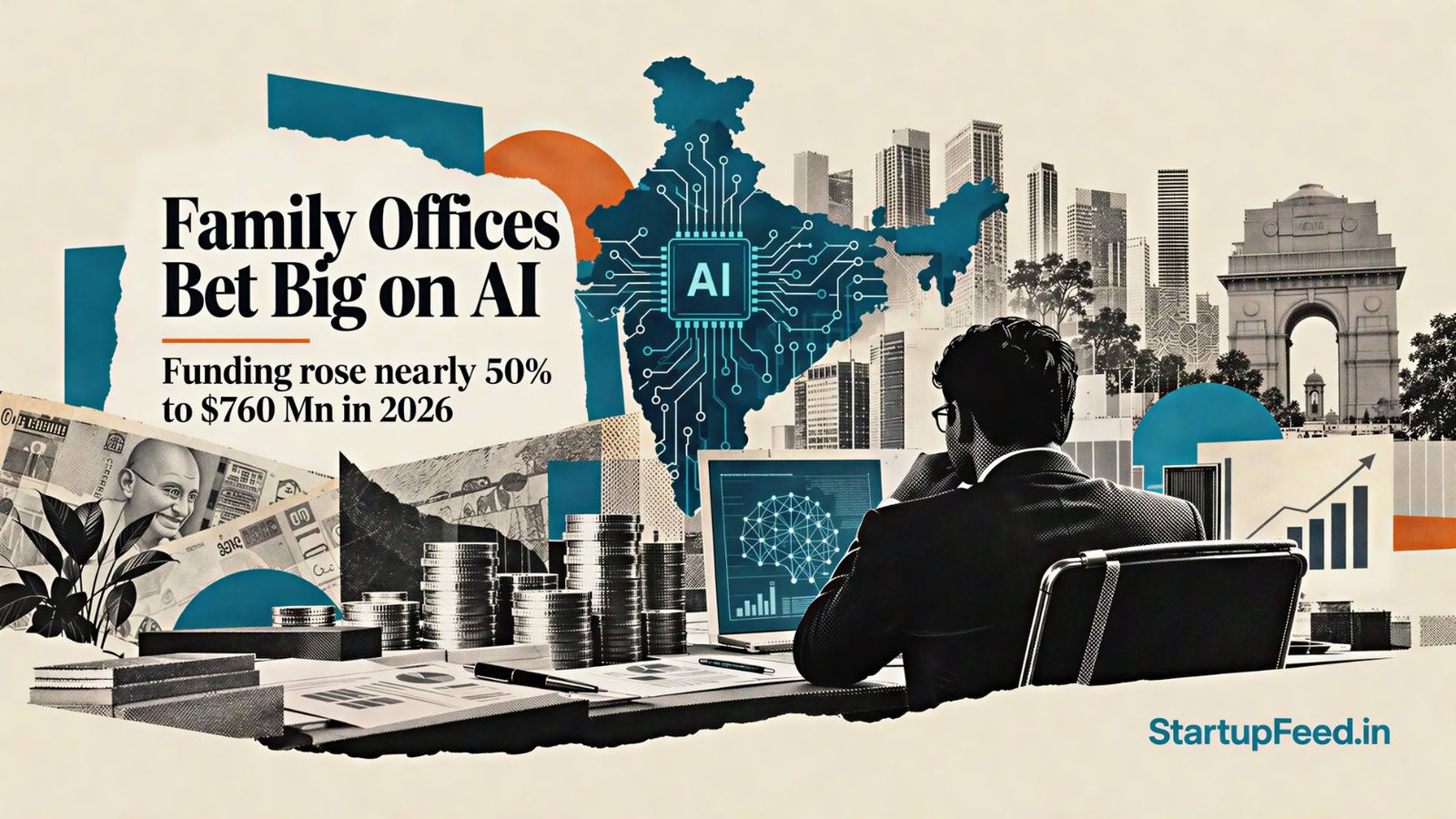
- Indian family offices and angels lifted AI startup funding nearly 50% in 2026, to about $760 Mn, per a Bloomberg report citing Tracxn.
- India has drawn more than $15 Bn in private AI investment since 2013, against $757 Bn in the US and nearly $132 Bn in China.
- Premji Invest, Claypond Capital and QED Innovation Labs are writing the cheques, in rounds from $27 Mn to $130 Mn.
Indian family offices and angel investors increased their AI startup funding by nearly 50% in 2026, to about $760 Mn, a Bloomberg report said Friday.
The rise is steep in percentage terms, but India stays far behind. Private AI investment in the country has crossed $15 Bn since 2013.
The United States has drawn $757 Bn over the same period, and China nearly $132 Bn. India’s pool is roughly a fiftieth of the American one.
Why Indian Family Offices Are Backing AI
Indian family offices are backing AI for one simple reason: they want a share of fast growth, and local startups now look investable to them.


The pull is the upside. Family offices see AI products and models spreading across business, and they want in early.
Many are now investing directly in startups, not only through venture funds. Waterfield Advisors, a wealth manager, tracks these investors.
Riddhiman Jain, who heads its investments, put the shift this way:
“Several family offices and angel investors now are keen on investing directly as they get comfortable with how India’s AI ecosystem is coming into place.”
Riddhiman Jain, head of investments, Waterfield Advisors. From comments to Bloomberg, October 16, 2026.
He added that AI needs patient money, which is still scarce, and that the market here is young. That makes early, long-horizon capital valuable.
Who Is Writing the Cheques
Three family offices lead the list: Premji Invest, Claypond Capital and QED Innovation Labs.
Premji Invest, the firm of billionaire Azim Premji, has been the most active overseas. In June, it joined a $27 Mn round for Pramaana Labs, an AI startup founded by IIT Madras alumni.
Pramaana Labs checks AI answers for errors in fields like tax and healthcare. Khosla Ventures led that round. Premji Invest’s portfolio also holds Databricks, Canva, Writer and Spotdraft.

Claypond Capital, the family office of Manipal Group chairman Ranjan Pai, has moved faster this year. It backed Flam’s $40 Mn round in September and Emergent’s $130 Mn round in July.
Flam makes AI-driven interactive content and has signed more than 100 business customers, among them Google. Emergent runs a coding platform now valued at $1.5 Bn, and reached unicorn status within a year of launch.
QED Innovation Labs, linked to CRED founder Kunal Shah, rounds out the main group.
Here is where the money has gone this year:
| Family office | Startup | Round | When |
|---|---|---|---|
| Premji Invest | Pramaana Labs | $27 Mn | June 2026 |
| Claypond Capital | Flam | $40 Mn | September 2026 |
| Claypond Capital | Emergent | $130 Mn | July 2026 |
What India Still Lacks
India still lacks three things: enough capital, enough computing power, and enough senior AI researchers.
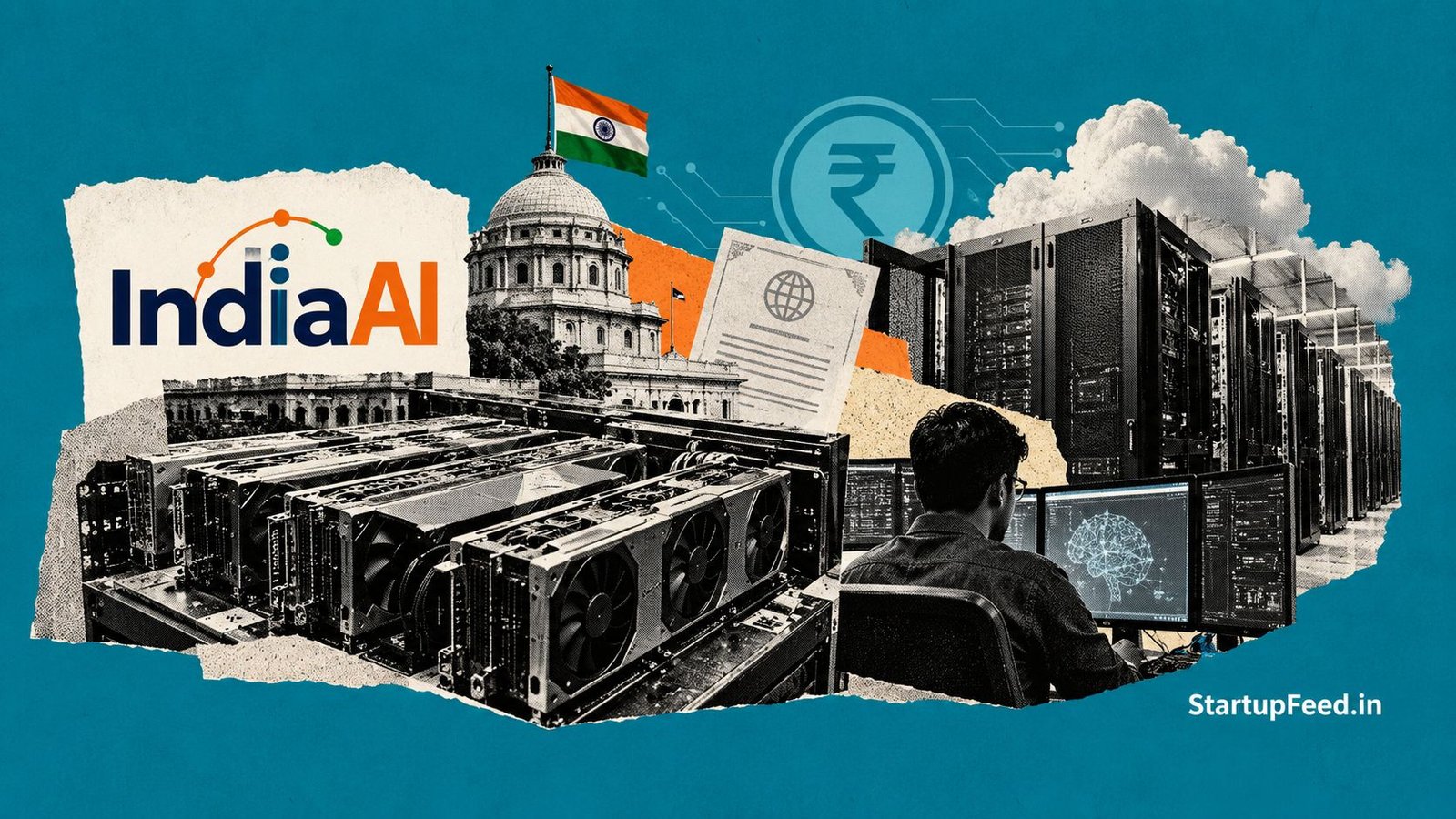
The government is trying to close part of the gap. Its IndiaAI Mission, worth Rs 10,371 Cr, pays for computing power, public datasets and homegrown AI models. The scheme runs over five years.
Big companies are spending too. Gautam Adani, Reliance chairman Mukesh Ambani and the Tata Group are building data centres and chip plants for AI. Their money is going into hardware, not the startups themselves.
The missing piece is patient money. Anirudh Damani of Artha Venture Fund told Bloomberg that India’s edge is cost: it can build AI software and services cheaply for global clients.
To keep the run going, founders will need more money and more computing power than they have now.
What this means for you: If you are building an AI startup in India, family offices and angels are now a live, growing source of early cheques. Pitch them with a clear path to revenue, and name the exact AI problem you solve, before the current rush cools.
StartupFeed Insight
The headline is the 50% jump, but the number that matters is the gap. India’s $15 Bn since 2013 sits next to $757 Bn in the US. The money is real, but it is small and early, and will not close that gap alone. The useful signal is where it goes: into applied AI, like tax, coding and content, not foundation models. Watch the firms that write a second cheque, like Claypond did at Flam and Emergent. Expect family offices to cross $1 Bn in annual AI funding by the end of 2027.
By Avinash Mishra, Business Correspondent
Have a tip? Write to us at editorial@startupfeed.in.
Liked this story? Follow StartupFeed on Google so our reporting reaches you first.