Quick Take
- Amazon India will invests a Rs 2,800 crore ($300 Mn) for its full-year 2026 operations.
- The funds cover logistics expansion, quick commerce scale-up, and welfare for delivery associates across India.
- Amazon Now will more than double its micro-fulfilment centre count and enter new cities this year.
Amazon India has committed Rs 2,800 crore ($300 Mn) in 2026 to expand its logistics network, scale the Amazon Now quick commerce platform, and strengthen worker welfare across its India operations. This Amazon India investment 2026 marks a 40% jump over the Rs 2,000 crore the company deployed in 2025.
The announcement, made on April 23, 2026, builds on last year’s spend that added 17 fulfilment centres, six sortation hubs, and 75 last-mile delivery stations to Amazon’s India network. The new capital places Amazon directly against Blinkit, Flipkart Minutes, and Zepto as India’s quick commerce market crosses an estimated Rs 40,000 crore in annual gross merchandise value.
StartupFeed Insight
Amazon’s dual bet — scaling dark stores while naming and funding worker welfare programs — is a move most e-commerce players have avoided making explicit. By attaching specific rupee commitments to Project Ashray, Sushruta, and Samriddhi, Amazon is doing something strategically smart: turning logistics labour retention into a competitive moat at a time when India’s gig-worker regulation debate is intensifying. Founders building logistics-adjacent startups and investors tracking the supply chain stack should watch this closely. The embedded AI layer — driving behaviour monitoring, route optimisation, workload equity — is the part competitors will struggle to replicate quickly. Expect Amazon India to formalise a delivery partner welfare trust or an ESOP-equivalent structure for gig associates within 18 months, ahead of potential regulatory mandates. — StartupFeed Desk
What Amazon India Invests in 2026: What Goes Where
| Metric | Detail | Notes |
|---|---|---|
| Investment Amount | Rs 2,800 Cr ($300 Mn) | Announced April 23, 2026 |
| Previous Investment | Rs 2,000 Cr (2025) | Added 17 FCs, 6 sortation hubs, 75 delivery stations |
| Broader India Commitment | $35 Bn by 2030 | AI, exports, job creation |
| Amazon Now Current Scale | 300+ micro-fulfilment centres | Across major Indian cities |
| Amazon Now 2026 Target | More than 2x current count | Entering new cities, doubling in existing ones |
| Worker Welfare Programs | Project Ashray, Sushruta, Samriddhi | Rest stops, driver health, social security access |
The jump from Rs 2,000 crore in 2025 to Rs 2,800 crore in 2026 — a +40% increase — is the clearest signal that Amazon views this year as a critical window in India’s quick commerce race before the market consolidates around two or three dominant players.
About Amazon India
Amazon India refers to the Indian operations of Amazon.com, Inc., the global e-commerce and technology company founded by Jeff Bezos in 1994 and headquartered in Seattle. Its Indian marketplace entity, Amazon Seller Services Private Limited, operates the Amazon.in platform, a national fulfilment and delivery network, and the Amazon Now quick commerce vertical. In FY25, Amazon Seller Services reported operating revenue of Rs 30,139 crore — up +19% year-on-year — with losses narrowing sharply to Rs 374 crore, indicating improved cost discipline. The platform serves millions of sellers and competes with Flipkart (Walmart-backed) and Meesho in India’s e-commerce market.
What does the Rs 2,800 Crore mean for Amazon India’s workers?
A significant share of the 2026 outlay is directly attached to three named welfare programs. Project Ashray builds and expands air-conditioned rest stops for delivery associates across the country. Sushruta extends health and wellness programs — including access to medical camps — specifically for truck drivers and long-haul logistics staff. Samriddhi widens access to government-backed social security schemes and broadens accident and medical insurance coverage for workers and their families.



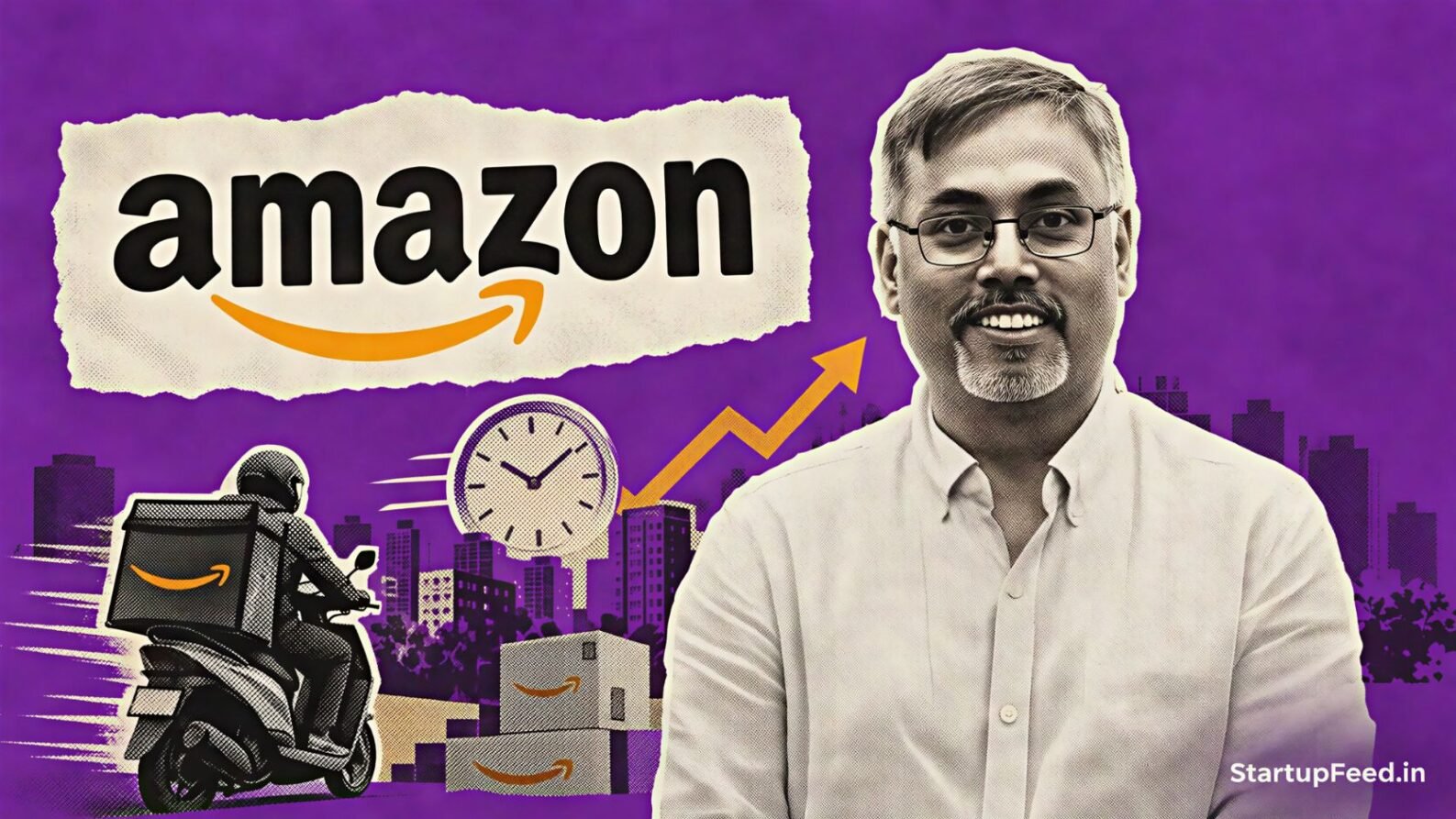
“We remain committed to raising the bar on associate safety, health and financial wellbeing while building a faster and more reliable delivery network.” — Abhinav Singh, VP of Operations, Amazon India and Australia
Alongside welfare, the company is deploying AI and machine learning tools to make logistics work safer. These include systems to monitor driver behaviour in real time, optimise delivery routes to reduce physical strain, and distribute workloads more equitably among delivery partners. Updates to the delivery partner app will also improve navigation and earnings transparency. The 2026 plan also directs capital toward upgrading fulfilment and sortation centres with improved cooling, ventilation, and hydration access — with a focus on inclusive workplace design.
How does Amazon Now compare to Blinkit, Flipkart Minutes, and Zepto?
Amazon entered quick commerce in 2025, later than Blinkit, Swiggy Instamart, and Zepto. Its Rs 2,800 crore 2026 commitment is its first major effort to close the gap.
| Platform | Backer | Dark Stores (2026) | Notable Status |
|---|---|---|---|
| Amazon Now | Amazon | 300+ (targeting 2x by end-2026) | Scaling; AI-integrated logistics |
| Flipkart Minutes | Flipkart / Walmart | 800+ (targeting ~1,600 by end-2026) | Slowing burn ahead of IPO |
| Blinkit | Zomato | Largest network; 46-50% market share | Claims cluster-level EBITDA positivity |
| Zepto | Independent | Expanding aggressively | Preparing for India IPO |
Flipkart Minutes, backed by Walmart’s supply chain, leads Amazon in dark-store count but has slowed expansion to manage cash burn ahead of a planned stock market listing. Blinkit remains the market leader by share. What makes Amazon’s play different is the integration of logistics infrastructure investment with explicit worker welfare funding — a combination no other player in the segment has formalised at this scale.
What’s Next
Watch for Amazon to disclose new city additions to Amazon Now by Q3 2026, as the more-than-double target implies opening dozens of new markets within nine months. The harder question is whether Amazon’s worker welfare investment translates into measurable reductions in delivery partner churn — data the company has not yet disclosed publicly. If it does, it sets a benchmark that competitors with IPO timelines and tighter cost structures will struggle to match.
Will Amazon’s gig-worker welfare bet become the new standard for Indian e-commerce, or will rivals treat it as a PR exercise? Watch the Q3 2026 disclosures closely.
Frequently Asked Questions
What is Amazon India’s investment plan for 2026?
Amazon India invests more than Rs 2,800 crore ($300 Mn) in 2026 to expand its logistics network, scale the Amazon Now quick commerce platform, and improve worker safety and welfare. This forms part of a broader $35 Bn India investment commitment by 2030, focused on AI-led digitisation, exports, and job creation. The 2026 outlay represents a +40% increase over the Rs 2,000 crore deployed in 2025.
What is Amazon Now and how big is its current network?
Amazon Now is Amazon India’s quick commerce offering, delivering groceries and essentials in minutes through a dark-store model. As of 2026, it operates through more than 300 micro-fulfilment centres across major Indian cities. Amazon plans to more than double this count by the end of 2026, entering new cities and increasing coverage in existing ones.


What are Project Ashray, Sushruta, and Samriddhi?
These are Amazon India’s named delivery partner welfare programs, all funded under the 2026 investment. Project Ashray provides air-conditioned rest stops for delivery associates across the country. Sushruta extends dedicated health and wellness support to truck drivers and long-haul logistics staff. Samriddhi connects workers and their families to government-backed social security schemes and broader insurance coverage.
Written by Dr. Mayank Raj. Published: April 24, 2026. Updated: April 24, 2026. Have a tip? Write to us at editorial@startupfeed.in.
Liked this story? Follow StartupFeed on Google so our reporting reaches you first.