
Quick Take
- SpaceX listed on Nasdaq on June 12, 2026, at $135 a share, the largest IPO ever.
- Indian residents can send up to $250,000 abroad each year under the LRS, but moving unlisted shares home is far harder.
- Getting SpaceX shares as an in-specie transfer may need RBI approval and could trigger capital gains tax in India.
Many Indians who hold SpaceX shares now face hard compliance questions after the company listed in June 2026. Getting the stock into India cleanly is the problem.
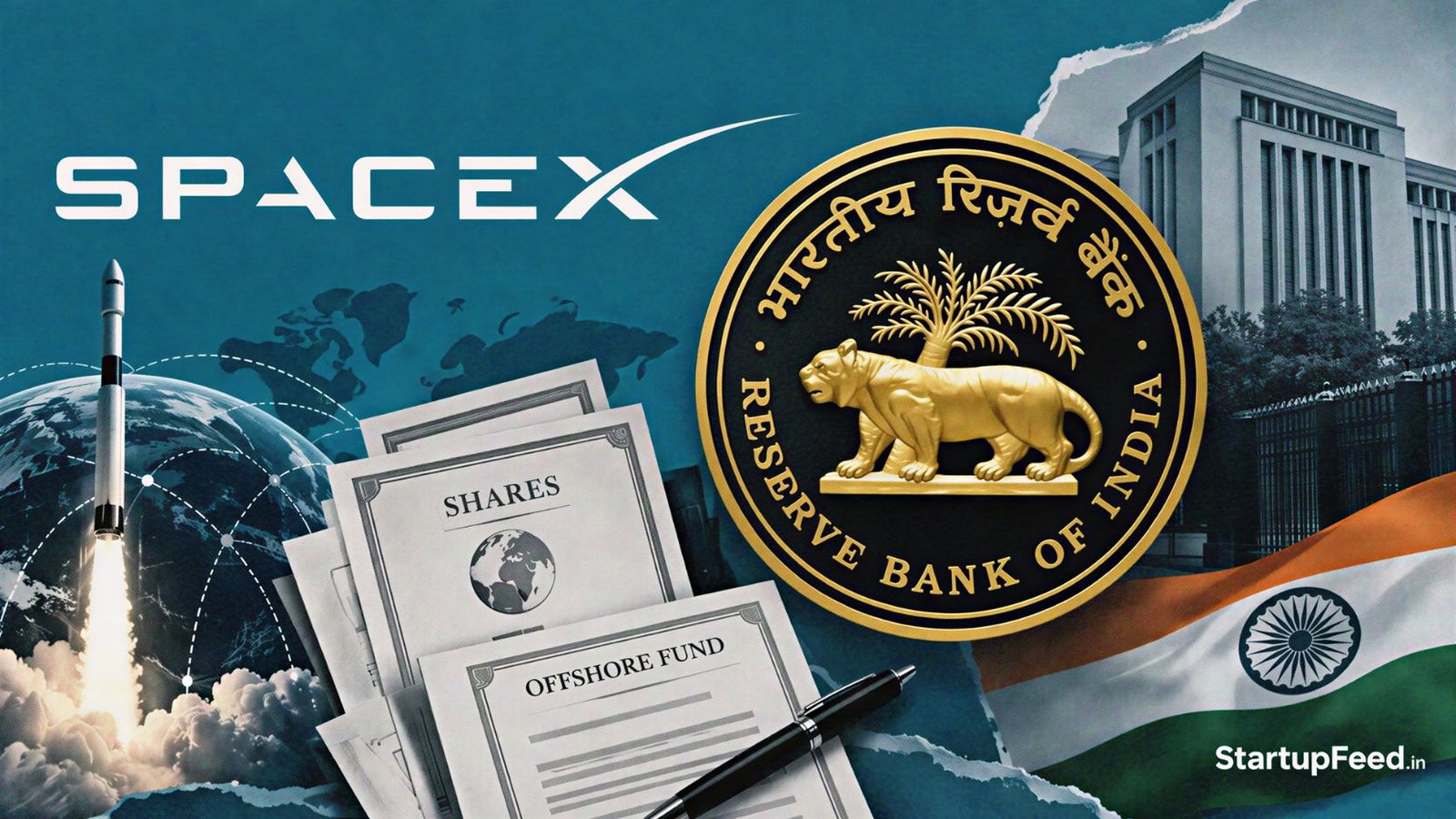
SpaceX listed on Nasdaq on June 12, 2026, at $135 a share. It was the largest IPO ever. Some Indian residents got in early through offshore funds and special vehicles, well before the listing.
Now those holdings must come home. Moving unlisted foreign shares into a resident’s own name is not simple. The Reserve Bank of India has strict rules on how money and assets cross the border.
What is the in-specie problem?
Many of these investors put money in before the IPO. They used the Liberalised Remittance Scheme, called the LRS. It lets a resident individual send up to $250,000 abroad each financial year for permitted investment.
Some funds ended up with investors who wanted their SpaceX shares directly, not cash. This is called in-specie distribution. It hands over the asset itself instead of selling it and paying out money.



That is where the trouble starts. Some Indian investors never had legal or operational control over the fund. For them, getting the shares in kind may count as a rule breach.
The reason is technical. Under LRS, a swap of one asset for another is allowed only in mergers or on a listing. Handing over shares when a fund is dissolved fits neither box.
Vishal Gada, founder and chief executive of Aurtus, raised the core doubt. Aurtus advises on tax and regulatory matters. He said in-specie distribution may need prior RBI approval.
There is one clear path. The rules allow shares that come as sweat equity or under an Employee Stock Ownership Plan, called an ESOP. Those count as overseas portfolio investment, or OPI, up to 10% of the paid-up stock.
That path is narrow, though. It does not cover most fund investors.
Why does OPI versus ODI matter?
Timing matters as much as structure. Some investors disclosed their unlisted units as OPI, not as overseas direct investment, or ODI. That choice may now cause problems.
Moin Ladha, partner at law firm Khaitan & Co, explained why they did it. He said the OPI route probably helped them escape ODI compliance. It also avoided sharing the SpaceX valuation report with the RBI.



There is a further catch. Under LRS rules, capital gains stay pending on a swap. There is no realisation. So there is no duty to sell the shares to meet reinvestment terms.
Harshal Bhuta, partner at CA firm P.R. Bhuta & Co, said the key issue is when and how the investment happened. Investors who came in through regulated funds before August 2022 could be in a spot.
What changed in the RBI 2024 rules?
The RBI liberalised its ODI framework in June 2024. That change allows portfolio investment in offshore funds run by a fund manager. It reaches jurisdictions like Singapore.
Will Indian holders pay tax?
Views also differ on tax. Some argue there is no tax until the shares are actually sold. Gada does not fully agree.
He read it another way. He said the fund units could be treated as already transferred. The fair market value of the listed shares would then count as the realisation value.
Here the sum gets sharp. The gap between an investor’s original cost and that value would face capital gains tax in India.
So the answer turns on one thing. It is not just how you brought SpaceX in. It is when you did it, and what you told the RBI.
What this means for you: If you hold SpaceX through an offshore fund or SPV, check with a tax adviser now on how the units were disclosed and whether an in-specie transfer needs RBI approval before you act.
StartupFeed Insight
The SpaceX listing turned a paper holding into a real one, and that is exactly when old shortcuts surface. The split between OPI and ODI was a quiet call made years ago to avoid sharing a valuation report with the RBI. Now it decides tax and legality. Watch for the RBI or tax officers to ask fund managers for distribution records over the next two quarters. Anyone who took the in-specie route without control over the fund should expect the hardest questions. By March 2027, expect at least one clarification or a set of notices as more pre-IPO holders try to bring these shares onshore.
— Avinash Mishra, Business Correspondent
Frequently Asked Questions
What this means for you: Treat any pre-IPO SpaceX holding as a live compliance item, not a settled one, and get the paperwork checked before you move the shares.
Have a tip? Write to us at editorial@startupfeed.in.
Disclaimer: This article is for information only and is not investment advice. StartupFeed and its authors are not SEBI-registered investment advisors. Please speak to a SEBI-registered advisor before investing.
Liked this story? Follow StartupFeed on Google so our reporting reaches you first.