

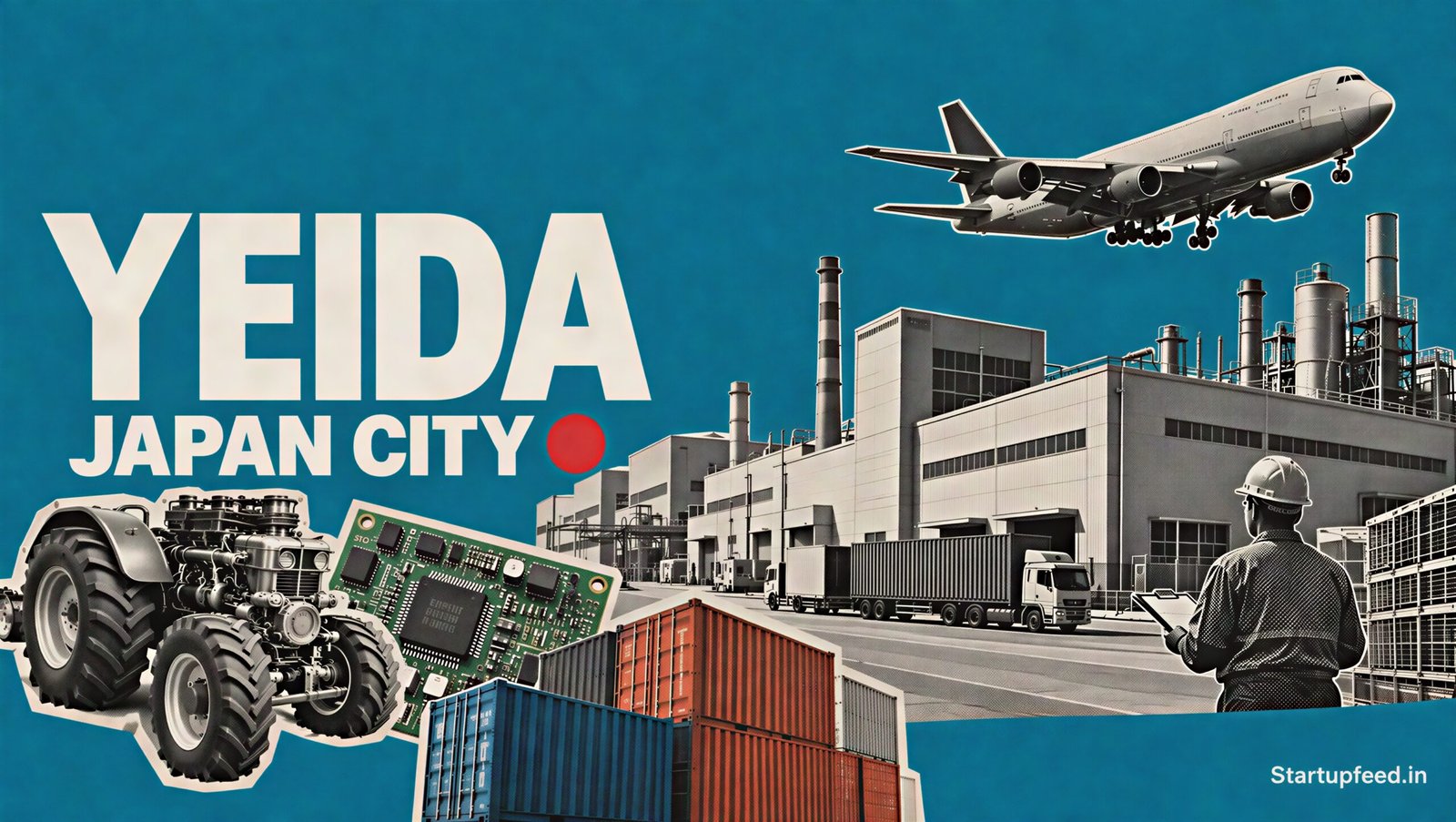
Uttar Pradesh has placed a fresh bet on Japanese capital, and it sits minutes from the upcoming Noida International Airport at Jewar. At the UP-Japan Investment Meet 2026 in New Delhi, Chief Minister Yogi Adityanath announced the YEIDA Japan City, a dedicated township for Japanese firms across roughly 500 acres in Sector 5A of the Yamuna Expressway Industrial Development Authority. This is not a plain land allotment. The YEIDA Japan City is planned as an integrated zone that blends factories, offices, and homes for Japanese companies and their staff.
The meet drew more than 200 Japanese chief executives, managing directors, and country heads. The Japanese side was led by Yamanashi Prefecture Governor Kotaro Nagasaki. For founders and operators, the real signal is not the ceremony. It is the supply chain that a dense manufacturing cluster near Jewar can open.
Sub-national diplomacy turns into groundbreakings
The project marks a shift in how states court foreign money. Instead of chasing one big factory, Uttar Pradesh is building a plug-and-play ecosystem for a whole national industry. The state pitched the YEIDA Japan City as a cohesive micro-economy, with commercial, residential, and institutional infrastructure sitting beside plants. Several memoranda signed at earlier meets are now moving to concrete groundbreakings.
The anchor investments
Two large manufacturers gave the YEIDA Japan City its first proof points. Escorts Kubota has been allotted 154 acres in Sector 10 for a greenfield plant. The company plans to invest about Rs 2,029 crore and expects to create close to 4,000 jobs. The facility is set to build roughly 60,000 tractors a year, along with a range of agricultural machinery components.
Spark Minda Group, the auto-components major, held a virtual groundbreaking for projects in Sectors 10 and 24. Its investment is pegged at about Rs 1,166 crore, with an estimated 6,440 jobs. Together the two anchors commit close to Rs 3,195 crore. Both are established corporates, not startups, and that distinction shapes how the ecosystem story should read.
A cluster, not a single park
The YEIDA Japan City is one piece of a larger design near the airport. In an earlier phase reported in 2024, YEIDA moved to acquire about 5,000 acres from nearly 2,000 farmers for a set of specialised cities. The plan carved out a Japanese city of about 395 hectares for a semiconductor and advanced-tech cluster. A Korean city of about 365 hectares was mapped for electronics manufacturing, including chips, cameras, and AI hardware. A separate 250-acre Fintech City was also proposed.
That mix is why the YEIDA Japan City reaches well beyond tractors and auto parts. A semiconductor and advanced-tech cluster needs a deep base of suppliers. Chips, boards, sensors, casings, and precision parts rarely travel far once volumes rise. Proximity cuts both cost and lead time. This is the layer where Indian firms can plug in.
Where Indian hardware startups fit
Here the framing needs care. There is no confirmed megadeal yet between the YEIDA Japan City and any Indian hardware or supply-chain startup. What the cluster offers is access. Anchor plants create steady demand for local vendors in machining, tooling, electronics assembly, and logistics tech. Indian electronics system design and manufacturing startups can bid to supply parts. Deep-tech firms in sensors, robotics, and industrial software can sell into Japanese lines that prize reliability.
The pull works because large buyers reward nearby vendors. A young components maker can win a small order, prove quality, and scale with the plant next door. Japanese firms are also known for long supplier relationships. For a startup, one reference customer of that calibre can unlock further contracts across the cluster.
Supply-chain startups have an opening too
A cluster this size runs on warehousing, freight matching, customs software, and inventory tools. Startups in these areas often grow fastest next to large, predictable buyers. The YEIDA Japan City could become that kind of anchor customer over time, if execution holds. Cold-chain, packaging, and last-mile players near the airport stand to benefit as cargo volumes build.
The logistics edge
Location is the strongest card in the pitch. The YEIDA Japan City sits inside a corridor served by the upcoming Noida International Airport at Jewar, planned as one of India’s largest. It also draws on the Eastern and Western Dedicated Freight Corridors. A proposed Ghaziabad to Jewar rapid transit line, estimated near Rs 20,640 crore, would add mass connectivity to the zone.
Uttar Pradesh now holds a large share of India’s expressway network, which shortens road time to ports and markets. For a hardware supply chain, that blend of air cargo, rail freight, and road access is hard to match in one location. It is the kind of base that lets a component startup ship fast and stay lean.
What founders should watch
Execution risk is real. Land acquisition near Jewar has faced farmer disputes before. Timelines for the specialised cities have slipped in earlier rounds. The Rs 3,195 crore in anchor commitments is verified, yet the billion-dollar tag often pinned to the project is not backed by a single confirmed figure for the YEIDA Japan City itself. Track plot allotments, incentive terms, and the first vendor tenders. Those signals will show whether the supply-chain promise turns into real orders.
For now, the YEIDA Japan City is a strong statement of intent. It pairs Japanese manufacturing with Indian logistics and a growing deep-tech base. The startups that map the cluster early, and build for its buyers, are the ones most likely to gain.
Liked this story? Follow StartupFeed on Google so our reporting reaches you first.