
Quick Take
- The Rs 62,500 Cr Mobile Phone Manufacturing Scheme opened on August 21, 2026, and runs to FY31.
- Indian-owned EMS firms qualify at a Rs 1,000 Cr turnover, a tenth of the Rs 10,000 Cr bar for others.
- The government is backing three Indian smartphone brands it expects to launch in 10 to 14 months.
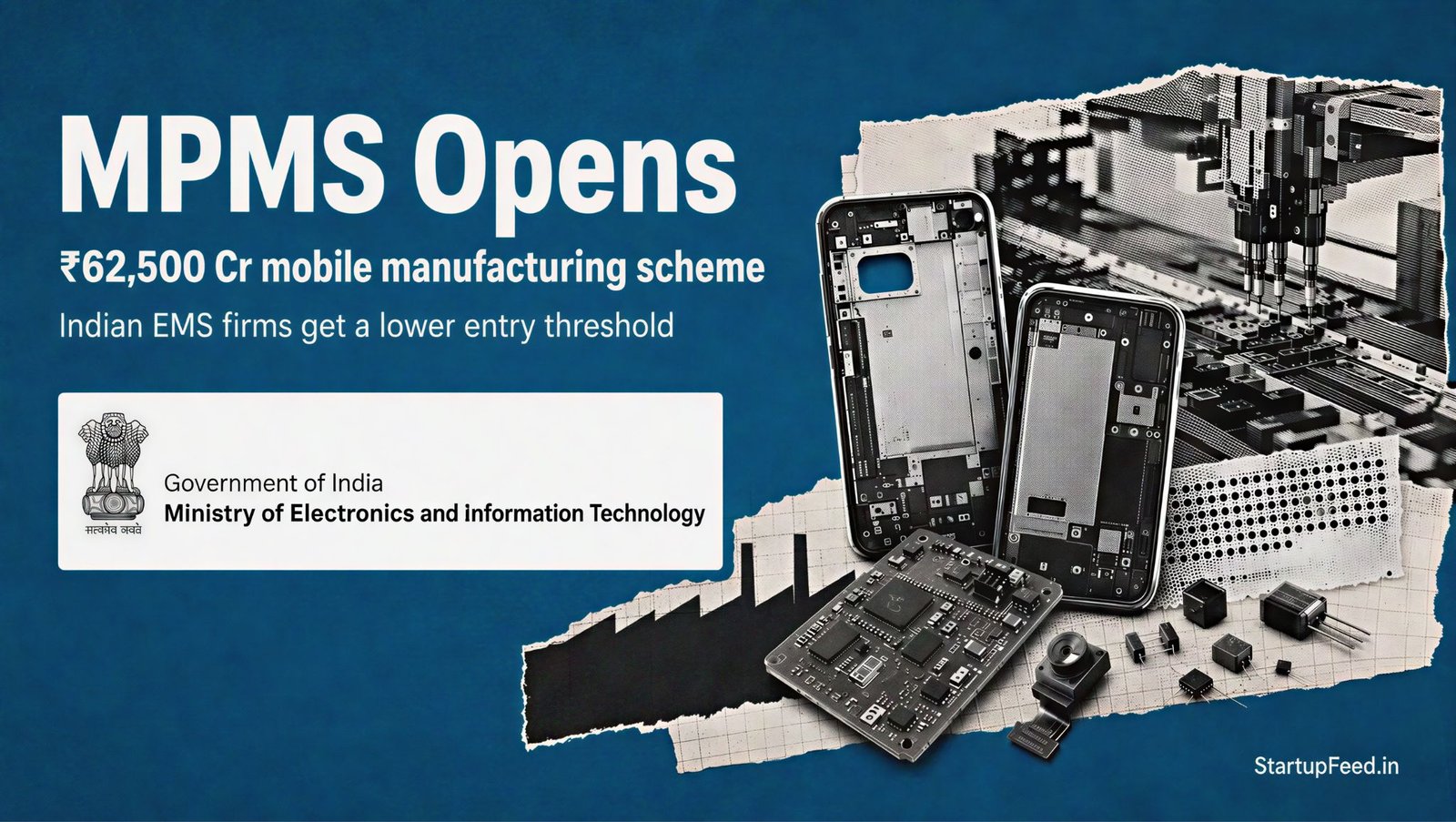
India notified a Rs 62,500 Cr scheme on August 21, 2026, to fund mobile phone makers for five more years and build local brands.
The Mobile Phone Manufacturing Scheme, or MPMS, opened for applications the same day. It runs from April 1, 2026, to FY31, IT Minister Ashwini Vaishnaw said in Delhi. The Union Cabinet had cleared it on July 15.
The scheme replaces the older Production Linked Incentive plan for large electronics, which closed on March 31, 2026. That earlier round drew about $14 Bn into India’s electronics base, Electronics and IT Secretary S Krishnan said.
Here is the part founders should read twice. The MPMS sets a low door for Indian-owned contract makers.
Who can apply under the MPMS?
Any mobile phone maker registered in India can apply if it had a FY26 turnover of Rs 10,000 Cr. The guidelines came out on August 21, 2026.
Electronic manufacturing services firms are covered too. These are the contract makers that build phones for the brands. Foxconn, Dixon Technologies and Tata Electronics are examples.
An EMS firm with at least 51% Indian ownership qualifies at a FY26 turnover of just Rs 1,000 Cr. That is a tenth of the general bar. The gap is a clear tilt toward Indian-owned suppliers.
The scheme has two parts. Target Segment 1 pays for mobile phone manufacturing. Target Segment 2 backs Indian mobile phone brands.
Applicants under the brand segment get a one-year gestation period. That lets a new brand set up and meet the rules before it claims any money.
How much can a manufacturer earn?
Makers can earn a base incentive of 2.25% to 5% on eligible sales, the guidelines show. The rate rises with the production and sales a firm hits.
Indian brands sit at the top of that band. They are eligible for the full 5%, Krishnan said, as the government pushes local firms to sell abroad.
Two top-ups sit above the base rate. A firm can earn up to 1.5% more for sourcing key parts and sub-assemblies in India.

Indian brands get a second top-up. An extra 3% is on offer for Indian design and research and development.
Existing brands must grow to earn. A brand has to add Rs 5,000 Cr in sales over its FY26 base in FY27 to qualify. That threshold climbs to Rs 10,000 Cr for FY28.
What does this mean for Apple and Google?
Vaishnaw said the government expects Apple to make products beyond the iPhone in India. Asked if Apple could build more than iPhones here, the minister replied yes.
The government is in talks with Apple to widen the range it assembles in India, Vaishnaw said. He did not name a product or a date.
Google could also shift most of its export production from China to India, the minister said. He was responding to reports that Google plans to move device work out of China.
The context is a supply chain moving fast. India now assembles about 25% of all iPhones, up from under 5% four years ago, per StartupFeed’s earlier reporting.
The MPMS aims for about Rs 39 Lakh Cr in cumulative production and 60,000 direct jobs over its run. The old PLI round supports about 12 Lakh jobs already, Krishnan said.
Why does the scheme back three Indian brands?
Vaishnaw said he sees three Indian smartphone players emerging in 10 to 14 months. The government is working with the three on their designs.
The three firms have been asked to draw up best-in-segment designs. They must also pick the segments they want to fight in, from economy to super-premium.
The government will check each firm before it clears support. It will assess the intellectual property and design of every applicant, Vaishnaw said.
The design must be original to draw the money. The minister said the government will be strict on this point.
This is the real shift in the scheme. India spent a decade paying for scale. It is now paying for Indian brands, Indian IP and Indian design.
StartupFeed Insight
The Rs 1,000 Cr door for Indian-owned EMS firms is the line to watch, not the Apple headline. A tenth of the general bar is a deliberate opening for domestic contract makers. Pair it with the 3% design top-up and the intent is plain. The government wants Indian firms to own the IP, not just the assembly line. The risk is the Rs 10,000 Cr sales bar for new brands, which is steep for a first-time entrant. Expect at least one of the three named brands to reveal a product segment before March 2027. Watch which EMS firms file first. That list will show who believes the design money is real.
Avinash Mishra, Business Correspondent
What this means for you: If you run an Indian-owned contract maker, check the Rs 1,000 Cr eligibility bar now. The design and sourcing top-ups reward local IP.
Have a tip? Write to us at editorial@startupfeed.in.
Liked this story? Follow StartupFeed on Google so our reporting reaches you first.