
Quick Take
- Amazon crossed $3 Tn (Rs 2,85,930 Cr Cr) market value on August 3, 2026, the fifth firm ever.
- It joins Nvidia, Apple, Microsoft, and Alphabet, taking just over two years from $2 Tn.
- AWS grew 37% in Q2 2026, its fastest pace in 18 quarters, powering the rally.
In This Article
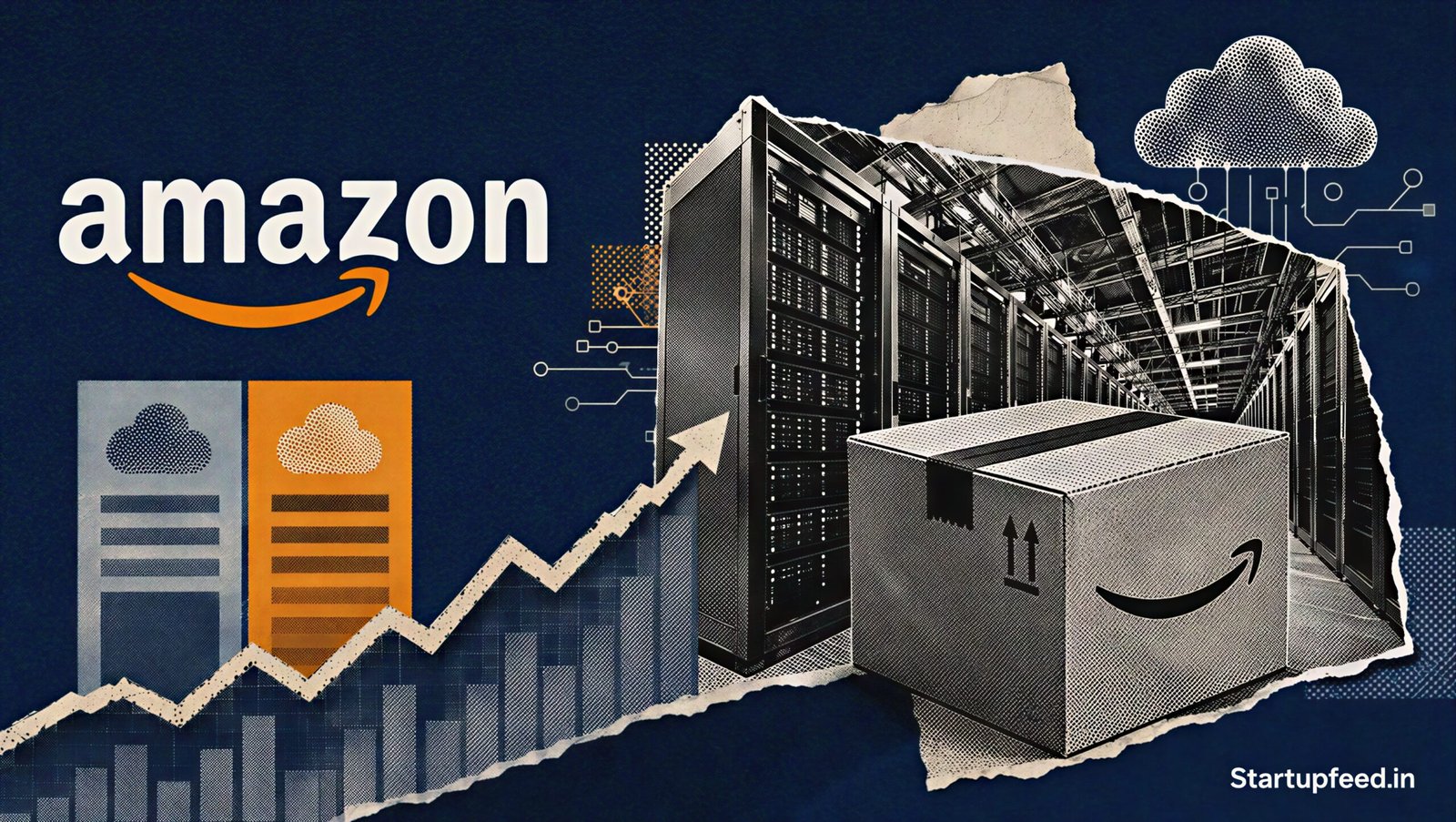
Amazon Hits $3 Trillion in market value for the first time on August 3, 2026, becoming only the fifth company in history to reach the milestone. The stock touched a record high near $287, valuing the firm at roughly $3.08 Tn (Rs 2,93,461 Cr Cr) at a live rate of Rs 95.31 to the dollar.
The e-commerce and cloud giant joins Nvidia, Apple, Microsoft, and Alphabet as the only firms ever worth this much, according to Bloomberg. Shares rose as much as 5.3% during the session, extending a rally that began after strong second-quarter earnings showed accelerating cloud growth. The move came just over two years after Amazon first crossed $2 Tn in June 2024.
StartupFeed Insight
The headline is the $3 Tn number, but the real signal sits inside the mix. AWS supplied only 21% of Amazon’s Q2 revenue yet 60% of its operating profit, per company filings. That shift is why the market re-rated the whole business. Indian SaaS founders and cloud resellers should watch closely: AWS growth of 37% means capacity, not demand, is now the ceiling, and India is a priority region for new data centres. Expect Amazon to announce fresh India cloud capacity or a Hyderabad-linked expansion before the end of FY27 as it races to meet reserved 2027 demand. By Harshvardhan Jain.
The $3 Trillion Milestone in Numbers
Amazon Hits $3 Trillion off the back of a record share price of about $287.17, its highest ever, StockTwits reported. The valuation makes it the fifth public company to cross the mark, and the rally added more than 20% to the stock across two trading sessions.
| Metric | Detail | Notes |
|---|---|---|
| Market value | $3.08 Tn (Rs 2,93,461 Cr Cr) | Intraday high, August 3, 2026 |
| Record share price | ~$287.17 | All-time high (StockTwits) |
| Intraday gain | +5.3% | On the milestone day (Bloomberg) |
| Rank in club | 5th company ever | After NVDA, AAPL, MSFT, GOOGL |
| $2 Tn to $3 Tn | Just over 2 years | $2 Tn first hit June 2024 |
| 2026 stock gain | +24% YTD | Outpacing S&P 500 (StockTwits) |
The pace matters. The jump from $2 Tn to $3 Tn took just over two years, far faster than the more than six years Amazon needed to go from $1 Tn in late 2018 to $2 Tn.
About Amazon
Amazon.com, Inc. is a US e-commerce and cloud-computing firm founded in 1994 by Jeff Bezos in Seattle. It runs the world’s largest online retail marketplace and Amazon Web Services (AWS), the top cloud infrastructure provider. Led by CEO Andy Jassy, the company also operates advertising, devices, and logistics arms, and holds a large stake in AI firm Anthropic. It employs over 1.5 million people worldwide.



Why Did Amazon Cross $3 Trillion Now?
Amazon crossed $3 Trillion because AWS posted its strongest growth in years, easing investor fears about heavy AI spending. AWS net sales rose 37% year over year to $42.2 Bn (Rs 40,221 Cr) in Q2 2026, the unit’s fastest pace in 18 quarters, according to Amazon’s official Q2 2026 results.
“AWS is booming, growing 36.7% year-over-year in Q2, our fastest growth in 18 quarters, and our AI and Chips businesses each eclipsed run rates of more than $25 billion,” said Andy Jassy, President and CEO, Amazon.
Total company revenue crossed $200 Bn (Rs 1,90,620 Cr) in a single quarter for the first time, up 20% year over year. Operating income rose 43% to $27.5 Bn (Rs 26,210 Cr). The AWS figure beat analyst forecasts of 31% growth by a wide margin, which triggered a 15% single-day stock jump on Friday before the milestone.
How Does Amazon Compare to the $3 Trillion Club?
The $3 Trillion club now has five members, and each reached the mark on a different growth engine. Nvidia rode AI chips, Apple leaned on devices and services, Microsoft and Alphabet used cloud and AI, and Amazon combined retail scale with AWS.
| Company | Core Growth Driver | Cloud Growth (latest Q) |
|---|---|---|
| Amazon (AWS) | Cloud + AI + retail | 37% |
| Microsoft (Azure) | Cloud + AI | 43% |
| Alphabet (Google Cloud) | Cloud + search + AI | 82% |
| Nvidia | AI chips | Not a cloud provider |
| Apple | Devices + services | Not a cloud provider |
Cloud rivals set a high bar this earnings season, with Alphabet’s Google Cloud up 82% and Microsoft’s Azure up 43%, per CNBC. What sets Amazon apart is AWS profitability: the unit ran a 39.4% operating margin in Q2 and now carries a $496 Bn (Rs 4,72,738 Cr) backlog.
What It Means for India
Amazon’s milestone lands as the firm deepens its India footprint across retail, cloud, and payments. AWS has committed billions to Indian data-centre regions, and Indian startups from fintech to gaming run core workloads on its infrastructure. A stronger, better-funded AWS usually means faster local capacity and new AI services for Indian developers.
The flip side is competition. Amazon’s retail arm faces D2C and quick-commerce rivals at home, while AWS competes with Microsoft Azure and Google Cloud for Indian enterprise deals. For Indian SaaS founders, cheaper and faster cloud compute is a tailwind, but rising AI infrastructure costs globally could feed into pricing over time.
What’s Next
Amazon raised its 2026 capital spending plan to $220 Bn (Rs 2,09,682 Cr), the highest of any Wall Street firm, mostly for AI and data centres. It says capacity for 2027 is already largely reserved. Watch for a fresh India cloud region or capacity announcement in the coming quarters. Will AWS hold its lead as Google Cloud grows at 82%?



Frequently Asked Questions
Disclaimer: This article is for informational purposes only and does not constitute investment advice. StartupFeed and its authors are not SEBI-registered investment advisors. The analysis above is based on publicly available information and should not be the sole basis for any investment decision. Please consult a SEBI-registered financial advisor before making investment decisions.
Have a tip? Write to us at editorial@startupfeed.in.
Liked this story? Follow StartupFeed on Google so our reporting reaches you first.