
Quick Take
- HDFC Bank AI now runs on Neev, its own generative platform, plus a real-time fraud engine.
- A team of 150 to 200 engineers at the Gurgaon tech centre built it over 18 months.
- The fraud system scans transactions in microseconds and blocks money mule activity across UPI channels.
In This Article
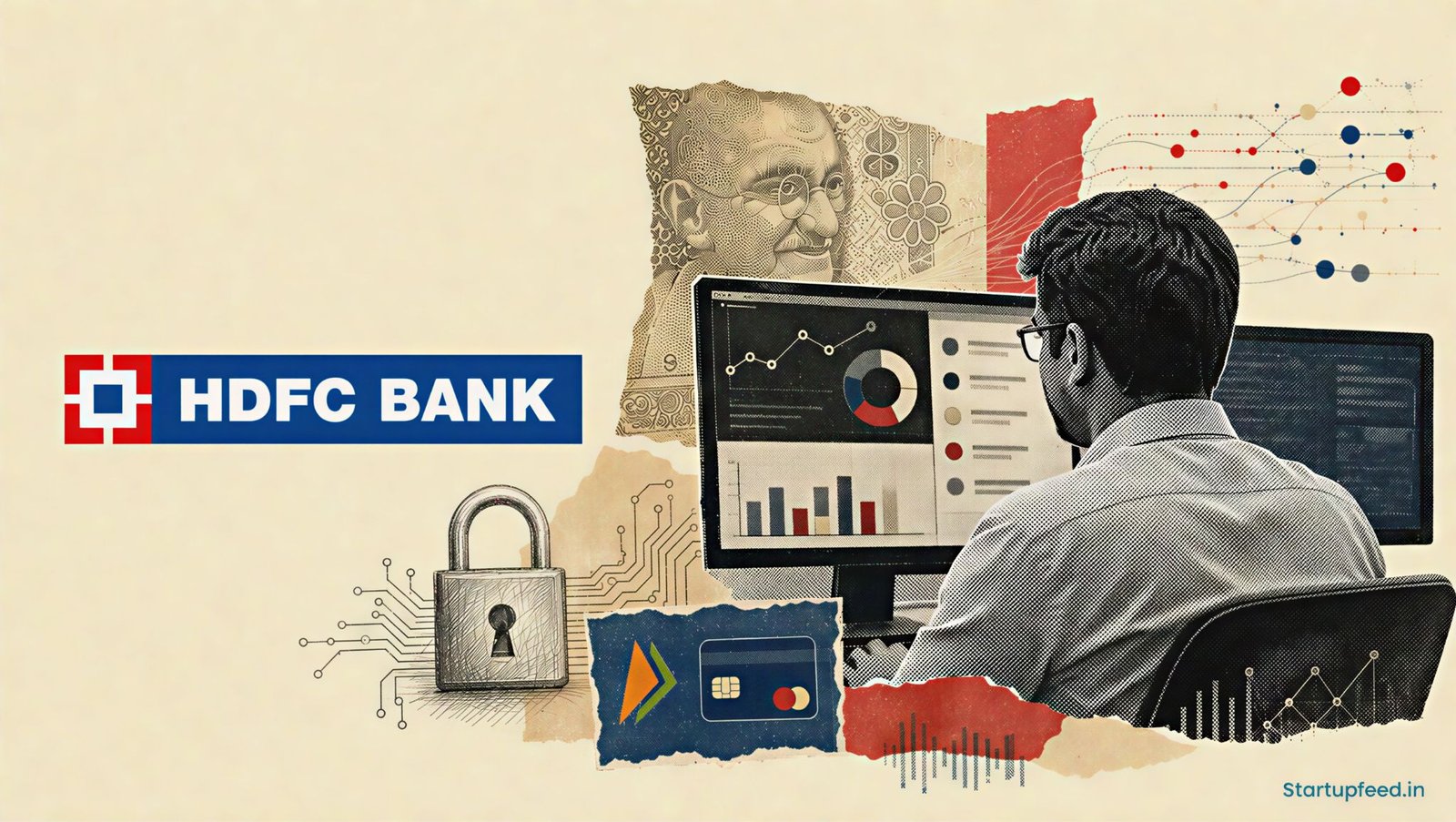
HDFC Bank AI has taken a big step in-house, with the country’s largest private lender by value deploying its own generative AI platform called Neev and a custom real-time fraud detection system, the bank confirmed in early July 2026.
The move signals a shift for a lender once slowed by tech outages. Ramesh Lakshminarayanan, group head of information technology and chief information officer at HDFC Bank, said tomorrow’s banks must own their engineering talent and platforms to compete. Both systems were built by an internal team of 150 to 200 engineers. Details of the bank’s wider technology work sit on the HDFC Bank newsroom.
StartupFeed Insight
The real story is not the AI label, it is the make-versus-buy call. By running small language models on its own transaction data, HDFC keeps its richest asset, customer behaviour, away from third-party vendors and their licence bills. Fintech founders selling fraud or risk tools to large banks should watch closely, because the buyer just became a builder. StartupFeed expects at least one more top-five Indian bank to announce a similar in-house AI fraud stack before March 2027, as UPI fraud pressure and RBI scrutiny push lenders to own the full detection layer. By Avinash.
HDFC Bank AI Stack at a Glance
The HDFC Bank AI stack pairs Neev, a proprietary generative AI platform, with a separate real-time fraud engine. Neev automates routine banking operations and speeds up service delivery, while the fraud engine streams and scores transaction data in microseconds. Both were built by a dedicated in-house team at the bank’s Gurgaon technology centre over roughly 18 months.
| Metric | Detail | Notes |
|---|---|---|
| AI Platform | Neev (generative AI) | Automates operations, runs on in-house small language models |
| Fraud System | Custom real-time engine | Streams and scores transactions in microseconds |
| Engineering Team | 150 to 200 engineers | Hired from large tech and fintech firms |
| Build Location | Gurgaon tech centre | Dedicated in-house AI unit |
| Build Timeline | About 18 months | Aims to cut reliance on outside vendors |
| Key Channel | UPI and card payments | Fraud checks integrated across payment rails |
The standout detail is the microsecond scoring speed, which lets the system flag or block a suspect payment before it settles rather than after the money has left.
About HDFC Bank
HDFC Bank is India’s largest private sector bank by market value, serving retail and corporate customers nationwide. Ramesh Lakshminarayanan leads its technology and digital function as group head of IT and CIO, a role summarised on his HDFC Bank leadership profile. The bank has pursued an AI-first strategy across fraud detection, customer service, and credit, and now builds core platforms with its own engineering teams.



Why is HDFC building AI in-house?
HDFC is building AI in-house to own its technology and reduce dependence on third-party providers. The bank recruited engineers from major technology and fintech companies to staff a dedicated team, treating proprietary platforms as a competitive edge rather than a cost centre.
If you do not have your own engineering talent and your own platforms, you will not be able to compete, Lakshminarayanan said.
The logic is direct. Owning the model and the data cuts long-term licensing costs and lets the bank update tools faster as fraud patterns shift. It also keeps sensitive customer transaction data inside the bank, a growing concern as regulators tighten data rules under the DPDP Act.
How does the fraud system stop scams?
The HDFC Bank AI fraud system stops scams by analysing every transaction as it happens and instantly flagging or blocking behaviour that breaks a customer’s usual pattern. It targets money mule operations, where accounts are used to move illicit funds, and applies checks across UPI (Unified Payments Interface) and card channels.
The bank has also tightened the account-opening gate. New customers face stricter KYC (Know Your Customer) checks, mandatory credit bureau verification, and Aadhaar-based authentication. To catch known offenders early, HDFC has connected its systems to national databases, including the Ministry of Home Affairs registry and the Indian Cyber Crime Coordination Centre (I4C), so applicants can be cross-checked against flagged fraudsters. Lakshminarayanan has called stronger KYC the first line of defence.
How does HDFC compare with rival banks?
HDFC now competes on how deeply it owns its AI stack, not just whether it uses AI. State Bank of India, ICICI Bank, and Axis Bank all run fraud engines and chatbots, but HDFC’s edge is building core platforms in-house on its own transaction data.
| Bank | AI Approach | Notable Edge |
|---|---|---|
| HDFC Bank | In-house platform (Neev) plus custom fraud engine | Owns models and data, 150 to 200 engineer team |
| SBI | Tech-first, YONO-centred AI | Vast scale, over 520 Mn customers |
| Axis Bank | Dedicated GenAI competency centre | Uses alternate data for underwriting |
What sets HDFC apart is that it links each AI model to one customer ID and a single governance layer, giving it enterprise control while moving at start-up speed.
What’s Next
The real test comes in the next few quarters, when investors will look for proof that Neev and the fraud engine actually cut fraud losses and operating costs. Watch HDFC Bank’s upcoming financial disclosures for any shift in its IT-to-revenue ratio and fraud-related figures. Will more Indian banks follow HDFC and build their own AI platforms rather than buy them?


Frequently Asked Questions
Written by Avinash. Have a tip? Write to us at editorial@startupfeed.in.
Liked this story? Follow StartupFeed on Google so our reporting reaches you first.