

Quick Take
- RMZ committed up to $40 Bn (Rs 3,32,000 Cr) across Andhra Pradesh and Maharashtra in three weeks.
- Andhra Pradesh gets $10 Bn over five years; Maharashtra gets $30 Bn over a decade.
- RMZ targets 1.5 GW colocation capacity as India faces a sharp GPU crunch.
In This Article
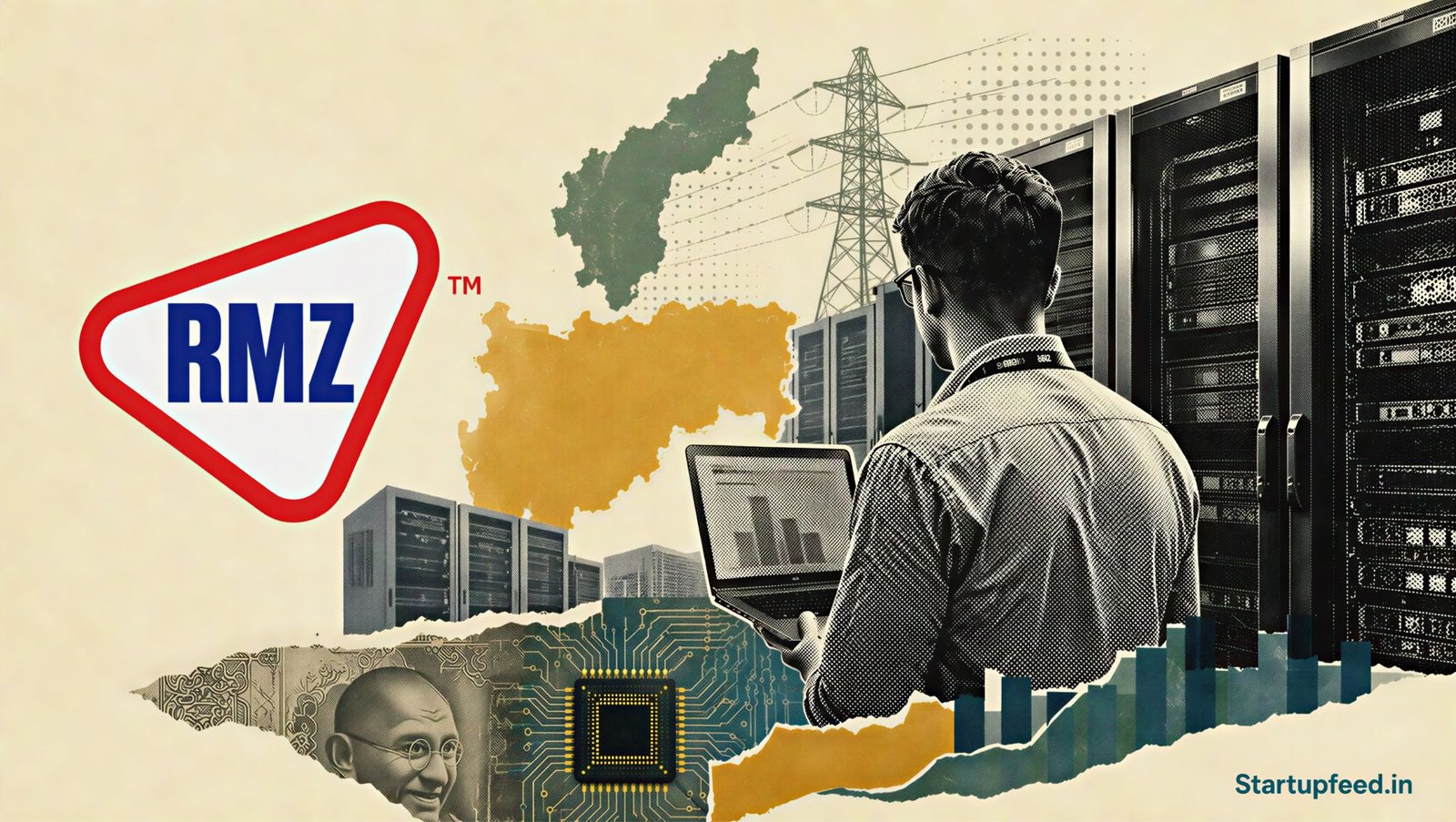
The RMZ Data Centre plan now totals up to $40 Bn (Rs 3,32,000 Cr), after the group pledged $10 Bn to Andhra Pradesh and $30 Bn to Maharashtra within three weeks at Davos 2026.
Both commitments were signed at the World Economic Forum Annual Meeting 2026 (company announcement). The Andhra Pradesh deal runs over five to six years and targets up to 1 GW of hyperscale capacity in Visakhapatnam (Business Standard). The Maharashtra pact with MMRDA and CIDCO spans ten years across the Mumbai region (company announcement).
StartupFeed Insight
The real story is speed, not size. RMZ already runs about 230 MW of colocation capacity, so its 1.5 GW target is a 6x jump (company announcement). That scale only matters if power and chips arrive on time. Hyperscalers are shifting AI training and inference workloads away from crowded Mumbai and Chennai toward Visakhapatnam, where land and grid headroom are cheaper. StartupFeed expects RMZ to energise its first 100 MW block in Visakhapatnam before the end of FY 2026-27. Watch state power tariffs closely: they will decide whether $40 Bn turns into live racks or stranded promises. By StartupFeed Desk.
RMZ Data Centre Deal Breakdown
The RMZ Data Centre commitment splits across two states with different timelines and goals. The table below sets out the verified numbers from RMZ’s own announcements and Business Standard.
| Metric | Detail | Notes |
|---|---|---|
| Andhra Pradesh Commitment | $10 Bn (Rs 83,000 Cr) | Over 5-6 years, Visakhapatnam and Rayalaseema |
| Maharashtra Commitment | $30 Bn (Rs 2,49,000 Cr) | Over 10 years, Mumbai region (MMRDA, CIDCO) |
| Combined Pledge | Up to $40 Bn (Rs 3,32,000 Cr) | Signed within three weeks at Davos 2026 |
| Data Centre Target | 1.5 GW colocation capacity | From about 230 MW today (company announcement) |
| Jobs Potential | About 4 lakh direct and indirect | 1 lakh in AP, 3 lakh in Maharashtra |
| Announcement Date | January 20-23, 2026 | World Economic Forum, Davos |
The standout figure is the 6x capacity jump. Moving from about 230 MW to 1.5 GW in five years would make RMZ one of India’s larger colocation owners (company announcement).
About RMZ
RMZ is a Bengaluru-headquartered real estate and infrastructure group owned by the Menda family. Founded in 2002, it runs an integrated owner-operator model and holds over 70 million square feet of assets worth more than $20 Bn (company announcement). Its data centre arm partners with Colt Data Centre Services, backed by Fidelity’s Abigail Johnson, and works with CPP Investment Board and Mitsui Fudosan on offices.



Why Is RMZ Betting On Data Centres?
RMZ is betting on data centres because India generates about 20% of the world’s data but holds only 3% of global storage capacity, per industry estimates cited by RMZ. That gap, plus a global AI compute surge, is pulling patient capital into Indian digital infrastructure.
“Mumbai and its surrounding regions are emerging as critical hubs in India’s digital infrastructure and data-driven economy. RMZ already has an existing colocation capacity of approximately 230 MW,” said Deepak Chhabria, President, RMZ Infrastructure.
Chhabria has argued that RMZ designs data centres as full ecosystems, not single assets. He has also said the compute crunch has compressed time-to-market, so RMZ aims to deliver 100 MW in 12 months. Both points explain why state partnerships matter: land, power, and approvals decide build speed.
How Bad Is India’s GPU Crunch?
India’s GPU base sits at roughly 38,000 graphics processing units (GPUs), a small pool for a country of its size, per the interview backing this story. Experts say India needs to scale data centre capacity from about 1.2-1.5 GW today to nearly 8 GW within five years (industry estimates).
This shortage is why hyperscalers are moving AI training and inference workloads away from saturated Mumbai and Chennai. Cities like Visakhapatnam offer cheaper land and spare grid capacity. RMZ leaders also argue that domestic semiconductor and GPU manufacturing is the only path to a truly sovereign AI infrastructure for India. Imported chips keep build timelines hostage to global supply.
How Does RMZ Compare To Rivals?
RMZ is one of several giants racing to build Indian AI infrastructure, but its $40 Bn state pledge is among the largest private commitments announced in 2026. The table compares headline numbers from public announcements.
| Player | Announced Investment | Capacity Target |
|---|---|---|
| RMZ | Up to $40 Bn (state pledges) | 1.5 GW colocation |
| Adani Group | About $100 Bn (AI data centres) | 5 GW by 2035 |
| Reliance Industries | About $11-15 Bn | 3 GW, Jamnagar |
What sets RMZ apart is its ecosystem model. It bundles data centres with GCC parks, offices, and logistics, rather than building compute alone.
What’s Next
RMZ’s Navi Mumbai data centre work with CIDCO is set to begin in FY 2026-27, subject to land and clearances (company announcement). The group is also weighing an initial public offering (IPO) to secure permanent capital for this build-out. The next test is whether the first 100 MW block lands on schedule. Will RMZ hit its 12-month delivery promise, or will power constraints slow the race?

Frequently Asked Questions
Last updated: June 18, 2026 at 14:30 IST
Written by Avinash. Published: June 18, 2026. Updated: June 18, 2026. Have a tip? Write to us at editorial@startupfeed.in.
Liked this story? Follow StartupFeed on Google so our reporting reaches you first.