
Quick Take
- EU AI Act enforcement began August 2, 2026, with the AI Office and national authorities now empowered to fine.
- GPAI providers face fines up to EUR 15 Mn (Rs 165 Cr) or 3% of global yearly turnover, whichever is higher.
- Chatbots must now disclose they are AI, and deepfakes must be labelled, affecting Indian firms serving EU users.
In This Article
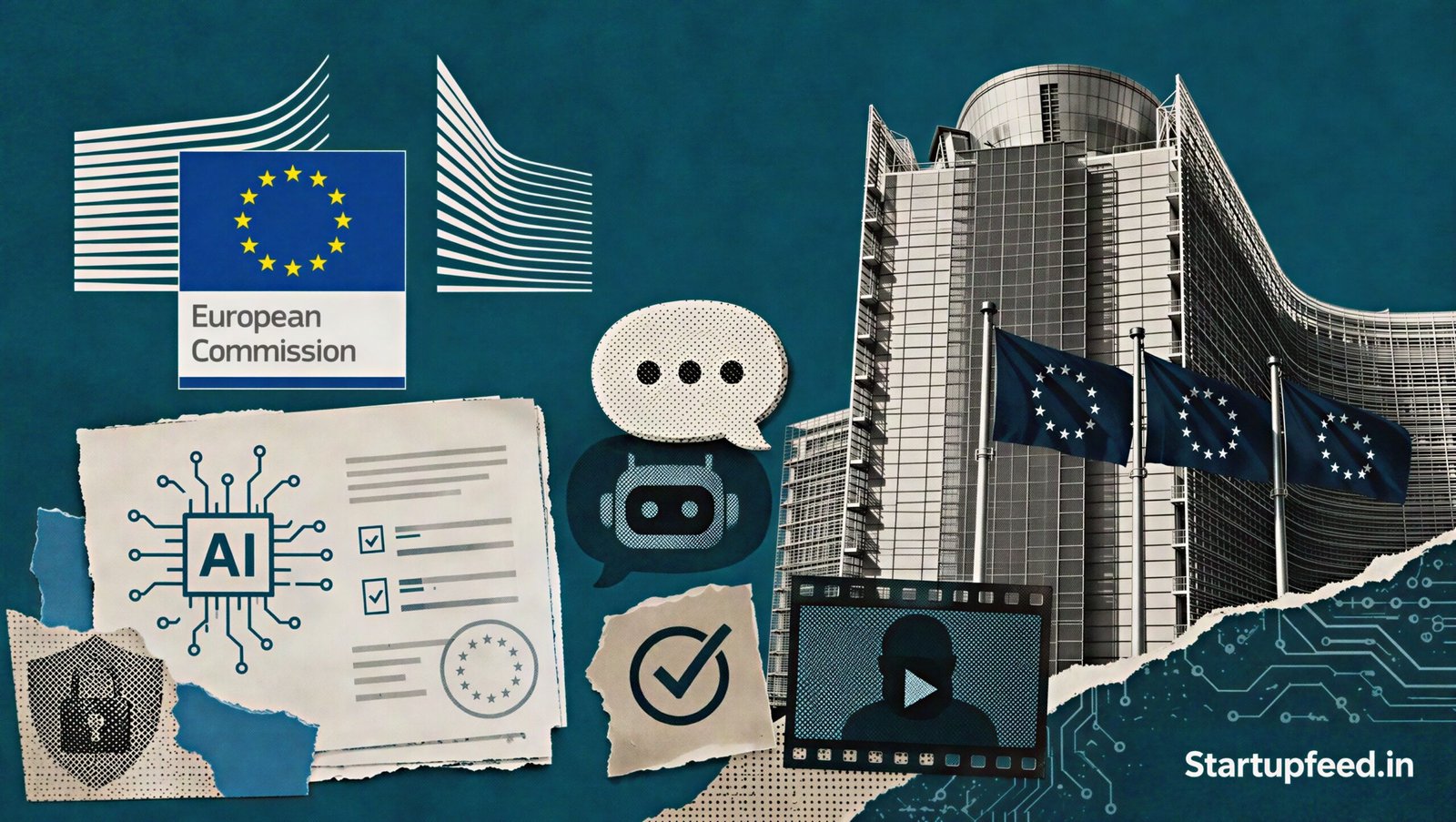
EU AI Act enforcement officially began on August 2, 2026, when the European Commission’s AI Office and national authorities gained the power to police the Artificial Intelligence Act and fine rule-breakers. The move puts real teeth behind the world’s first broad AI law.
The same date switched on new transparency rules across the 27-nation bloc. Chatbots must now tell users they are talking to a machine, and deepfake images, video, or audio must be clearly labelled. The Commission confirmed the start date in a press release dated July 31, 2026.
StartupFeed Insight
The August 2 date is a start line, not a deadline, and that changes the game for AI teams. Enforcement power over general-purpose AI (GPAI) models sits centrally with the AI Office, so it does not wait for every member state to appoint its own regulator. Indian SaaS and AI firms selling into Europe should treat the chatbot disclosure rule as live risk today, not a future project. StartupFeed expects the first formal AI Office information requests to named GPAI providers to surface within the September to December 2026 window, well before any headline fine lands. Compliance leads who move now will avoid a scramble later. By Avinash.
EU AI Act Enforcement: The Key Facts
EU AI Act enforcement is the phase where the European Commission can compel disclosure, evaluate AI models, and issue penalties for breaking the Artificial Intelligence Act. It started on August 2, 2026, one year after the law’s rules for general-purpose AI first applied on paper.
| Metric | Detail | Notes |
|---|---|---|
| Enforcement start | August 2, 2026 | AI Office plus national authorities |
| Max GPAI fine | EUR 15 Mn (Rs 165 Cr) or 3% of global turnover | Whichever is higher |
| General breach ceiling | EUR 35 Mn (Rs 384 Cr) or 7% of global turnover | For prohibited AI practices |
| Transparency rules | Chatbot disclosure, deepfake labelling | Under Article 50 |
| Code of Practice signatories | 180+ organisations | On AI-generated content transparency |
| Regulator | European Commission AI Office | Sole authority for GPAI models |
The standout figure is scope, not size. For GPAI models, the Commission acts as the single competent authority, so its reach does not depend on national regulators being ready. Conversions use the live rate of Rs 109.70 per EUR (July 31, 2026).
About the EU AI Act
The EU AI Act (Regulation 2024/1689) is the European Union’s broad law governing artificial intelligence, in force since August 1, 2024. It sorts AI systems by risk level, bans certain practices outright, and sets duties for high-risk and general-purpose systems. The Commission’s AI Office, based in Brussels, supervises GPAI models and runs the AI Act Service Desk. National authorities in each member state handle other parts of the law.



What do the new transparency rules require?
The new transparency rules require certain AI systems to tell people when they are dealing with AI and when content has been made or altered by it. This duty sits under Article 50 of the Artificial Intelligence Act and applies from August 2, 2026.
“The measures are intended to reduce deception and manipulation and help people make informed choices. They also give businesses clearer obligations and a practical way to show compliance,” the European Commission said in its press release.
In plain terms, any customer-facing chatbot must open by telling users it is not human. Synthetic or deepfake media must carry a clear label, and AI-generated content must also carry machine-readable marks so tools can detect it. The Commission published a first list of more than 180 organisations that signed its Code of Practice on transparency of AI-generated content, a voluntary route that helps firms show they comply.
What does this mean for Indian companies?
Indian companies that serve EU users must follow the EU AI Act enforcement rules, because the law reaches any provider whose AI touches people inside the bloc. This extraterritorial scope means an Indian SaaS chatbot used by a German customer falls under Article 50 disclosure duties.
For India’s large IT services and product firms, two duties matter most right now. First, conversational AI tools sold into Europe need a clear “you are talking to an AI” notice at the start of each chat. Second, any product that generates images, video, or audio needs deepfake labelling and machine-readable marks. The Commission’s enforcement page also lists a complaints tool and a whistleblower channel, which raise the odds that gaps get flagged. Firms building or reselling GPAI models face the heavier tier, with the AI Office able to demand documentation and model access.
How does the EU approach compare globally?
The EU approach is the strictest broad AI law now in force, and it sets a benchmark that other markets weigh. India, by contrast, has favoured a lighter, sector-led path so far, guided by the MeitY (Ministry of Electronics and Information Technology) rather than a single binding AI statute.
| Region | Approach | Binding fines |
|---|---|---|
| European Union | Broad, risk-based AI Act | Yes, up to 7% of turnover |
| India | Sector-led, advisory guidance | No single AI-specific law yet |
| United States | Executive action, state-level rules | Patchy, no federal AI statute |
What makes the EU model different is the mix of a single written rulebook, central GPAI oversight, and fines tied to global revenue. That combination pushes global firms to redesign products for Europe, an effect analysts often call the Brussels effect.
What’s Next
Watch the September to December 2026 window for the AI Office’s first formal information requests to GPAI providers. India’s MeitY is also expected to keep shaping its own AI guidance through 2026, drawing lessons from Europe’s rollout. The bigger question stays open: will other large markets copy the EU’s binding model, or stick with lighter rules? Where should India land on that line?



Frequently Asked Questions
Disclaimer: This article is for informational purposes only and does not constitute investment advice. StartupFeed and its authors are not SEBI-registered investment advisors. The analysis above is based on publicly available information and should not be the sole basis for any investment decision. Please consult a SEBI-registered financial advisor before making investment decisions.
Have a tip? Write to us at editorial@startupfeed.in.
Liked this story? Follow StartupFeed on Google so our reporting reaches you first.