Quick Take
- PM Modi named Nandan Nilekani to head a high-powered exam reform task force on July 26, 2026.
- An earlier panel under K Radhakrishnan made 101 recommendations in 2024, drawing 37,000-plus student and parent responses.
- The core question: can tech save education, or do trust and institutions matter more first?
In This Article
Can tech save education in India? A new high-powered task force under Nandan Nilekani, announced by PM Modi on July 26, 2026, will now test that question against one of the country’s oldest problems: broken public exams and low institutional trust.
The move follows weeks of youth protests over exam paper leaks and the resignation of Union Education Minister Dharmendra Pradhan on July 25, 2026, as reported by government news outlets. Nilekani, the Infosys co-founder who built Aadhaar, now carries the hope that technology can fix a deeply human system. This piece looks at whether that hope holds up.
StartupFeed Insight
The tell in this story is not the tech, it is the repeat. India already had a 101-point reform blueprint from the K Radhakrishnan panel, yet key items like full computer-based testing were not rolled out. That pattern says the hard part is delivery, not design. Founders and edtech firms watching the Nilekani task force should note the real market: not flashy exam software, but the boring layer of audited processes, trained staff, and secure logistics that make any tool trustworthy. StartupFeed’s read: expect the task force to publish a first set of recommendations within 6 months, and expect the same implementation gap to reappear unless institutional capacity is funded alongside the software. By Harshvardhan Jain.
Can Tech Save Education in India?
Technology can strengthen education systems, but it cannot replace the institutional trust and reliability that make those systems work. This is the central argument that the current exam crisis has forced back into the open. India has spent two decades using tech to solve chronic public problems, from identity to payments, with real gains and real limits.
The optimistic case is simple. Digital question-paper delivery, biometric verification, and computer-based testing can each cut specific failure points in exams like NEET (National Eligibility cum Entrance Test) and JEE (Joint Entrance Examination). These are project plans with clear milestones, which is why they feel solvable.
The harder truth is that tools sit on top of institutions. A leak does not happen only because a system is old, it happens because a person in the chain is compromised. So the question of whether tech save education efforts succeed depends on the reliability of the humans and processes around the software.

Why Was the Nilekani Task Force Formed?
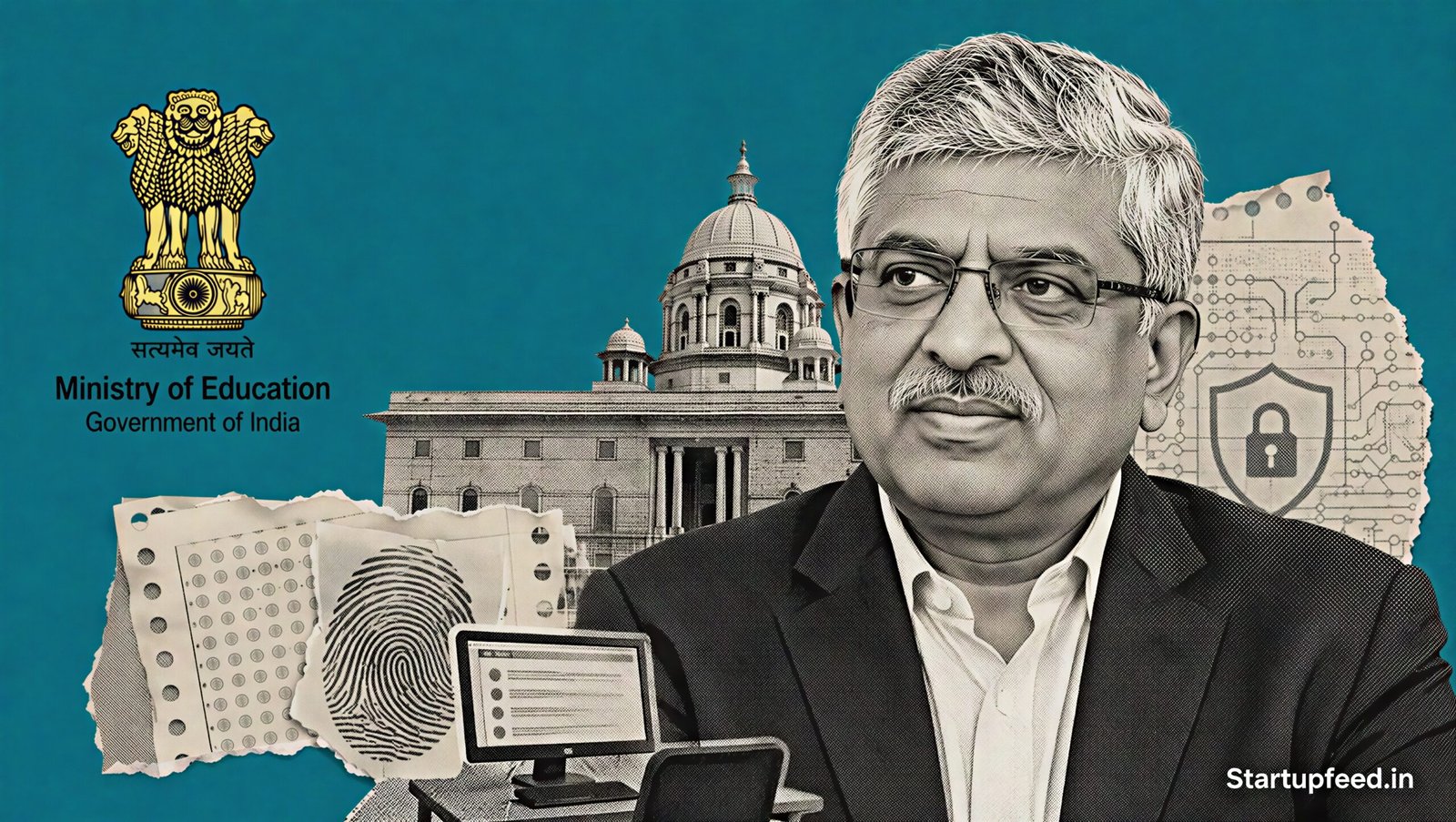
The Nilekani task force was formed to recommend the next phase of examination reforms after the 2026 paper leak controversy and mounting public pressure. On July 26, 2026, PM Modi announced Nandan Nilekani as its head, a day after the education minister’s exit.
“Our examination system must be reliable and transparent, and must make maximum use of technology,” PM Modi said while announcing the panel, according to the official government release.
The panel reportedly includes domain experts across technology and administration. Nilekani’s known strength is scale: he led the Aadhaar rollout, where the first number was issued 14 months after he joined government in 2009. The bet is that this same integrator mindset can bring order to a fragmented exam system spread across states, boards, and millions of students.
The Exam Reform Numbers So Far
India’s exam reform effort did not start in 2026. A seven-member committee under former ISRO chairman K Radhakrishnan was set up in June 2024 after the UGC-NET cancellation and NEET-UG irregularities, and it produced a detailed blueprint.
| Metric | Detail | Notes |
|---|---|---|
| Recommendations made | 101 | Grouped into 46 major action points |
| Student and parent responses | 37,000-plus | Collected via public consultation |
| Report submitted | October 21, 2024 | Titled on national common entrance testing |
| Proposed CBT centre network | 400 to 500 centres | Using KVs and JNVs, within about one year |
| Testing capacity target | 2.0 to 2.5 lakh per session | For computer-based tests nationwide |
| New task force head | Nandan Nilekani | Announced July 26, 2026 |
The striking fact is not the ambition, it is the follow-through. Committee reporting shows the plan was serious and specific, yet key items like full computer-based and multi-session testing were not fully rolled out.
About the Reform Effort
India’s exam reform push is led by the Ministry of Education through the National Testing Agency (NTA), which conducts high-stakes tests like NEET-UG and JEE Main. The 2024 Radhakrishnan panel and the 2026 Nilekani task force are the two main reform bodies. The stated goal is a transparent, tamper-proof, technology-backed exam system serving millions of Indian students each year.
How Will the Task Force Use Technology?
The task force is expected to lean on digital delivery of question papers, secure printing at exam centres, biometric authentication, and wider computer-based testing. The earlier panel had proposed a system using biometrics and AI to verify students at multiple stages.
“Given Nandan’s stature, it will be difficult to sidestep this task force’s recommendations,” political scientist Sandeep Shastri told Open magazine.
That stature cuts both ways. It raises the odds that recommendations get attention, but it also raises expectations that tech alone will fix trust. The unfinished 2024 reforms are a warning that authority on paper does not guarantee delivery on the ground.

Is Technology Enough Without Trust?
Technology reduces fraud but does not eliminate it, because compromised institutions can defeat even strong tools. This is the analysis at the heart of the debate. India’s own record shows the split screen: demonetisation plus digital payments and identity did make some corruption harder, yet corruption did not disappear.
| Approach | What it fixes | What it cannot fix alone |
|---|---|---|
| Digital paper delivery | Print and transit leaks | Insider collusion at centres |
| Biometric verification | Impersonation | Weak local staffing and oversight |
| Computer-based testing | Physical paper handling risk | Trust in the agency running it |
What sets a durable fix apart is design plus governance together. Better ground-level institutions, clear accountability, and funded human capacity are what let any tool actually hold. Without that base, the software is a polished shell.
What’s Next
The immediate milestone is the task force’s first set of recommendations, likely within about 6 months of its July 2026 formation. Alongside, the government has moved the Public Examinations (Prevention of Unfair Means) Amendment Bill to raise penalties for leaks. The real test will be whether the next NEET and JEE cycles run cleanly. Will India fund the boring institutional layer this time, or repeat the 2024 gap?
Disclaimer: This article is for informational purposes only and does not constitute investment advice. StartupFeed and its authors are not SEBI-registered investment advisors. The analysis above is based on publicly available information and should not be the sole basis for any investment decision. Please consult a SEBI-registered financial advisor before making investment decisions.
Frequently Asked Questions
Have a tip? Write to us at editorial@startupfeed.in.
Liked this story? Follow StartupFeed on Google so our reporting reaches you first.