

Quick Take
- The global AI market is forecast to reach $407 Bn by 2027, per MarketsandMarkets research.
- India now hosts 4,500-plus AI startups building multilingual, cost-efficient solutions for global markets.
- Indian AI funding hit $3.94 Bn in one quarter, with government committing Rs 10,000 Cr through IndiaAI Mission.
Indian AI startups are transforming healthcare, retail, cybersecurity, and factory operations as the global AI market races toward $407 Bn (Rs 33,78,100 Cr) by 2027, according to MarketsandMarkets.
India now hosts more than 4,500 AI startups building sector-focused, multilingual, and cost-sensitive solutions. The country is no longer just a services hub. It is fast becoming a source of globally relevant AI products, with unicorn-level valuations, government-backed compute access, and record quarterly funding all arriving together in 2025-26.
StartupFeed Insight
The $407 Bn global AI figure is a ceiling every country wants a share of. India’s edge is not just talent; it is the ability to build at lower cost, across 22-plus Indian languages, and for problems that do not yet have Western answers. Healthcare diagnostics in tier-2 cities, farm advisory in regional languages, factory automation for SME manufacturers: these are genuinely unserved markets. Founders and investors who anchor in these specific niches, rather than chasing generic GenAI (Generative AI) tooling, are the ones most likely to capture durable revenue. Watch for sector-specific AI companies, particularly in health-tech and agri-tech, to lead India’s first crop of AI-native IPOs by 2028. By StartupFeed Desk.
What Is the Global AI Opportunity India Is Chasing?
The global AI market stood at $86.9 Bn in 2022 and is projected to compound at 36.2% per year, reaching $407 Bn by 2027, per MarketsandMarkets data. Healthcare and life sciences are the fastest-growing verticals inside that number.
India’s own AI market is projected to reach $17 Bn by 2027, per industry estimates, with AI-driven services already adding $10-12 Bn to India’s $315 Bn technology revenue. Beyond that, AI adoption could generate $1.7 Tn in GDP (Gross Domestic Product) impact for India by 2035. These figures place India firmly among the top five AI growth markets globally.
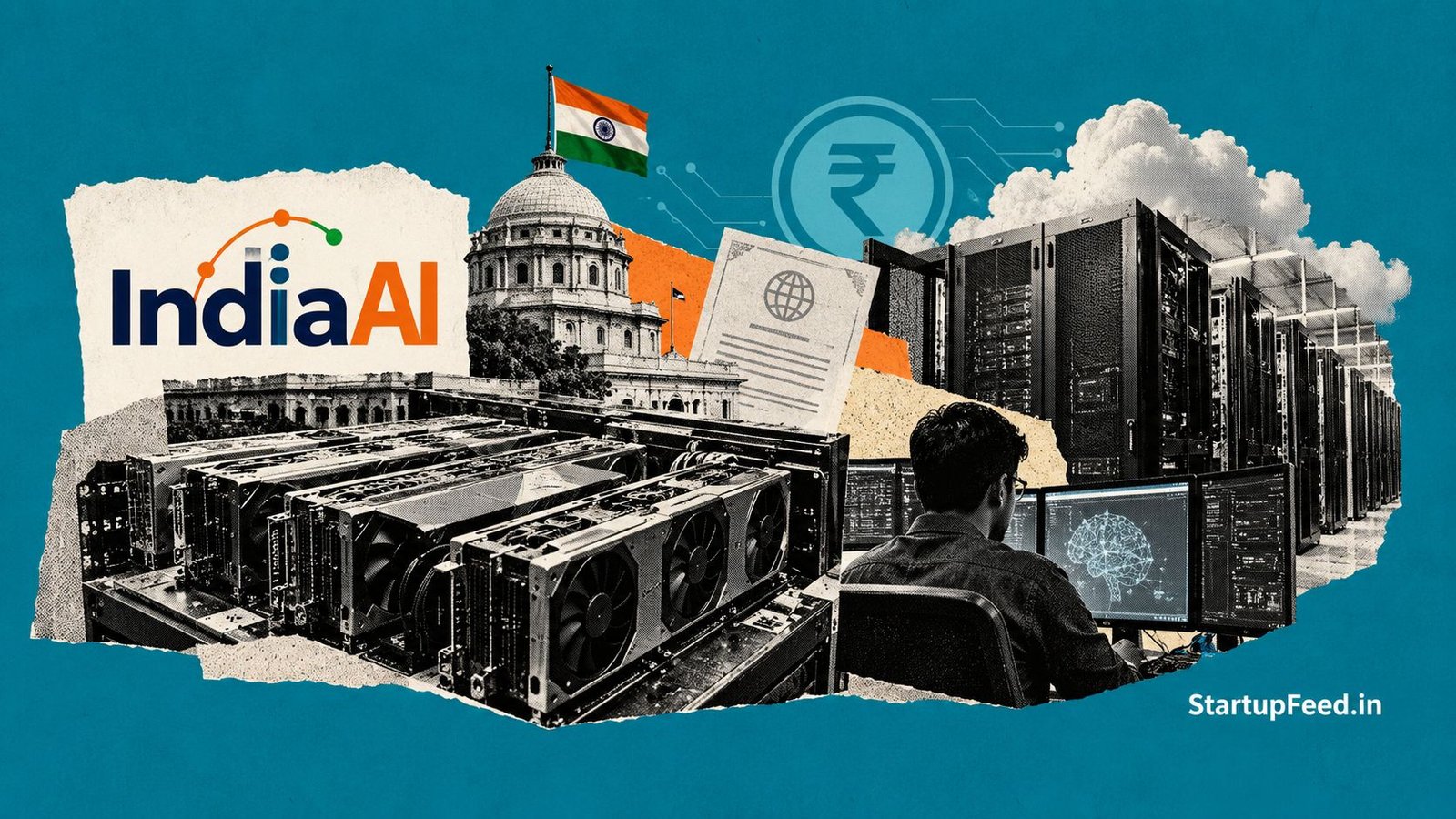
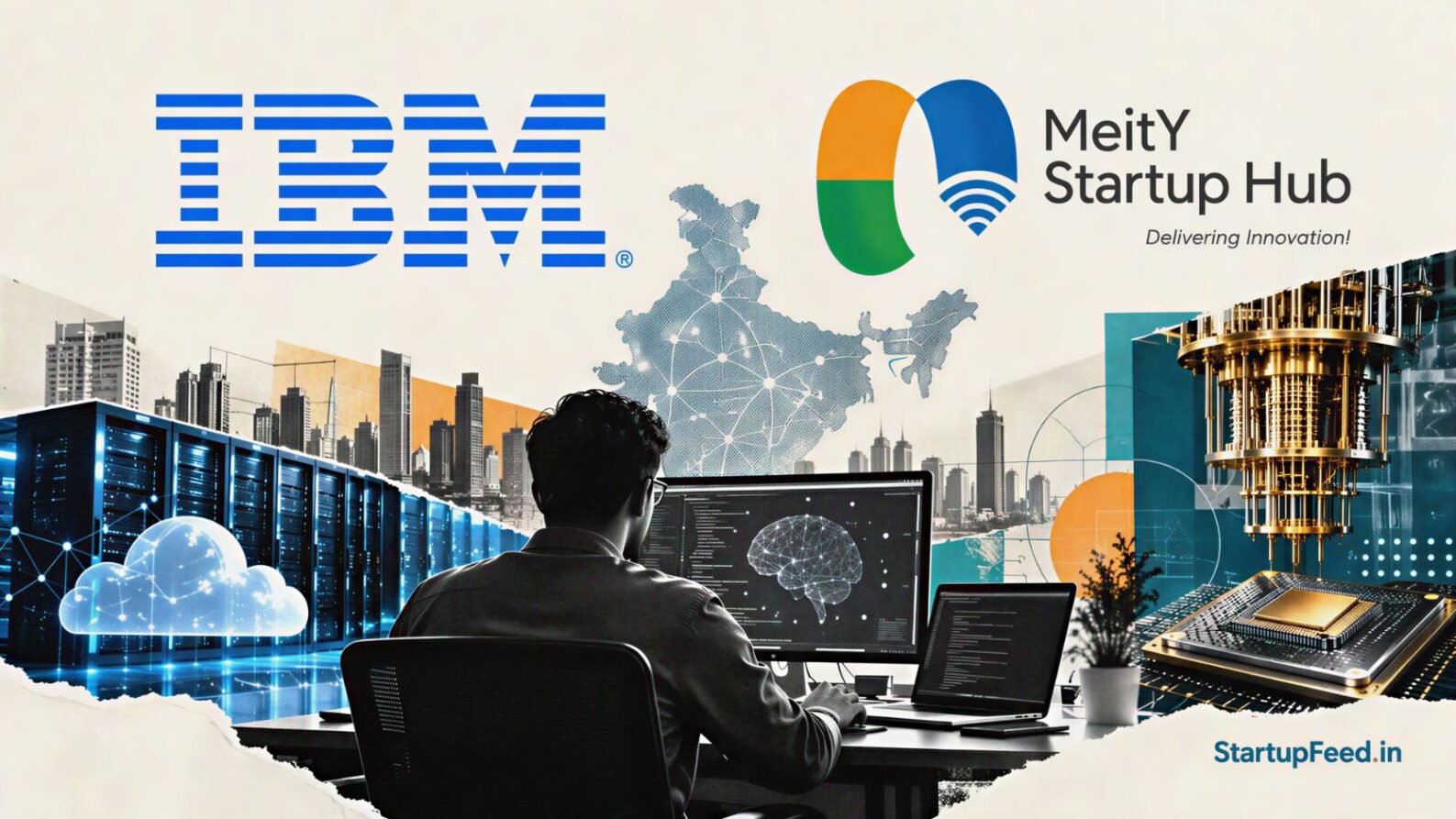
The government has matched market momentum with policy. The IndiaAI Mission has allocated Rs 10,000 Cr for compute, foundational models, and data infrastructure. Following the India AI Impact Summit in February 2026, that commitment may double to Rs 20,000 Cr. GPU (Graphics Processing Unit) infrastructure under the mission has expanded sharply, giving startups like Sarvam AI access to Rs 220 Cr worth of NVIDIA GPUs to train Indic language models at scale.
How Are Indian AI Startups Reshaping Key Sectors?
Indian AI startups are building concentrated solutions across six high-impact sectors. Each sector has a distinct gap that Indian conditions create. The table below captures the primary verticals and leading names.
| Sector | What AI Is Doing | Notable Startup |
|---|---|---|
| Healthcare | X-ray, CT, and TB diagnosis via deep learning | Qure.ai |
| Retail and E-Commerce | AI-driven personalisation, inventory automation | Haptik |
| Factory and Manufacturing | Predictive maintenance, vision-based quality checks | HCLTech DRYiCE |
| Cybersecurity | AI threat detection and compliance automation | Multiple enterprise players |
| Language and Conversational AI | LLMs (Large Language Models) in 22 Indian languages | Krutrim, Sarvam AI |
| Agritech | Crop health monitoring, weather advisory, harvest AI | Cropin |
The standout theme is localisation. Indian founders are not porting Western AI products into India. They are building from scratch for Indian data, Indian languages, and Indian price points. Qure.ai, for example, has shipped FDA-cleared AI diagnostics to public health systems in multiple countries, starting from the specific constraint of under-resourced Indian hospitals.
Who Are the Startups and Investors Leading the Charge?
India’s AI ecosystem has four clear leaders by scale. Krutrim, founded by Bhavish Aggarwal in 2023, became India’s first AI unicorn at a $1 Bn valuation after raising $50 Mn from Matrix Partners. It supports 22 Indian languages in its LLM and is building a full-stack AI compute infrastructure including chips and data centres.
Sarvam AI, backed by Lightspeed Venture Partners, Khosla Ventures, and Peak XV Partners, raised $41 Mn at Series A. It is building efficient open-source Indic LLMs and voice-first AI interfaces. Neysa provides GPU-accelerated cloud compute for enterprises building GenAI applications. Fractal Analytics, with $170 Mn raised and an IPO reportedly planned for 2026, brings enterprise AI to Fortune 500 companies worldwide.
On the investor side, Fundamentum just launched F2A (Fundamentum Frontier Advisors), a Rs 2,000 Cr AI and deep-tech fund backed by anchor investor Nandan Nilekani. The Centre has indicated that India’s AI sector could attract over $200 Bn in capital over the next two years.
“India is the sleeping giant in Generative AI. Its scale, skills, and startups are set to transform not just AI in India but also in the world.”
Christopher Marshall, Vice President, IDC Asia/Pacific
About India’s AI Startup Ecosystem
India’s AI startup ecosystem crossed 4,500 active companies in 2026, up from around 1,500 in 2023, per NASSCOM and Inc42 data. The ecosystem spans Bengaluru, Hyderabad, Delhi-NCR, and an emerging tier-2 layer in cities like Pune, Ahmedabad, and Chandigarh. Government support through the IndiaAI Mission and related deep-tech initiatives has provided compute subsidies, data-labelling programmes, and a Rs 10,000 Cr foundational fund. The ecosystem has collectively raised over $2.6 Bn to date, with Indian AI startups pulling in $3.94 Bn in a single quarter in early 2026.
How Does India Compare With Global AI Leaders?
India’s AI strengths and gaps become clear when placed next to the US and China.
| Metric | India | USA | China |
|---|---|---|---|
| AI Startups (approx.) | 4,500+ | Tens of thousands | 4,000+ (GenAI) |
| Annual AI Funding | $1.5 Bn+ (2027 est.) | $16 Bn+ (2023) | Rapid expansion |
| AI Unicorns | Krutrim, Fractal | OpenAI, Anthropic, xAI | DeepSeek, Zhipu AI |
| Key Advantage | Cost, language diversity, talent pool | Capital, foundation models | Scale, manufacturing AI |
| Govt. AI Mission | Rs 10,000 Cr (may double) | Stargate: $500 Bn | National AI plan 2030 |
India’s competitive position is clearest in multilingual AI, cost-efficient enterprise tools, and health-tech. These are areas where the US has less urgency and China faces access barriers. Indian startups that focus here have a structural moat that capital alone cannot buy.
What Comes Next for India’s AI Ecosystem?
The near-term milestones are concrete. Fractal Analytics is eyeing a 2026 IPO at roughly Rs 14,450 Cr valuation. Sarvam AI’s Indic LLMs are expected to expand voice-interface coverage to 22 languages by late 2026. The IndiaAI Mission’s GPU pool is set to grow further. And F2A’s Rs 2,000 Cr fund will begin deploying into AI and deep-tech startups over the next 12-18 months.
The bigger question is whether Indian AI startups can move from building for Indian markets to selling globally. Qure.ai and Uniphore already have. Will the next wave of health-tech and agri-tech AI companies follow? That answer will define India’s share of the $407 Bn prize.
Frequently Asked Questions
How large is the global AI market expected to be by 2027?
The global AI market is projected to reach $407 Bn (Rs 33,78,100 Cr) by 2027, growing at a compound annual rate of 36.2% from $86.9 Bn in 2022, according to MarketsandMarkets. Healthcare and life sciences are the fastest-growing verticals within that total.
How many Indian AI startups exist and what sectors are they targeting?
India had more than 4,500 active AI startups as of 2026, per NASSCOM and Inc42 estimates. They operate across healthcare diagnostics, conversational AI in 22 Indian languages, factory automation, retail personalisation, agritech, and cybersecurity, with growing global expansion in health-tech and enterprise SaaS.
What government support is available for Indian AI startups?
The IndiaAI Mission has committed Rs 10,000 Cr for compute, data, and foundational model development. Following the India AI Impact Summit in February 2026, this figure may double. Key benefits include subsidised GPU access, data-labelling infrastructure, and a tax holiday until 2047 for companies building AI data-centre capacity in India for global markets.
Disclaimer: Market size projections and funding figures in this article are sourced from publicly available research reports and industry trackers. They represent forecasts and are subject to change. This article is for informational purposes only and does not constitute investment advice.
Liked this story? Follow StartupFeed on Google so our reporting reaches you first.