
Quick Take:
- Market Size: India furniture market: $31.51 Bn (2026) → $45.52 Bn (2031) at 7.63% CAGR
- Online Penetration: 10–15% today — up from single digits pre-2020; significant headroom remains
- IPO Pipeline: Wakefit listed (Rs 1,288.89 Cr issue) | Rentomojo DRHP filed | Furlenco targeting post-FY27 | Wooden Street eyeing 2028
- Consolidation: Pepperfry acquired by TCC Concept (Rs 662 Cr — 66% below peak valuation) | Urban Ladder under Reliance since 2020
- Capital Discipline: Furlenco: first profitable year FY25 (Rs 3 Cr PAT after Rs 130 Cr loss in FY24) | Wakefit EBITDA margin 14% in Q3 FY26
- Big Bet: IKEA committed $2 Bn+ to India | Godrej Interio continues omnichannel expansion
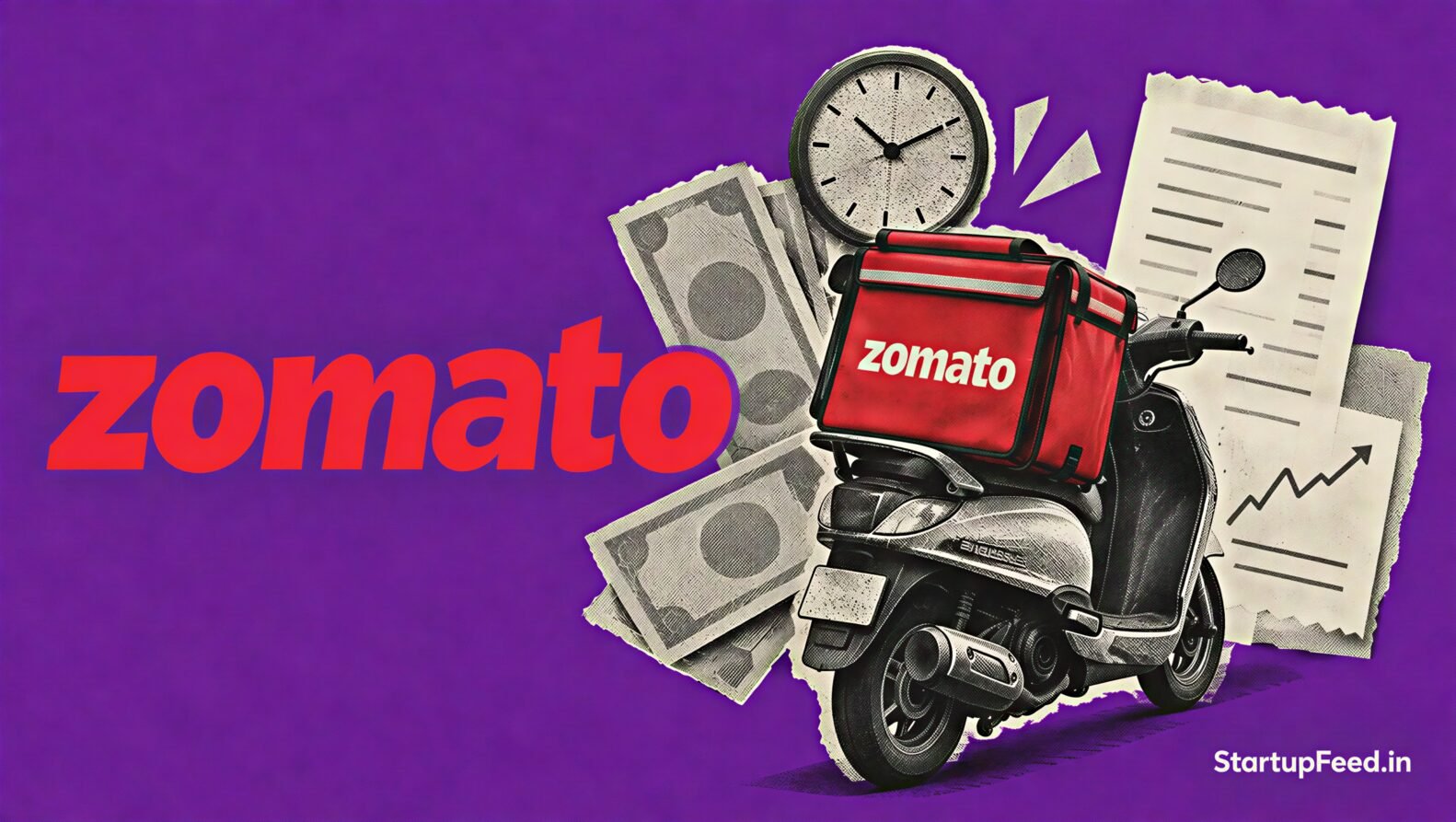
India’s furniture ecommerce sector is entering a new phase — one that looks less like the growth-at-all-costs era of 2018–2022 and more like a disciplined race for sustainable scale. In the last four months alone, Wakefit went public with a Rs 1,288.89 Cr IPO, Rentomojo filed its DRHP, Pepperfry was acquired by TCC Concept for Rs 662 Cr — representing a 66% valuation erosion from its peak — and Furlenco turned profitable for the first time in over a decade, raising Rs 125 Cr to accelerate toward its own IPO.
The sector’s defining characteristics are no longer how much money a player can raise or how fast it can open studios. They are: unit economics, omnichannel integration, logistics efficiency, and customer experience. The long game has begun — and only the players who built real operational moats during the hype era are still standing to play it.
StartupFeed Insight
What the numbers say: Online furniture penetration at 10–15% in a $31 Bn market still leaves a $25 Bn+ offline opportunity. The players who build omnichannel infrastructure now will own the next decade of formalization gains.


What’s improving:
– Wakefit’s EBITDA margin jumped from 1.4% to 14% in 12 months — proving that furniture D2C can deliver real operating leverage when vertical integration is in place
– Furlenco’s turnaround (Rs 130 Cr loss → Rs 3 Cr profit in one year) validates the subscription model as a structurally more capital-efficient way to acquire and retain furniture customers
– IPO activity signals market maturity: public market scrutiny will force the sector to report and defend unit economics in ways that private funding rounds never required
What’s concerning:
– Pepperfry’s fate — Rs 300 Mn raised, Rs 662 Cr exit, 66% below peak — is a cautionary tale for marketplace models without manufacturing control. Distribution without differentiation is lethal in furniture.
– Logistics remains the category’s structurally unsolved problem. Heavy furniture delivery timelines of 1–3 weeks and high return costs will limit online penetration growth until last-mile infrastructure improves meaningfully.



– The unorganised sector still holds 70–75% of the market. QCO enforcement (ISI certification from Feb 2026) may formalise some of this, but it will be a slow process.
Our prediction: By FY28, three models will dominate: vertically integrated D2C (Wakefit model), subscription/rental (Furlenco/Rentomojo model), and international premium omnichannel (IKEA). The marketplace model — Pepperfry’s approach — has been permanently discredited in India’s furniture sector.
India’s Furniture Market — The Numbers That Matter
| Metric | Current (2026) | Forecast (2031) | CAGR |
| India Furniture Market (total) | $31.51 Bn (Rs 2.6 L Cr) | $45.52 Bn | 7.63% |
| India Home Furniture Market | $27.27 Bn | $40.53 Bn | 8.24% |
| Online Penetration | 10–15% of total | 15–20% est. | Growing |
| Organised vs Unorganised Split | ~25–30% organised | 35%+ est. | Formalisation accelerating |
| India’s FMCG furniture ecommerce share | ~6% of total ecommerce | ~6–8% by 2030 | Lagging fashion, electronics |
The headline market size is large — $31.51 Bn in 2026 — but the structural reality is that furniture is one of the slowest-digitising categories in India’s ecommerce economy. While fashion and electronics have crossed 30–40% online penetration, furniture remains at 10–15%. The reason is structural: furniture is high-involvement (consumers want to see and feel before spending Rs 30,000–Rs 1,50,000), high-logistics (heavy, requires assembly), and low-frequency (sofas last 8–12 years).
The Furniture Quality Control Order (QCO), effective February 2026, requires ISI certification for work chairs, general-purpose chairs, tables, storage units, beds, and bunk beds. This is the single most important regulatory development in the sector in years — it creates a compliance barrier that small unorganised producers cannot easily clear, accelerating formalisation and increasing addressable market for organised brands.
Who’s Still Standing — India’s Furniture Ecommerce Player Map
| Player | Model | Revenue (Latest) | Status | Key Development |
| Wakefit | D2C, Omnichannel | Rs 421 Cr (Q3 FY26 quarterly) | Listed (IPO FY26) | India’s first new-age D2C furniture IPO; Rs 1,288.89 Cr issue; 137 COCO stores; EBITDA margin 14% in Q3 FY26 |
| Pepperfry | Marketplace, Omnichannel | ~Rs 264 Cr (FY22, declining) | Acquired | Acquired by TCC Concept for Rs 662 Cr — 66% valuation erosion from peak; raised $300 Mn+ but couldn’t scale profitably |
| Urban Ladder | D2C, Curated | N/A (not disclosed) | Reliance-backed | Acquired by Reliance Retail in 2020 at 75% markdown; now backed by Reliance ecosystem |
| Furlenco | Subscription Rental | Rs 228.7 Cr (FY25) | Pre-IPO | Rs 125 Cr raised (Dec 2025); first profitable year FY25 (Rs 3 Cr PAT); targeting Rs 370 Cr revenue in FY26; IPO post-FY27 |
| Rentomojo | Rental + Lease | N/A | DRHP Filed | Filed DRHP to raise Rs 150 Cr; furniture + electronics rental with monthly subscription model |
| Wooden Street | Customised D2C | ~Rs 400+ Cr (est.) | Private | Customisation-first model; hub-and-spoke network targeting 3-day delivery; eyeing IPO by 2028 |
| IKEA India | Retail + Online | ~Rs 3,000 Cr (FY25 est.) | Expanding | Committed $2 Bn+ to India; 9 stores planned; omnichannel push into Tier-2 cities |
| Godrej Interio | Organised Retail | Rs 4,000+ Cr (est.) | Expanding | Largest organised player by revenue; omnichannel expansion; investing in trending product categories |
The contrast between Wakefit and Pepperfry is the clearest illustration of what separated winners from losers in the sector. Both were founded in the same era, both raised hundreds of millions of dollars, and both chased omnichannel strategies. But Wakefit built five manufacturing plants and vertical integration — giving it control over quality, cost, and delivery timelines. Pepperfry built a marketplace model dependent on third-party sellers, costly imports, and a premium pricing position that increasingly became indefensible as Wakefit and IKEA undercut it on price-to-quality.
Wakefit’s IPO — India’s First New-Age Furniture Listing
Wakefit Innovations’ IPO — a Rs 1,288.89 Cr issue — made it India’s first new-age D2C furniture and mattress brand to go public. The listing validated a business model built on vertical integration, direct-to-consumer distribution, and progressive omnichannel expansion from a single manufacturing-focused origin.
The Q3 FY26 numbers posted post-IPO were striking: revenue of Rs 421.3 Cr (all-time high quarterly revenue, up 9.4% YoY), and EBITDA of Rs 59.2 Cr — a margin of 14%, up from just 1.4% in Q3 FY25. The EBITDA jump — 196% in absolute terms — came from manufacturing efficiencies, logistics optimisation, and a favourable shift in product mix as the furniture vertical grew faster than mattresses.
As of December 2025, Wakefit operated 137 Company-Owned Company-Operated (COCO) stores across 76 cities and approximately 1,700 Multi-Brand Outlets. The company holds Rs 889 Cr in cash post-IPO — sufficient runway to accelerate its planned 50% increase in COCO store openings starting next fiscal.
“We’re seeing increasing interest in products with built-in functionality. Our mattress temperature controller, Regul8, is one such offering. It will be interesting to study the space closely to see how consumer tastes evolve in the future and how companies adapt to their changing needs.”
— Chaitanya Ramalingegowda, Co-Founder, Wakefit
Pepperfry’s Acquisition — A Case Study in Model Risk
Pepperfry’s journey from India’s most-funded online furniture brand to a distressed acquisition by TCC Concept for Rs 662 Cr — 66% below its peak valuation of over Rs 2,200 Cr — is the sector’s most instructive failure. The company raised $300 Mn+ from Goldman Sachs, Norwest Venture Partners, Bertelsmann India, and Pidilite. It chased an IPO for years. It had 200+ studios across 100+ cities. Yet it could not build a defensible business.
Three structural failures explain the fall:
- No manufacturing control: Pepperfry operated as a marketplace — connecting customers with furniture sellers — without owning production. When IKEA and Wakefit undercut prices with vertically integrated supply chains, Pepperfry had no cost lever to pull.
- Premium pricing in a price-sensitive market: Dining tables starting at Rs 50,000 while Wakefit offered comparable quality from Rs 30,000. In a value-sensitive category where the purchase decision takes weeks, price parity is existential.
- Commodity product catalogue: Compressed wood, standardised designs — easy to replicate and widely available elsewhere. Without customisation, exclusivity, or manufacturing quality, customer retention collapsed. Wooden Street built its moat on exactly the customisation that Pepperfry did not offer.
The death blow was the sudden passing of co-founder Ambareesh Murty in 2023, which triggered a management reshuffle and accelerated the operational disintegration. By FY25, revenue had declined 14% despite years of investment. The board eventually acknowledged the company could not IPO independently.
Furlenco’s Turnaround — The Subscription Model Validated
Furlenco’s journey from near-death to profitability is the sector’s most dramatic turnaround. In FY24, the company posted a net loss of Rs 130.2 Cr. In FY25, it turned a profit of Rs 3.1 Cr on revenue of Rs 228.7 Cr — a 64% revenue increase alongside a Rs 133 Cr swing in net income. Sheela Foam’s Rs 125 Cr investment in December 2025 and strategic backing have given the company the resources to pursue its IPO ambition post-FY27.
The subscription model’s structural advantage in furniture is significant: recurring revenue smooths out the low-frequency problem that destroys unit economics for ownership-based players. Furlenco earns 70% of revenue from rental furniture, 25% from appliances, and 5% from new furniture sales. That revenue mix — dominated by recurring subscriptions — gives it visibility into future cash flows that no one-time sale business can match.
“Nothing beats customer experience. It comes down to how orders are managed, whether deliveries are on time, the quality of the product, and how issues are handled if something goes wrong. Customer experience is number one, followed by product and product quality.”
— Ajith Mohan Karimpana, Co-Founder & CEO, Furlenco
For FY26, Furlenco targets Rs 370 Cr in revenue and Rs 37 Cr in profit — a 10x increase in absolute profit YoY. The company aims to reach Rs 100 Cr in profit before filing its IPO prospectus.
The Sector’s Structural Challenges — What’s Still Unsolved
| Challenge | The Problem | Who Is Solving It and How |
| Logistics & Delivery | Large/heavy items; last-mile assembly; high return costs; delivery takes 1–3 weeks | Wakefit (5 manufacturing plants, just-in-time model); Furlenco (subscription model eliminates delivery/return asymmetry); Wooden Street (3-day delivery target via hub-and-spoke) |
| Consumer Trust (Pre-Purchase) | Furniture is high-involvement; customers want touch-and-feel before Rs 30,000+ purchase | Omnichannel studios (Pepperfry, Wakefit 137 stores, Wooden Street); AR/3D room visualisers; sample programmes |
| Customisation Demand | Indian consumers want exact dimensions, specific finishes — commodity designs don’t retain customers | Wooden Street (built its moat on customisation); Wakefit (2,534 SKUs launched in 9M FY25 alone) |
| Low Repeat Purchase Rate | Sofas and beds last 8–12 years; customer acquisition cost must be recovered on first order | Furlenco (subscription solves with recurring revenue); Wakefit (cross-category expansion into mattresses, pillows, home accessories) |
| Price Sensitivity | Pepperfry priced Rs 50,000+ for dining tables while Wakefit offered comparable at Rs 30,000 | Vertical integration (Wakefit owns manufacturing); rental model (Furlenco reduces upfront cost); IKEA (European efficiency applied to Indian price points) |
| Unorganised Competition | 70%+ of India’s furniture market is unorganised; local carpenters offer customisation at lower cost | QCO enforcement (ISI certification from Feb 2026 creates quality barrier); brand building; warranty and after-sales differentiation |
How India’s Furniture Consumer Has Changed
Furniture buying in India has shifted from fully offline, trust-led decisions to an informed, omnichannel journey over the past three to five years. Consumers now research and browse online — comparing prices, reading reviews, watching YouTube room tours — but still rely on physical stores for validation before committing to large purchases.
Three behavioural shifts are reshaping how furniture companies must operate:
- The touch-and-feel requirement persists: Even high-intent online shoppers often visit a studio or store before placing a Rs 50,000+ order. This makes offline touchpoints not optional but essential for conversion — hence Wakefit’s 137 stores and IKEA’s massive retail investments.
- Functionality over aesthetics: Urban apartment sizes are shrinking (600–800 sq ft in Mumbai and Delhi). Consumers now prioritise space-saving, multi-functional furniture — hydraulic-lift beds, fold-out desks, storage sofas. Brands that offer smart storage solutions are outperforming those that sell only decorative pieces.
- Faster delivery expectation: The quick-commerce era has reset delivery expectations across categories. Pepperfry’s pivot into quick commerce partnerships with Zepto for home décor items reflects this pressure. Wooden Street’s 3-day delivery target reflects the same.
The Large Player Bet — IKEA and Godrej Interio
The single most important structural investment in India’s furniture sector over the next 3 years is IKEA’s $2 Bn+ commitment to India. With 9 stores planned and an aggressive omnichannel push into Tier-2 cities, IKEA is doing what it has done in every market it enters: redefine price expectations with European manufacturing efficiency, forcing all other players to either differentiate or compress margins.
For Indian players, this creates a strategic binary: compete on price (near-impossible without IKEA’s supply chain scale) or compete on customisation, speed, and service (the only viable differentiation strategies). Wooden Street chose customisation. Wakefit chose vertical integration and speed. Furlenco chose a subscription model that makes price per month more relevant than unit price.
Godrej Interio — India’s largest organised furniture player by revenue — continues expanding its omnichannel presence and investing in trending product categories. As the incumbent organised player, it benefits most from QCO enforcement, which closes the quality gap between unorganised carpenters and branded products.
What’s Next — The Next 18 Months in India’s Furniture Ecommerce
Five developments to watch through FY27:
- Furlenco and Rentomojo IPOs: If Furlenco delivers Rs 37 Cr profit in FY26 as targeted, it will file its DRHP in FY27. Rentomojo has already filed. These listings will give the rental/subscription model its first public market validation — and create a benchmark P/E for the sector.
- Wakefit’s store expansion: The company plans to accelerate COCO store openings by 50% from FY27, using its Rs 889 Cr cash position. Watch whether retail expansion translates into faster furniture vertical growth (currently the fastest-growing segment but still below 40% of revenue).
- QCO enforcement impact: The Furniture Quality Control Order’s ISI certification requirement (from Feb 2026) will force unorganised producers to either invest in compliance or exit the formal market. This could significantly accelerate market formalisation in FY26–27.
- IKEA Tier-2 expansion: IKEA’s push into Tier-2 cities through smaller format stores and enhanced online delivery will test whether its price-for-quality model translates outside metros. If it works, the impact on mid-market Indian furniture brands will be severe.
- B2B leasing as a new growth vector: Furlenco and Rentomojo are targeting corporate HR relocation packages — bundling furniture subscription into employee relocation benefits. This B2B channel has lower customer acquisition cost and higher subscription stickiness than B2C.
The long game in furniture ecommerce is not about who can raise the most capital. It is about who can build the deepest supply chain integration, the most seamless omnichannel experience, and the most defensible customer relationship. The hype era ended with Pepperfry’s distressed sale. The discipline era has begun with Wakefit’s IPO and Furlenco’s profitability.
What do you think? Which furniture model — D2C, subscription, or marketplace — will dominate India by 2030? Share on X @StartupFeed_official