

Quick Take
- Singapore court sentenced Byju Raveendran to six months jail for contempt of asset orders.
- The case was filed by a Qatar Investment Authority subsidiary in Singapore.
- Raveendran denies wrongdoing and says settlement talks with lenders are near conclusion.
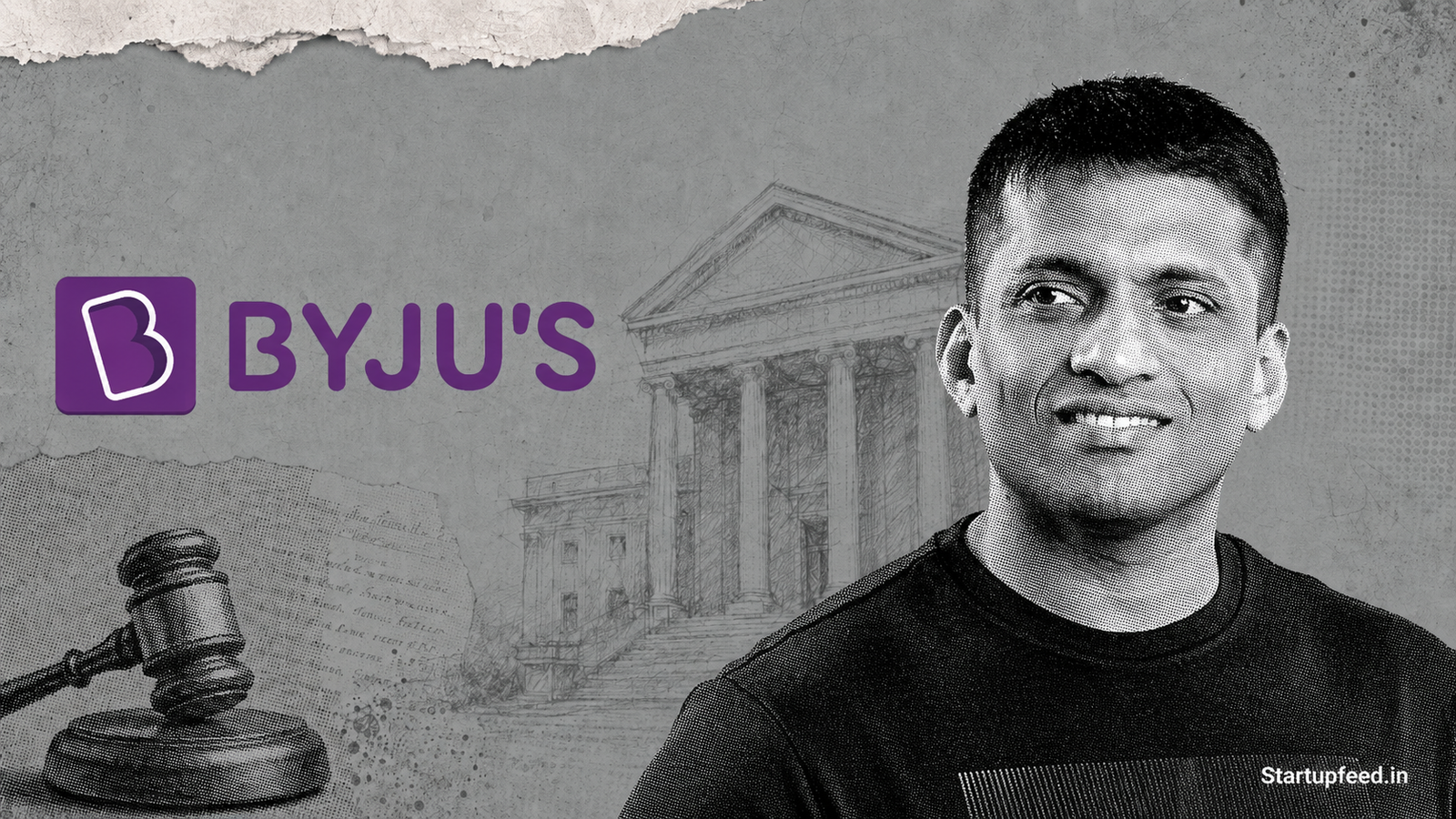
A Singapore court has sentenced Byju Raveendran to six months in jail for contempt, after finding that the BYJU’S founder repeatedly ignored orders to disclose his personal assets since April 2024.
The court has ordered Raveendran to surrender to authorities and pay legal costs of S$90,000 (around $70,500 or Rs 59 lakh). It has also asked him to produce ownership documents for Beeaar Investco Pte, a corporate entity linked to past asset transfers. The contempt case was filed by a subsidiary of the Qatar Investment Authority (QIA, the sovereign wealth fund of Qatar).
StartupFeed Insight
The Singapore order changes the equation. For two years, Byju Raveendran has answered legal pressure with denials and delays. A jail term, even one he can appeal, raises the personal cost of staying silent. Watch the parallel US case closely. GLAS Trust and the creditors tied to the $1.2 billion soured loan have been waiting for this kind of leverage. The Singapore ruling hands it to them. Expect a fresh settlement push from the founder’s side within 60 days, likely with concessions on asset disclosure he has so far refused, by StartupFeed Desk.
What did the Singapore court order?
| Detail | Order |
|---|---|
| Jail term | 6 months for contempt of court |
| Legal costs | S$90,000 (approximately $70,500 or Rs 59 lakh) |
| Surrender | Must report to Singapore authorities |
| Disclosure | Must submit ownership documents for Beeaar Investco Pte |
| Petitioner | A Qatar Investment Authority subsidiary |
| Legal counsel | QIA: Drew & Napier. Byju’s Investments: Fervent Chambers. |
Raveendran’s present location is unclear. It is not known whether he is in Singapore, India, or somewhere else. That detail will shape whether the jail term takes effect quickly.
Why was Byju Raveendran sentenced?
The court found that Raveendran had broken multiple orders linked to disclosure of his personal assets. The first such order dates back to April 2024. The petitioner, a QIA subsidiary, has been pushing for clarity on where the money it invested in BYJU’S went after the edtech firm’s value collapsed.
Raveendran has rejected the court’s reading of events. In a statement, he said the ruling “presents a misleading narrative” and that settlement talks with lenders are “advanced and nearing conclusion.” He denied any wrongdoing and said the disputed funds were used for business purposes.



“For months, the lenders (including GLAS Trust and QIA), other stakeholders and us (the founders) have been in advanced settlement discussions. I chose resolution over confrontation.” Statement by Raveendran on X, May 27, 2026.
About BYJU’S
BYJU’S, run by parent firm Think and Learn Pvt Ltd, was founded in 2011 by Byju Raveendran and Divya Gokulnath in Bengaluru. The edtech firm offered learning apps, test prep, and tuition for school students. At its 2022 peak, it was valued at $22 billion (about Rs 1.85 lakh crore). Top investors included Tiger Global, General Atlantic, Naspers, Silver Lake, and QIA. The company is now in insolvency proceedings in India.
How does this fit BYJU’S wider collapse?
The Singapore case is one of many. In the US, lender GLAS Trust is chasing a $1.2 billion (Rs 10,080 Cr) term loan that has soured. A Delaware bankruptcy court had ordered Raveendran to pay $1.07 billion (Rs 8,988 Cr) for alleged diversion of funds from BYJU’S Alpha. That judgment was reversed in January 2026, sending the damages question back for a fresh hearing.
BYJU’S itself has acknowledged the scale of the collapse. In a 2024 interview, Raveendran told Reuters the company is “worth zero.” From a $22 billion peak to insolvency in three years, the fall is among the fastest startup wipeouts in Indian history.
What’s Next
The Singapore order can be appealed. The bigger question is whether Raveendran returns to face the jail term, or fights from outside. His statement suggests he will keep contesting. A settlement involving GLAS Trust, QIA, and the founders could move quickly if lenders sense fresh leverage. Will the Singapore ruling finally force the asset disclosure the courts have demanded, or will the standoff stretch into a second year?
Frequently Asked Questions
Why was Byju Raveendran sentenced to six months in jail?
A Singapore court found him in contempt for repeatedly failing to comply with orders to disclose his personal assets, dating back to April 2024. The court has also asked him to pay S$90,000 (around $70,500 or Rs 59 lakh) in legal costs and submit ownership documents for Beeaar Investco Pte.
Who brought the case against Byju Raveendran in Singapore?


The contempt proceedings were filed by a subsidiary of the Qatar Investment Authority. QIA had invested in BYJU’S during a later funding round, when the firm was already cutting jobs. QIA was represented in court by Drew & Napier. Byju’s Investments was represented by Fervent Chambers.
What is happening to BYJU’S as a company?
BYJU’S is in insolvency proceedings in India and faces creditor claims in the US, where lenders are trying to recover a soured $1.2 billion (Rs 10,080 Cr) loan. The company was valued at $22 billion (Rs 1.85 lakh crore) in 2022. Its founder has said the company is now “worth zero.”
Liked this story? Follow StartupFeed on Google so our reporting reaches you first.