
Published: October 26, 2026
StartupFeed Quick Take
- Parag Agrawal’s Parallel Web Systems is valued at $2 Bn after a $100 Mn round led by Sequoia Capital in April 2026.
- Elon Musk fired Agrawal as Twitter chief executive in 2022; the two sides settled a $128 Mn severance fight in 2025.
- Parallel’s web tools for AI agents are used by more than 100,000 developers, including Harvey and Notion.
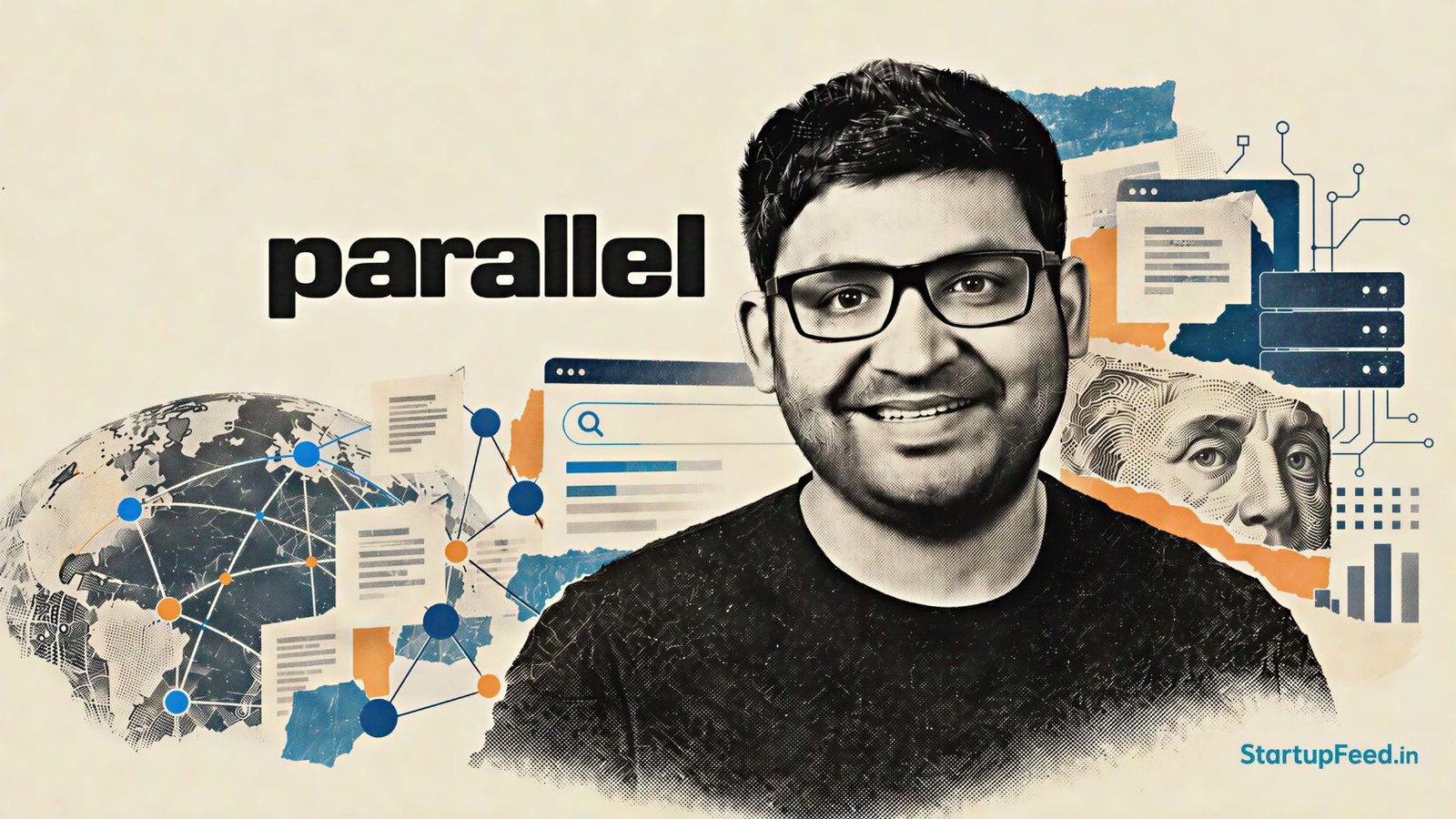
Parag Agrawal, the former Twitter chief executive Elon Musk fired in 2022, now leads a Palo Alto AI startup valued at $2 Bn.
The company Agrawal founded, Parallel Web Systems, raised $100 Mn in April 2026 at that $2 Bn price. Its funding announcement put the value five months earlier at $740 Mn.
The rise has been fast. The company went from a $30 Mn seed to a $2 Bn valuation in about two years.
Parag Agrawal grew up in Ajmer, Rajasthan. He studied computer science at IIT Bombay, then took a PhD at Stanford.



Fired after Elon Musk’s $44 Bn Twitter takeover
Elon Musk bought Twitter for about $44 Bn in October 2022 and fired Parag Agrawal within days.
Agrawal had spent a decade at Twitter, rising from engineer to chief technology officer before the top job. He became chief executive in November 2021, succeeding co-founder Jack Dorsey.
His run lasted about 11 months.
Agrawal and three other former executives later sued Musk’s firm for $128 Mn in unpaid severance. The group included ex-finance chief Ned Segal and former legal heads Vijaya Gadde and Sean Edgett.
X Corp denied wrongdoing and said the four were let go for poor work. A September 2025 court filing showed both sides settled, on terms kept private.
In interviews this year, Agrawal has named Satya Nadella’s turnaround of Microsoft as his model for the chief executive job. Being a founder, he has said, is a mindset more than a title.
Parag Agrawal’s bet: AI is the web’s second user
Parag Agrawal built Parallel around one claim. The main user of the web, he argues, will soon be AI, not people.



Its tools let AI agents search and read the live web, then hand back clean, sourced answers a model can use.
Agrawal co-founded Parallel with Travers Nisbet in 2023. The company stayed quiet until 2025, after a $30 Mn seed round reported in January 2024.
The main products are an API to search the web and one to pull facts from pages. A research tool returns answers with citations and a confidence score, and others track sites or find lists of items.
Agrawal calls these agents the web’s second user. Every answer carries source links, which helps cut the false facts that AI models sometimes invent.
Its stated aim is to keep the open web usable as AI agents become its main traffic.
Agrawal has staked the company on that shift.
“We founded Parallel on a conviction that agents will use the web a thousand times more than humans ever have, and that most of that work will happen in the background.”
Parag Agrawal, founder and chief executive, Parallel Web Systems. From the company’s Series B announcement, April 29, 2026.
How Parallel reached a $2 Bn valuation
By April 2026, Parag Agrawal had taken Parallel to a $2 Bn valuation, when Sequoia Capital led a $100 Mn round.
Earlier backers Kleiner Perkins, Index Ventures and Khosla Ventures joined in. Andrew Reed of Sequoia Capital took a seat on Parallel’s board.
The round more than doubled the $740 Mn valuation Parallel set five months earlier. In all, the company has raised about $230 Mn since 2023.
The Series B landed just five months after the Series A, an unusually short gap between big rounds. The company says more than 100,000 developers now build on Parallel, from AI startups to regulated firms.
Parallel has grown from about 10 staff at the start to roughly 50 today. Here is how the money came in.
| Round | Date | Amount | Valuation | Lead investor |
|---|---|---|---|---|
| Seed | January 2024 | $30 Mn | Not disclosed | Not disclosed |
| Series A | November 2025 | $100 Mn | $740 Mn | Kleiner Perkins, Index Ventures |
| Series B | April 2026 | $100 Mn | $2 Bn | Sequoia Capital |
Who uses Parallel, and the lesson for Indian founders
Parallel’s customers are mostly firms building their own AI agents. The legal AI company Harvey uses it, and the list also names Attio, Clay, Modal, Notion, Opendoor and Rogo.
It also says banks and hedge funds use the tools, without naming them. The outsourcing firm Genpact has signed up to use Parallel for insurance and sales research.
Enterprise agents use Parallel to write code, study sales data and weigh risk for insurers. Rivals include Tavily and Exa, which build similar web tools for agents.
Parag Agrawal has also floated an open market that would pay publishers when AI agents use their content.
For Indian founders, the signal is not the comeback. It is where the money went: the plumbing for AI agents, bought by banks, law firms and insurers.
What this means for you: If you are an Indian founder building AI agents or developer tools, the money behind Parallel shows where enterprise demand sits. Study the web-access and retrieval layer for agents, because paying customers in law, finance and insurance are buying it now.
StartupFeed Insight
The comeback will get the clicks. The money tells a sharper story. Sequoia Capital paid about 2.7 times Parallel’s November price just five months later, and it paid for plumbing, not another chatbot. That is the bet worth watching: the dull layer that feeds AI agents, priced well ahead of revenue. For Indian founders chasing model demos, the paying customers here sit in law, finance and insurance, not in consumer apps. Expect at least two India-based startups to raise rounds aimed squarely at agent infrastructure before the end of 2027.
By Avinash Mishra, Business Correspondent
Have a tip? Write to us at editorial@startupfeed.in.
Liked this story? Follow StartupFeed on Google so our reporting reaches you first.