
Published: 19 October 2026
StartupFeed Quick Take
- Rs 109 Cr Series B led by Mirae Asset Venture Investments India, announced October 19, 2026
- Store count goes from 25 to 150 in two to three years, which is 125 new shops
- The round is about 2.7 times the brand’s FY25 revenue of Rs 40.7 Cr
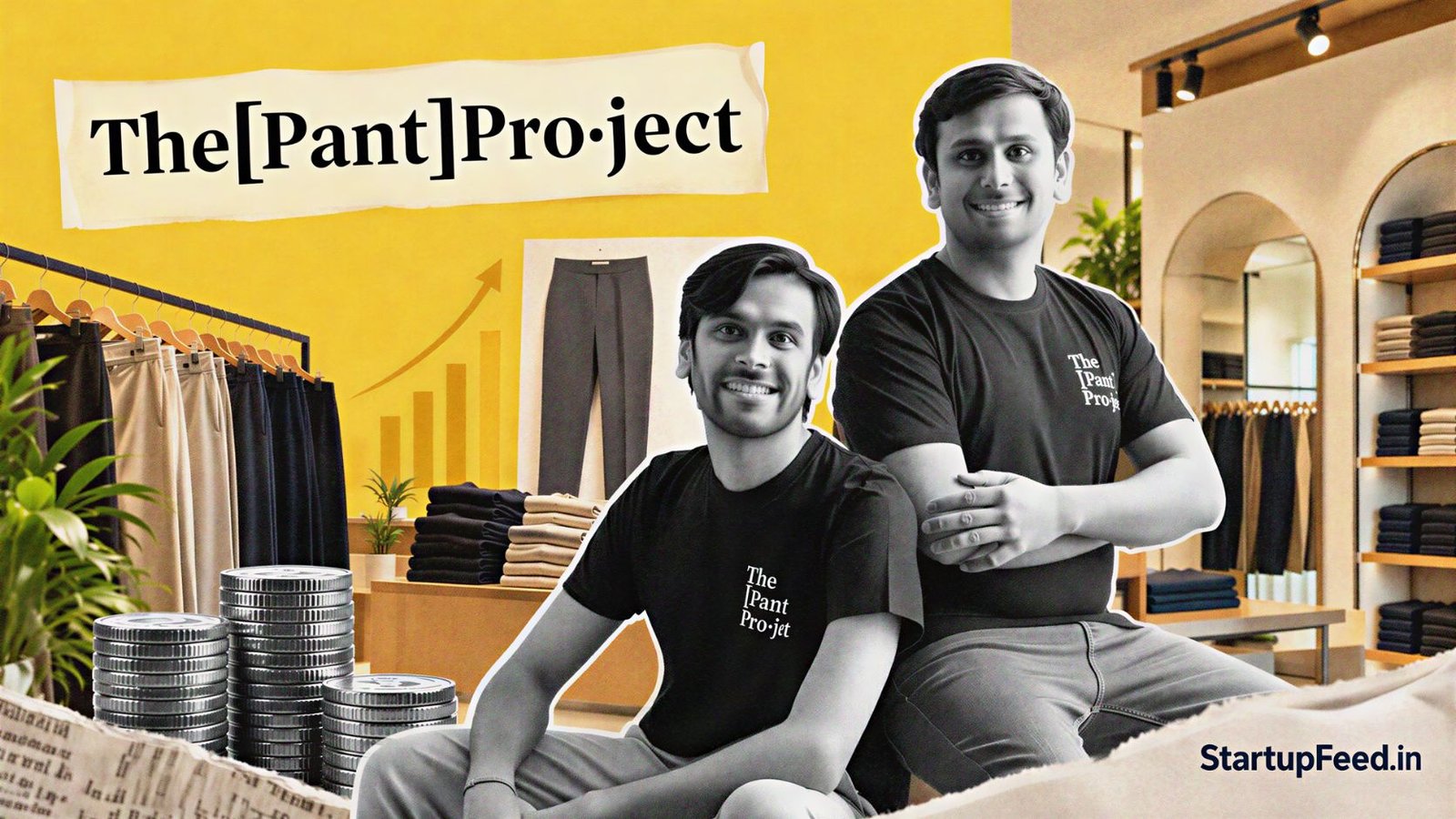
Mumbai menswear brand The Pant Project has raised Rs 109 Cr in a Series B round led by Mirae Asset Venture Investments India.
The money is about 2.7 times what the brand sold in all of FY25. Revenue that year was Rs 40.7 Cr. In FY26 it crossed Rs 80 Cr.
Existing investor Sorin Investments joined the round. So did family offices and angels, among them Anisha Saraf, B&K Securities, MGA Ventures and B2V Ventures.
The Pant Project also took venture debt from Alteria Capital. The size of that loan was not shared. Total funding now stands above $15.75 Mn.



Dhruv Toshniwal, founder and chief executive of The Pant Project, put the offline push this way:
“That foundation gave us the data, the product knowledge and the brand equity”
Dhruv Toshniwal, founder and chief executive, The Pant Project. From the company statement, October 19, 2026.
Where the Rs 109 Cr Goes
The Pant Project will spend the money on stores and on new kinds of clothes. The store network goes from 25 to 150 in two to three years. That is 125 new shops.
Work out the pace and it is one new shop every six to nine days, for three years running.
Split the whole round across those 125 shops and each gets about Rs 87 lakh. The real figure per shop will be lower, because part of the round pays for new product lines.
Those lines are jeans, athleisure and casualwear. The brand already sells jeans, sweatpants, joggers and shorts.
It wants a full menswear range, not bottomwear alone. The catalogue runs past 300 products, sold on its own site and on Myntra and Amazon.
Two in-house products carry the brand: Malai power stretch pants and Inklock No Fade Black Jeans. Denim went from nothing to a fifth of sales in 18 months.


The Pant Project Store Target Moved From 100 to 150
Three weeks before this round, the store target was 100, not 150. Dhruv Toshniwal gave that number in a Founder Thesis interview published on September 28, 2026. He put the shop count at 15 then, spread across seven cities.
The company statement of October 19 puts the count at 25 and the target at 150. So the goal rose by half in under a month. The near-term build is bigger than the one described in late September.
All 15 shops open in September were making money at store level, before central costs. That is the test a brand should pass before signing 125 more leases. Go Fashion, the listed women’s bottomwear chain, runs more than 500 stores on the same single-category idea.
What the Revenue Numbers Show
Mandar Dandekar, partner at Sorin Investments, said revenue has grown more than fivefold since the Series A round of June 2024.
Check that against the base. In FY24, the Series A year, the operating company reported revenue of Rs 30.8 Cr and a loss of Rs 7.4 Cr. Five times Rs 30.8 Cr is about Rs 154 Cr.
FY26 closed above Rs 80 Cr. That is under three times the FY24 figure, not five.
The fivefold mark instead matches the Rs 150 Cr to Rs 160 Cr target for the year ahead. That is a forward number, not a closed one.
One caution on the table below. The FY24 figure comes from filings for Aanswr Fashion Private Limited, the company that runs the brand.
The later figures are the founder’s own net sales. The two are not measured the same way.
| Year | Revenue | Change |
|---|---|---|
| FY21 | Rs 1 Cr | First full year |
| FY24 | Rs 30.8 Cr | Series A year |
| FY25 | Rs 40.7 Cr | Up 32% |
| FY26 | Over Rs 80 Cr | Roughly double |
| FY27 target | Rs 150-160 Cr | Founder’s goal |
The Money Is Chasing a Crowded Menswear Shelf
Menswear in India is worth about Rs 1.64 lakh crore. Bottomwear alone is put at Rs 40,000 Cr to Rs 50,000 Cr, growing 10% to 12% a year.
The Pant Project fights digital-first names such as Snitch, Rare Rabbit and Bombay Shirt Company. It also fights Blackberrys, Raymond and Louis Philippe, which have held mall shelves for decades.
Offline money is flowing to this shelf. Last week menswear brand KISAH raised Rs 35.9 Cr in a Series A led by Fireside Ventures, mostly to open stores.
The Pant Project was started in 2020 by brothers Dhruv Toshniwal and Udit Toshniwal. It stayed bootstrapped for four years before the $4.25 Mn Series A of June 2024, which Sorin Investments led. Dexter Capital Advisors advised the brand on that round.
What this means for you: If you run a direct-to-consumer brand weighing a store rollout, this round sets a price: about Rs 87 lakh per new store. Check your own store-level profit before you sign leases, because this brand had 15 shops earning at store level first.
StartupFeed Insight
The round is not large by Series B standards. It is large next to this company. Rs 109 Cr is about 2.7 times FY25 sales and more than three times FY24 sales. That is the bet: buy 125 leases now and grow into them. Watch two things. The first is whether store-level profit holds past 50 shops, where rent and staff costs stop being cheap. The second is the FY27 revenue number. If the brand closes FY27 under Rs 150 Cr, the 150-store plan slips to FY29 and the next round gets harder to price.
By Avinash Mishra, Business Correspondent
Have a tip? Write to us at editorial@startupfeed.in.
Liked this story? Follow StartupFeed on Google so our reporting reaches you first.