
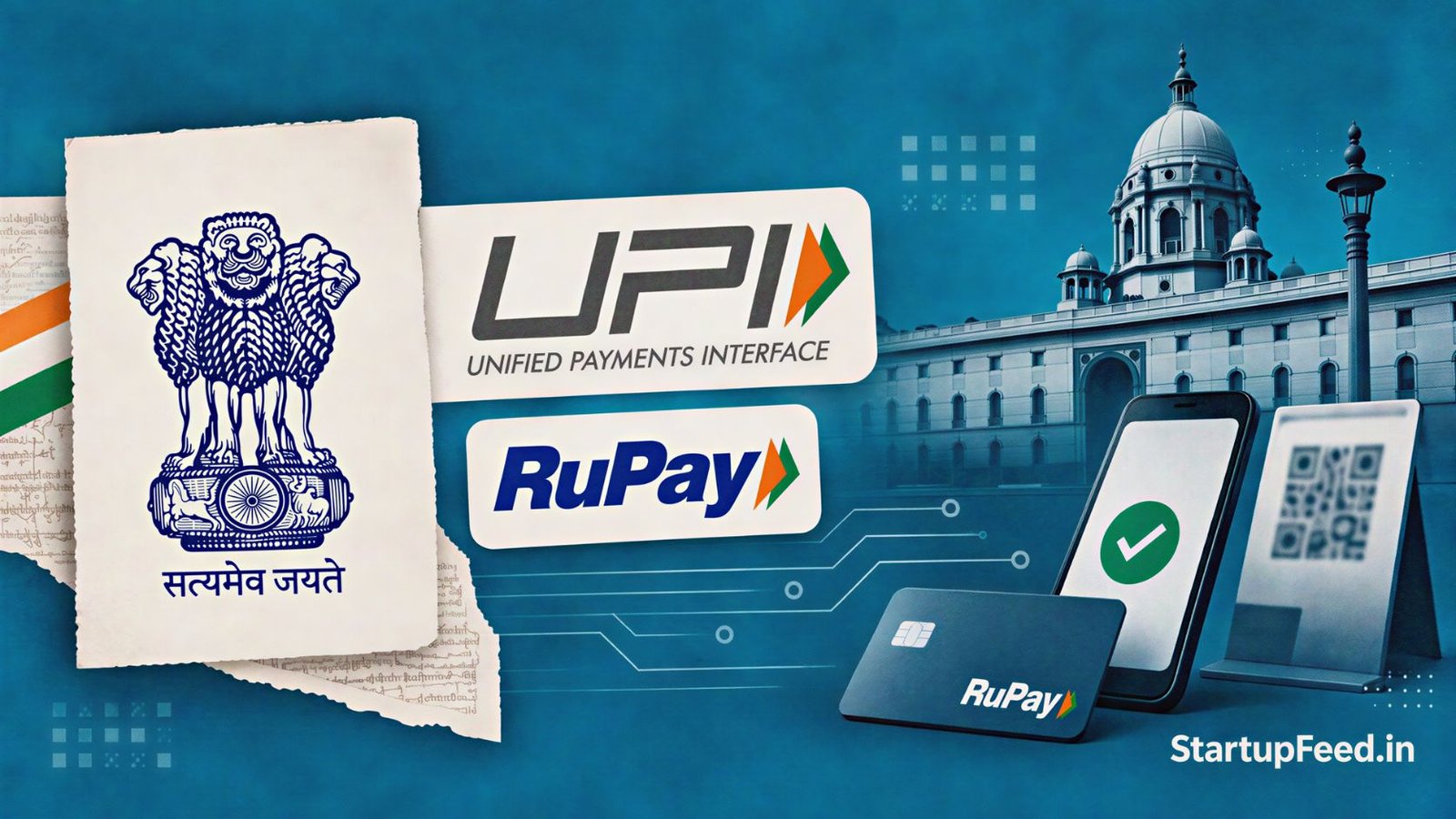
The finance ministry has fixed zero merchant discount rate on UPI and RuPay debit card payments up to Rs 2,000. It did this through a gazette notification dated September 14, 2026.
The order amends the Payment and Settlement Systems Act, 2007. It bars any bank or system provider from charging a person who makes or receives such a payment. MDR is the fee a merchant pays a bank or payment firm to process a digital transaction.
The move matters for what it leaves out. By protecting only payments up to Rs 2,000, the notification clears the way to charge merchants on larger UPI transactions. The government has now set the line above which a fee can apply.
The decision on the actual rate now sits with the UPI and Services Steering Committee. This body is headed by the National Payments Corporation of India (NPCI). It will decide the MDR framework and the rates.
The notification follows the Taxation and Other Laws (Amendment) Bill, 2026, which Parliament passed a month earlier. That bill amended Section 10A of the 2007 Act. It let the Centre pick which payment modes stay exempt from MDR.


Recent reports point to the likely shape of the fee. UPI payments above Rs 2,000 could be charged at 40 basis points, or 0.4% of the transaction value. Issuing banks could take 40% of that fee. Third-party apps such as PhonePe and Paytm, and acquiring banks, would split the rest.
At 40 basis points, the split works out to about 16 basis points for the issuing bank. The third-party app and the acquiring bank would get about 12 basis points each. An earlier discussion had floated a much smaller 5 to 7 basis points.
The zero-MDR rule started in 2020 to push digital payments. UPI has since become India’s main way to pay. It handled 2,451 Cr transactions worth Rs 29.82 Lakh Cr in August 2026, up about 20% in a year.
Banks and payment firms still lean on government money to cover their costs. The incentive outlay peaked at Rs 3,631 Cr in FY24. The initial FY26 allocation fell to Rs 437 Cr before a later increase. A parliamentary panel said the incentives do not cover the cost of running the system.
Markets read the MDR signal as good news for fintech firms. As the reports emerged last week, Pine Labs stock rose 16.9% to close at Rs 202.35 on the BSE. MobiKwik gained about 8% to Rs 209.80, and Paytm rose 3.9% to Rs 1,806.25.
What this means for you: If you run a business above the Rs 2,000 ticket size, price in a possible UPI fee soon, and watch NPCI for the final rate.
Have a tip? Write to us at editorial@startupfeed.in.



Liked this story? Follow StartupFeed on Google so our reporting reaches you first.