Quick Take
- FSSAI has sent more than 150 notices to food companies over misleading ads and false claims, plus 12 to e-commerce firms and over 30 to food service chains.
- Risk-based FSSAI inspections rose from 11,904 in FY23 to 26,267 in FY25, more than double in two years.
- Investors are now writing food-claim compliance into term sheets, so a flagged label can hold up a funding round.
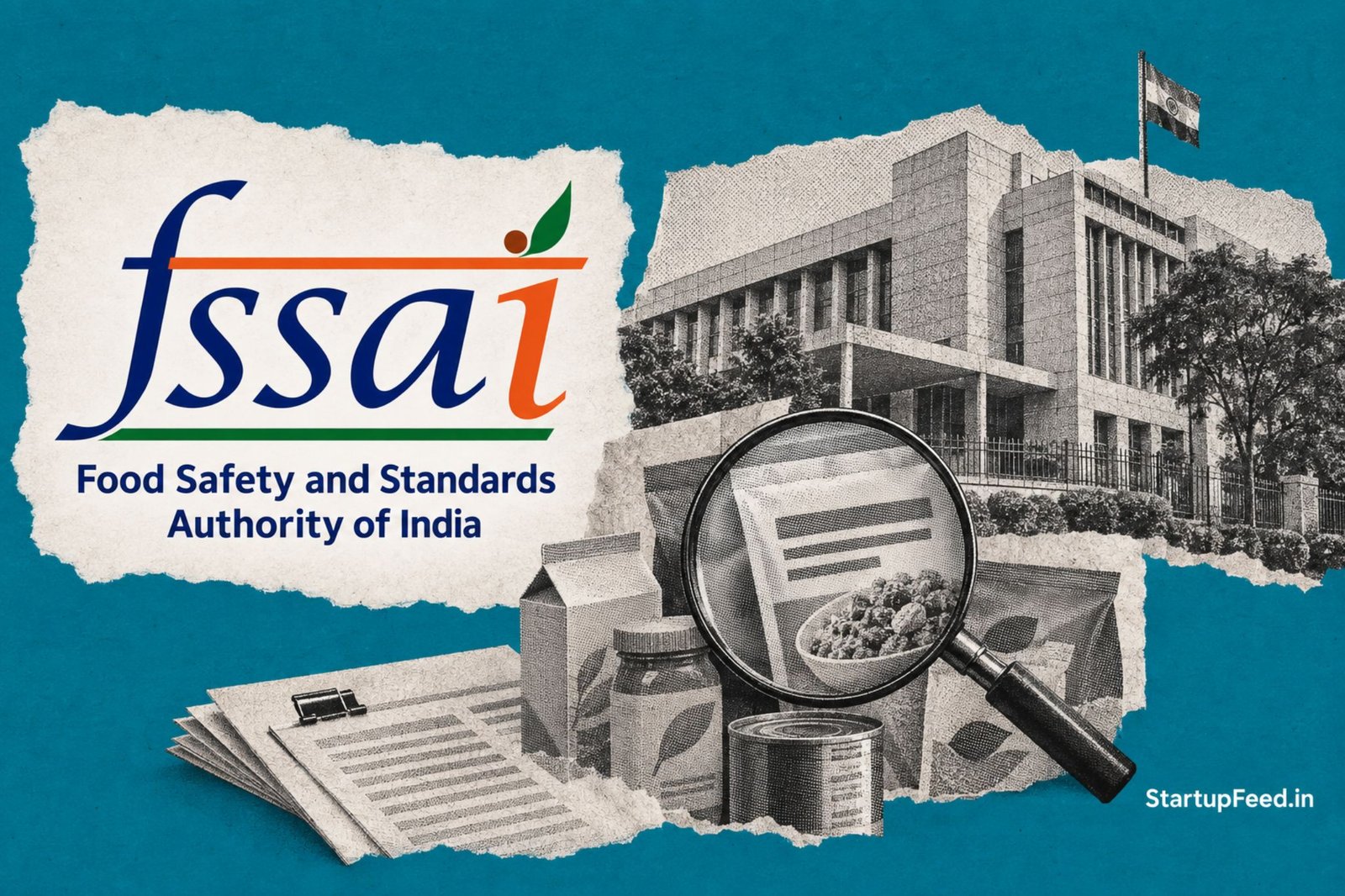
India’s food regulator has issued more than 150 notices to food companies over misleading ads and false claims. The notices went out over recent months, most of them in August 2026.
The Food Safety and Standards Authority of India, or FSSAI, sent the notices for misleading advertisements, false claims and labelling breaches. Business Standard first reported the count. Twelve more notices went to e-commerce firms, and over 30 went to food service chains.
Which companies got notices?
These are not small names. The list runs from Nestle India and PepsiCo to Coca-Cola, Abbott and Red Bull. Amazon got 12 notices and lost one warehouse licence, while five Domino’s outlets had licences suspended.
For founders, the real signal sits underneath the big brands. Investors now treat food-claim compliance as a funding test.
Which brands have pulled claims?
Some brands have already backed down. Mondelez pulled Bournvita’s health and nutrient claims and removed the ads from online stores. Amway India dropped its “100% Pure Coconut Oil” branding, and took the “Energy Drink” label off its XS caffeinated line.


A Kerala firm, Juza Foods, went further. It agreed to drop claims like “boost immunity” and “support stronger bones” on baby food, and retracted comparative calcium claims too.
The word “100%” is a common trigger. FSSAI issued an advisory in May 2025 asking brands to stop using it, because “100%” can imply absolute purity or superiority. Bournvita first came under scrutiny back in 2023.
Why does this matter to startups?
Enforcement is climbing fast. Risk-based FSSAI inspections rose from 11,904 in FY23 to 26,267 in FY25, more than double in two years.
The pressure lands hardest on young health-food and wellness brands. India’s healthy food market was worth $25.8 Bn in 2025 and is projected to reach $59.8 Bn by 2034. Much of that promise rests on claims like “natural”, “high protein” and “immunity”.
How are investors reacting?
That is exactly where investors are tightening. Term sheets now ask for third-party audits, quality-system upgrades and compliance milestones. Some add indemnities that shift remediation costs onto founders, and deals are screened for compliance gaps that could become post-deal liabilities.
Underwriting has changed too. Investors are adding compliance-adjusted revenue and remediation-cost assumptions to their models. A flagged claim is no longer just a marketing headache. It is a line item in a valuation.
The demand for help is already showing up. Foodyaari, a compliance consultant, reported a fivefold jump in compliance-related brand demand.


A claim on a label is now a claim on your cap table.
StartupFeed Insight
The headline number is the notices, but the number founders should watch is the inspection jump: 11,904 to 26,267 in two years. That curve does not bend back. The big brands can absorb a notice and a fine. A Series A health-food brand cannot absorb a term sheet that stalls over a “100%” label. Expect claim substantiation to become a standard data-room item by the March 2027 fundraising season, sitting next to GST filings and cap tables. The brands that win funding next year will be the ones that can prove every label, not just defend it.
— Dr. Mayank Raj, Contributing Editor
What this means for you: Audit every claim on your labels and ads now against FSSAI rules, because investors will check them before they check your growth.
Have a tip? Write to us at editorial@startupfeed.in.
Liked this story? Follow StartupFeed on Google so our reporting reaches you first.