

Quick Take
- Google will buy 1 million carbon credits from Mitti Labs through 2030.
- The rice-methane project covers about 100,000 hectares across three Indian states.
- Mitti Labs says its method cuts field methane by about 50% and water use by about 40%.
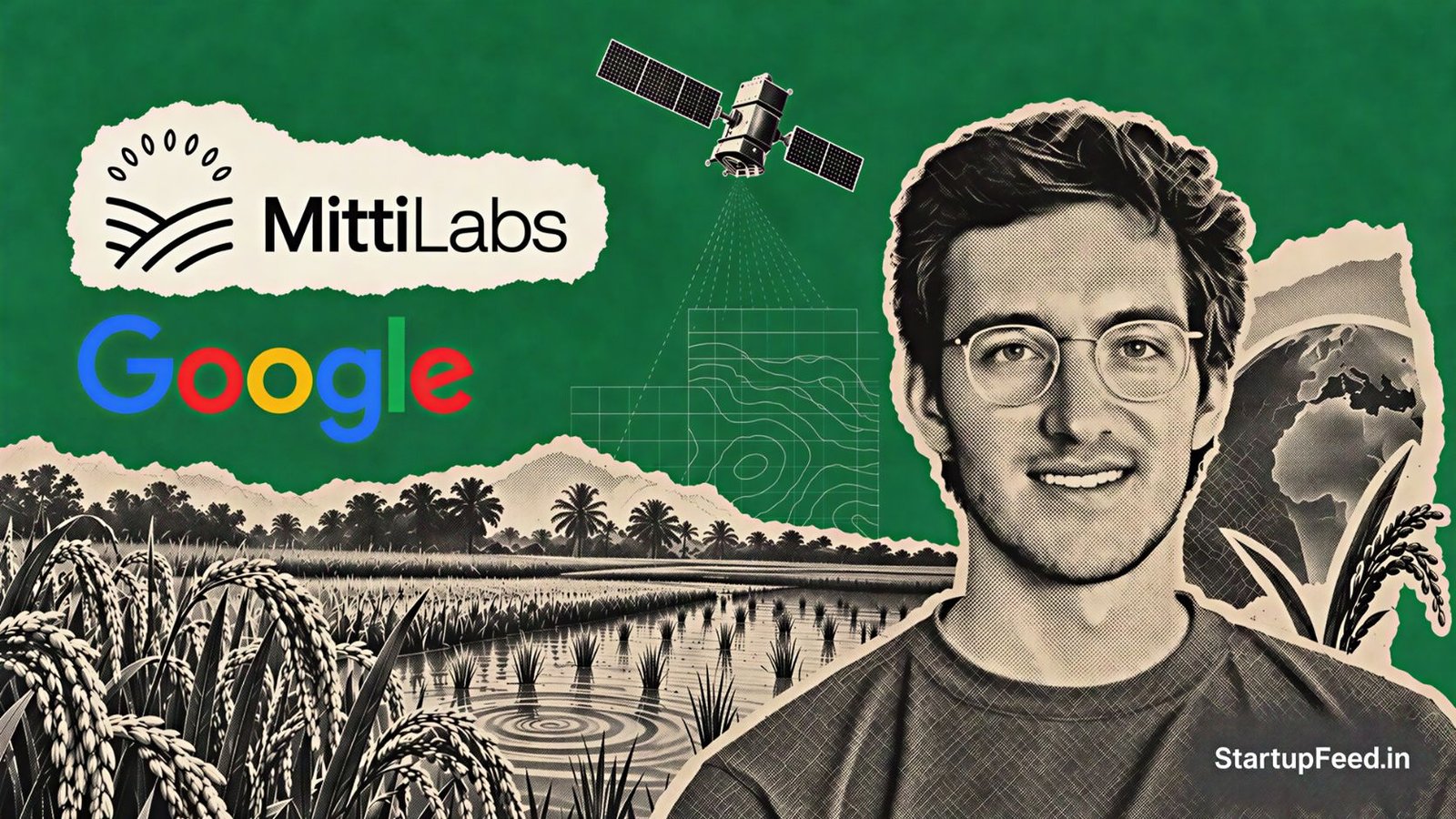
Google has agreed to buy 1 million carbon credits from Mitti Labs, an Indian climate-tech startup. It is the largest known deal for rice-farming methane credits.
Mitti Labs co-founder Xavier Laguarta shared the terms with TechCrunch. The four-year agreement runs through 2030, and financial terms were not disclosed.
Google is chasing net-zero emissions by 2030. Yet its emissions are rising. Google’s greenhouse gas output grew 18% in 2025, reaching about 14.5 million tonnes of carbon dioxide equivalent.
Carbon dioxide equivalent, or CO2e, adds up different greenhouse gases as one number. That emissions figure comes from Google’s environmental report, published in June 2026.
What Did Google and Mitti Labs Agree?
Google will buy 1 million carbon credits from Mitti Labs by 2030. The project spans three southern states: Karnataka, Andhra Pradesh and Telangana. At peak delivery it will reach about 100,000 hectares.

The project pays farmers to flood their rice fields for shorter periods. Shorter flooding cuts the methane that rice paddies release, and it lowers water use too.
Mitti Labs says the method cuts methane by about 50% and water use by about 40%, with no drop in yields.
How Does Mitti Labs Cut Rice Methane?
Mitti Labs runs a GeoAI platform that tracks water and crop growth on rice farms from space. The platform pairs satellite radar images with on-the-ground measurements. It watches crop growth, soil moisture and flooding across small farms.
The radar comes from commercial and public satellites, at resolutions from 50 centimeters to 10 meters. Mitti Labs also uses on-ground chambers to measure gas directly in the field. The startup feeds its own field data into its AI models.
Credits can be certified by Gold Standard or Isometric, two carbon-credit bodies. Independent third parties verify the projects before any credits are issued.
Harvard classmates Xavier Laguarta and Devdut Dalal founded Mitti Labs in 2023. Nathan Torbick is chief technology officer, and the startup is based in New York and Bengaluru.
Why Is Google Buying Rice Carbon Credits?
Google is buying rice carbon credits to offset emissions it cannot yet cut, as its AI build-out pushes power use higher. Laguarta said talks between the two firms began about a year ago.

Before signing, Google studied Mitti Labs’ monitoring technology and visited farms. Google was drawn to the water savings and to Mitti Labs’ scale. Mitti Labs says its projects have saved more than 500 billion liters of water in two years.
Rice paddies produce about 30% of farming’s methane emissions, according to TechCrunch. India is the world’s second-largest rice producer.
Laguarta said having Google as a buyer is “obviously a good signal” for Mitti Labs. The message to rivals is simple. If Google checked this project, others will look too.
How Does the Deal Compare, and What Is Next for Mitti Labs?
The Mitti Labs deal is Google’s second big carbon-removal deal in India. The first was a 100,000-tonne biochar deal with Gurugram-based Varaha in January 2025.
| Detail | Varaha | Mitti Labs |
|---|---|---|
| Announced | January 2025 | September 2026 |
| Type | Biochar carbon removal | Rice-methane credits |
| Volume | 100,000 tonnes | 1 million credits |
| Delivery | One-time | Through 2030 |
Google is also buying clean power in India, signing a deal tied to a 150-megawatt solar project in Rajasthan. That lifts its contracted solar capacity with ReNew in the state to 300 megawatts.
Mitti Labs already sells credits to other buyers. Its customers include carbon marketplace Cool Effect, rice producer Ebro Foods and farm-input firm Syngenta. Laguarta said the Google deal is Mitti Labs’ largest offtake deal so far.
Saudi Aramco has also backed Mitti Labs, TechCrunch reported in August 2026. Laguarta added that most project revenue goes to farming communities. Mitti Labs declined to say how much farmers on the Google project will earn.
The startup plans to start work in the Philippines later in 2026. It aims to enter Indonesia and other Southeast Asian markets in 2027. Laguarta said about 150 million farmers grow rice across India, Southeast Asia and China.
What this means for you: If you build climate or agritech in India, global buyers like Google now pay for measurable, verified carbon cuts, not promises.
StartupFeed Insight
Google’s 1 million credits will not dent its 14.5 million tonnes of annual emissions. That is the point worth watching. The deal is a scale test, not an offset that balances Google’s books. For India, the real prize is the method. Mitti Labs works with more than 100,000 farmers today and wants millions by 2030. If its 50% methane claim survives third-party audits at that scale, rice carbon becomes a real export. Expect at least one more global buyer to sign an Indian rice-methane deal before the end of 2027.
By Avinash Mishra, Business Correspondent
Frequently Asked Questions
Have a tip? Write to us at editorial@startupfeed.in.