Quick Take
- Gen Z founders sit behind 15,000 to 20,000 Indian startups, about 12 to 15% of the ecosystem.
- Hurun’s 2026 U30 list names 102 founders under 30, worth Rs 2.9 lakh crore together.
- India added 55,200 recognised startups in FY26, its highest count on record.
India turns 79 this Independence Day. For its youngest founders, freedom now means something narrow and practical: the freedom to start a company at 22 and be taken seriously.
The numbers back the shift. DPIIT had recognised 2,12,283 startups as of January 31, 2026, according to a Press Information Bureau release. Between 15,000 and 20,000 of them have at least one Gen Z founder. That is 12 to 15% of the whole ecosystem.
Gen Z here means people born from 1997 onward. The oldest are 29. Many are far younger.
How many Gen Z founders does India have?
Roughly one in seven Indian startups now has a founder under 29. The estimate of 15,000 to 20,000 firms comes from ecosystem data built on DPIIT’s recognised-startup count.
Their reach is not spread evenly. These founders cluster in AI, deep-tech, software, fintech, healthcare and quick commerce. A Titan Capital and Hurun study found founders under 30 are 1.75 times more likely to start a software company than founders aged 31 to 40. They are 1.44 times more likely to start a healthcare venture.



The label itself is spreading fast. LinkedIn recorded a 104% jump year-on-year in Indians adding “Founder” to their profiles. Gen Z leads that rise.
What does the Hurun 2026 list show?
The clearest snapshot comes from one list. The Avendus Wealth and Hurun India U30 List 2026 names 102 entrepreneurs aged 30 or under. Last year it named 80. That is a 28% rise in twelve months.
Together these 102 founders run companies worth Rs 2.9 lakh crore. Their firms employ more than 75,000 people. The average founder on the list is 28 years old, and 84% are first-generation entrepreneurs, according to the report.
To qualify, a first-generation founder needs a business valued at $25 Mn or more. The bar is real. These are not hobby projects.
The money is concentrated at the top. The list’s ten biggest startups have raised over $3.5 Bn between them. Zepto leads with $2.3 Bn. BharatPe follows at $650 Mn.
| Metric | 2025 | 2026 |
|---|---|---|
| Founders on the U30 list | 80 | 102 |
| Combined valuation | Not disclosed | Rs 2.9 lakh crore |
| People employed | Not disclosed | 75,000+ |
| Non-metro founders | Not disclosed | 40 |
| Bengaluru entrants | Fewer | 21 |
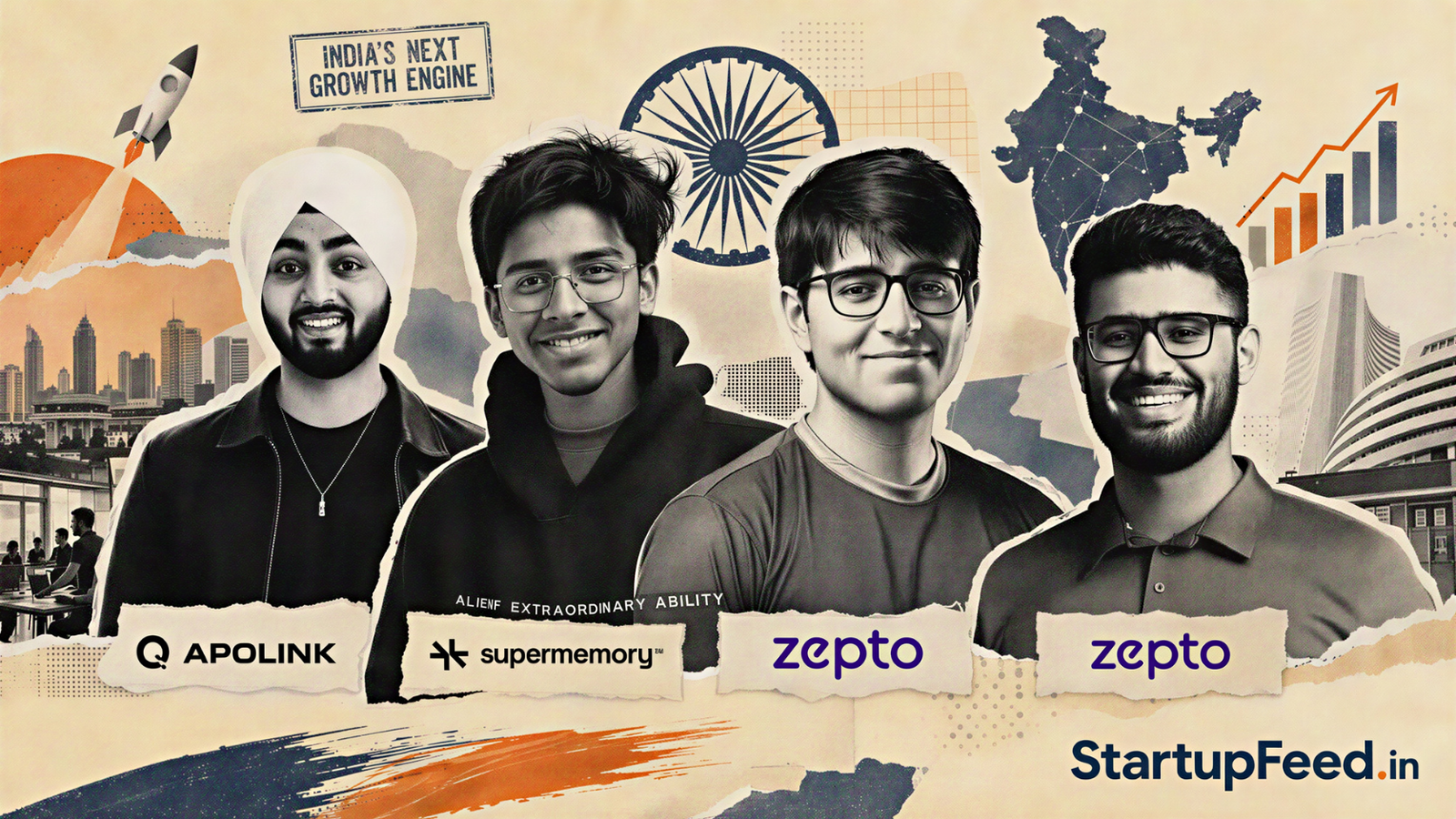
The youngest names show how early this now starts. Onkar Singh Batra founded a spacetech firm, Apolink, at 20. Dhravya Shah is also 20. Zepto’s Aadit Palicha and Kaivalya Vohra are both 23, and their company alone carries the biggest raise on the list.
Why is it easier to start young in 2026?
Two forces made this possible. One is policy. The other is where the founders live.



On policy, the rules loosened in 2026. DPIIT issued Gazette Notification G.S.R. 108(E) on February 4, 2026. It doubled the turnover ceiling for a recognised startup from Rs 100 crore to Rs 200 crore. It added a Deep Tech category with a 20-year recognition window.
The tax picture eased too. Angel tax, long the sector’s most hated levy, was abolished from April 1, 2025. That removes a threat that once hung over every early cheque a young founder took.
Geography is the second force. Of the 102 U30 founders, 40 build from non-metro cities. Bengaluru still leads with 21 entrants, but the base is widening. FY26 was the strongest year yet, with 55,200 new recognised startups and recognitions up 51.6% year-on-year.
Demand is shifting toward the young as well. Gen Z now drives 40 to 45% of India’s online shoppers, per the “How India Shops Online 2026” report by Flipkart and Bain. Founders who grew up on these platforms read that buyer better than anyone older.
What should founders and investors watch?
The risk sits in the same place as the promise. A 28-year-old average age means less experience through a downturn. Funding is concentrated in a handful of names at the top of the list. Most Gen Z startups are far smaller and far more fragile.
For an investor, the signal is clear. The next Zepto-scale raise is now as likely to come from a 23-year-old in a tier-2 city as from a metro veteran. The old filter of age and pedigree is a weaker screen than it was.
For a young founder, the message is simpler still. The gate is open wider than at any point in the last decade. What you do with that is on you.
What this means for you: If you are under 30 and building, the 2026 rules and the widening investor lens work in your favour. Register with DPIIT, size your raise to real revenue, and do not read the top of the Hurun list as the median.
StartupFeed Insight
The striking number is not the Rs 2.9 lakh crore. It is the 40 non-metro founders on a list of 102. For a decade, youth and a metro address were the two things a young founder could not fake. One of those has now broken. Cheap bandwidth, UPI and remote capital have cut the metro out of the founding story. Watch the FY27 U30 list closely. If non-metro representation crosses half, the centre of gravity in Indian startups will have moved for good, and it will have moved young.
— Harshvardhan Kothari, Technology and Policy Correspondent
Frequently Asked Questions
Have a tip? Write to us at editorial@startupfeed.in.
Liked this story? Follow StartupFeed on Google so our reporting reaches you first.