Quick Take
- PM Modi cleared four Seva Teerth schemes on February 13, 2026, from India’s new PMO complex.
- Startup India Fund of Funds 2.0 carries a Rs 10,000 Cr ($1.05 Bn) corpus for deep tech.
- PM RAHAT, doubled Lakhpati Didi target and a Rs 2 lakh Cr farm fund round out the package.
In This Article
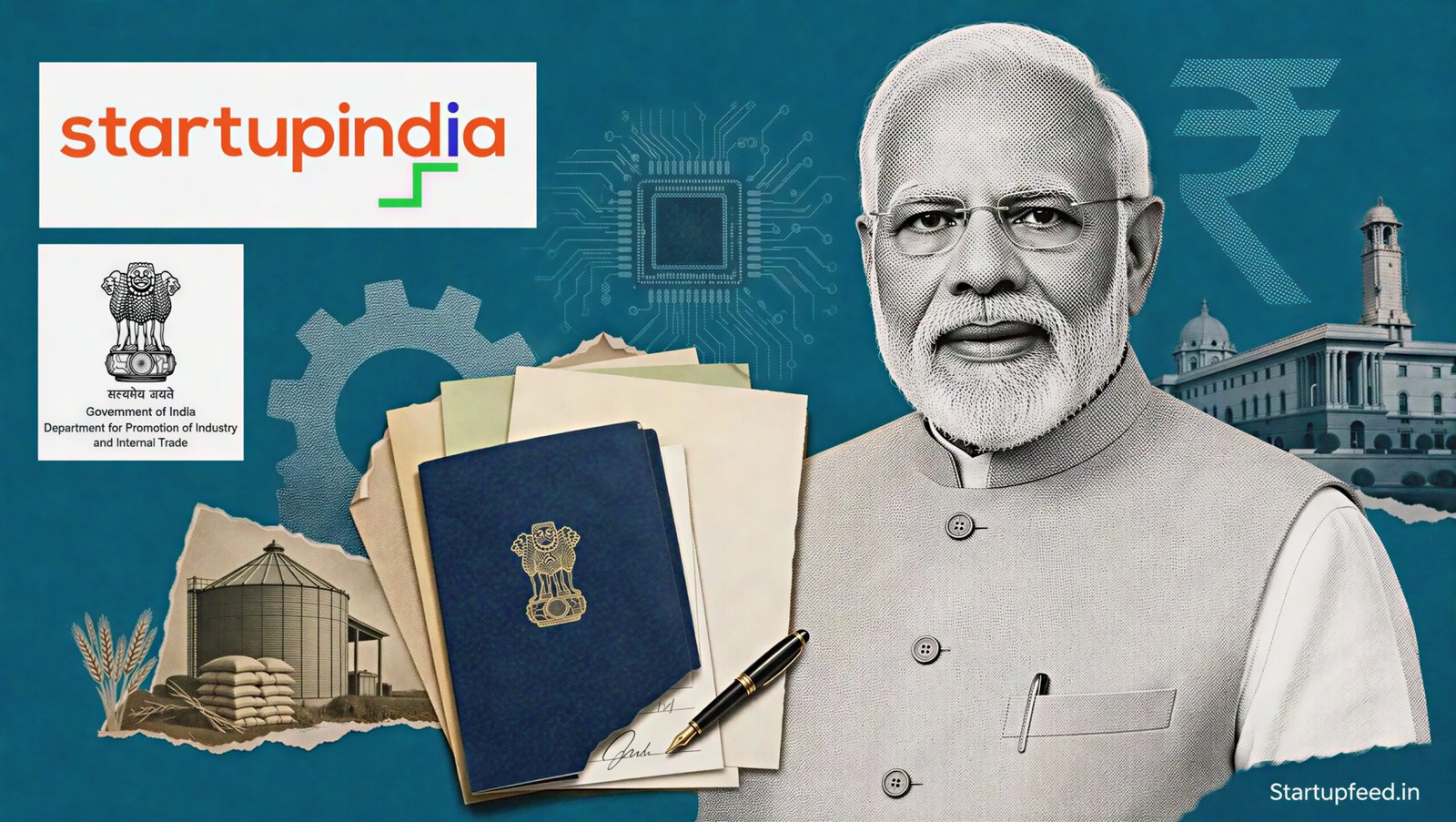
Seva Teerth schemes became India’s newest policy news on February 13, 2026, when Prime Minister Narendra Modi signed four major approvals from the country’s new Prime Minister’s Office complex in Delhi. The headline decision for the startup world was Startup India Fund of Funds 2.0, a Rs 10,000 Cr ($1.05 Bn) corpus for deep technology and early-stage ventures.
The four files also covered the PM RAHAT accident-care scheme, a doubled target for Lakhpati Didis and a Rs 2 lakh Cr Agriculture Infrastructure Fund. The government framed the cluster as its first act of governance from Seva Teerth, which now houses the PMO, the National Security Council Secretariat and the Cabinet Secretariat on Kartavya Path. Figures here follow the live USD-INR rate of about Rs 95.4 per dollar on August 5, 2026.
StartupFeed Insight
The real signal in the Seva Teerth schemes is the pivot away from consumer apps toward deep tech and manufacturing, where domestic risk capital has been thin. A fund-of-funds model routes money through professional AIF managers, not government cheques, so the pace of AIF selection will decide impact. Deep-tech and hardware founders, plus smaller AIFs targeting early-growth rounds, should watch closely. StartupFeed expects the first tranche of FoF 2.0 AIF commitments, via SIDBI, to be visible within the 16th Finance Commission cycle, with early allocations flowing to robotics, semiconductors and space by mid-2027. By Soumya Verma.
The Four Seva Teerth Schemes at a Glance
The Seva Teerth schemes are four policy approvals signed by PM Modi on February 13, 2026, spanning accident care, women’s income, farm infrastructure and startup capital. Each targets a distinct group: the vulnerable, women, farmers and youth. The government said these were the first decisions taken from the new PMO complex, according to a statement carried by All India Radio News.
| Scheme | Key Detail | Notes |
|---|---|---|
| PM RAHAT | Cashless care up to Rs 1.5 Lakh for accident victims | Targets the golden hour after road accidents |
| Lakhpati Didi | Target doubled from 3 Cr to 6 Cr by March 2029 | 3 Cr milestone already crossed ahead of schedule |
| Agriculture Infrastructure Fund | Outlay doubled from Rs 1 Lakh Cr to Rs 2 Lakh Cr | Aims at storage, supply chains and value addition |
| Startup India FoF 2.0 | Rs 10,000 Cr ($1.05 Bn) corpus for AIFs | Focus on deep tech and advanced manufacturing |
The most interesting detail is timing: the schemes were announced from Seva Teerth on February 13, but the formal Union Cabinet approval of the startup fund came the next day, February 14, 2026, with the DPIIT Gazette notification following on April 13, 2026.
About Startup India
Startup India is the Central Government’s flagship entrepreneurship programme, launched in 2016 under the Startup India Action Plan. Run by the Department for Promotion of Industry and Internal Trade (DPIIT), it offers recognition, tax benefits and funding support. India has grown from fewer than 500 startups in 2016 to more than 2 lakh DPIIT-recognised startups, with 2025 recording the highest-ever annual registrations, per the Press Information Bureau.


What is Startup India Fund of Funds 2.0?
Startup India Fund of Funds 2.0 is a Rs 10,000 Cr ($1.05 Bn) government-backed fund that invests in SEBI-registered Alternative Investment Funds (AIFs), which in turn back recognised startups. The Union Cabinet, chaired by PM Modi, approved it on February 14, 2026, and the Government notified it on April 13, 2026, according to the Press Information Bureau release.
The scheme does not write cheques directly to startups. Instead, the Small Industries Development Bank of India (SIDBI) acts as the Implementation Agency, committing capital to AIFs across the 16th and 17th Finance Commission cycles. A second domestic Implementation Agency will also be selected. The full notification sits in the Gazette of India.
Why should founders care about the startup fund?
Founders should care because FoF 2.0 targets the exact gap that has held back Indian deep tech: patient, long-term domestic capital. The priority segments are deep tech, early-growth-stage startups backed by smaller AIFs, technology-driven manufacturing, and sector-agnostic ventures.
This move will strengthen India’s venture capital ecosystem, crowd in private investment and accelerate high-quality job creation across the country, said Piyush Goyal, Union Minister of Commerce and Industry.
For deep-tech and hardware founders, the practical takeaway is that more India-based AIFs may soon have dry powder for capital-heavy, long-horizon bets. Traction, cap tables and a clear use-of-funds story still matter for any venture conversation.
How does FoF 2.0 compare to FFS 1.0?
FoF 2.0 keeps the same Rs 10,000 Cr headline corpus as the 2016 Fund of Funds for Startups (FFS 1.0), but adds a segmented, deep-tech-first design. FFS 1.0 committed its full corpus to 145 AIFs, which invested over Rs 25,500 Cr in more than 1,370 startups, per PIB.
| Feature | FFS 1.0 (2016) | FoF 2.0 (2026) |
|---|---|---|
| Corpus | Rs 10,000 Cr | Rs 10,000 Cr |
| Focus | Broad startup ecosystem | Deep tech, manufacturing, early growth |
| Time horizon | Single cycle | 16th and 17th Finance Commission cycles |
What makes FoF 2.0 different is intent: the two-cycle horizon and VCIC screening signal a permanent structural feature rather than a one-time push.
What’s Next
DPIIT is set to issue the operational guidelines and the composition of the Venture Capital Investment Committee that screens AIFs. SIDBI will begin operationalising the scheme from the notification date, with a second Implementation Agency to be chosen. The signal to watch is how fast the first AIF commitments land and whether deep-tech promises translate into deployed capital. Which sector do you think should get the first cheque?



Frequently Asked Questions
Have a tip? Write to us at editorial@startupfeed.in.
Liked this story? Follow StartupFeed on Google so our reporting reaches you first.